
Nghe An applies technology to industrial production.
Nghe An's industrial enterprises are constantly applying science and technology, and digital technology to production; thereby improving operational efficiency, competitiveness, and service quality.
The movements
In the first few months of 2024, textile and garment exports recovered compared to last year. However, alongside the recovery in orders, the textile and garment industry still faces several challenges such as supply chain risks, digital transformation trends, circular economy, and green production… For sustainable development, there is no other way than to rely on digital transformation and green growth.
According to Mr. Tran Van Hoa, Vice Chairman of the Trade Union of Vinatex Hoang Mai Garment Joint Stock Company, 2023 presented many general difficulties for the textile and garment industry, but the company received priority orders from Vinatex Group (the Group has 18 garment and 5 textile enterprises), resulting in steady production. In 2024, the company is fully booked until the end of the year and has already shipped many consignments to European and American markets.
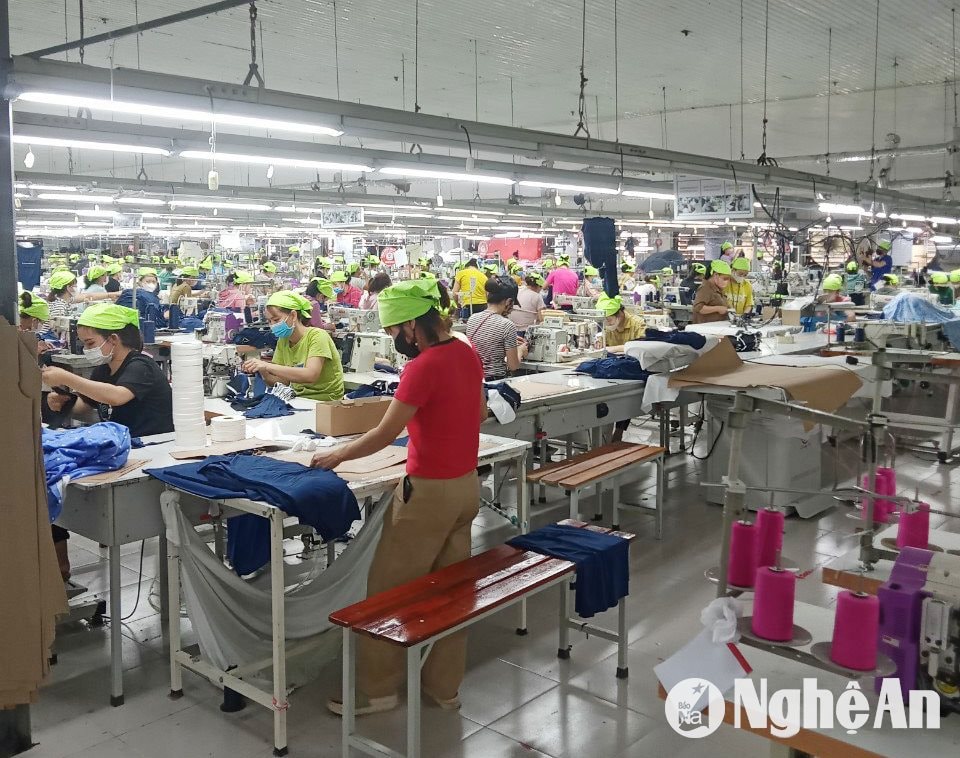
Mr. Tran Van Hoa, Vice Chairman of the Trade Union of Vinatex Hoang Mai Garment Joint Stock Company, said: "To achieve these results, the company has applied advanced technologies, such as high-precision automatic cutting technology, fabric lifting machines, automatic fabric spreading machines, conveyor belt fabric spreading tables, automatic labeling machines, and automatic fabric cutting machines. These new solutions for the cutting room bring many benefits to the garment business, such as saving time, manpower, fabric, and optimizing production costs. Compared to before, when the fabric spreading process required at least two workers, with the automatic fabric spreading machine, only one person is needed to operate it, but productivity is much higher."
The application of technology and scientific techniques to production processes and digital transformation is becoming a mandatory requirement for the textile and garment industry in order to export goods to demanding markets, as markets such as Europe, the US, and Japan have very high requirements for green production.
Mr. Tran Van Hoa - Vice Chairman of the Trade Union of Vinatex Hoang Mai Garment Joint Stock Company
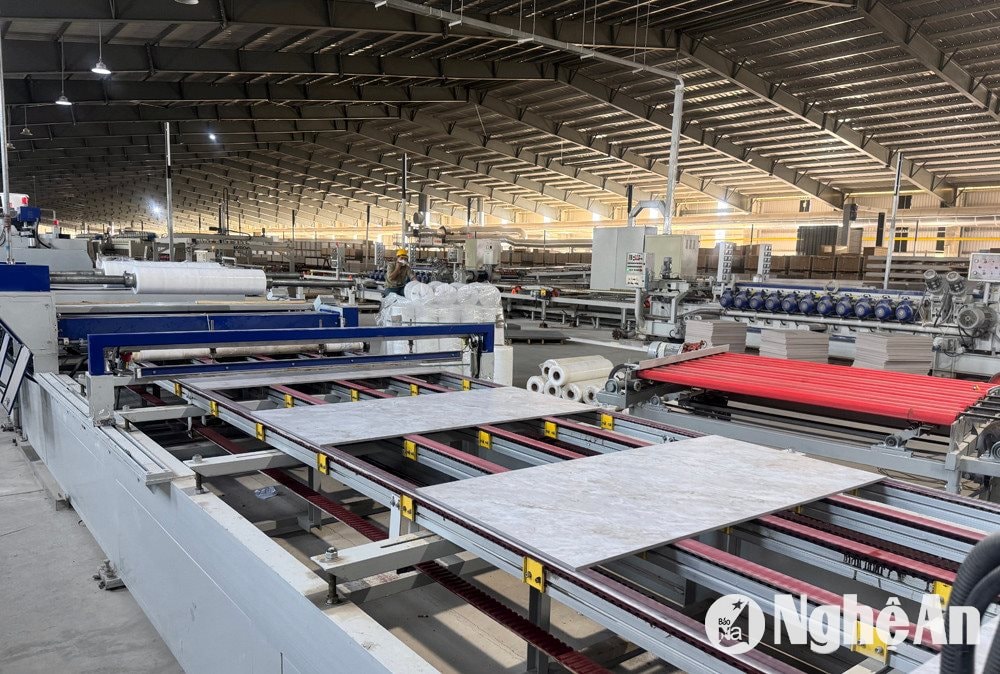
Some construction material manufacturing businesses also apply technology imported from European countries, creating high-quality products. For example, thanks to technological innovation, the biggest milestone is the construction material production complex in Nghi Van commune (Nghi Loc district), where Trung Do Joint Stock Company has become a leading enterprise nationwide in construction material production and a pioneer in the production of large-format sintered slab stone "made in Vietnam". The company's perspective is that a new technological line usually has a certain cycle, so when investing, choosing the latest technology is essential for optimal efficiency.
For the Nghi Van Complex project, the company chose the Continua+ technology line from SACMI Group (Italy) for installation; simultaneously, it invested in modern, integrated facilities, including multi-stage kiln dryers, and the most advanced packaging and sorting lines in the entire Asia-Pacific region. To diversify product designs and quality to meet the demands of the European and American markets, the company also selected Itaca Group (Spain), the world's third-largest glaze supplier, to create designs and mix colors for various types of ceramic tiles, fired stone, etc.
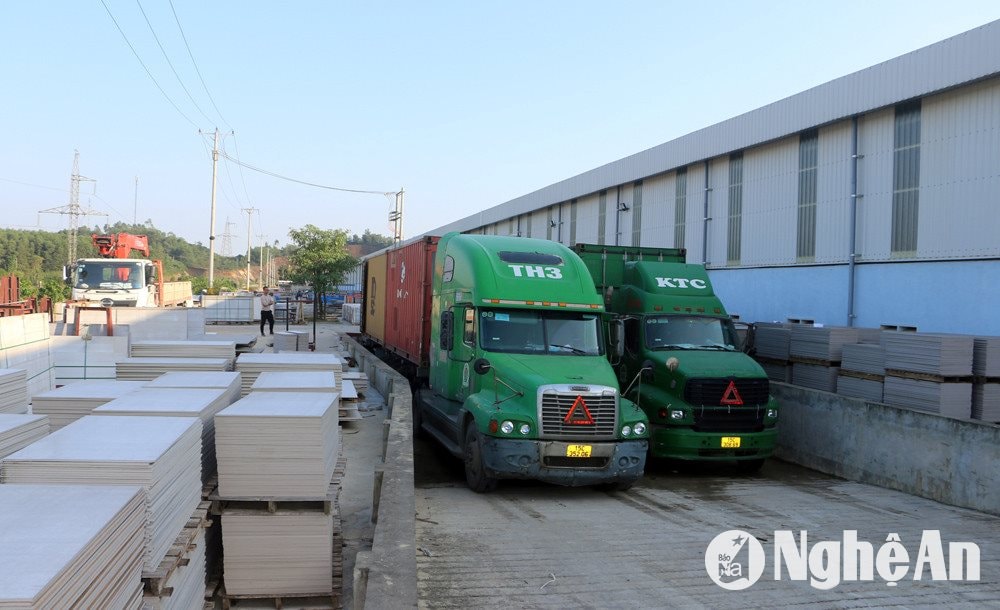
Mr. Nguyen Duy Hien, Director of Trung Do Joint Stock Company, stated: To gain a competitive advantage, in addition to effectively utilizing readily available domestic raw materials, the company has chosen the most advanced technology in the world, appearing for the first time in Vietnam. Furthermore, the company constantly strives for improvement, applying new scientific and technical achievements from around the world, and continuously implementing modern and advanced management systems to reduce costs.
The application of science and technology is also being emphasized by businesses in many other sectors to improve productivity, quality, and competitiveness, helping to maintain growth momentum, create opportunities for development, and expand production and business activities. The mining and mineral processing sector is innovating its technology in mining operations, using Spanish technology to produce ultra-fine limestone powder coated with stearic acid.
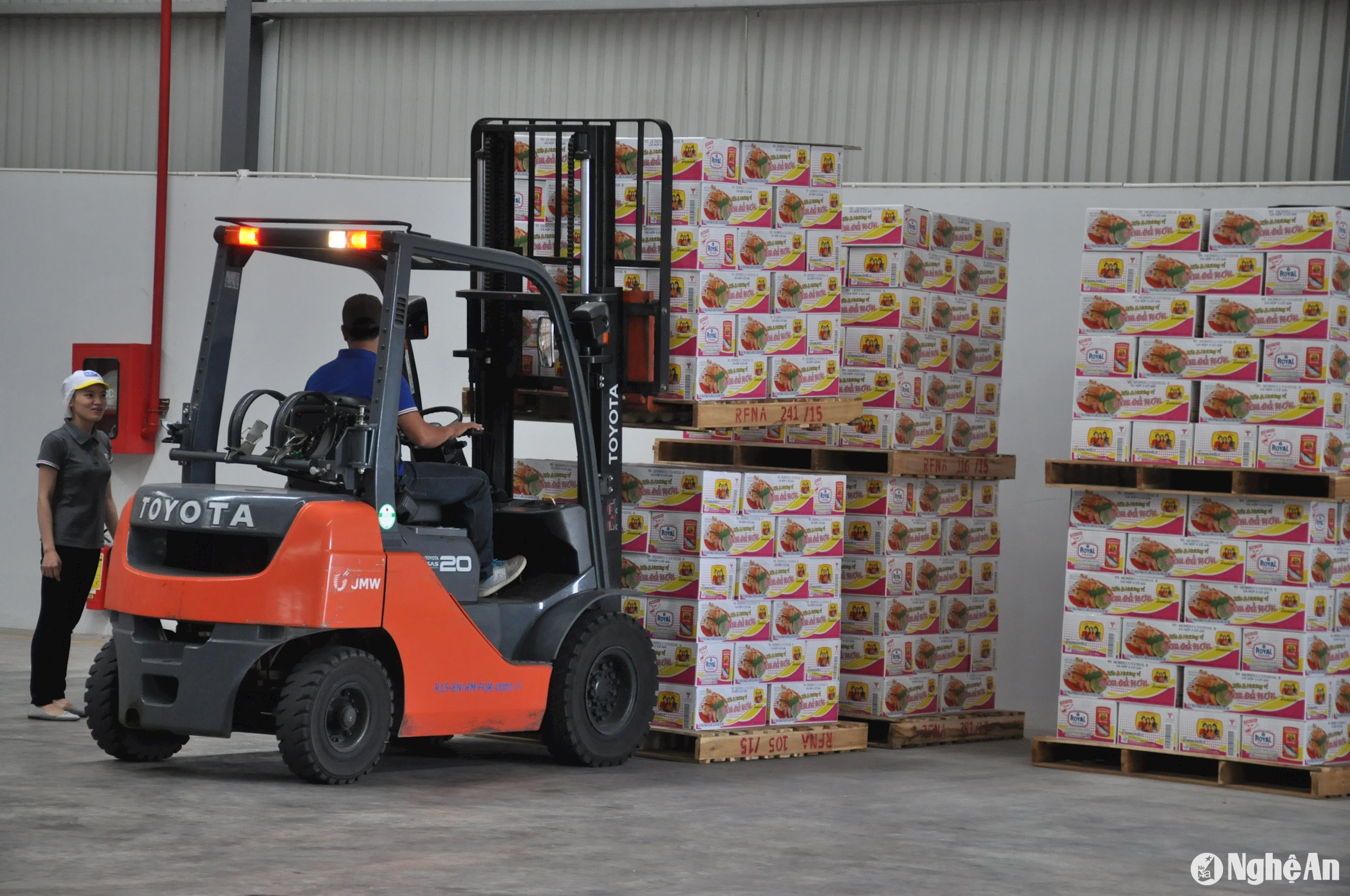
The agricultural, forestry, and aquatic product processing and food processing sectors have received investment in modern technology linked to high-tech agriculture and the application of circular economy models. Examples include: milk processing by TH and Vinamilk; sugar processing and food production by Massan Group; and canned fish processing by Royal Foods Group. Similarly, the electricity production and supply sector has mastered the technology for monitoring and controlling substations and managing the operation of the power system with smart grid solutions, attracting several projects producing electrical equipment and transmission equipment (such as Viet A and Nanoco)...
Promoting the application of science and technology
It can be said that the formation and development of the Fourth Industrial Revolution has brought about a strong development of new technologies, focusing mainly on smart manufacturing based on breakthrough achievements in information technology, biotechnology, nanotechnology, etc. Technology is considered one of the "lifelines" that helps businesses overcome many difficult periods.
Recognizing the importance of science and technology in attracting investment, the province also focuses on attracting FDI projects that utilize high-tech and modern technologies, meeting the standards and regulations of parent corporations/companies, especially businesses producing phone components and accessories for Samsung and Apple such as Em-Tech, BSE Vietnam, Luxshare Vietnam, Goertek, Everwin, and Juteng.
Many projects produce high-tech products such as: automotive parts and components, network equipment, camera modules, printers, optical components, lenses, single-cell silicon wafers, semiconductor wafers… by corporations and enterprises such as Sunny, Gaojia Optics, Runergy PV Technology, Luxvisions Innovation, Kyungshin…
Forecasts for 2024 and the years to come indicate that the industrial sector will face many difficulties and challenges due to the impact of the global economic recession and conflicts between countries and regions around the world, leading to decreased consumer demand and affecting investment attraction, production, and business activities of enterprises.
According to the Department of Industry and Trade, to develop science and technology in industrial production, it is necessary to create conditions for businesses to access capital, experts, and technological advancements from advanced countries. This includes strengthening cooperation in human resource training with large companies and corporations such as Samsung; and enhancing linkages between training institutions and manufacturing businesses, as well as between domestic and foreign manufacturing businesses.
From a management perspective, continue to attract foreign direct investment projects into processing and manufacturing industries (automotive, mechanical engineering, footwear, garment, electronics, information technology, etc.); supporting industries; renewable energy; processing industries associated with agricultural and rural development; and projects using modern, environmentally friendly technologies according to the issued project list.


