
Do citizens have the right to check the identification of traffic police officers?
Currently, there are many conflicting opinions regarding the statement by Major General Tran Son Ha, Director of the Traffic Police Department (Ministry of Public Security), that "citizens have no right to check the documents or vehicles of traffic police officers."
At the launch ceremony for the peak period of ensuring traffic order and safety to celebrate National Day on September 2nd and the Traditional Day of the People's Police, organized by the Traffic Police Department (Hanoi Police), Major General Tran Son Ha, Director of the Traffic Police Department, stated: "Traffic police officers on the road handling violations are authorized by competent authorities, they wear name tags and badges on their chests, and have proper identification cards. Therefore, it is incorrect for citizens to request to check their plans, special projects, or the calibration stickers of speed cameras; they do not have the right to do so."
This statement has attracted attention and sparked debate among many people, raising the question: Do citizens have the right to check the documents of traffic police officers?
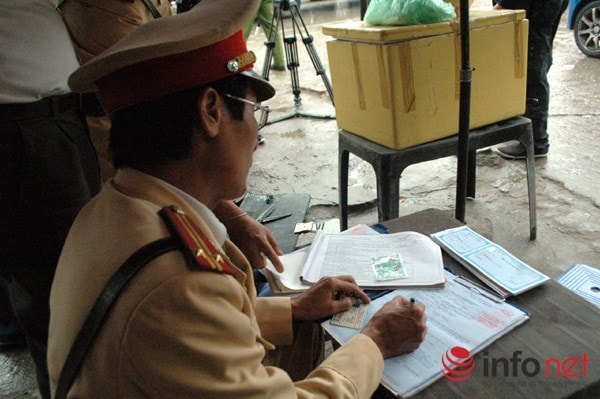 |
| Traffic police handle traffic violations. |
Even within the legal community, there are differing opinions on this issue. Lawyer Tran Minh Hung (Ho Chi Minh City Bar Association) stated: “In principle, when a violator is penalized, the violator has the right to request the competent authority to prove their fault, and to view, know, and examine this evidence. If citizens are not granted these basic rights, it will lead to abuse of power, unfounded and arbitrary penalties.”
However, lawyer Nguyen Kieu Hung from Giai Phong Law Firm (Ho Chi Minh City Bar Association) argued: “It’s true that giving citizens the right to conduct immediate inspections, while allowing traffic police to do the opposite, is somewhat inconvenient and easily abused by citizens. But, if citizens aren’t given this right, traffic police have more opportunities to abuse their power. Therefore, we need to consider another form of inspection that would prevent both sides from ‘abusing’ their authority.” According to lawyer Hung, citizens have the right to report violations promptly and file complaints afterward; the situation where anyone who violates the law is subjected to a “reverse inspection” by traffic police should not be allowed to continue.
To provide a multifaceted perspective on this issue, we present two opposing viewpoints. Below is an interview with Lawyer Nguyen Kieu Hung (Ho Chi Minh City Bar Association).
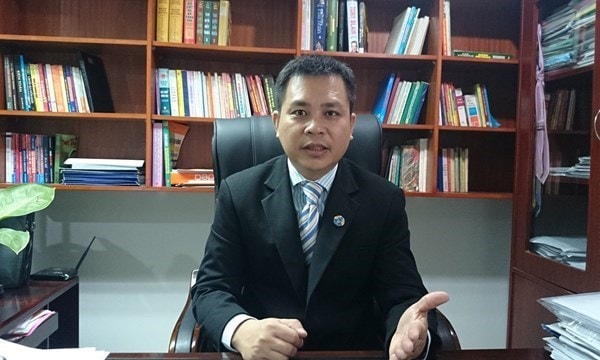 |
| Lawyer Nguyen Kieu Hung, Giai Phong Law Firm (Ho Chi Minh City Bar Association) |
- Mr. Nguyen Kieu Hung, in your opinion, does the content of Major General Tran Son Ha's statement (Director of the Traffic Police Department) reflect the spirit of "the people know, the people discuss, the people supervise"?
The spirit of "the people know, the people discuss, the people inspect" is expressed and implemented in various forms, based on the principle of compliance with the law and without causing harm to other organizations or individuals. It's true that giving citizens the right to inspect immediately is somewhat inconvenient and prone to abuse by traffic police. However, if citizens are not given this right, traffic police have more opportunities to abuse their power. Therefore, we need to consider another form of inspection that, even if both sides wanted to, would prevent abuse.
- According to Circular 01/2016 of the Ministry of Public Security, there are 5 cases in which traffic police are allowed to stop vehicles, including cases requiring a patrol plan, a specific theme, or an order. Are citizens informed of these documents?
In principle, people should know, but there are no specific regulations on when and under what circumstances they should know.
- If the public isn't allowed to see them, how can traffic police ensure that officers have their identification badges, uniforms, and name tags while performing duties they haven't been assigned?
When citizens detect suspicious signs of traffic police officers performing their duties improperly or violating procedures, they have all the rights to know. These include the right to report the matter to the police inspectorate, and the right to request that the traffic police officer record necessary information in the report, such as their name, rank, badge number, date, time, and location where the violation was detected. Once this information is recorded in the report, citizens have the right to file a complaint or sue the traffic police officer in court.
- Besides, cases of fake traffic police officers are not uncommon, so if simply having name tags and patrol badges prevents citizens from checking them, will that prevent this problem?
In my opinion, prevention is possible by immediately calling the local police hotline or the police inspectorate when there is any suspicion.
- However, there are also instances where violators become arrogant and demand to be inspected by traffic police. So, according to the lawyer, what kind of monitoring mechanism is needed to prevent citizens from arrogantly demanding to be inspected by traffic police every time they violate the law?
I agree that citizens should not be given the right to immediately retaliate against traffic police. Instead, traffic police and public awareness campaigns should guide citizens on their right to report violations promptly and their right to file complaints afterward.
Thank you, lawyer!
Lawyer Tran Minh Hung, Family Law Firm (Ho Chi Minh City Bar Association) "Citizens have the right to know that this document is valid, and the person issuing the penalty must provide it to the offender, to prevent abuse of power." Lawyer Tran Minh Hung (Family Law Firm, Ho Chi Minh City Bar Association) stated: "In my opinion, Major General Tran Son Ha's statement that 'citizens requesting to check plans, projects, or inspection stamps of speed cameras is incorrect; they do not have such rights' is unfounded and does not guarantee the right of violators to prove their case and provide evidence." In principle, when a traffic violator is penalized, they have the right to request that the competent authority prove their fault, and to view, know, and examine this evidence. If citizens are deprived of these basic rights, it will lead to abuse of power, unfounded and arbitrary penalties. This will cause frustration and fail to convince violators by denying them fundamental rights such as the right to request proof of fault, to provide evidence of wrongdoing, and to examine the tools and equipment used by traffic police in enforcing penalties. According to Clause 2, Article 14 of Circular No. 01/2016 of the Ministry of Public Security regulating control through technical equipment and devices: When a violation of traffic order and safety by a person or vehicle participating in traffic has been recorded through technical equipment and devices, the officer giving the order to stop the vehicle for inspection must draw up an administrative violation report and handle it according to regulations. If the offender requests to view the images and recorded evidence of the violation, they must be shown immediately if the images and recorded evidence are available. If the images and recorded evidence are not immediately available, the police will instruct the offender to view them when they come to the unit's headquarters to process the violation. Furthermore, according to Clause 2, Article 12 of this Circular, officers performing patrol and control duties are permitted to stop vehicles for inspection in the following cases: a) Directly detecting or through technical means and equipment detecting and recording violations of road traffic laws; b) Execute orders and patrol and control plans issued by the Director of the Traffic Police Department or the Director of the Provincial Public Security Department or higher; c) Implement the plan for organizing patrols, inspections, and handling violations to ensure traffic order and safety, as directed by the Head of the Highway Traffic Patrol and Inspection Department under the Traffic Police Department, the Head of the Traffic Police Department, or the Head of the District Police or higher; d) There must be a written request from the head or deputy head of the investigating agency; or a written request from relevant functional agencies to stop vehicles for inspection to ensure security and order, prevent and combat crime and other violations of the law. The written request must specify the time, route, vehicles to be stopped for inspection and processing, and the participating forces; d) Reporting or denouncing violations of the law by individuals and vehicles participating in traffic. Based on the above regulations, the right of citizens to know this document is justified, and the person issuing the penalty must provide it to the offender, preventing abuse of power and avoiding the possibility of issuing penalties at any time and place while not on duty. |
According to Infonet


