
War veteran poet Hoang Cat: Poems that will live on through the ages.
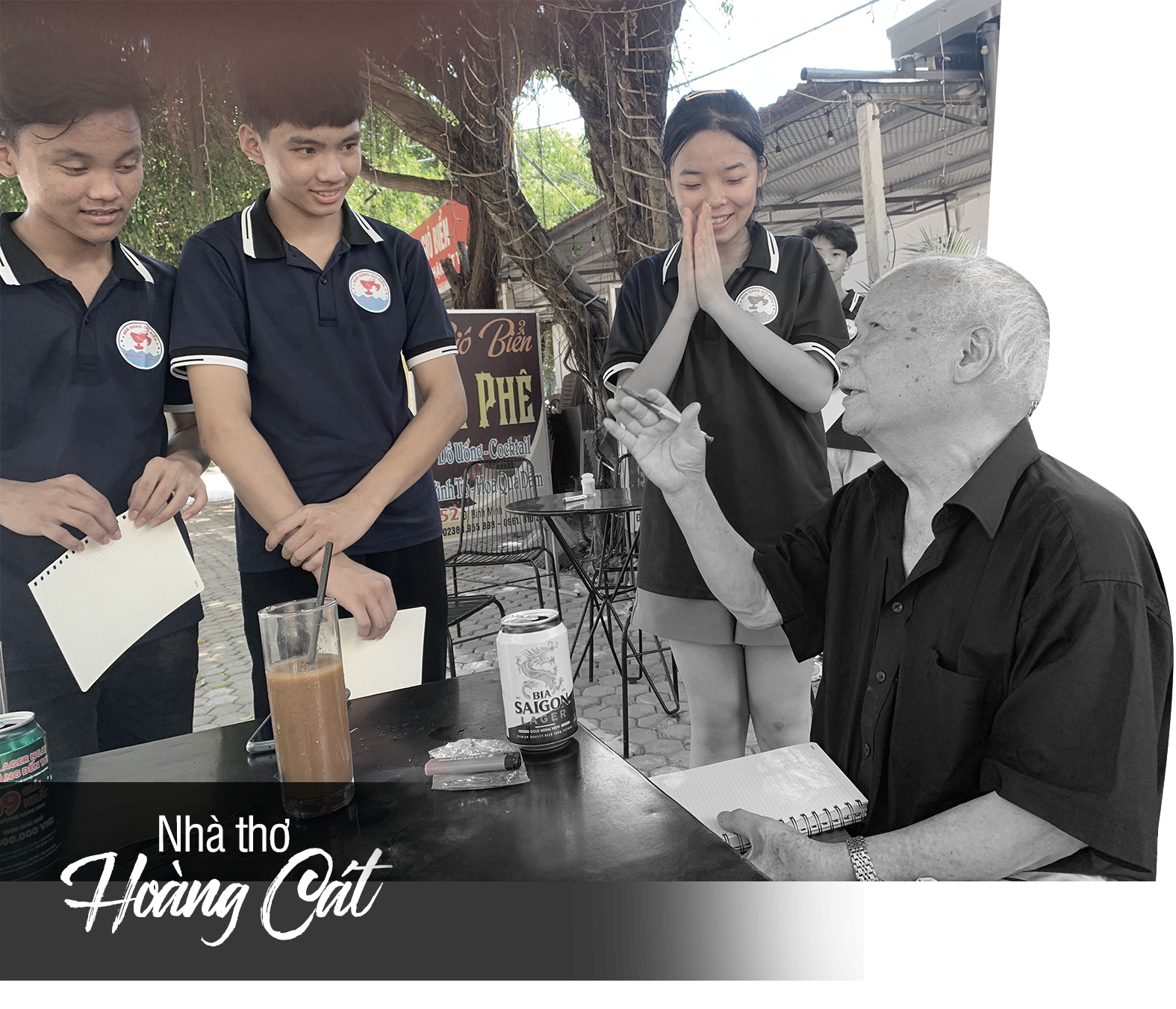
One day, I was having coffee with the poet Hoang Cat on Cua Lo beach, and he said: "Poetry must be written from the heart, from unending pain. That heart-wrenching pain is stirred by emotion, and only when that emotion reaches its peak can a poem or a verse be written."
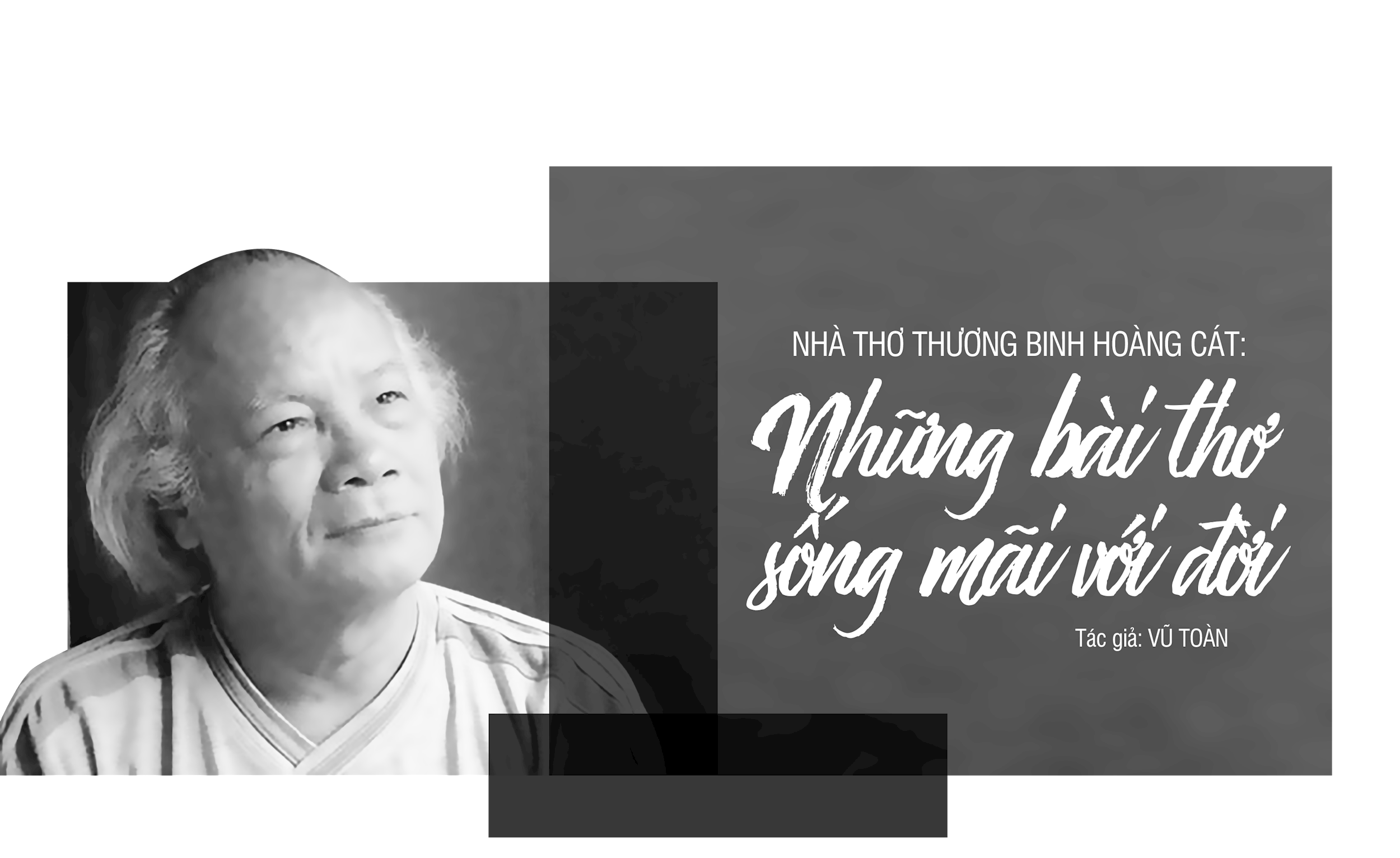
One day, while having coffee with the poet Hoang Cat on Cua Lo beach, he said:"Poetry must be written from the heart, from unceasing pain. That heart-wrenching pain is stirred by emotion, and only when that emotion reaches its peak can a verse, a poem, be written.""...
Along with the famous poem "Three Incense Sticks," the poem "My Heart Is a Tomb," included in his first poetry collection "The Persistent January" (Culture Publishing House, 1991), is enough to give us a portrait and a brand of the war veteran poet Hoang Cat.
The poem has an unusual structure, and its title is also unusual. It's unusual because the poet unexpectedly uses the vibrant red heart in his chest as a tomb to "bury" his fallen comrades who died on the battlefield. A sacred emotion arises from a suppressed poetic idea, a poetic soul that cannot help but feel a pang of pain.
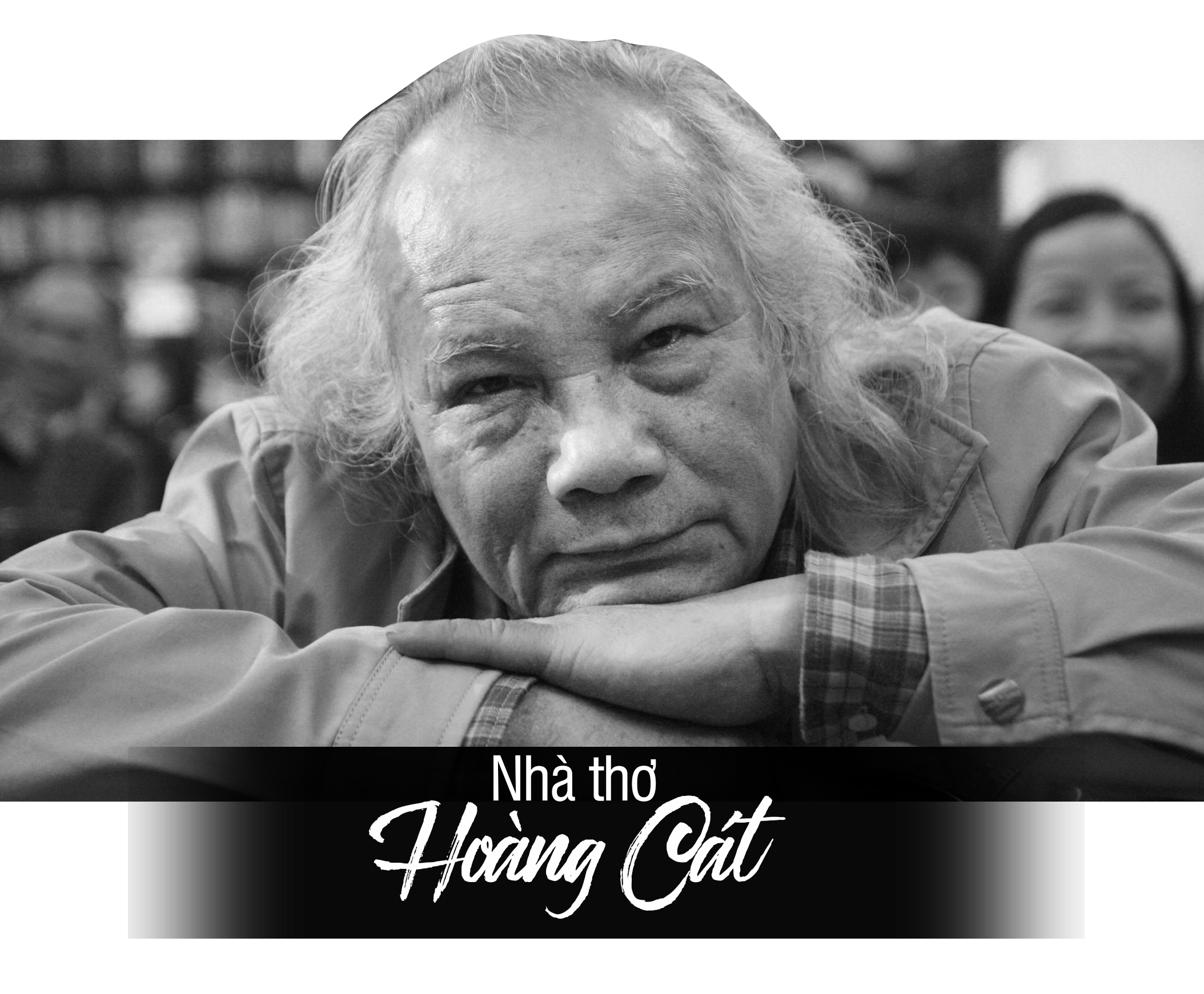
Unusualness is a rare element in poetry if the poet is untalented. That unusualness is a beautiful quality of poetry. It's what makes the poet Hoang Cat's name so renowned. One might think this quality is lofty and unattainable, but it's not; it lies within the 23 lines of the poem. Just one reading or one listening is enough to understand it completely, without needing any explanation.
My heart is a tomb
I buried my mother, who was killed by bombs.
I buried my younger brother, but I didn't find his body.
On the Southern battlefield.
My heart is a tomb
I buried Tien, from Tinh Gia, Thanh Hoa.
He went on a business trip and never came back.
I spent a whole month searching and finding rubber sandals.
My heart is a tomb
I buried and cherished my beloved younger brother.
(Linh lives in Yen Thanh, Nghe Tinh)
I lost a leg, Linh carried me on a stretcher to rescue me.
The enemy fired their machine guns, Linh was torn to shreds.
The plane dropped troops and cut Linh in two.
I have buried so many friends.
In my heart, in the midst of my youth.
Khải, Bí, Xin, Dành, Quyện, An
I can't remember everyone.
Because life still has to be lived.
I will always keep those graves warm.
Between my breasts.
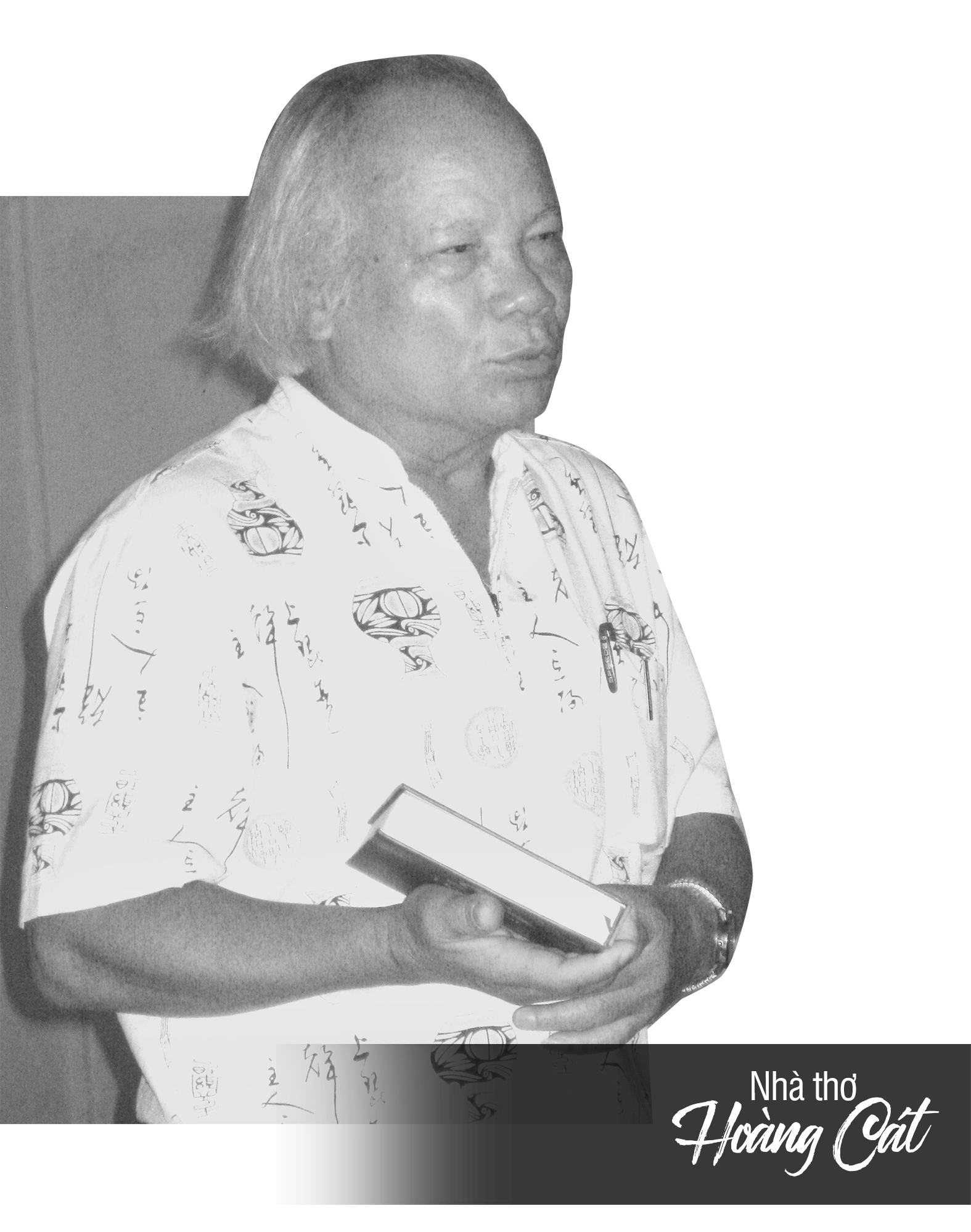
While having coffee with poet Hoang Cat on Cua Lo beach, I heard him recite this poem with tears in his eyes. He said, “I love Linh from Yen Thanh so much. I owe Linh so much. Linh died in my place. And Linh died a terrible death. Only I know about it.” It was a scene of extreme tragedy and heroism, unfolding amidst the twilight of a forest riddled with bombs and bullets during wartime…”
Poet Hoang Cat recounts the origins of this story, beginning when he left his sworn brother Xuan Dieu's house at 24 Cot Co Street in Hanoi to join the army in 1966. On the second day of Tet in 1969, he was a team leader on a special assignment to learn how to manufacture flying mines at an engineering workshop in Quang Da. After learning and testing a few mines, which worked well, he was preparing to leave when a B52 bombing raid hit the workshop. The blast crushed his left leg. In agony, he used his belt to apply a tourniquet and bandages to treat himself before paramedics arrived to take him from the heavily bombed area to the Quang Da infirmary. Three months after surgery, his left leg was amputated. Paramedics continued to move him around. One day, at 5 PM, two fellow soldiers were carrying him on a stretcher. The soldier named Linh carried him from behind, while his fellow soldier, a Ta Oi ethnic minority, carried him from the front. Suddenly, American helicopters dropped troops into the forest. A group of enemy soldiers landed right on the stretcher carrying him. At that moment, the enemy shot Linh dead on the stretcher. His fellow Ta Oi soldiers vanished. By instinct, he closed his eyes, curled up like a pangolin, and plunged into the forest, lying there waiting to die by the stream.
At this point, Hoang Cat said, "But fate didn't let me die yet." That's because, late that night, he suddenly heard the sound of "dog chasing": Chop! Chop! He knew this was the signal to find him.
They were fighting each other among the liberation army soldiers. Therefore, he cautiously "chased the dog" again: "Catch! Catch!" Just a moment later, the Ta Oi soldier who had disappeared that afternoon crawled over, turned around, and carried him away into the dense forest at night.
Regarding Linh's death – "the enemy fired in bursts, Linh was torn to shreds / Airplanes dropping troops chopped Linh in two" – there are other details that the author of this article finds difficult to write down. Perhaps it was this very pain that led the poet Hoang Cat to construct the poetic imagery from the depths of his blood-soaked heart, creating a "grave" to "bury" Linh and many other brave soldiers who fell heroically on the battlefield.
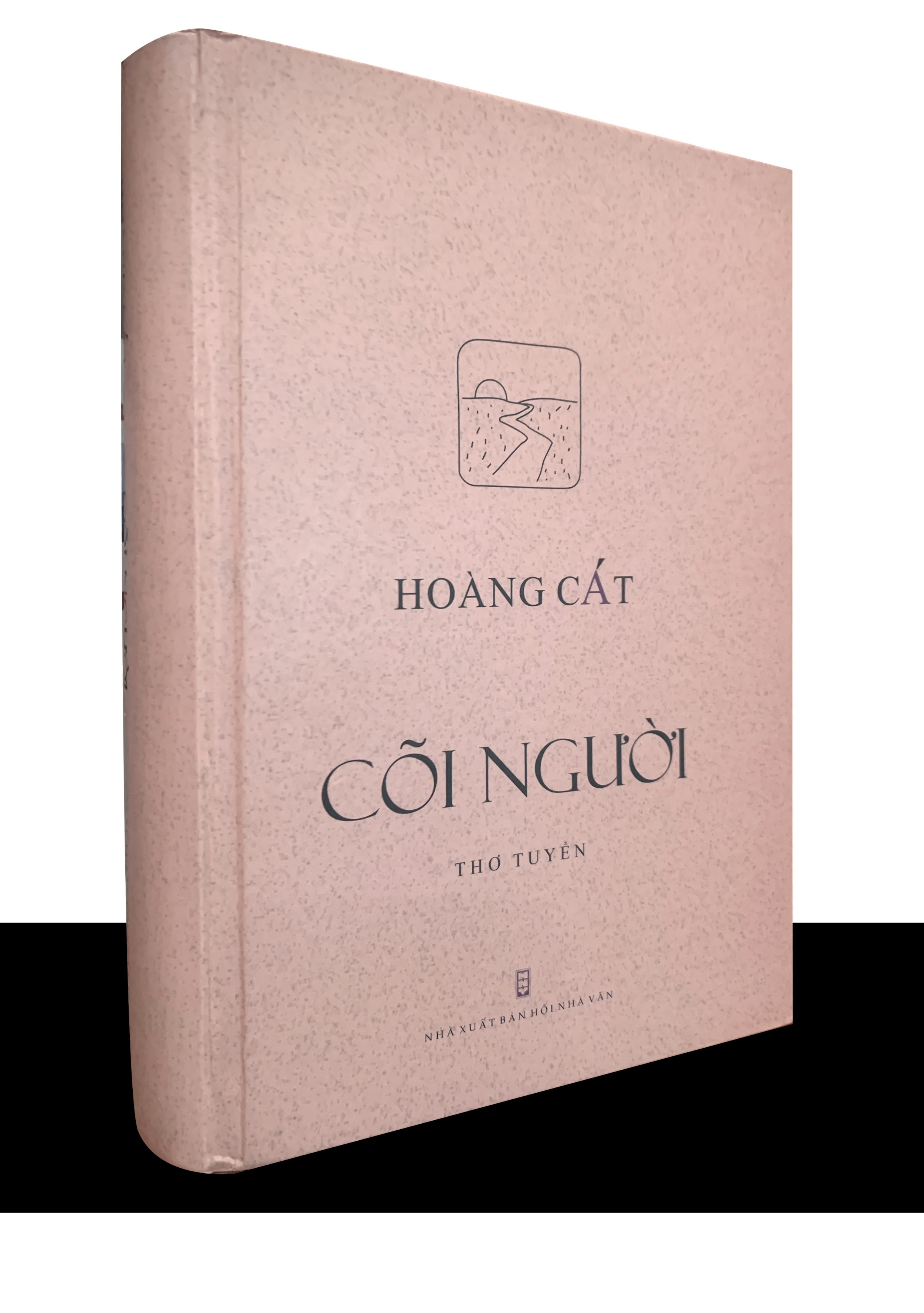
In the 12 volumes of poetry compiled into the "grand" anthology "The Human Realm" by Hoang Cat, comprising 1,000 pages (Vietnam Writers Association Publishing House, August 2023), we see that the poet does not hesitate to call himself a poet with a wealth of self-deprecating emotions. He says: "Poetry must be written from the heart and soul, from unending pain. That heart and soul pain is stirred by emotion, and only when that emotion reaches its peak can a verse or a poem be written."
Perhaps it was this very perspective that, after the "incident involving Mr. Lanh's apple tree"—a literary mishap—helped Hoang Cat write memorable poems depicting 17 different occupations, including selling tea and trading pedicab dogs to make a living on the sidewalks and flea markets of Hanoi. And strangely enough, there is a Hoang Cat who always views life with a clear, pure eye. Throughout his 1,000 poems, one sees only a soul as pure as a grain of sand.
I want to scream, I want to yell loudly.
A lovely life - she's so beautiful!
Is that so - that we will part ways forever?
Everywhere you look, you see breathtaking beauty.
(Romantic)
It was so clear that he had to hide and deceive the beggar because when he heard the beggar outside, he went into the house to find something to give, but when he searched the bin, there was no rice; when he searched the drawers, there wasn't a single penny; when he opened the rice cooker, the pot was empty, the rice was cold, and all he could hear was the buzzing of mosquitoes. Therefore:
"I had no choice but to remain silent."
Go into the kitchen and sit silently.
It's as if the house is empty.
"Hiding from and deceiving beggars."
(Hiding from and deceiving beggars)
In his later years, the poet Hoang Cat occasionally returned from Hanoi to visit his hometown in Phuc Chi village, Hung Tien commune, district.Nam DanThis is the place he left at the age of 18 to go to Hanoi to study at Hanoi Technical College No. 1 and then worked as a technical officer at the Tran Hung Dao Mechanical Factory in Hanoi. This is also where his first poem, "400," was published in the Lao Dong Newspaper in 1960: "A building with 400 window frames / Its chest proudly forms a wall to welcome the wind / Friends with the clouds, conversing with the moon and stars"... The poem that Hoang Cat happily showed to Xuan Dieu, but Xuan Dieu read it and remained silent. Huy Can (then Deputy Minister of Culture) cheerfully praised it, saying, "The poem is quite good, with many beautiful images; he hasn't praised it yet because he's jealous of you."
Poet Hoang Cat was born in 1942 in Hung Tien commune, Nam Dan district, Nghe An province. He enlisted in the army in 1965 and fought on the Tri-Regional battlefield.
He lived in Thien - Hue - Quang Nam until 1969; he was wounded and lost a leg. Poet Hoang Cat passed away on the afternoon of July 1, 2024 in Hanoi.


