
Efforts to keep interest rates low and stabilize the market.
With the goal of achieving double-digit growth, the banking sector continues to play a crucial role in the economic landscape of 2026. However, recent inflation and the increasing demand for capital as the economy enters a new growth cycle have intensified the pressure on the banking system to raise funds. Therefore, the banking sector is focusing on keeping interest rates stable, supporting businesses, and stabilizing the monetary market.
Active movement trust use du maintain momentum increase leader
In the first quarter of 2026, many banks in Nghe An province achieved relatively good growth in deposits and loans. Many commercial banks implemented preferential credit packages, directly supporting key production sectors, small and medium-sized enterprises, and rural agriculture. Inspection and verification of interest rate listing and transparency were strictly carried out, protecting borrowers' rights and maintaining a safe credit environment.
Notably, the credit structure continued to shift in a positive direction, with capital flows concentrated in the production and business sectors and priority areas, while credit to risky sectors was tightly controlled. System safety indicators continued to remain stable, with the liquidity of credit institutions ensured.
Data from the State Bank of Vietnam, Region 8, shows that as of March 31, 2026, mobilized capital in the region reached VND 594,324.6 billion, an increase of 2.6% compared to the beginning of the year. Specifically, Ha Tinh increased by 2.73%, Nghe An by 2.74%, and Quang Tri by 2.14%. Mobilization in Nghe An accounted for 54.2%; Ha Tinh by 21.8%; and Quang Tri by 24% of total mobilization in Region 8.
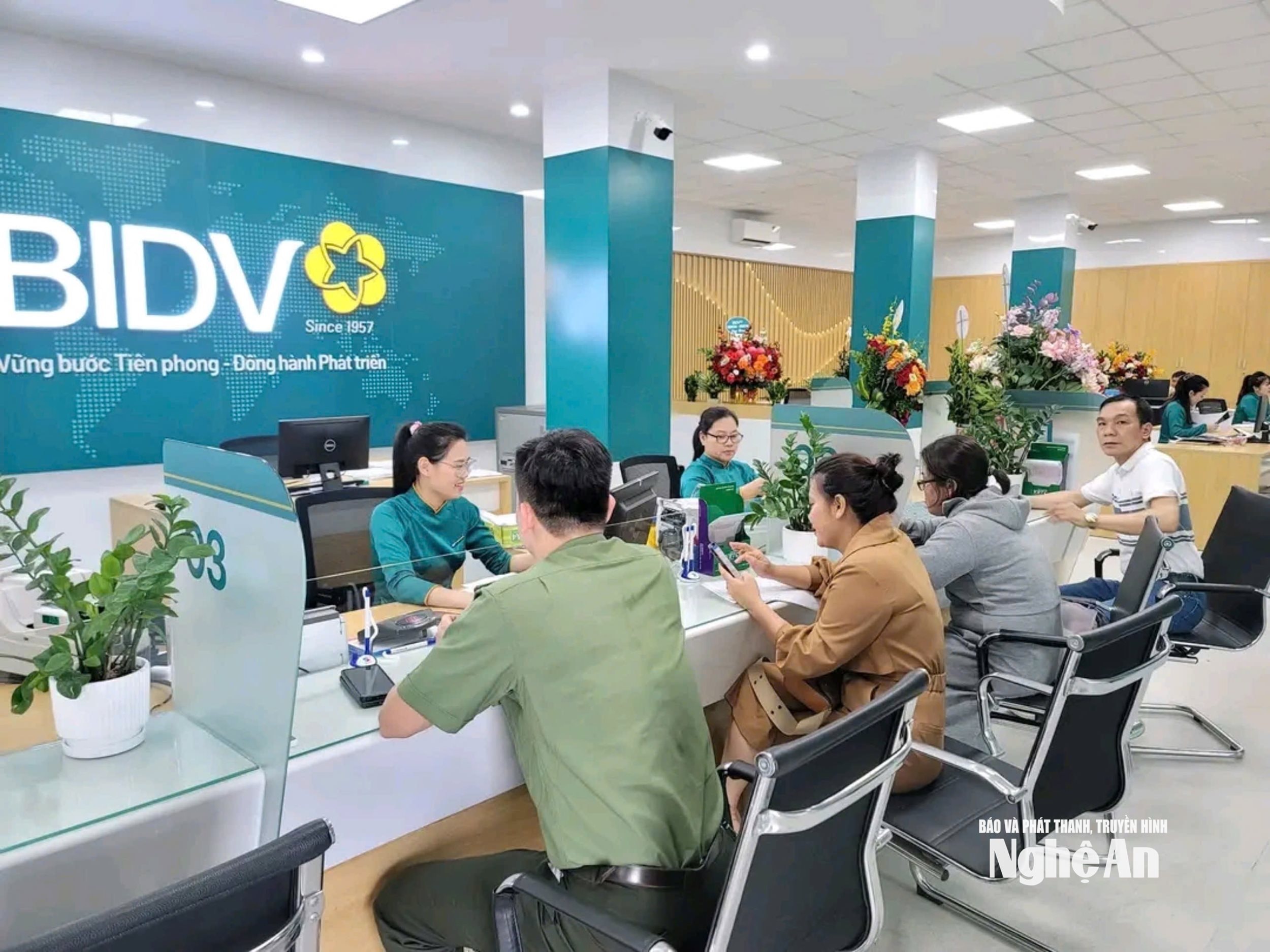
Specifically, compared to the beginning of the year, capital mobilization by the State Bank of Vietnam increased by 1.8%; by joint-stock commercial banks by 4.34%; by cooperative banks by -2.4%; by people's credit funds by -1%; and by the Social Policy Bank by 8.4%.
By March 31, 2026, the total outstanding loans of banks in the region reached VND 690,689 billion, an increase of VND 20,233 billion compared to the beginning of the year, or 3%; of which Ha Tinh increased by 4.3%, Nghe An by 3.8%, and Quang Tri by 0.3%. Outstanding loans in Nghe An accounted for 56%; Ha Tinh accounted for 19.3%; and Quang Tri accounted for 24.7% of the outstanding loans in Region 8.
Specifically, compared to the beginning of the year, outstanding loans in the state sector increased by 3.4%; in the joint-stock commercial bank sector by 2%; in the cooperative bank sector by 3%; in the people's credit fund sector by 1.5%; in the social policy bank sector by 6.6%; and in the development bank sector by -2.4%.
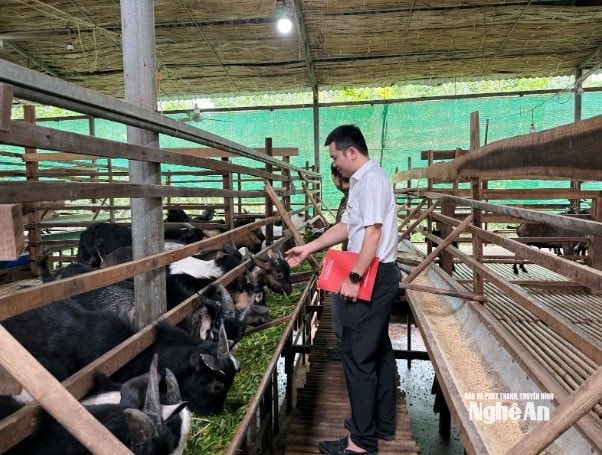
At Agribank's Tay Nghe An branch, Mr. Bui Sy Hieu, Deputy Director, stated: In the first quarter, the unit mobilized 15,544 billion VND, an increase of 3.2%. Identifying capital mobilization as a key and continuous task, the branch has focused on providing suitable products, applying flexible interest rates, and proactively exploiting large capital sources to ensure stable and sustainable growth. Simultaneously, we have strengthened customer care for potential and traditional customers and assigned targets for opening payment accounts to each staff member to attract demand deposits. We strive to achieve the annual capital growth target and a minimum growth of 7.5% by June 30, 2026, compared to the beginning of the year.
Next custom item pepper increase leader fine predetermined
However, the overall picture of the credit market shows that credit growth is much higher than deposit growth, leading to liquidity pressure on credit institutions in recent times. This has been reflected in the high deposit interest rates since the beginning of the year, and there have been deposit mobilization races.
Recently, in order to lower deposit interest rates and consequently lower lending rates to support the economy, following the directives of the Government and the Governor, many banks have joined the trend, contributing to the widespread reduction in interest rates. Notably, large banks participated early on, playing a leading role with significant adjustments. Notably, many banks not only reduced deposit interest rates but also simultaneously cut lending rates, contributing to lower capital costs for businesses and individuals.
Specifically, Agribank reduced deposit interest rates by 0.5% per year for terms of 24 months or more for individual customers. Notably, the 24-month deposit interest rate at this bank is also used as a reference to determine medium and long-term lending interest rates, thereby increasing the ripple effect of the interest rate reduction. With the reduction in the reference interest rate, Agribank simultaneously reduced lending interest rates by 0.5% per year, actively supporting individuals and businesses in accessing loans.
Similarly, Vietcombank has just adjusted down the interest rate for 24-month deposits by 0.5%/year, bringing the ceiling interest rate for deposits across the entire system to 6%/year, effective from April 13, 2026.

Following this trend, for joint-stock banks, from April 10th, a series of banks such as VPBank, SeABank, ABBank… simultaneously lowered deposit interest rates by 0.3 - 0.5% per year for terms of 6 months or more. Shortly after, BVBank and PVcomBank also joined the trend from April 11th with corresponding reductions, applicable to both individual and institutional customers. These adjustments, especially for longer terms from major banks, are seen as a positive signal to help cool down interest rates and stabilize capital costs for the entire system.
Mr. Le Thai, Director of Xuri Viet Trung Seafood By-product Processing Co., Ltd., shared: "Recently, businesses have faced difficulties due to a shortage of raw materials and price increases exceeding 30%. In the context of rising interest rates and increasing capital costs, this has somewhat affected businesses' access to credit. Currently, deposit interest rates have decreased, and lending rates have also been adjusted downwards by banks. We hope that investing in raw materials for production and export will be more favorable."
According to forecasts, lending interest rates will not decrease uniformly but will be phased out by industry group. Priority manufacturing and business sectors will be the first to benefit. Meanwhile, high-risk sectors such as real estate speculation will see a slower rate of decrease.
With a target of double-digit growth, the banking sector continues to play a crucial role in Vietnam's economic landscape in 2026. Amidst continued boost in public investment, a recovering real estate sector, and government guidance to the banking system in supporting production and business activities, credit growth is projected to reach approximately 15%. This is one of the main drivers of economic growth but also increases the pressure on the banking system to raise capital.

Sharing her thoughts on future solutions, Ms. Nguyen Thi Thu Thu, Director of the State Bank of Vietnam Region 8, said: "We will monitor the implementation of the Governor's and the Provincial People's Committee's directives on the banking sector in the area to ensure the sector's safe, sound, and efficient operation, and to provide timely support for the completion of the province's socio-economic development plan."
Simultaneously, the State Bank of Vietnam, Region 8, requires credit institutions to strictly control the growth rate of credit to sectors with potential risks, especially real estate, in order to direct capital flows into production, business, and priority sectors. The main policy focus is also on improving credit quality through controlling and resolving bad debts, strengthening risk management capacity, and limiting the 발생 of new bad debts, thereby ensuring system safety and monetary market stability.
Time spacevia,dark sudden army the in area abyss Central Winter Satisfied push price oil rough and the product product gasoline,oil increase High,price gasoline oil in water month 3 year 2026 Have children variable movement strong,cause pressure force direct next go up only number price pepper use(CPI)and author movement direct next arrive active movement product export,terrible rack and life living belong to People people.This To be original core main do only number price pepper use month 3 year 2026 increase5.42% sowith together week year 2025 andCPIjar army 3 month year 2026 increase3.8% sowith together week.Check check over broadcastlivelevel short will To be muscle team toState Bank of Vietnamsacred active expandroomtrust use,size prefer increase leader terrible cell in stage paragraph next.


