
Phần lớn tiêu cực giáo dục do báo chí phát hiện
"Most of the negative incidents we've dealt with recently were reported by the press. Discoveries of wrongdoings made proactively by the education sector are still few...", said Minister of Education and Training Pham Vu Luan.
Minister of Education and Training Pham Vu Luan has just signed document No. 2998 addressed to the chairmen of the People's Committees of provinces and centrally-administered cities regarding the direction of the 2013 high school graduation exam and university and college entrance exams.
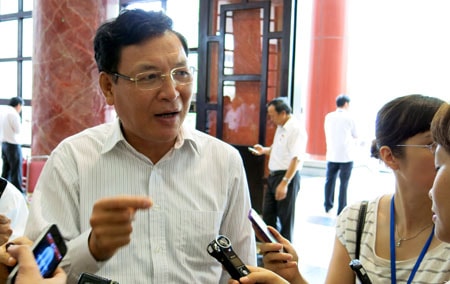 |
Minister of Education and Training Pham Vu Luan |
Tại văn bản này, Bộ trưởng Phạm Vũ Luận đề nghị chủ tịch UBND các địa phương: “Chỉ đạo các cơ quan truyền thông trao đổi kỹ với cơ quan có trách nhiệm trước khi cho đăng tải các thông tin nhạy cảm liên quan đến đề thi như lộ đề thi, đề thi có sai sót, tiêu cực trong kỳ thi… (nếu có)”.
Văn bản này đã gây phản ứng khá mạnh mẽ từ phía dư luận. Bên hành lang Quốc hội sáng 21.5, báo giới đã có cuộc trao đổi với Bộ trưởng Phạm Vũ Luận xung quanh vấn đề này. Bộ trưởng Luận giải thích:
- Không ai nói là cấm đăng tin. Các bạn phóng viên nhận được những thông tin đó thì cứ đăng, thậm chí phản ánh với trường. Bộ và chỗ nào đó nhận mà không xử lý thì cơ quan báo chí vẫn có thể đăng tiếp và đăng luôn cả những thông tin rằng: Chúng tôi đã phản ánh mà cơ quan này, ông này bà kia không xử lý thông tin những tiêu cực trong giáo dục một cách thấu đáo.
Tôi đồng tình với việc tạo nên sức ép để cả xã hội đấu tranh với chuyện tiêu cực trong giáo dục một cách sát sao. Tuy nhiên, phải thận trọng. Nghe thông tin một cái là đưa, chưa kiểm chứng. Nhất là lúc các em đang làm bài, nhỡ các em sốc không làm được bài thì sao.
Bộ Giáo dục và Đào tạo đã có thông báo chỉ đạo các cơ quan báo chí trao đổi kỹ với cơ quan có trách nhiệm trước khi đăng tin về những sai phạm, tiêu cực trong thi cử để cân nhắc cho kỹ và định hướng dư luận cho chuẩn. Vì đã có hiện tượng báo này, báo kia, nhất là các báo “mạng” nghe là đăng, xong mai xác minh lại thì sự việc không có thật. Việc này để lại hậu quả xấu.
Vì thế, chúng tôi đề nghị báo chí đưa tin, cân nhắc thận trọng, đừng nghe một cái là đưa. Chúng ta nên trao đổi kỹ, thẩm định đúng hãy đưa tin. Nên trao đổi với công an và cơ quan thanh tra về giáo dục đào tạo và phối hợp điều tra, xác minh, bóc tách để xử lý. Nếu các bạn đã cung cấp rồi và chỗ nào đó nhận tin mà ỉm đi và không xử lý, các bạn đăng lên, Bộ không bao giờ bao che. Chúng ta nên chống tiêu cực trong giáo dục một cách có trách nhiệm, chất lượng để đảm bảo môi trường thi cử cho các em học sinh.
Bộ Giáo dục và Đào tạo kiên quyết đấu tranh chống tiêu cực trong thi cử, không loại trừ cả cơ quan quản lý và thày cô giáo cũng có những chuyện đó. Mặc dù thầy cô giáo phản đối, nhưng Bộ đã họp với thày cô hiệu trưởng các trường và quyết định cho mang phương tiện ghi âm, ghi hình vào phòng thi, chỉ không được phát trực tiếp thôi.
This action aims to gather evidence of irregularities in order to decisively address this issue. At press conferences and ministerial meetings, I have consistently stated that, up to this point, all the irregularities in examinations that have been discovered have come from the press. The Ministry's agencies have not provided me with any information yet. Therefore, there is no reason not to cooperate with the press. I suggest that localities discuss this with media outlets so that they can consider cooperating and there should be no limit on the publication of information about examination irregularities in the press.
He believes that negative information requires more time to process and thoroughly assess.
- That's right, there's no need to rush when dealing with violations or handling information about violations. If there's evidence, we can process it within a day or two; it doesn't cost anything. If after a day we can't verify it anymore, then we need to learn from this experience in terms of professional practice. But immediately exposing it and shocking people wouldn't be beneficial.
This year marks the first time the education sector has implemented measures to prevent exam cheating by allowing the use of audio and video recording devices in examination rooms. How do you assess the impact of implementing this measure?
- The first impact is psychological, because all the regulations in the examination system up to now are based on the assumption that teachers and administrators are good and supervise students strictly. In reality, some teachers and administrators also violate the rules. However, the current regulations lack this supervision; they only have outer and inner layers of isolation, but these layers are not effective. In my opinion, we need to create a proper system of supervision.
Students are also a part of the school system; there may be instances of cheating and misconduct, but many students are good, honest, and willing to fight for what they can, so there's no reason why we shouldn't utilize their support. Therefore, teachers feel as if an invisible camera is watching them from above, which will inevitably compel them to be more disciplined.
On the other hand, we must encourage honest students who dare to fight against negativity. Just as we honor good students who return lost items, excel in their studies, and are well-behaved, we must also commend and protect those students who dare to confront negativity. While the number of cases caught red-handed by students may not be quantifiable, their invaluable impact on teachers who may be contemplating such behavior is significant.
He asked, "If no wrongdoing has been detected in the education sector, how should the sector itself combat corruption?"
- We are strongly pursuing this, and while it hasn't been effective yet, we've had to resort to another approach: the press uncovering and providing information to the education sector.
Minister, how has the Ministry handled the irregularities in examinations that have been reported in the press recently?
- The majority of the negative incidents we've dealt with recently were reported by the press. I've officially thanked the media outlets. There have been few instances of violations discovered proactively by the education sector. Recently, the Ministry has begun to learn from experience and investigate and handle some schools with violations. A few years ago, negative incidents in education were frequently uncovered by the press.
Many journalists provided us with audio recordings, articles, and other documents, and the press also acknowledged that the Ministry had handled the violations very seriously. The press is a powerful force serving the fight against corruption in the education sector.
What are your hopes for the upcoming university and college entrance exams now that new regulations against cheating have been issued?
- We must fight step by step, of course, because "a thick rind requires sharp nails," as when we introduce policies to combat corruption, those involved in corruption will find other ways to counter it. We must persevere; there is no immediate cure.
We must propose solutions, monitor the actual situation, and if appropriate, continue to promote them. If inappropriate, we must adjust them, and if new phenomena emerge, we must update and supplement them, especially in the context of new technologies for broadcasting images and sounds without the need for earpieces. We must proceed step by step. The struggle must not only be ethical, but also technological, technical, and responsible. We must persistently update and analyze negative situations in order to address them.
What agency has the Ministry established to allow the press and the public to report negative practices and wrongdoings in education?
- The Ministry has a permanent inspectorate for this matter. During the exam period, there is a Standing Committee for Exam Steering Committee, and the phone numbers of the agencies and individuals responsible for receiving and handling information are publicly announced. Combating corruption through bureaucracy is not advisable; information about corruption in education can be provided through official documents, letters, emails, and phone calls.
We strictly adhere to journalistic regulations by never obtaining personal information from informants and only focusing on the specific violation to address the issue, coordinating with reporters and other media outlets for further investigation.
Thank you, sir!
Theo Dân Việt - TH


