
Enhancing the effectiveness of the population and family planning work apparatus at the grassroots level.
(Baonghean.vn) - In 2018, after more than a year of shifting the focus of population work from family planning to population and development, Nghe An's population work has seen positive changes.
However, given the characteristics of a densely populated province, with uneven population quality and a high rate of third or subsequent births, the challenges facing the population sector in the coming period remain significant. Nghe An Newspaper conducted an interview with Dr. Nguyen Ba Tan, Head of the Provincial Population and Family Planning Department, regarding the key tasks of the sector in 2019.
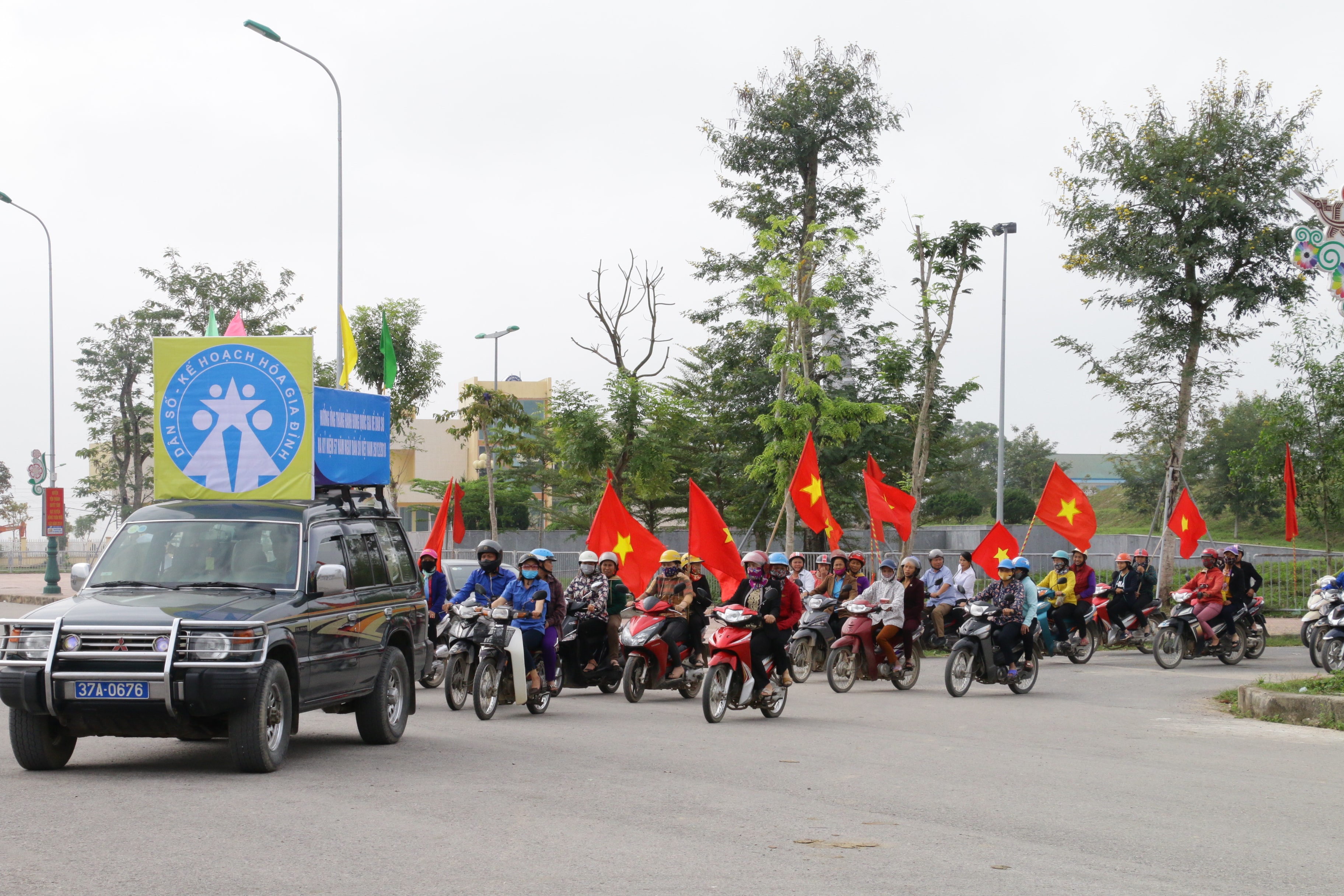 |
| Launching ceremony of the 2018 National Population Month in Yen Thanh district. Photo: My Ha. |
PV: Dr. Nguyen Ba Tan, in 2018, several adjustments to population policy had a significant impact on population work. In addition, many people, even officials and Party members, misunderstood and spread misinformation about the Party and State not restricting third or subsequent births, which greatly affected the effectiveness of propaganda and mobilization efforts to implement population and family planning policies at the grassroots level. Looking back on a year of activity, could you elaborate on this?
Doctor Nguyen Ba Tan:Decision No. 11/2018/QD-UBND amending and supplementing several articles of the Regulations issued together with Decision No. 43/2015/QD-UBND dated August 21, 2015, of the Provincial People's Committee came into effect on February 25, 2018. In the first few months of implementation, confusion arose at the grassroots level, especially in proposing forms of handling violations of population policies. In addition, population work still faces many difficulties because many families still prefer having many children and want a son to carry on the family lineage. Meanwhile, funding for targeted health programs is gradually being cut, and local resources are insufficient to support population activities.
Looking at the broader picture, although population work has shifted its focus from Population and Family Planning to Population and Development, Nghe An still has to carry out two tasks simultaneously, the first of which is striving to achieve replacement fertility. On the sectoral side, in 2018, many activities were undertaken to promote communication and advocacy to help raise awareness and change people's behavior in implementing population and family planning policies. The target groups for communication and services related to population and family planning have also been expanded, focusing on women in high-fertility age groups, adolescents, young people, and the elderly.
 |
| Leaders from the General Department of Population and Family Planning, the Department of Health, and the Sub-Department of Population and Family Planning visited a model of reproductive health counseling for students in Yen Thanh district. Photo: My Ha |
In particular, in 2018, the sector successfully organized a program to honor 30 exemplary Catholic families who had effectively implemented population policies, creating a ripple effect among the general public.
With these efforts, it is projected that the total number of births in the province in 2018 will decrease by nearly 5,000 compared to 2017. The crude birth rate is 16.15‰, a decrease of 0.3‰. The rate of contraceptive use currently reaches nearly 100% of the planned target.
PV:Nghe An province is still facing many demographic challenges, including a high birth rate, a gender imbalance that has not yet returned to normal levels, and a provincial rate of third births still above 22% (5.3% higher than in previous years). According to doctors, what are the causes of these problems, and what conditions are needed to achieve the replacement fertility rate as targeted?
Doctor Nguyen Ba Tan:Compared to other localities, Nghe An's population work faces many challenges due to its large geographical area, dense population (ranking 4th nationwide), and uneven population quality, with disparities between regions. Indicators show that the current rate of third births is high, mainly concentrated in coastal areas, special regions, and areas with favorable economic conditions.
 |
| Meeting and commending Catholic families who have done well in implementing population policies. Photo - Duc Anh |
Achieving replacement fertility levels cannot be done overnight; it requires a process. First, we need to strengthen propaganda efforts to raise public awareness and demonstrate the effectiveness of the smaller family model. Furthermore, we need to strengthen the leadership and guidance of Party committees and government at all levels, unify understanding and action, and consider population management a central task for all sectors and localities. Simultaneously, we must consolidate and expand population and family planning services to meet the needs of the people, especially in remote, disadvantaged, and difficult areas. Increased investment in population work is necessary, along with additional policies for special regions, areas with high birth rates, and areas facing significant living difficulties.
PV: In 2018, one of the most discussed issues in the Population sector was the plan to merge population centers in districts, cities, and towns. To date, how far has the merger plan progressed, and what will the Population sector "gain" and "lose" after the merger?
Doctor Nguyen Ba Tan:In implementing Resolution No. 18-NQ/TW of the 6th Plenum (12th Congress), the Nghe An Health Department has developed a plan to merge the District Population Centers and District Health Centers; the plan has now been approved by the Provincial People's Committee. However, the process of developing the plan faced many difficulties because the names, functions, tasks, organizational structure, and job positions were not yet defined. Therefore, the plan was mainly developed using purely arithmetic methods, and furthermore, when consulting with other provinces, many difficulties in the plan development process were also identified.
 |
| Communicating population policy information to people in the riverside area of Hung Nguyen district. Photo: My Ha |
Currently, the population management apparatus in Nghe An has been continuously built and strengthened over the past 10 years (since 2008) and is operating effectively. The province has 468 commune-level population officials (12 communes and towns still lack population officials); and 21 district-level population and family planning centers are operating very effectively. If mergers are carried out before the necessary conditions are met, the advantages and effective advice on population work will not be utilized. Meanwhile, Nghe An remains the 7th province with the highest birth rate in the country, with over 22% having a third child or more, a high gender imbalance at birth (115/100), and a low population quality compared to the rest of the country.
PV: Many opinions suggest that population work at the grassroots level has become well-established, with a team of collaborators and officials spread to every village and hamlet. Now, if there are changes in the structure and management agencies, how will they operate, and will it negatively impact the achievements that the Population sector has strived for over the years? What are your thoughts on this issue, Doctor?
Doctor Nguyen Ba Tan:As mentioned, the role and effectiveness of population officials at the commune and district levels are currently at their highest; governance and management are being carried out rigorously and systematically. If conditions do not allow for mergers, management will face many difficulties, and the quality and effectiveness of the work will not be high.
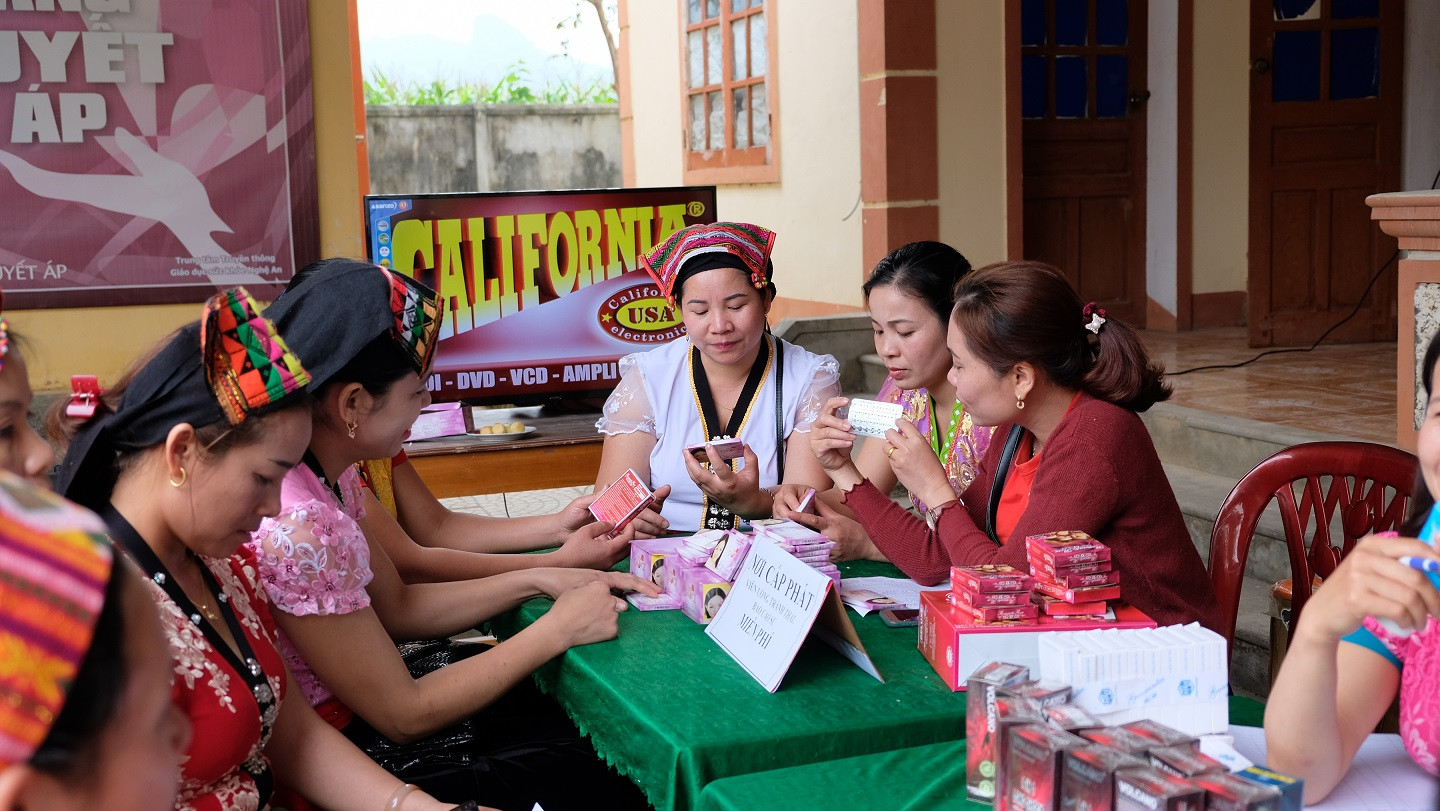 |
| Marketing of contraceptives in Con Cuong district. Photo - My Ha |
In my opinion, the most important thing at this stage is streamlining the workforce, ensuring a 10% reduction in staffing by 2021 compared to 2016. Simultaneously, we should gradually pilot some models according to the new plan, and only proceed with implementation when deemed suitable and effective. In reality, over the past nearly 30 years, the organizational structure of the health sector from the central to local levels has undergone many changes, with mergers and separations, and even now, the health sector's structure from the district to the provincial level remains unstable.
PV:Thank you, doctor!


