
The truth about the uses of pig gallstones worth billions of dong.
(Baonghean.vn) - Recently, many families have successively found pig gallstones worth billions of VND, and conflicting information about their true value and uses has caused a stir in public opinion.
According to traditional Chinese medicine texts, pig gallstones, also known as "pig sand" or "pig sand," are a type of material that accumulates over time in the digestive system of pigs, such as in the stomach, intestines, and gallbladder. Pig gallstones are characterized by their sweet taste, cooling properties, and herbal scent. They are believed to have economic and medicinal value, and are considered to have therapeutic effects on the heart and liver. Due to their long-term accumulation under unfavorable conditions, this material is considered a precious gem.
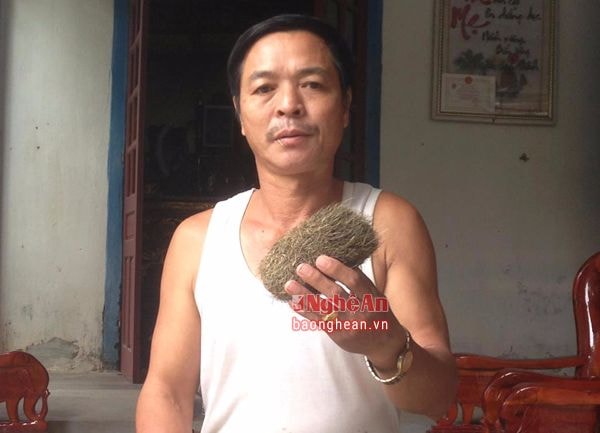 |
| Mr. Luong Van Linh from Dang Son commune (Do Luong district) holds in his hand a "strange object" believed to be a pig gallstone, which he obtained on September 14th from a sow his family has raised for the past 13 years. |
Cinnabar, when formed over a sufficiently long period, will have a mild herbal aroma, especially when exposed to air. Ancient Traditional Chinese Medicine used cinnabar to aid in the treatment of conditions such as sedation, epilepsy, anxiety, insomnia, coma, fever reduction, detoxification, expectoration, and many other ailments.
Many people believe that pig gallstones don't exist, and that it's just a baseless rumor. While pig gallstones appear to have a protective layer of hair, some people think it's just hair from pigs fighting and swallowing it, or perhaps some kind of tumor...
However, strangely, the hairs on the "pig's mantle" grow "very precisely," with all the pointed ends facing outwards. Furthermore, if this were a tumor, it would have a vascular connection to receive nutrients and grow. Instead, the "pig's mantle" is an independent mass.
Why is pig slate so expensive?
Pig gallstones are very rare because the time pigs are raised is usually short, so gallstones are infrequent or, if they are found, are immature. Therefore, the use of pig gallstones is little known, and only traditional (secret) herbalists use them in their own unique remedies.
Information about cinnabar is scarce; modern literature contains no records of it, nor have there been any large-scale studies. However, this does not mean that cinnabar is without value. Traditional Chinese medicine has extremely rare and expensive medicinal herbs that are also not documented in any published literature, such as black mugwort and agarwood.
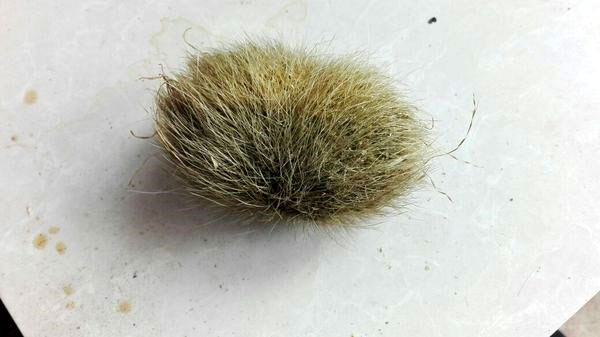 |
| Many people believe that pig gallstones are simply clumps of hair that pigs swallowed after fighting and then couldn't digest. |
According to Chinese folklore, pig bile is an extremely rare medicinal material with the effects of clearing heat, detoxifying, expelling phlegm, calming the nerves, treating insomnia, coma, epilepsy, etc. Pigs with pig bile usually have less hair, eat less, have a high body temperature, are thin, sometimes have red eyes, constantly squeal day and night, and sleep very little.
According to Professor Dang Tuan Luong, who works at the Institute of Animal Medicine at Sichuan Agricultural University (China), silt accumulates in the bodies of pigs, and this phenomenon also occurs in some other livestock. The longer the growth period, the larger the shape of the accumulated object.
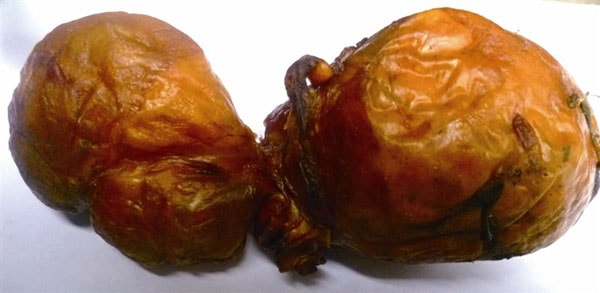 |
| "Niuhuang" refers to gallstones from cows or buffaloes. |
Many animal species also possess "jewels" that are used in medicine, such as ox gall, horse gall, monkey gall, dog gall, and some other animals also have "jewels" in their digestive system (bile, stomach, or intestines). These all have medicinal properties that can cure various diseases.
Thu Thu (compiled)
| RELATED NEWS |
|---|


