
Increased pressure on buyers of affordable homes.
The Ministry of Finance's recent proposal to increase VAT from 10% to 12% starting in 2019 will lead to an increase in real estate prices, directly impacting homebuyers, especially those with low incomes.
According to real estate experts, real estate products utilize thousands of components from various industries, from construction and business operations to services. Therefore, increasing the VAT rate from 10% to 12% effective January 1, 2019, will lead to higher input material and construction costs. This, in turn, means higher house prices and a potential decline in real estate transactions.
Real estate products in the low- and middle-income segment currently have an average price of around 1-2 billion VND. Increasing the VAT to 12% will put more pressure on consumers, especially in the affordable housing segment, as prices could increase by tens or even hundreds of millions of VND.
"Low-income earners in Nghe An have lost their chance to buy affordable housing."
Real estate experts disagree with the VAT increase because it will lead to higher house prices. |
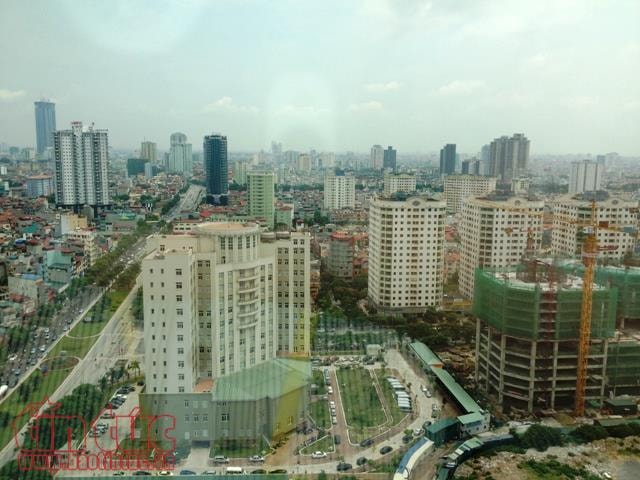
According to economist Nguyen Minh Phong, to ensure the effectiveness of social housing policies, consideration should be given to avoiding a uniform price increase. Instead, increases should be applied to high-end properties, villas, resorts, and housing for high-income earners, without affecting the rights of middle and low-income earners. For the wealthy, a price increase of tens of millions of dong is insignificant, but for the poor, it represents a significant problem.
Sharing the same view, expert Dang Hung Vo, former Deputy Minister of Natural Resources and Environment, argued that increasing taxes would raise costs for affordable housing, while the policy should ideally focus on reducing various taxes.
According to experts, the Ministry of Finance has not yet released any specific study on the impact of the tax increase on the budget, the economy, and the people. If the tax is increased from 10% to 12%, how much additional money will be added to the budget, and how will people's lives, especially the poor, be affected?
With Vietnam's current per capita income at just over $2,000 per year, increasing taxes will certainly affect the people, especially the poor who need to buy a house.
Not only does the draft law from the Ministry of Finance propose increasing VAT, but it also anticipates applying VAT to the transfer of land use rights. According to Mr. Le Hoang Chau, Chairman of the Ho Chi Minh City Real Estate Association, this is unreasonable.
According to Mr. Chau, Clause 6, Article 5 of the current VAT Law stipulates that "transfer of land use rights" is exempt from VAT, which is entirely correct to avoid double taxation, is consistent with practical realities, and is reasonable. Now, the draft law proposes applying VAT to the transfer of land use rights, which would lead to "double taxation," increasing the selling price of houses for buyers. Therefore, the Association recommends that not applying VAT to the transfer of land use rights would be more reasonable and fair.
Mr. Chau stated that the Association understands the difficulties the State faces in securing budget revenue when fulfilling its commitment to reduce taxes during the process of global economic integration, while also having to cover regular expenses and investment for development. However, VAT has a significant impact on the economy, all businesses, and the lives of the people.
Currently, among ASEAN countries, Indonesia, Laos, and Cambodia also apply a VAT rate of 10%; Singapore 7%, and Thailand 5%.
"For the real estate market, increasing the VAT to 12% will lead to an increase in the prices of raw materials, construction contracts, labor, etc., and consequently, house prices will also increase," Mr. Chau said.
According to Hoang Duong/baotintuc
| RELATED NEWS |
|---|


