
Following the referendum defeat, the Italian Prime Minister announced his resignation.
(Baonghean.vn) - On December 5th, center-left Prime Minister Matteo Renzi announced his resignation after admitting a "clear and undeniable" defeat in a referendum on the country's constitutional reforms.
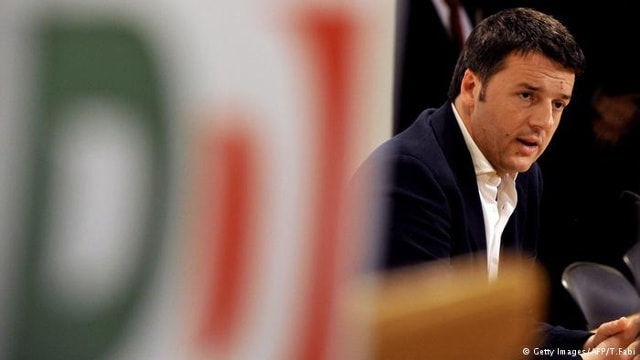 |
| The Italian Prime Minister has announced his resignation. Photo: AFP. |
Renzi told his supporters: “Tomorrow the President of the Republic of Italy will meet with me and I will submit my resignation. I take full responsibility for this defeat and declare that I lost, not you.”
The referendum defeat caused a major shock, with nearly 60% of voters choosing to say "no" to the proposed constitutional reforms.
Conversely, this is seen as a victory for nationalist and populist parties with Eurosceptic leanings, which had campaigned fiercely against Renzi and his promises to stimulate Italy's stagnant economy.
Renzi stated, "When you fail, you can't pretend nothing happened and go to bed. My government ends here, today."
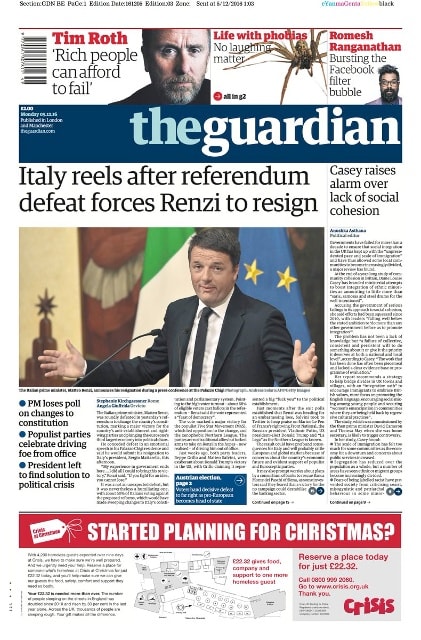 |
| News of the Italian Prime Minister's resignation made the front page of many major newspapers. Photo: Guardian. |
What's next?
The Italian president will decide what his next move is. He could piece together fragments from the current parliament to form a new government, or call a general election in which the Five Star Movement, led by actor Beppe Grillo, which opposes the ruling regime, is likely to win overwhelmingly.
The recent referendum also took place against a backdrop of growing concerns about the rapid spread of populism across Europe.
The leader of France's National Front party wrote on Twitter: "The Italians have rejected the European Union and Renzi. We must listen to their desire for freedom and their desire for protection!"
What about banks?
There are also concerns that the voting results could further destabilize the country's finances, especially given the banking system's precarious situation with bad debt.
Investors fear political turmoil, which could lead to much higher interest rates when depositing money into banks that are in urgent need of cash.
Some banks may not be able to afford that upfront cost, or may not be able to find other parties willing to provide support, leading to the prospect of the banks facing difficulties and needing government financial bailout.
Phu Binh
(According to CNN)
| RELATED NEWS |
|---|


