
Zombies are devouring Asia.
(Baonghean) - Governments and banks in Asia are continuing to disburse preferential financing packages and other forms of support to help keep struggling companies on the verge of bankruptcy – also known as “zombie” companies. They hope that these companies will become sustainable businesses once they recover their growth momentum. However, in reality, these types of companies are destroying the global economy…
For example, consider the situation currently unfolding in South Korea with Daewoo Shipbuilding & Marine Engineering Co., Ltd. On March 23rd, two state-owned banks, the Korea Development Bank and the Korea Export-Import Bank, agreed to lend the struggling shipbuilding company $2.6 billion and convert debt into equity to prevent potential default.
In a statement, the Korea Development Bank also warned that if Daewoo went bankrupt, “the losses to the country’s economy could be enormous as the entire shipbuilding industry could collapse and financial institutions could face even greater losses.”
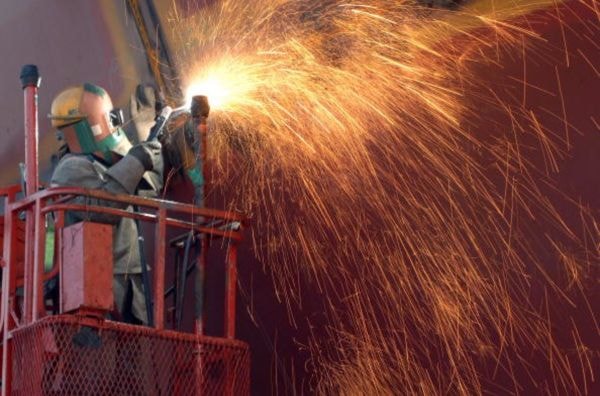 |
| Daewoo Shipyard has faced numerous difficulties recently. Photo: Bloomberg |
Indeed, Daewoo is suffering a severe crisis within the entire shipbuilding and shipping industry, heavily impacted by the slowdown in global growth and trade. Another South Korean giant, Hanjin Shipping Co., Ltd., went bankrupt last year. Daewoo's creditors are likely hoping for a financial bailout to keep the company afloat until conditions in the industry improve.
However, this is a film with a very familiar plot. Less than two years have passed since Daewoo Shipyard received its first bailout loan and a debt-to-equity swap. In fact, the company started as a dilapidated, cash-strapped shipyard that the government reluctantly placed on the Daewoo Group in 1978.
Later, when Daewoo Group collapsed following the Asian financial crisis of the late 1990s, Daewoo Shipbuilding Company was pulled from the ashes and became an independent company in 2000 with another debt converted into equity.
Certainly, forcing a company like Daewoo into bankruptcy comes with a significant cost. Workers could lose their jobs, banks could be burdened with bad debts, and so on. But maintaining these "zombie" companies would result in an even greater price to pay.
A study published in January by the Organization for Economic Cooperation and Development (OECD) suggests that "zombie companies"—defined as long-standing companies struggling to pay interest on their debt—are contributing factors to sluggish productivity growth and consequently, stagnant economic growth in developed countries.
"Zombie" companies deprive healthy businesses of opportunities to expand and create barriers to market entry for new businesses, leading to a negative impact on investment capital. For OECD countries, the study's authors link the increase in "zombie" companies compared to the period before the 2008 financial crisis to cumulative losses of 2% of investment and 0.7% of jobs.
In the context of sluggish growth and persistent unemployment due to a slow post-crisis recovery, missing out on such job-creating and investment-incentive opportunities is clearly a significant setback.
The study's authors assert: "The results show that the number of zombie companies, as well as the resources poured into them, has increased since the mid-2000s, and more and more such low-productivity companies are teetering on the brink of bankruptcy, clogging the market and stifling the growth of higher-productivity companies."
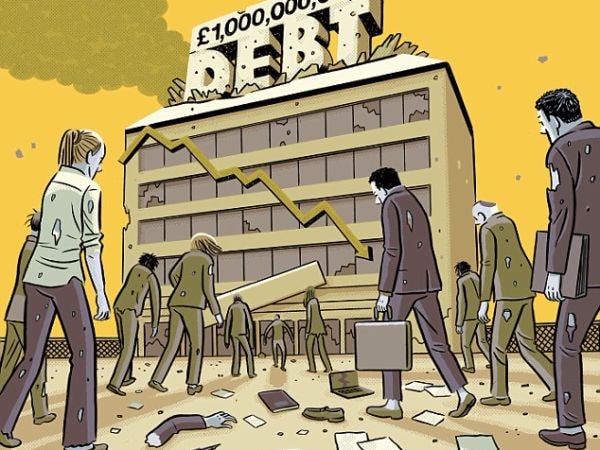 |
| "Zombie" companies are low-profit or unprofitable companies with a high risk of illiquidity. Photo: Dailymail |
Nevertheless, to some extent, policymakers still believe they can challenge the market. In China, senior government officials have repeatedly broken promises to crack down on "zombie" companies in industries with excessive factories and massive debts.
According to estimates, one of the fertile economic grounds for "zombie" companies in China is iron and steel, with actual operating capacity increasing in 2016. Although bankruptcies are still on the rise, the number of companies barely surviving remains very large.
He Fan, an economist at Renmin University in Beijing, recently estimated that about 10% of listed companies in China meet the criteria of "zombie" companies – a figure he considers modest compared to the actual scale of the problem.
According to him, by wasting money on failing businesses and, in the process, increasing the massive corporate debt, Chinese officials are salvaging this by sacrificing the growth, jobs, and innovation that the economy needs in the future.
He Fan wrote: “Zombie businesses are hindering economic recovery in China. Their existence prevents the reallocation of resources to more productive industries, leading to an uneven playing field.”
And those could be lessons for America. In the process of realizing his goal of reviving American manufacturing, President Donald Trump must be careful that government intervention does not disrupt the market, for example, by imposing high tariffs in response to the cost benefits of manufacturing goods overseas.
Factories that survive under such protection are not necessarily "zombie" businesses, but they will certainly have a similar impact on the economy. By preventing overseas production, Trump might salvage some jobs for American citizens, but he places an indirect burden on consumers through higher prices, and on shareholders through reduced corporate profits.
If that happens, it would be just like another horror movie, with one "zombie" creating even more "zombies".
Thu Giang
(According to Bloomberg)
| RELATED NEWS |
|---|


