
The unique "trade secrets" of Tien Phong carpentry village.
Tien Phong carpentry village (Xuan Hoa commune, Nam Dan district) is not yet a renowned handicraft village, nor has it received significant investment or development on a large scale. But amidst fierce market competition, what has helped this village maintain its enduring vitality and continue to thrive?
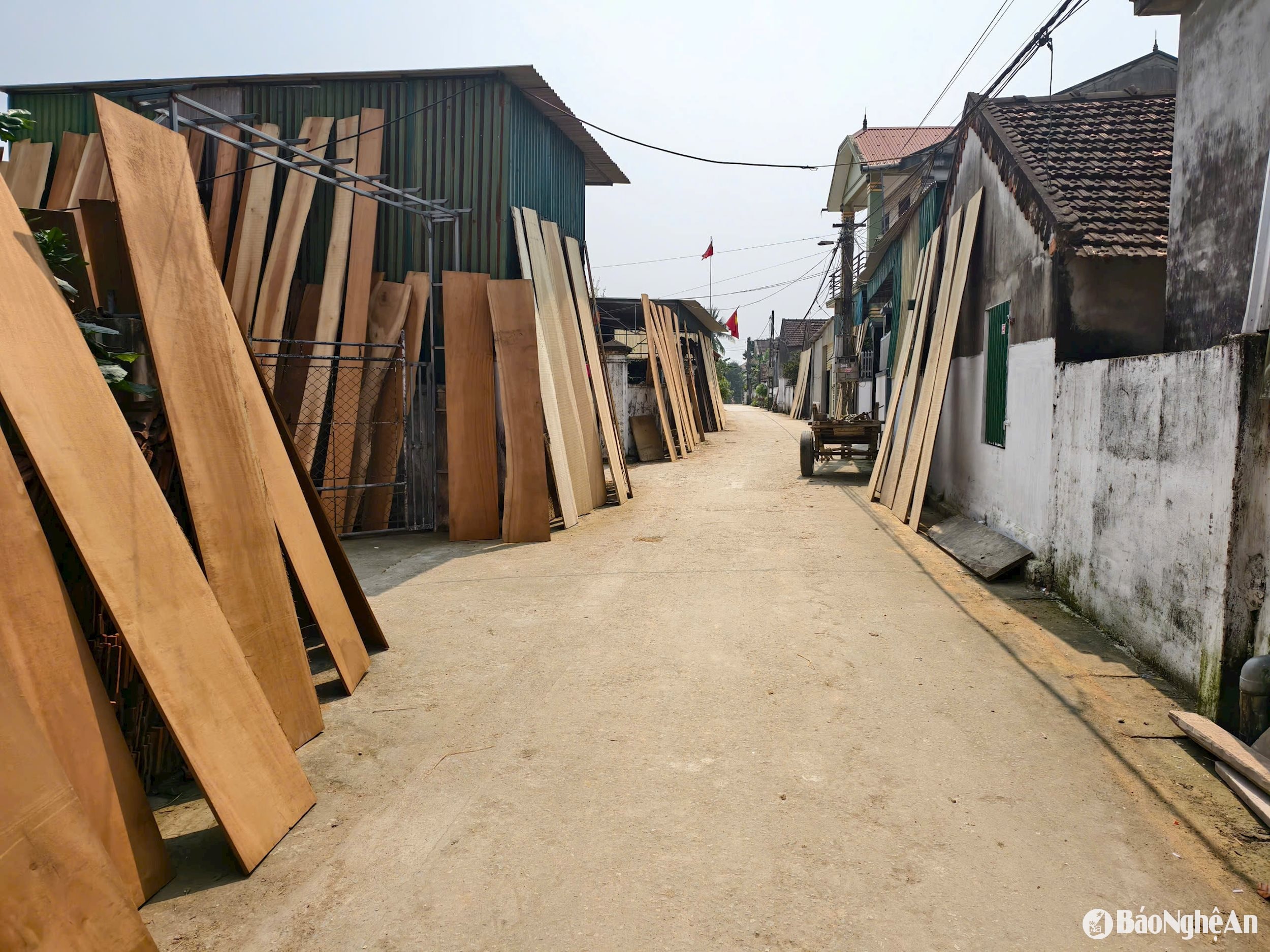
Village spirit
Mr. Nguyen Trong Chien (born in 1973), the owner of a carpentry workshop at the beginning of the village, recalled: “I started learning and practicing the trade in the 1980s from a relative. After about a year of apprenticeship, I returned to open my own workshop and continued to pass on the skills to others in the village who needed them. We taught each other and supported each other in opening workshops. Because many people in the village did the same, the number of carpenters gradually increased, becoming a close-knit community, and before we knew it, it had become a craft village.”
No one knows exactly when Tien Phong carpentry village was founded, but the older villagers all remember their childhoods filled with the sounds of hammers, planes, and chisels, and their youth imprinted on the roads lined with gleaming golden planks of wood. And above all, they grew up, matured, and developed together.
Also present during our conversation that day was Mr. Dao Van Tai (born in 1974). Originally a "student" of Mr. Chien, Mr. Tai now owns a larger workshop with more employees and more orders than his "teacher." Whether during difficult times or now, when they are more prosperous, the "teacher-student" relationship between the two workshop owners remains strong, with them meeting and visiting each other almost daily.
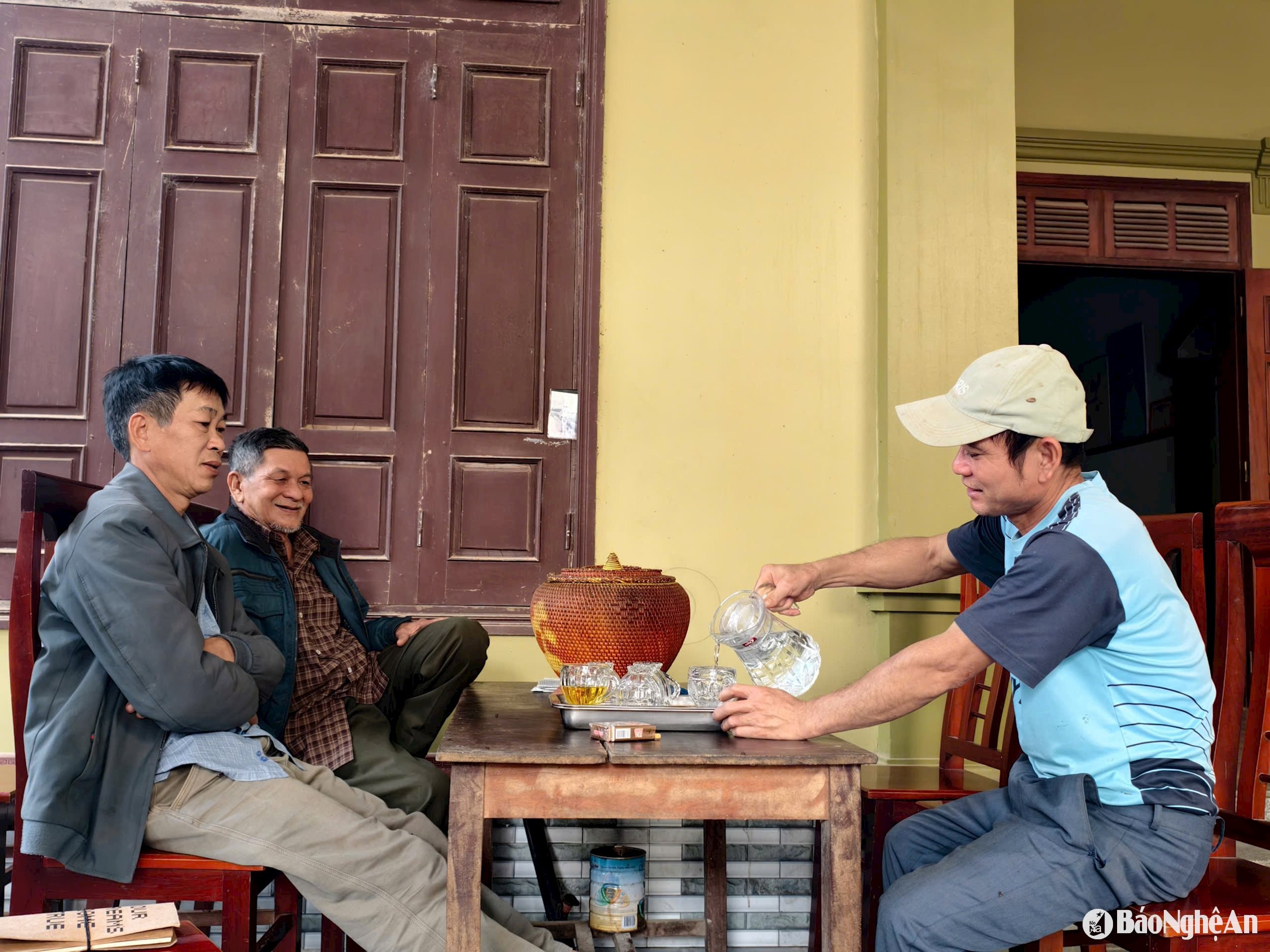
The special thing about lTien Phong NewspaperPeople are very fond of "complimenting each other." Workers from one carpentry workshop readily praise the skill and craftsmanship of another, and don't hesitate to bring customers to introduce their products and place orders. Each workshop will try to focus on perfecting a main product so that, when needed, they can share orders with each other.
Mr. Dao Van Tai shared: “I specialize in ceilings, Mr. Tai specializes in kitchen cabinets, Mr. Phuong specializes in tables and chairs… Each of us has our own strengths, and we all do our jobs properly, so customers can choose whoever they like. If you need a wooden house or a stilt house built, we will take you to the largest workshop in the village; they have many workers and are very professional!” Indeed, these carpentry workshop owners are willing to enthusiastically take customers to visit their neighbors' workshops, even though their own workshops are still busy with work.

Mr. Phan Xuan Hien, head of Tien Phong hamlet, said: “Tien Phong carpentry village began to form around the 1970s, inheriting the experience of building wooden houses from our ancestors. To date, the village has more than 40 households engaged in the craft, creating jobs for about 200 workers. In recent years, with improved living standards and high customer demand, the craft village has become increasingly prosperous, with products shipped throughout Vietnam. Many carpentry workshops have quickly updated to the latest trends, investing in modern workshops, equipment, and machinery to boost production speed.”
What's admirable is that the villagers always support each other like brothers and sisters, sharing orders to work together, never haggling, competing, or undercutting each other... As for the people who aren't carpenters, they are very supportive and understanding of the nature of this work. Painting is dusty, noisy, and has unpleasant smells, but no one complains. Even families with sick people or young children find ways to cope on their own and never use pollution as an excuse to cause trouble.”
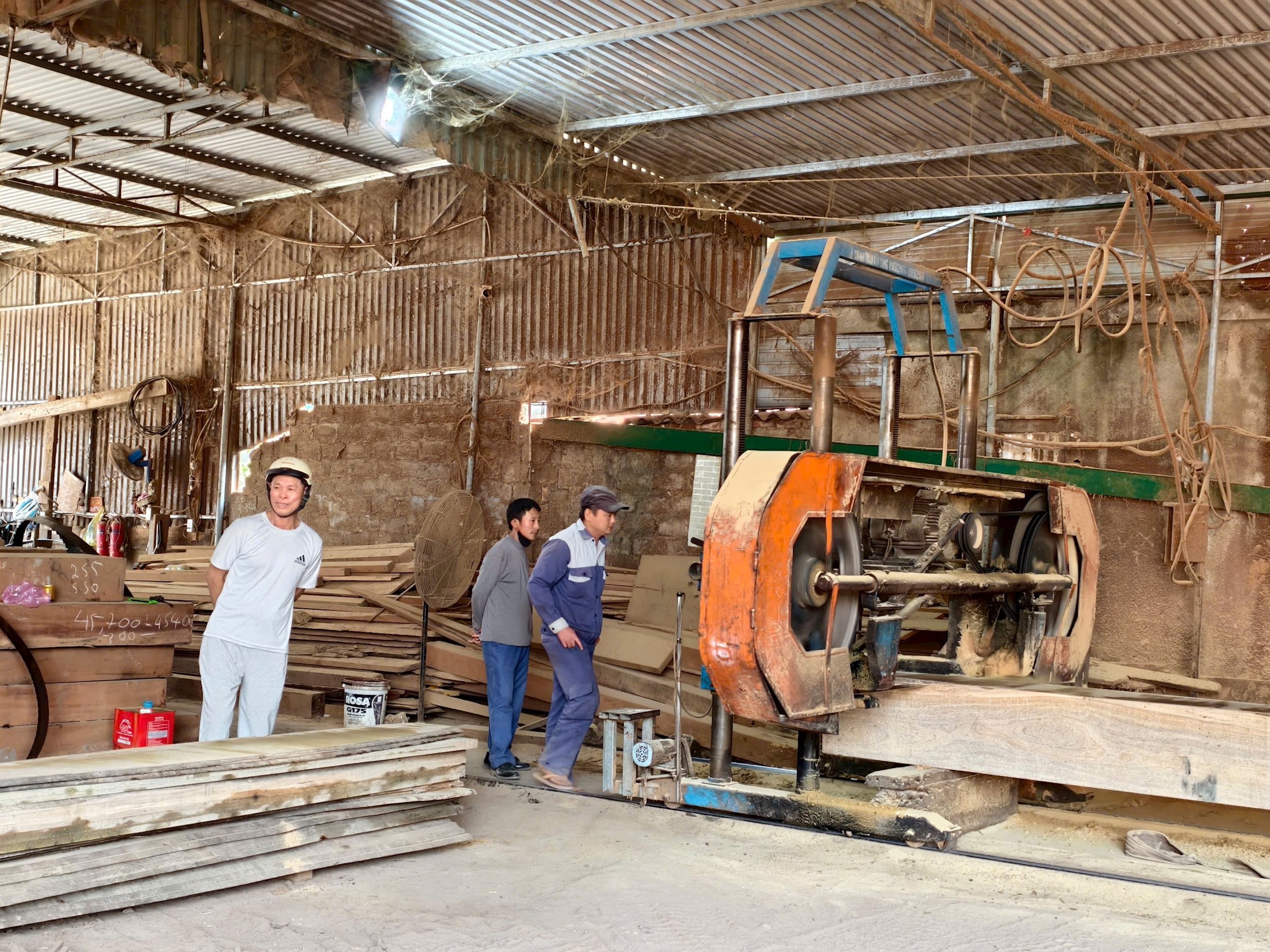
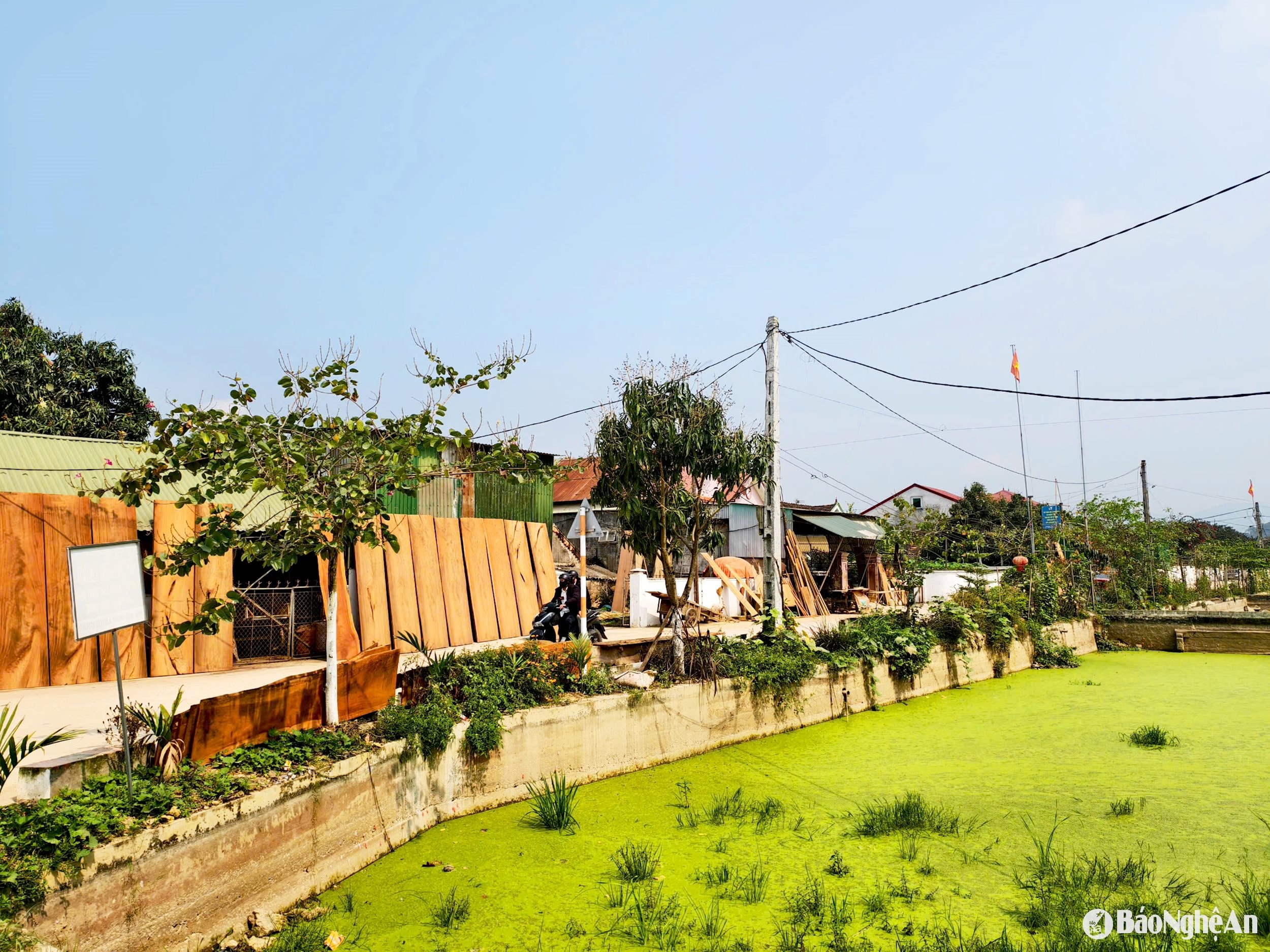
Mr. Hien also shared that since being recognized as a craft village, each household engaged in the craft has been allocated a plot of land in the village's concentrated production planning area. However, from then (2014) until now, due to various obstacles, this concentrated production area has not yet been handed over to the people. "If concentrated production is possible, with the solidarity of the people, Tien Phong carpentry village will certainly grow stronger and build a more widespread brand," Mr. Hien confidently stated.
The women of the carpentry village
In the carpentry village, alongside the leading role of the men, the role of the women is also extremely important. Quietly, these dedicated and diligent women become the spiritual support for the whole family, becoming special figures that their husbands and children are always proud to talk about.
With the same pride as any husband in the carpentry village, Mr. Dao Van Tai (born in 1974) spoke about his wife: “Besides carpentry, my family also has a garden and several acres of rice paddies, where we grow both rice and other crops. While I focus solely on carpentry and production management, my wife simultaneously takes care of cooking for the workers, managing the house, the fields, and looking after the children… When there is a lot of work, she also assists with production to ensure timely completion. She has mastered the techniques in every stage of production and can do everything, but usually only helps with tasks within her capabilities such as painting and polishing… She’s incredibly busy, working non-stop, but never complains.”
Similarly, Mr. Nguyen Trong Chien also acknowledged that his wife is an indispensable member of the family, ensuring that all tasks and relationships run smoothly and successfully.

From the perspective of a son, Mr. Dinh Xuan Tuan Anh shared: “My mother has been a carpenter since she got married. From then until now, she has simultaneously been a women's association official in the commune, helped my father run the carpentry workshop, managed the fields and gardens, and taken care of the children. Not only is she versatile, but she also excels in every role and task, always cheerful, optimistic, and full of life. And it's not just my mother; in Tien Phong village, there are many mothers and sisters who are just as capable and admirable. My generation, my wife's generation in particular, and young women in general, no longer work as carpenters alongside their husbands as before, but they always support, understand, and are ready to share in their husbands' work. I hope that tradition will be preserved forever.”
Praised and respected, the women of the carpentry village are nonetheless humble and gentle. Mrs. Nguyen Thi Phuong, one of the typical women of Tien Phong village, affirms: “Being the wife of a carpenter in this village is hard work. In the morning, we wake up early to prepare meals and tend to the fields and gardens. When the sun comes out, we go to the workshop to help our husbands work with wood. On days with little work, we sand and paint; on days with a lot of work, we saw and carry... it's all done. In the evening, when the workshop closes and the workers rest, we quickly clean up because wood dust covers the whole house... It's hard work, but everyone is passionate about their work, happily supporting their husbands, and committed to the profession; no one wants to quit!”
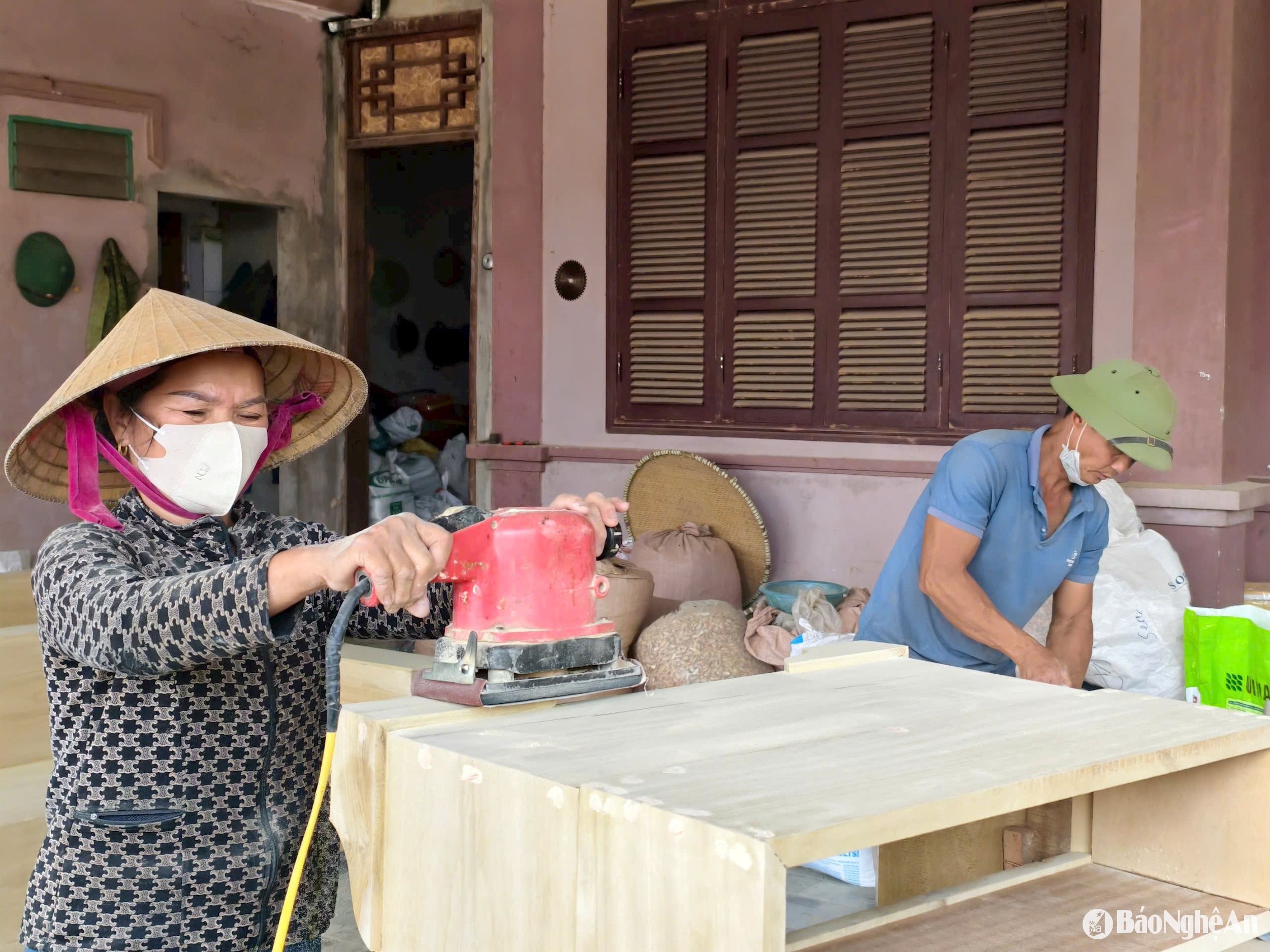
Ms. Phuong's story reflects the shared sentiments of most women in the carpentry village, whether they were born there or came from elsewhere to marry into the family. In every carpentry workshop in the village, you'll find women wearing masks, chatting animatedly, and working quickly. They are not just craftsmen; they are also a source of positive energy for the entire workshop, thanks to their cheerfulness, openness, and love for their work. Even though the job may involve occupational risks, be arduous, dusty, and may leave more wrinkles than their age suggests…
Is it perhaps family love andlove of workWhat created those special qualities?


