
"It is very common for officials today to get rich through corruption."
Analyzing the differences between the Central Party Committee's consideration of the strategic cadre building project and the time when the Resolution on cadre strategy was drafted 20 years ago, former Deputy Head of the Central Organization Department Le Quang Thuong affirmed that nowadays no minister is poor…
No minister or provincial governor is poor!
- The project to build a team of strategic-level cadres has just been submitted to the Central Committee for consideration and discussion at the ongoing 7th Conference, exactly 20 years after the implementation of Resolution No. 3 of the 8th Central Committee on "cadre strategy in the period of industrialization and modernization of the country." As someone involved in developing the regulations that have been in effect for the past 20 years, what differences do you see in this project?
- Actually, in every term, the Central Committee has a plan on personnel work, either issued by the Central Committee or the Politburo; in other words, this matter is always given attention. For the past 20 years, we haven't revised any of the content compared to the resolution – "Personnel strategy during the period of industrialization and modernization of the country" – which we drafted back then. At that time, I, along with Comrade Nguyen Phu Trong and another comrade, drafted this resolution. We conducted surveys, wrote the document, and submitted it to the Central Committee.
This plan is also more specific, detailed, and closer to current realities. We lived during the subsidy period, when social relationships were very simple, not as complicated as they are now. Therefore, this plan includes more predictions about specific situations that might arise in order to prevent them.
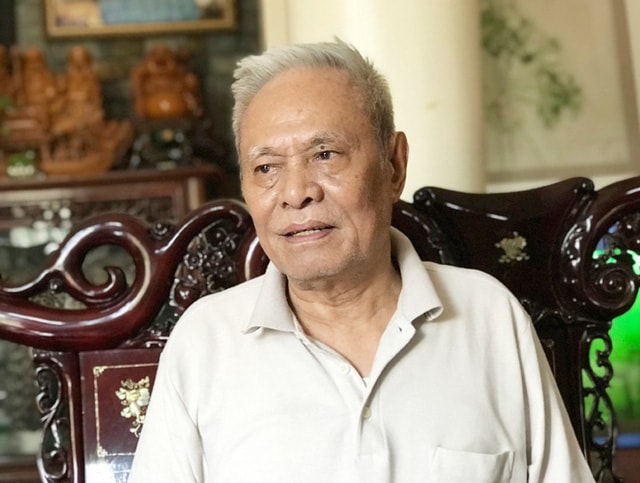 |
Mr. Le Quang Thuong - former Deputy Head of the Central Organization Department. |
- Recently, I was also invited by the leaders of the Central Organizing Committee to provide feedback on the draft plan. I have two points to note.
Firstly, in personnel management, paying attention to the strategic level is correct, but we must also pay attention to grassroots-level officials because they are the ones closest to the people; everything passes through their hands, from taxes to household registration, civil registration, security and order... If grassroots officials are not firm and enthusiastic, then no matter how many tasks are assigned from above, they will all be overlooked.
Furthermore, I suggest that we shouldn't have the broad definition of strategic-level officials as stated by the Central Organization Department (approximately 600 people), including Party Secretaries and Chairmen of Provincial People's Committees... I believe that the strategic level is the central level, the level that sets out policies and oversees their implementation. Officials like Party Secretaries and Chairmen of provinces are the intermediate level responsible for implementing those policies.
Strategic-level leadership should be limited to officials within the Politburo, the Secretariat, the Chairpersons and Vice-Chairpersons of the National Assembly, the Prime Minister and Deputy Prime Ministers, the Heads and Deputy Heads of central Party committees, and the Chairpersons of central mass organizations. These are the individuals who directly address policy issues.
- What you said partly reflects the General Secretary's remark at the opening session of the 7th Central Committee Conference: "Our cadres are numerous but not strong." Having worked in organizational affairs, what are your observations on current cadre work compared to when you were in that field?
- In every era, there have been active officials, ordinary officials, and incompetent officials. The present day is different from the past because the market mechanism is now profoundly impacting life. It makes socio-economic activities more vibrant and competitive, but it also uses money to control everything. Buying positions with money, buying seats with money… Money complicates social relationships. And those who are not upright or honest have used money to bribe and corrupt normal social relationships.
Many officials have become very rich. In the past, like me, building a house was only possible with money saved up by my family; where else would I get the money from? But now, for officials, getting rich through corruption is common, not uncommon at all. Just look at provincial governors or ministers; are any of them poor? I can confirm that none of them are poor. In our time, officials were just like ordinary people; we had nothing besides our salaries. If we had a garden and managed to develop our family's economy, we might have a little extra, but that was it.
Saying "if you're poor, no one wants to be a Minister or Provincial Chairman" is a fallacy. It must be done out of patriotism and responsibility to the people; if it's solely for the sake of getting rich, then it's a failure. In my opinion, no one immediately thinks about becoming a Provincial Chairman to get rich, but the process of working creates opportunities for them. Just keep bringing gifts and envelopes to their homes; if they don't accept them, their wives will, that's all.
The original organization didn't choose the wrong person…
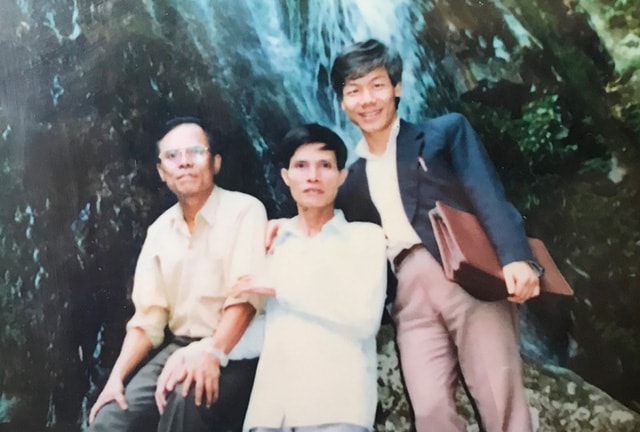 |
| Mr. Le Quang Thuong keeps a photograph of himself (left) with General Secretary Nguyen Phu Trong (right) from their time working at the Central Organization Department. |
That's correct, but first, regarding the standards for cadres, as President Ho Chi Minh said, we must focus on both "talent" and "virtue." Without "talent," one cannot be a cadre, but "virtue" is the foundation for developing "talent." The current General Secretary posed the question to the Central Committee: which is more important, "virtue" or "talent," and affirmed that both are equally important.
To do this well, we still need to educate and raise the awareness of officials and Party members, supplement legal institutions with specific regulations to control power so that officials cannot "corrupt" even if they want to, and rely on the people, mobilizing the people to participate in personnel work. Only then can we achieve this.
Our people are very close to the officials. They know everything about any official, including where they live, how they interact with the community, what their spouses and children are like, whether they own many cars, or whether many people come to give them gifts… the people know it all.
And finally, stricter management of officials is necessary to ensure the integrity of the workforce.
Construction regulations are always strict, with no shortage of layers of control, but in reality, through successive terms, we still allow many undeserving high-ranking officials to slip into the system?
Speaking of high-ranking officials, like General Phan Van Vinh, I don't think he was incompetent when he was first appointed. He was a hero, with contributions to the fight against crime and the protection of public order and security. He gradually rose through the ranks, from a professional officer to the Director of the Nam Dinh Provincial Police before being transferred to the Ministry of Public Security. That's a very good development process for an official, not a case of the organization choosing the wrong person.
However, due to developments and negative impacts from the market mechanism, people become unsettled, and once they gain power, officials become corrupt; it's not that these officials are inherently bad from birth.
In general, it must be said that the majority of our officials are good, with only a low percentage being corrupt. Negative practices and wrongdoings have always existed, but now, with the strong impact of the market economy, those who are not steadfast will inevitably falter.
There's also an opinion that we should look at the whole process, focusing primarily on achievements while overlooking shortcomings, except in cases of serious mistakes that must be addressed. That's probably true, because nowadays, most leaders live in big houses and have comfortable lives; if they do their jobs well, then they should be overlooked, shouldn't they?
Thank you, sir!


