
Two-tiered local government: Close to the people, for the people - Part 1: A harsh test
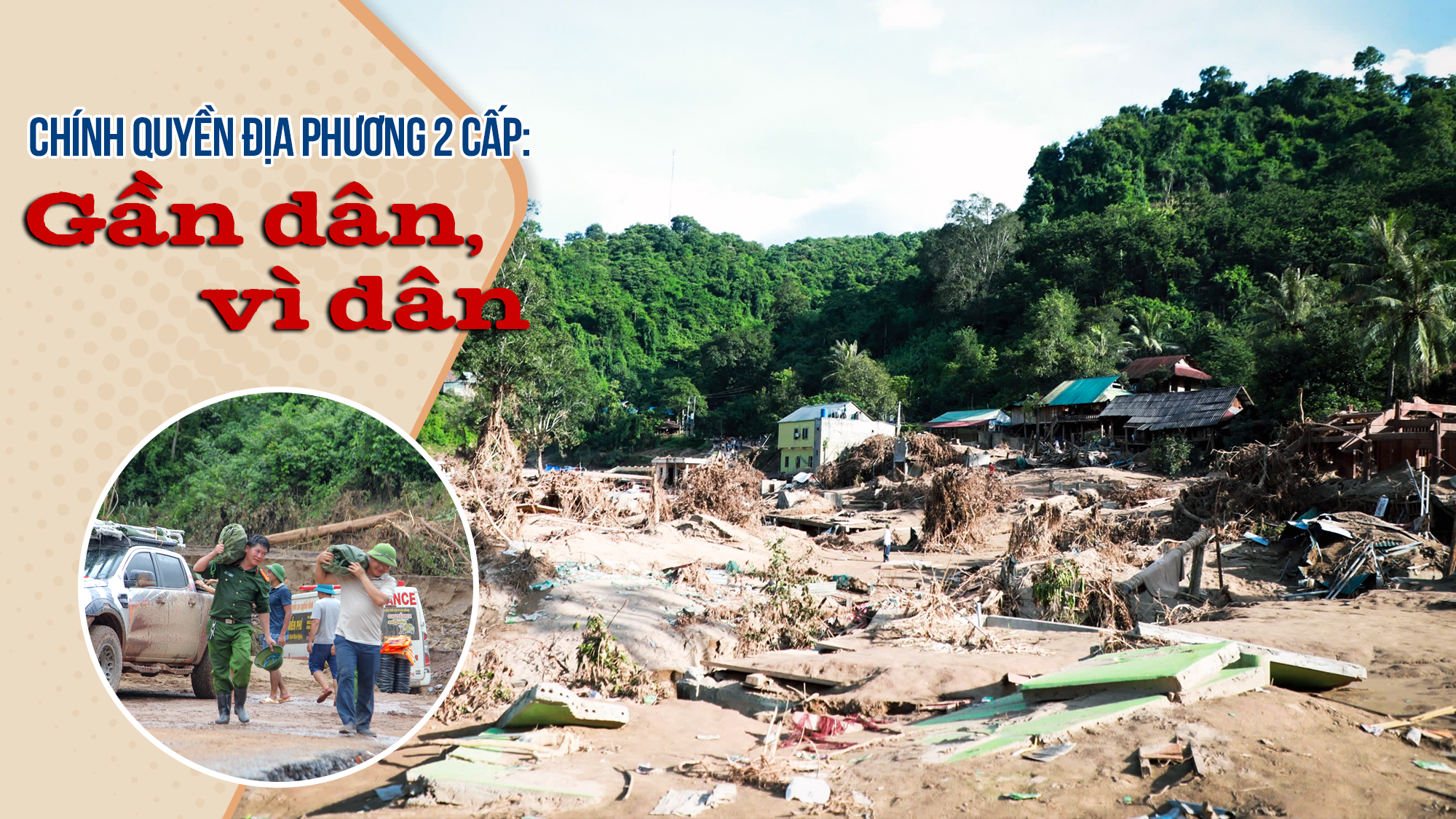
The sudden, devastating floods that swept through western Nghe An province presented an unprecedented test for the local government apparatus, which had just begun its transformation. As floodwaters washed away houses, cut off roads, and isolated many communes, the commune-level authorities, having just assumed full local governance functions, immediately joined the front lines, working alongside the people to build "flood-resistant fortresses."

Political and Party Building Reporting TeamAugust 17, 2025
The sudden, devastating floods that swept through western Nghe An province presented an unprecedented test for the local government apparatus that had just undergone a transformation. As floodwaters washed away houses, cut off roads, and isolated many communes, the commune-level authorities, having just assumed full local governance functions, immediately joined the front lines, working alongside the people to build "flood-resistant fortresses." It was in this difficult time that the administrative capacity, the spirit of service to the people, and the resilience of the new system were vividly and authentically tested.

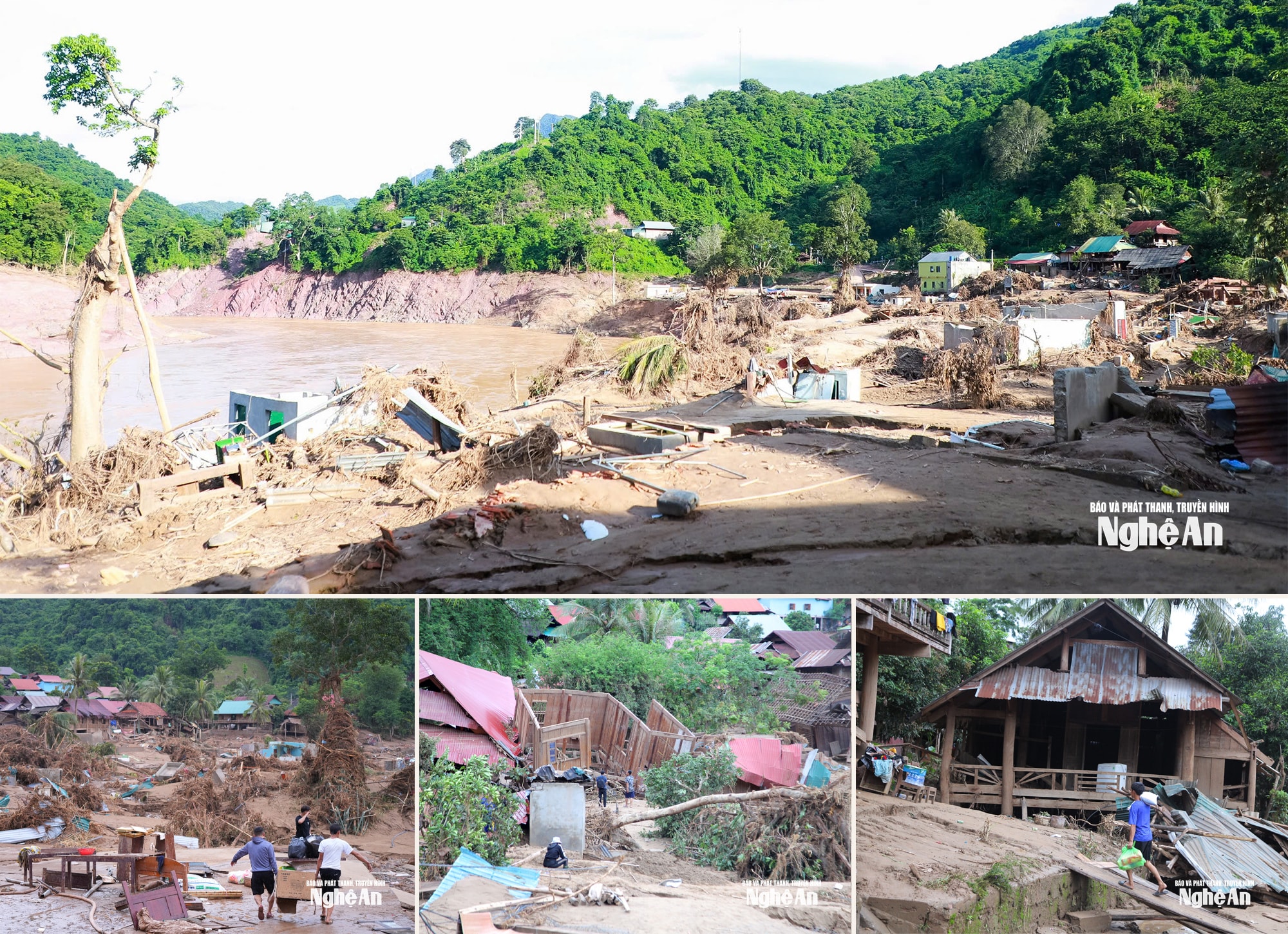
After the devastating flash flood on the night of July 22nd, we returned to Xieng Tam, once the most beautiful village in My Ly commune, now a desolate wasteland. Houses were gone, the school was gone, and even the familiar red dirt roads had vanished under layers upon layers of mud and earth. Everything the villagers had painstakingly accumulated over many years was swept away in less than an hour. The ferocious floodwaters of the Nam Non River, like a monster, crashed down on the village in the pitch-black darkness.
"Now, looking around, I can't even recognize my own house anymore," said Vi Thanh Ha, one of the residents of Xieng Tam whose entire house was swept away by the flood, bursting into tears. Her tears mingled with the red mud smeared on her face, which had been devoid of sleep for several nights.
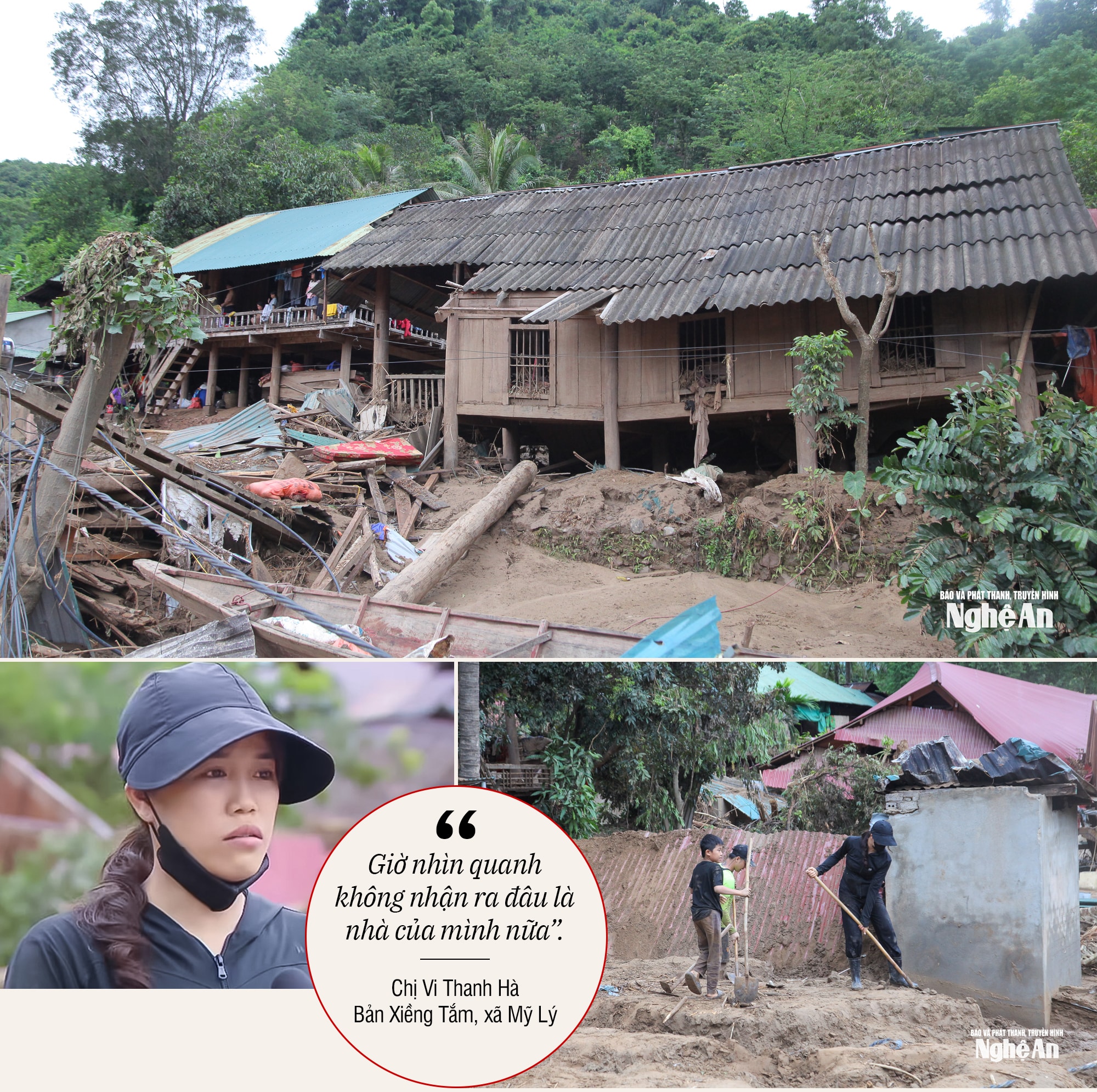
Statistics from the My Ly Commune People's Committee indicate that the flood swept away 220 houses, severely flooded another 130, partially flooded 59, and caused landslides in 27. The Yen Hoa suspension bridge, connecting the villages to the commune center, was also washed away. National Highway 16, a vital route, suffered landslides and numerous sections were broken. The entire area was completely isolated from the outside world for days. Yet, amidst the immense loss, the most frequently mentioned detail is zero: there were no casualties.
Luong Van Bay, Deputy Secretary of the Party Committee and Chairman of the People's Committee of My Ly commune, recalled: “We closely monitored the weather developments and organized evacuations immediately that night. The police, border guards, militia, and commune officials all went into the villages to relocate and help people escape the disaster in a timely manner.” Operating the new commune-level government apparatus for the first time, My Ly commune – a mountainous border area still facing many difficulties – acted promptly on the night of July 22nd. From organizing evacuations to coordinating forces according to the "four on-the-spot" principle (on-the-spot forces, command, logistics, and means) was a fierce and challenging test, but the commune overcame it.

Thanks to the timely guidance of the authorities at both levels, many communes in Nghe An have effectively implemented the "four on-the-spot" principle in disaster prevention and control. Local authorities have proactively created Zalo and Facebook groups linked to the names of communes and villages to quickly and easily transmit information in both directions.
In Muong Xen commune, when the hydropower plants announced flood releases, the commune's People's Committee immediately posted warnings on the "Muong Xen Smarthub" page with vivid and easy-to-understand information and illustrations. At the same time, commune leaders made direct video calls to village heads, reminding residents to evacuate. Thanks to this, dozens of households along the Nam Mo River were able to relocate safely in time.
Mr. Vi Van Hung from Hoa Son village shared: “Now that we have specific information and images of water levels, people understand the risks and can proactively seek shelter. The government is closer to the people, serving the people, which helps to respond to natural disasters much faster and more effectively.”
It can be said that the recent floods caused by the remnants of Typhoon No. 3 were a harsh and historic test for Nghe An: At 9 PM on July 22, 2025, the water flow into the upstream of the Ban Ve hydropower reservoir on the Lam River reached 9,543 m³/s, nearly touching the peak flood threshold of 10,500 m³/s (corresponding to a frequency of 0.02%, or once every 5,000 years). In reality, the peak flood recorded at the Ban Ve hydropower plant reached 12,800 m³/s, far exceeding the forecast, demonstrating the unusual and severe nature of this flood.

In response to this situation, Nghe An province quickly activated response plans according to two scenarios: Scenario 1 - relocating people to the peak flood level of 2018; Scenario 2 - relocating people to a safer level than the 2018 benchmark. Every step of the relocation was carefully calculated, from compiling statistics on the number of households needing evacuation, selecting temporary shelters, to arranging safe food and accommodation... ensuring that no one would be left homeless, hungry, or cold during the flood.
In the spirit of "proactive prevention, timely response, and prompt and effective recovery," Nghe An province promptly issued Urgent Notice No. 604/TB-UBND, requesting the mobilization of maximum forces and resources to support people's evacuation and protect lives and property. Just before the rainy season, the Provincial People's Committee directed localities to urgently review and update disaster prevention and control plans according to the "four on-the-spot" principle, especially focusing on relocating people in areas at high risk of landslides and flooding. This early, proactive, and practical preparation helped Nghe An significantly minimize damage. Compared to the scale and destructiveness of the flood, considered a historic "great flood," this result clearly demonstrates the effectiveness of the leadership and response of the two levels of local government in Nghe An, especially the role of the commune level.
.jpg)
Assessing the effectiveness of the two-tiered local government's operation during the recent natural disaster, the Deputy Secretary of the Provincial Party Committee and Chairman of the Provincial People's Committee, Le Hong Vinh, emphasized: "Local authorities have demonstrated thoroughness, responsibility, closeness to the local area and the people, and proactiveness, without relying on higher levels, in responding to the situations during the recent floods."
The remnants of Typhoon No. 3 caused a major flood, directly impacting 35 out of 130 communes and wards in Nghe An province, resulting in serious damage to property and infrastructure. As of 10:00 AM on August 2nd, estimated damages reached 3,635 billion VND; including 450 houses completely collapsed, buried, or swept away; 5,426 houses deeply flooded, with property inside damaged or lost after the water receded; and an additional 1,601 houses damaged by floodwaters and landslides… causing estimated damages of 1,545 billion VND.


During the days of torrential rains and floods, when the Lam River rose and flowed fiercely, many commune officials in Nghe An had to wipe away tears, leaving behind their flooded homes to stay with the people and maintain their territory. They truly lived up to their role as the last "gatekeepers" between the people and the natural disaster.
One of them is Comrade Luong Ba Vin - Secretary of the Party Committee and Chairman of the People's Council of Yen Hoa commune, a mountainous area. His house is in Tuong Duong commune, one of the most severely flooded areas on the night of July 22nd. When the floodwaters rose and submerged his house, his wife and children had to frantically carry each other to escape to the hills in the pouring rain. Meanwhile, Comrade Vin was still on duty at the Yen Hoa commune headquarters, more than 45 km from his home, to direct the flood response.
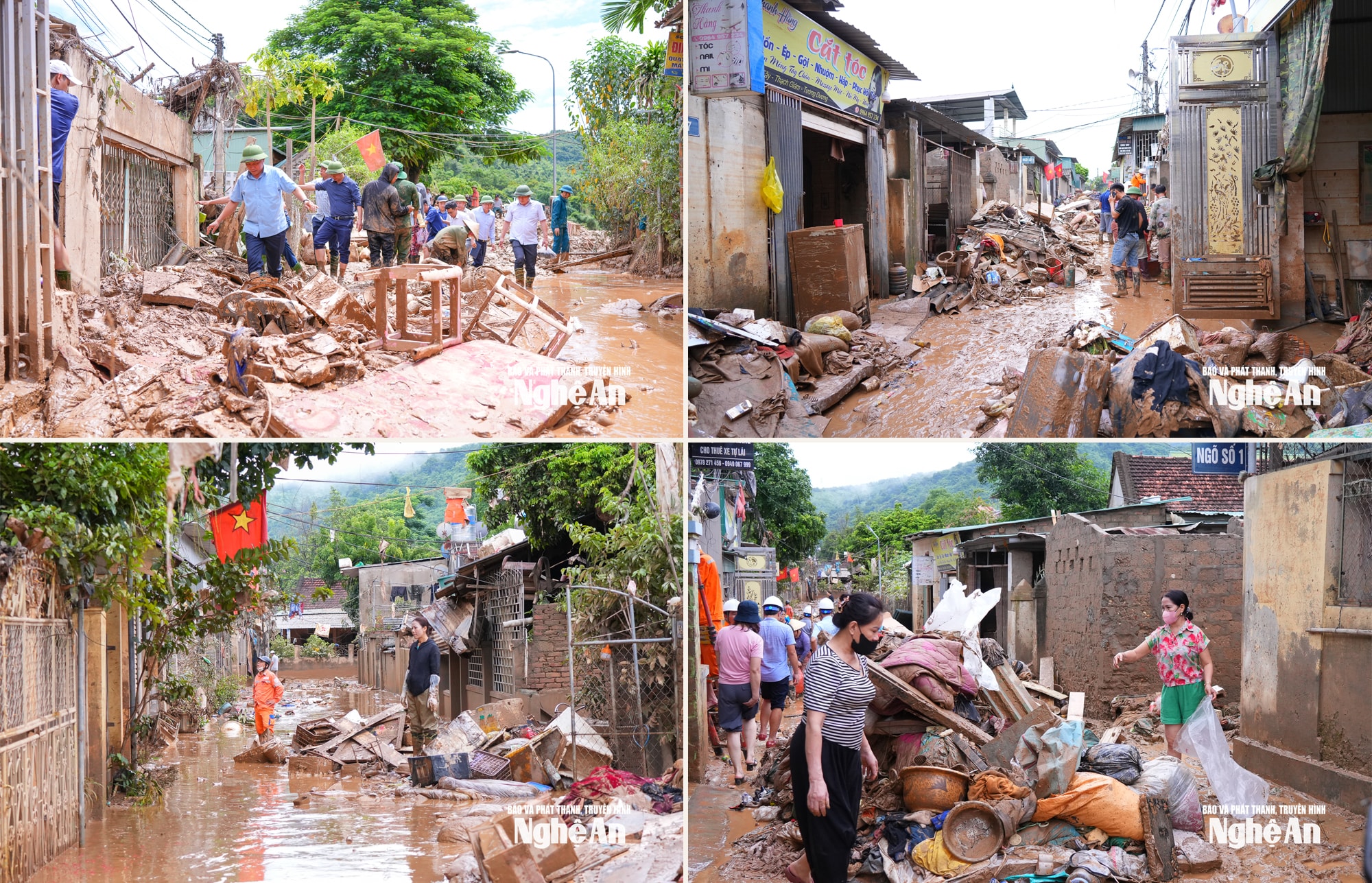
“It wasn’t just my house. Eight other officials from Yen Hoa commune whose houses were in Tuong Duong commune were also flooded. But at that time, we only had one choice: to stay with the people,” Comrade Vin shared. Despite his burning anxiety, the commune secretary and other officials continued to inspect vulnerable areas, assist in evacuating residents, and assess the damage. It wasn’t until the morning of July 24th, when the situation in the commune had basically stabilized, that he sent a message reporting the situation and requesting permission from the Provincial Party Secretary to be absent from the provincial meeting to go home and take care of his family.
“Reporting to the Provincial Party Secretary! The flood and storm prevention situation in Yen Hoa commune is basically stable. There has been a complete power outage since the evening of July 22, 2025. However, the homes of the Party Secretary and Deputy Party Secretaries in Tuong Duong commune were completely flooded from 2 AM on July 23rd. Their wives and children fled during the heavy rain and power outage. Currently, the water has receded from their homes, but they are still unable to return due to the mud. With the Provincial Party Secretary's permission, I will try to walk back home this morning to save my family…”
.jpg)
Comrade Luong Ba Vin said: "Immediately after receiving that message, the Provincial Party Secretary called to share his condolences and offer encouragement." Ten days after the flood, the thick layer of mud on Comrade Luong Ba Vin's family home was finally cleared. Most of the family's belongings were damaged from being submerged in floodwater for so long.
In Muong Xen commune, during that historic night of heavy rain, there were also officials who selflessly risked their lives to save people from the clutches of death. Comrade Vi Van Hieu, a member of the Standing Committee of the Party Committee and Commander of the Commune's Military Command, is a prime example. Around 9 PM on July 22nd, while the center of Muong Xen commune was submerged in water, he received an urgent call from a resident: "Someone is trapped in Block 5, the water is rising very quickly!"
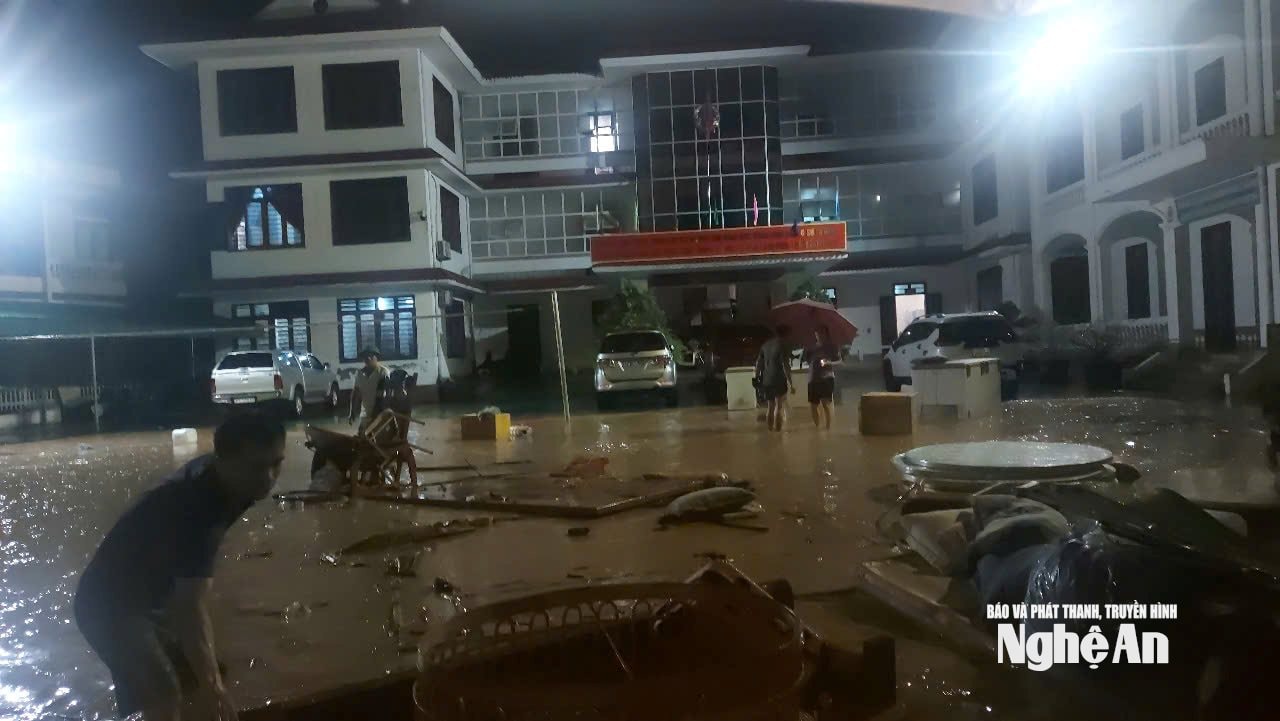
Without a moment's hesitation, he plunged into the pouring rain with his teammates. Upon arrival, the house where five people (two women and three men) were sheltering had become an isolated "island" amidst the raging floodwaters. No vehicle could safely reach them. In that life-or-death moment, Comrade Hieu decided to tie a rope around himself, asking his teammates to hold the end of the rope tightly, and then plunged himself into the fierce current.
Upon reaching the house, he calmly reassured each person, then one by one led all five out of the floodwaters. After nearly 30 minutes of struggling with the strong current, mud, and rocks, all were rescued safely. When they reached the shore, Comrade Hieu's leg was covered in blood, with a deep cut from hitting a sharp object submerged in the water. "At that moment, I couldn't think of anything else but saving people as quickly as possible. Human lives are paramount," Comrade Hieu shared simply, as is typical of soldiers. One of the five rescued victims, Bui Thi Que, emotionally recalled: "At that time, we were panicking, thinking we wouldn't make it. Seeing the officers rushing into the water, we felt like we were reborn..."
At 2:00 AM on July 23, 2025, Huu Kiem commune was engulfed in torrential rain. The Nam Mo River surged, the floodwaters rising at an unprecedented speed. In Khe Ty village, many houses were submerged, and cries for help echoed through the night. The urgent call from the family of Pham Van Hoi and Tran Thi Thuy brought tears to everyone's eyes: "All seven members of our family are trapped; the water is about to flood in!"
Faced with the urgent situation, the village head, Deputy Secretary of the Party Branch Cụt Văn Đoàn, along with two Party members, Ốc Văn Tuấn and Vi Văn Nghĩa, decided to paddle their boat into the raging current to rescue the villagers. “If we wait for the rescue team, it might be too late. We have to go!” Đoàn said.
In the flickering light of the flashlight, the small boat navigated the raging waters, approaching the deeply flooded house. Each person was safely helped down amidst cries of relief and sighs of relief. "If it weren't for you guys, my whole family probably wouldn't have seen the sun rise this morning," Thuy said emotionally.
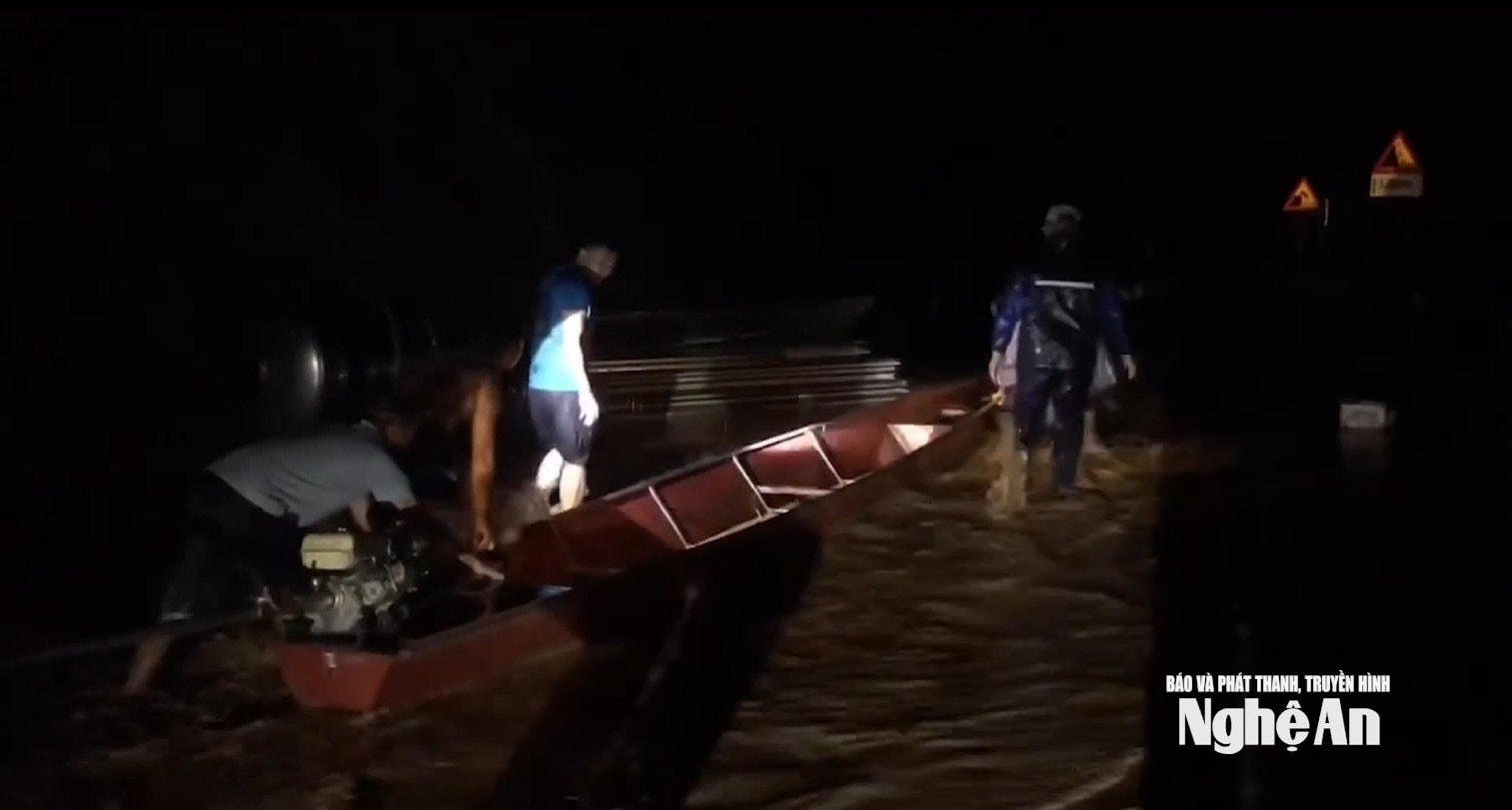
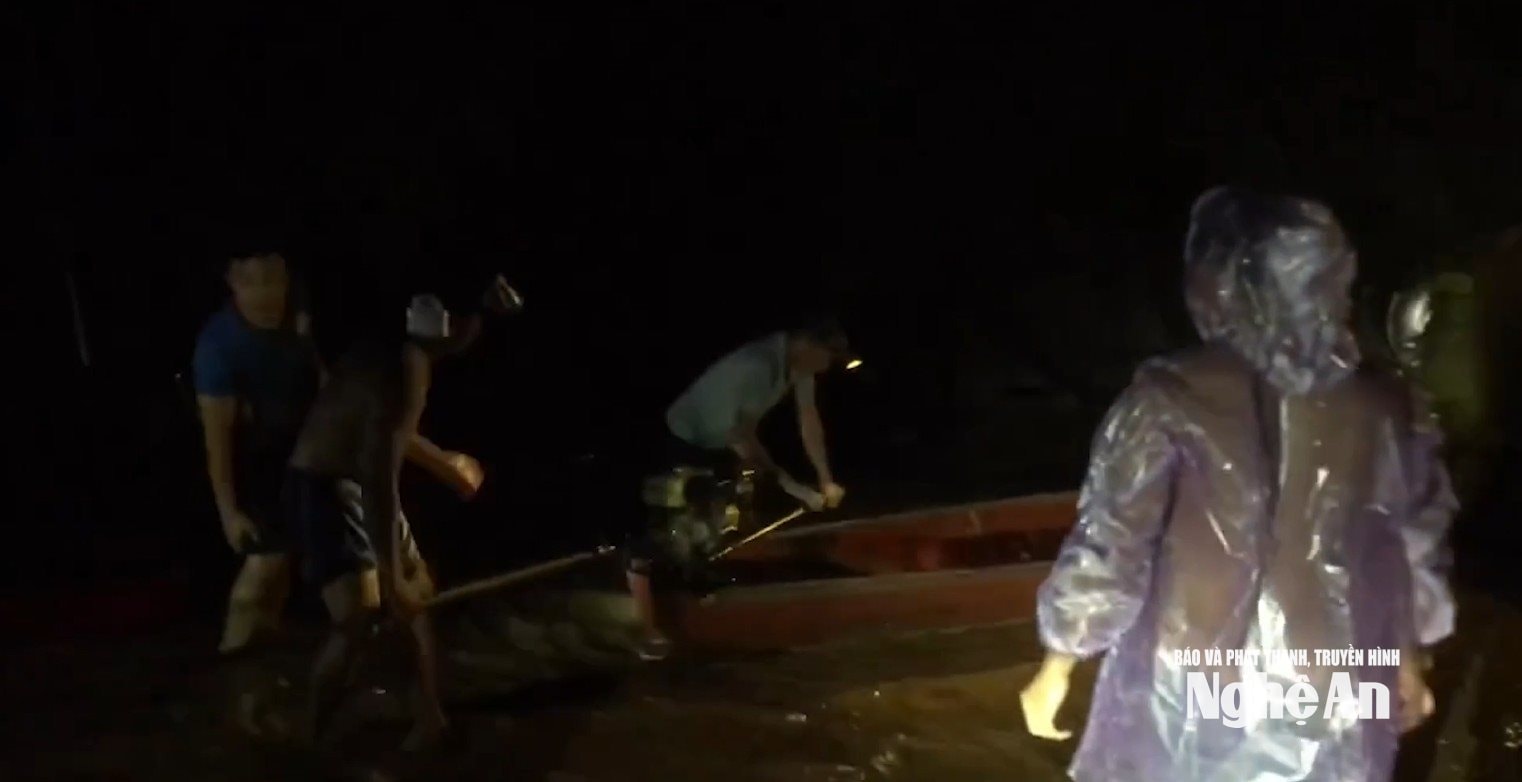
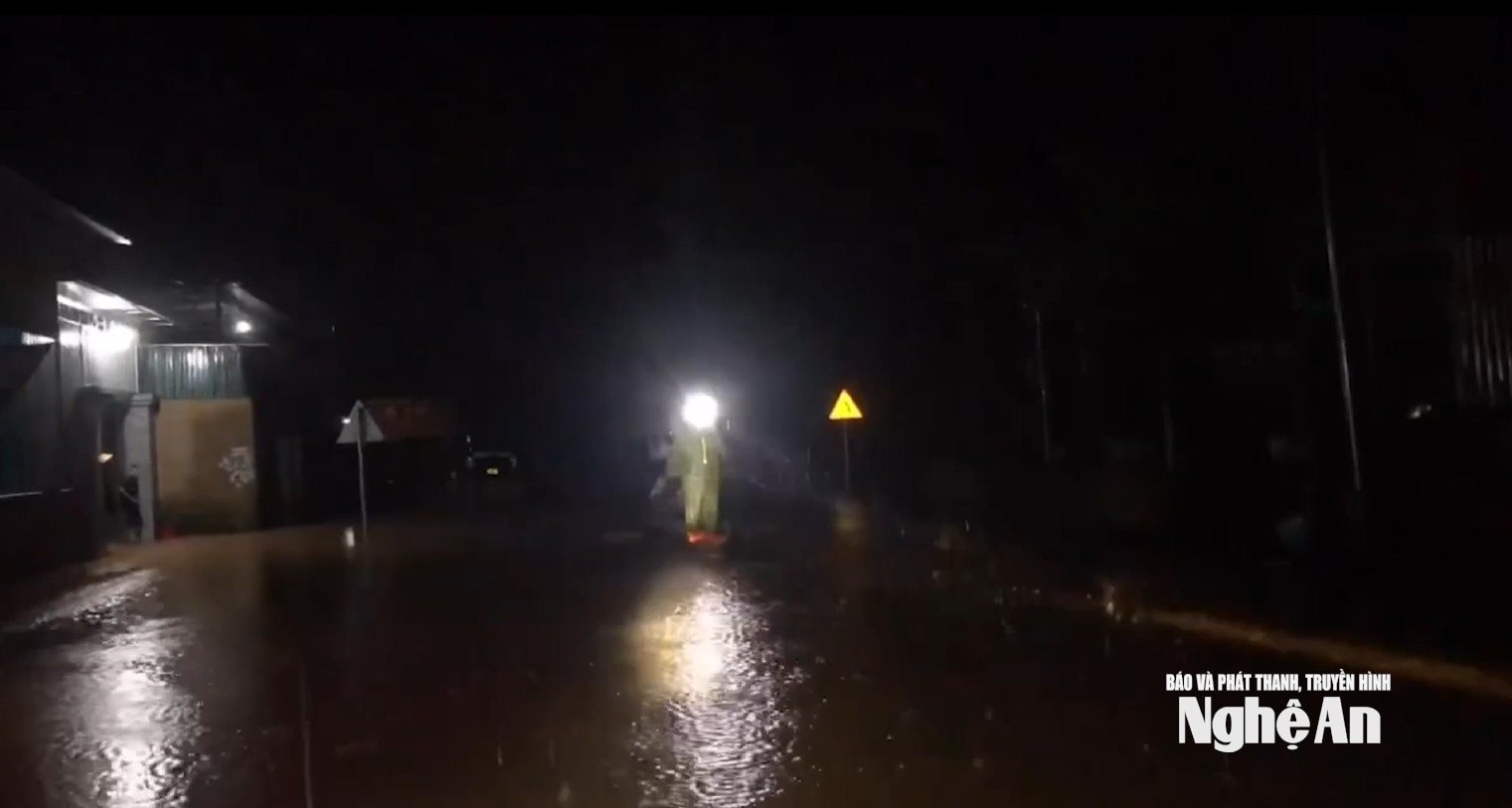
From 2 to 5 a.m., those three men continued to brave the torrential rain, saving 19 villagers. “Amidst the raging flood, Village Head Cụt Văn Đoàn and two Party members from the Khe Tỳ village branch were a vital support for the villagers,” affirmed Xeo Văn Nam, Secretary of the Hữu Kiệm Commune Party Committee.
Amidst the murky waters, the boat of these steadfast Party members not only carried human lives but also the spirit of "Party members lead the way, the people follow," a beacon of hope in the midst of the raging flood.
During the recent historic floods, Nhon Mai commune was one of the hardest-hit areas in western Nghe An province. Amidst the devastation, the Party Secretary and Chairman of the People's Council of the commune, Mac Van Nguyen, along with other commune officials, forged their own paths through the forest, walking over 20 kilometers and rowing boats along the Nam Non River to find ways to deliver supplies to the people. They carried crates of goods across streams, through mud and rocks still falling after the flood. "Even though our own houses were flooded up to the roof, many officials couldn't return because the people needed us," said Comrade Nguyen. Amidst the chaotic aftermath of the floods, the journey of the Party Secretary was not only about delivering timely relief supplies to the people, but also about maintaining the people's trust in the Party and the government.

Meanwhile, in Muong Tip commune on the Vietnam-Laos border, amidst the disaster, a touching story of compassion shone brightly along the Nam Non River. From July 21st to 27th, the commune suffered two major flash floods due to the impact of Typhoon No. 3 and its aftermath. In this difficult time, the Party Committee and the local government of Muong Tip commune decisively implemented the "four on-the-spot" principle, proactively providing relief and support to the villagers to overcome the floods. Not stopping there, Muong Tip commune also extended its helping hand to those across the border.

On the morning of July 31st, when the people of Na Muong village (Noong Het district, Xieng Khouang province, Lao People's Democratic Republic) requested assistance, Ms. Vi Thi Quyen - Secretary of the Party Committee and Chairwoman of the People's Council of Muong Tip commune - immediately directed the commune to coordinate with the Ta Do Border Guard Station to send 40 gift packages containing rice, instant noodles, clean water, and essential supplies to share. The next day, boats carrying relief supplies continued to cross the Nam Mo River, connecting the two banks of the Vietnam-Laos border. In the midst of the raging flood, Muong Tip commune not only stood firm but also extended a helping hand, demonstrating the spirit of "neighbors helping each other in times of need."
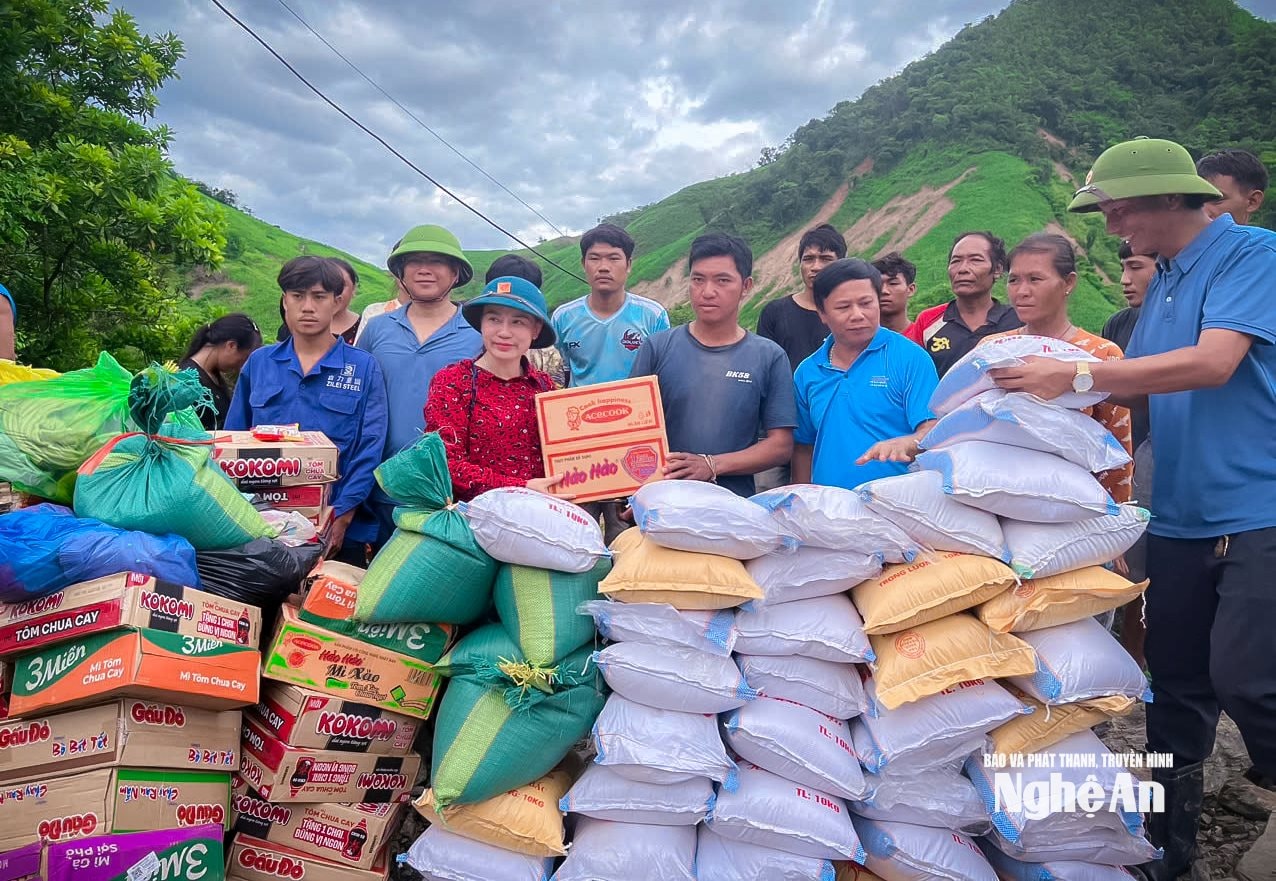
During the devastating floods, local officials and Party members did not back down, but became a reliable support for the people. Facing this harsh challenge, the leadership capacity, practical experience, and "serving the people" spirit of the newly established commune-level government were affirmed through concrete and timely actions. Not only did they overcome the natural disaster, but the team of officials and Party members also contributed to rekindling the people's faith in the Party and the government – a faith forged in hardship and enduring through silent sacrifices.
Immediately after the floods occurred in Nghe An, Dien Bien, and Son La, General Secretary To Lam requested that Party committees and local authorities at all levels ensure that those who lost their homes due to the floods have shelter, that no one goes hungry or cold, and that their basic living needs are met.
(To be continued)
.jpg)


