
Not agreeable on the surface, not satisfied in heart.
(Baonghean) - Long awaited, German Chancellor Angela Merkel's visit to the United States last week sparked further discussion due to a delay caused by a snowstorm. As expected, the expressions and statements from leaders on both sides suggest that the US-German "close relationship" will still face many difficulties under President Donald Trump's administration.
Confused and distant
In her statement at a joint press conference following her meeting with US President Donald Trump, German Chancellor Angela Merkel remarked: "It's good that the two sides spoke directly to each other instead of talking about each other through the media." Both leaders also described to reporters that their first meeting had gone quite well.
Officials from both sides had previously hoped that this meeting between the two leaders would be a positive step towards warming up the US-German relationship, which had been strained in recent times. However, what the public witnessed during this visit suggests that things will be more difficult than expected.
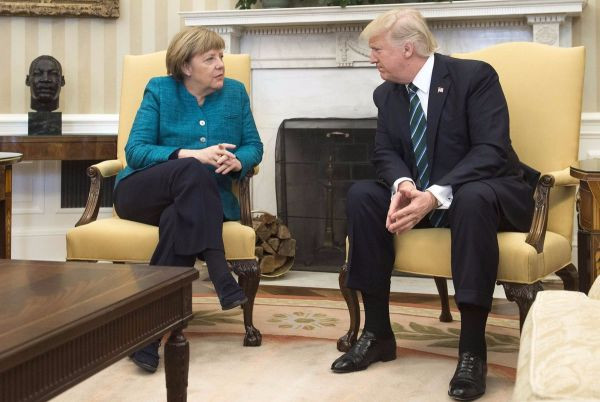 |
| German Chancellor Angela Merkel (left) and US President Donald Trump in the Oval Office on March 17. Source: AFP, Getty |
Trump's awkwardness, his hesitant demeanor, and even his avoidance of a diplomatic handshake with Merkel during the press conference in the Oval Office, showed that the estrangement between them has yet to be mended. Looking back at the meetings between Chancellor Merkel and the two previous US presidents, Barack Obama and George Bush, one can easily see a close bond and intimacy that went beyond diplomatic relations.
It stems from long-standing shared strategic views and interests between the US and Europe, as well as similarities between the leaders themselves. However, things turned out completely differently during the meeting with President Donald Trump last week.
Too different
International media outlets have commented throughout the past week that it is difficult to find two politicians with such vast differences in political experience, worldview, style, and personality as Trump and Merkel. Furthermore, the public has not forgotten the rifts created by President Trump's repeated criticisms of Chancellor Merkel.
Looking back to October 2015, when Merkel decided to allow over a million refugees into Germany, Trump commented, "What she's doing is crazy," and predicted riots in Germany. Two months later, when Time magazine named Merkel Person of the Year, Trump tweeted, "They chose someone who is destroying Germany." And in March 2016, when discussing the Cologne New Year's Eve attack, Trump again criticized Merkel and predicted unrest in Germany…
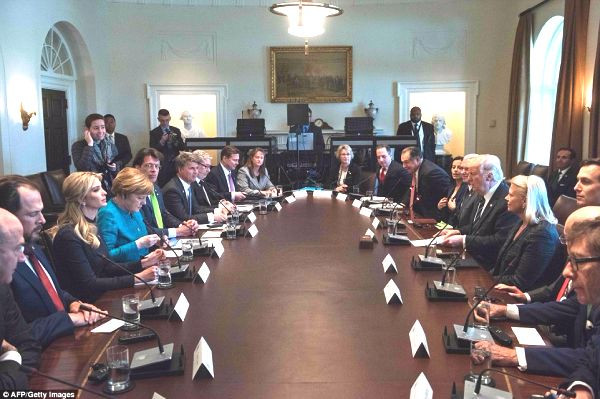 |
| The US and German leaders held talks at the White House. Source: AFP, Getty |
During their recent visit, as observers feared, the two leaders once again displayed vastly different views on a range of issues such as immigration and free trade. While Merkel continued to defend her stance against the growing protectionism in Europe and globally, Trump maintained that the US was the loser in free trade agreements. Regarding immigration, both continued to publicly criticize each other's policies, including Merkel's decision to open its doors to refugees and Trump's recent immigration ban.
Modest results
Looking at the recent US-Germany summit, the results achieved can be considered quite modest. Even Chancellor Merkel was at one point during the visit quite flustered when President Trump suggested that the two shared a rare commonality: both had their phones tapped by their predecessors in the US.
Nevertheless, the two leaders did find common ground regarding NATO. Specifically, President Trump demanded that Chancellor Merkel meet NATO's military spending targets. In response, Merkel pledged to increase military spending by 2%. However, Trump did not forget to criticize NATO as "obsolete" and for having cost the US and its allies large sums of money over the years.
However, from Germany's perspective, observers believe that the outcome of this visit is not particularly important to Chancellor Merkel. This is because Merkel is expected to continue pursuing a positive diplomatic policy with the US, regardless of who is in power and what differences may exist.
Simply put, Germany, and Europe as a whole, still need the US on almost every issue. Therefore, the goal of engaging with the new US president and restarting relations with Washington has already been a success for Merkel. Meanwhile, on the US side, President Donald Trump is believed to be shaping a foreign policy that is acceptable to all countries and does not contradict his campaign promises. Of course, long-term national interests will be the factor drawing the two leaders closer together. And it's only a matter of time!
Khang Duy
| RELATED NEWS |
|---|


