
Experts offer suggestions for reforming the History curriculum.
Teachers will play a decisive role in innovating and improving the quality of history teaching within the overall general education curriculum…
The National Assembly has just passed a resolution requiring the continued inclusion of History as a subject in the new curriculum. Thus, History remains an independent subject, not integrated into other subjects in the new overall general education program. The crucial issue now is finding effective solutions to reform the subject of History, ensuring it truly engages students.
Associate Professor, Dr. Nghiem Dinh Vy, former Rector of Hanoi Pedagogical University - a dedicated researcher of History for decades - believes that, building on the foundation of the old textbooks, the Ministry of Education and Training will innovate the curriculum and textbook writing methods first, and only then innovate teaching methods.
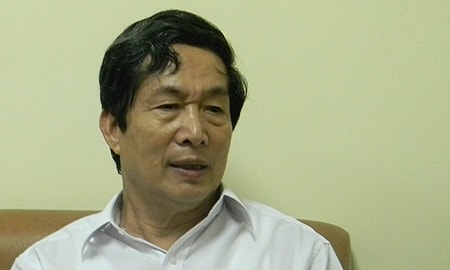 |
| Associate Professor, Dr. Nghiem Dinh Vy, |
Currently, history is taught using a continuous approach from primary to high school, gradually increasing the level of knowledge. If history is reformed at the primary school level, it could be combined with geography.
History lessons should be taught using engaging stories and themes to captivate students. For example, on the topic of "The Names of Vietnam Through the Ages: Van Lang, Au Lac, Van Xuan, Dai Viet, Vietnam," the teacher should explain in detail and then encourage students to discuss the topic in a scientific and lively manner.
To foster students' abilities, teachers should encourage them to express their feelings as honestly as possible through topics such as visiting rivers, traveling through ancient capitals, etc.
For stories about historical figures and famous people, teachers must have the skill to stimulate and encourage students' curiosity, imagination, and exploration through engaging stories such as: Egypt - the land of pyramids, Greece - the homeland of the gods…
At the lower secondary level, most schools teach Vietnamese history first, then world history. However, this teaching method fails to create a connection between the different pieces of knowledge.
To address this issue, the textbook program could combine Vietnamese and world history knowledge. For example, in the lesson on "Primitive Societies" in world history, teachers could simultaneously teach the lesson on "Traces of Primitive Society in Vietnam."
In a lesson about the August Revolution, the teacher can talk about the atmosphere on the day of the August Revolution in Hanoi and Saigon, and also include information about the situation during World War II.
The reform of the History curriculum is a comprehensive reform, including the textbook program. The book presents a complete historical overview of a chapter through vivid images and videos.
In textbook writing, the editorial board should not cram too many events and dates together as is currently the case, but could include historical documents, more maps, and vivid, colorful illustrations (including cartoons) to make the book truly eye-catching and more engaging for students in the subject of History.
At the high school level, the editorial board of the new textbooks should adopt a writing style that allows teachers to teach by theme: politics, economics, society, culture, science, etc. In grade 10, teachers could teach ancient and medieval history; in grade 11, modern history; and in grade 12, contemporary history.
The theme of each historical period must be engaging, linking historical events to the present situation. For example, the theme "War and Peace" could include lessons on "An Unstable Past," with Part I covering memorable events of World War I and World War II. Part two, "The Smoke of Gunfire Remains Thick," could encompass knowledge about the Middle Eastern wars, ISIS, and the current situation in Ukraine and Afghanistan.
The third section, "The Sound of Peace," includes lessons to help students better understand the position and role of the United Nations, the International Red Cross, international Olympic competitions, and to associate Vietnam with the image of a country of peace.
Teachers determine the quality of history teaching.
According to Associate Professor, Dr. Nghiem Dinh Vy, in the grand plan for educational development, teachers play the most important role. No matter how beautiful or engaging the textbooks are, or how modern the infrastructure and teaching equipment are, these are not the decisive factors in innovation and improving the quality of education.
Currently, the teaching of History mainly relies on the lecture-based method of "teacher reads, students copy." In reforming the way History is taught, teachers should play the role of classroom organizers, making students genuinely enthusiastic about the subject.
Instead of simply standing at the podium imparting knowledge, teachers should enhance group learning activities, allowing students to naturally and enthusiastically discuss various topics. To support teachers in teaching more effectively, schools should invest in projectors so that teachers can display images and video clips on historical topics on the board, thereby attracting students' attention to the subject.
Besides innovating teaching methods, we need to strengthen teacher training and development. Accordingly, teachers need to continuously learn and master new knowledge and teaching methods so that History truly engages students.
In addition, schools should create opportunities for students to visit historical sites, museums, etc. Through these field trips, students will gain a better understanding of the nation's history through concrete, real-life images.
Alongside the innovations in textbooks and improvements in teacher training, reforming the subject of History also requires the joint support and contribution of the film industry in developing and screening films about history.
History education should not only provide students with knowledge but also inspire the spirit of resistance against foreign invaders and the defense of the country, fostering national pride, patriotism, and encouraging citizens to be ready to stand up and defend the homeland.
Each history lesson should help students understand how our ancestors built the nation in the past and awaken the patriotic spirit of the Vietnamese people in the hearts of each learner. This contributes to equipping the younger generation to become "global citizens" with a full range of intellect, abilities, and qualities that reflect their unique identity, so that wherever they go, they can be proud to be Vietnamese.
According to VOV