
Stories from the sea voyage to Truong Sa…
(Baonghean.vn) - The ship 490, carrying the working group, braved the waves to reach Truong Sa in the final days of the year. Throughout the long voyage, reporters from Nghe An Newspaper experienced and understood many interesting stories on this long sea journey…
Hoping for each "wave"
After days of quarantine to prevent the spread of Covid-19 at Cam Ranh naval port, on December 21st, ship 490 began its journey carrying the working group and reporters to visit the district.Truong Sa Islandsacred land of the Fatherland. As the ship left the port, excitement and anticipation were evident on the faces of each crew member. After waving goodbye to the mainland, everyone seized every moment to admire the sea and take photos on board, especially those who were going to sea for the first time.
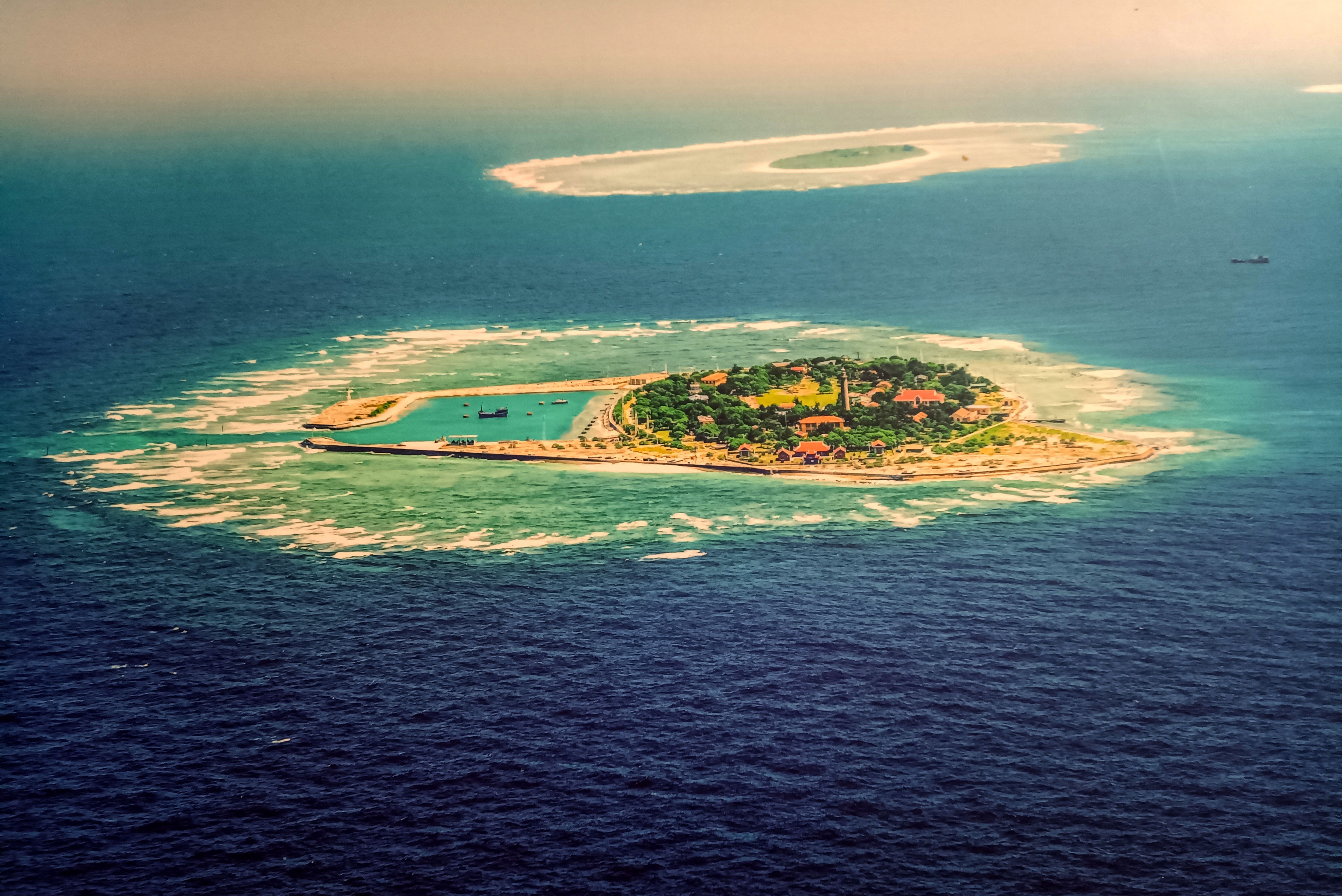 |
Song Tu Tay Island seen from a distance. Photo: Quang An |
The further the ship moves from shore, the more noticeable it becomes that the phone signal strength decreases, from 5 bars down to 1-2 bars, and then completely disappears after about 2 hours of travel, cutting off communication with the mainland. For those who regularly work, report news, and browse social media sites like Facebook and Zalo every day, the feeling of being disconnected from technology is very unfamiliar.
Throughout the days adrift at sea, with not a single wave, many wanted to call family and friends to tell them about their first time on a ship, at sea, or to ask about the situation back home, but they couldn't. Suffering from seasickness and a lack of phone signal, most members of the delegation had never experienced anything like this before.
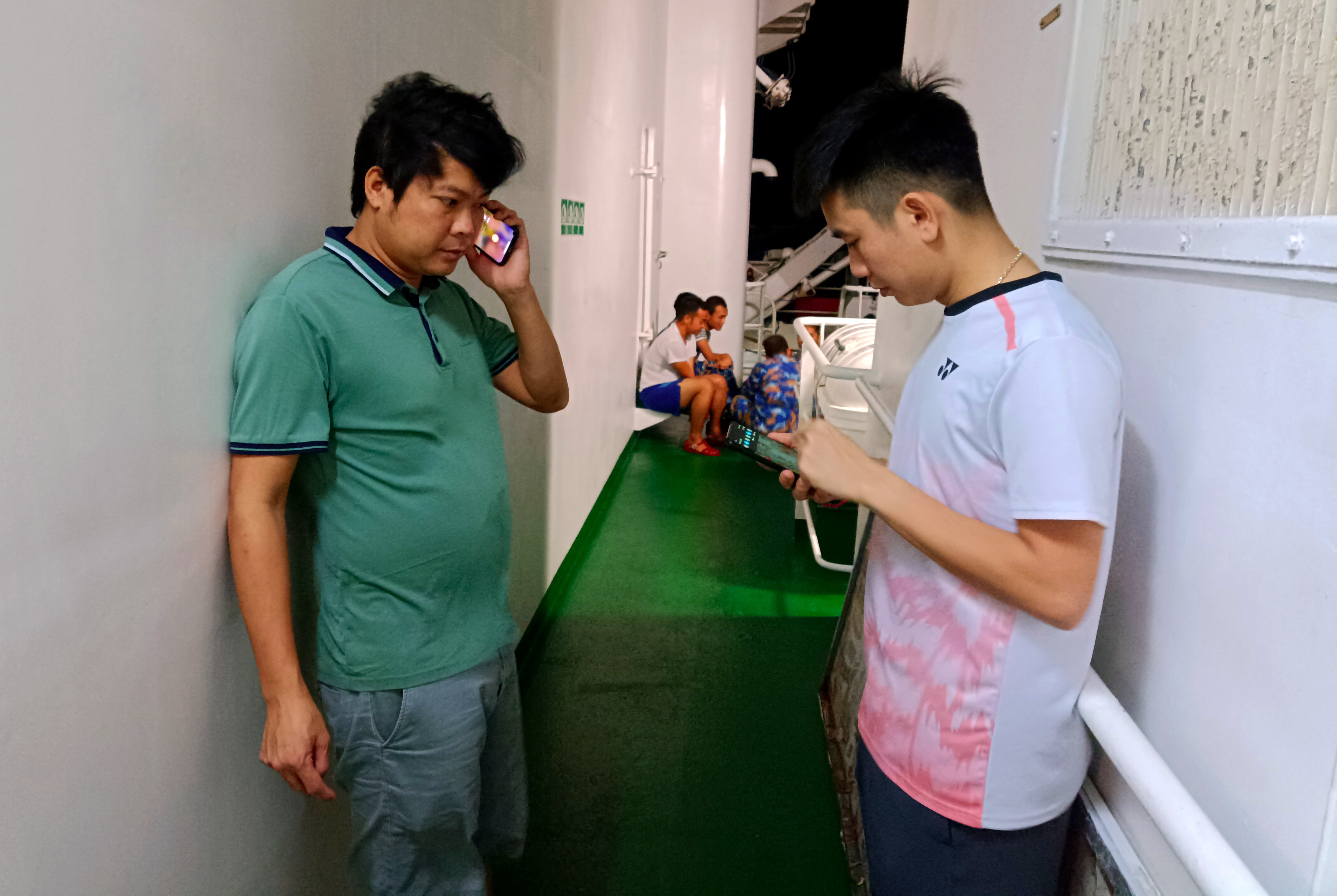 |
Whenever there was a signal, the members of the working group took the opportunity to call their families. Photo: Tien Dong |
As ship 490 approached...Song Tu Tay IslandThe signal bars gradually reappeared. Inside the cabin, we heard shouts of "The signal's back! The signal's back!" echoing throughout the corridors. Then, all the members of the task force and the soldiers excitedly left their cabins to go to the higher floors to "hunt for a signal." Everyone took the opportunity to call their families, relatives, friends, and units after two days of complete loss of contact.
A joyful, happy smile was evident on the face of young reporter Nguyen Viet Dung (Thai Nguyen Newspaper) after a phone call to his wife back home. Upon inquiring, he learned that Dung's wife was expecting their first child in early January 2023, coinciding with the ongoing sea voyage. After two days of complete "no signal," reporter Dung was anxious about his wife's health. After several minutes of conversation, knowing that both mother and child were healthy, Dung breathed a sigh of relief. After some heartfelt advice, Dung began sharing with his family about his first days at sea…
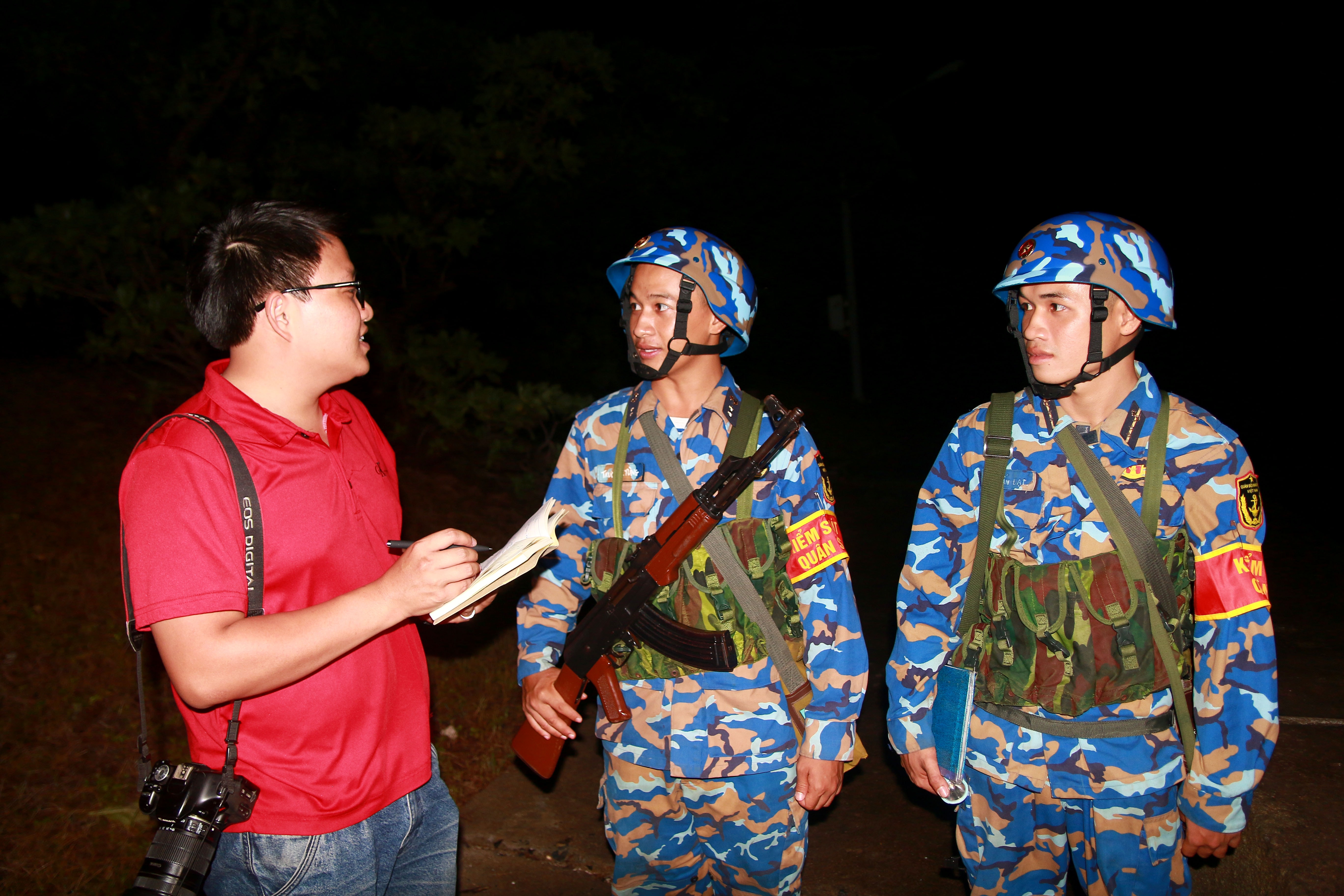 |
Reporters from Nghe An Newspaper working on Song Tu Tay Island, Truong Sa Archipelago. Photo: Tien Dong |
Or consider the story of Major Nguyen Duy Trung, who accompanied us to Song Tu Tay Island. The day the delegation departed was also the day his wife had to fly from Dak Lak to Hanoi for surgery on two serious illnesses. With their children studying far from home and her husband away on duty, the responsibility of taking his wife to the surgery rested entirely with their relatives.
After two days of complete loss of contact, Comrade Trung finally managed to call his family to check on his wife's health, taking the opportunity to offer words of encouragement to reassure her during her treatment and to share her burdens while he was on duty on the remote island.
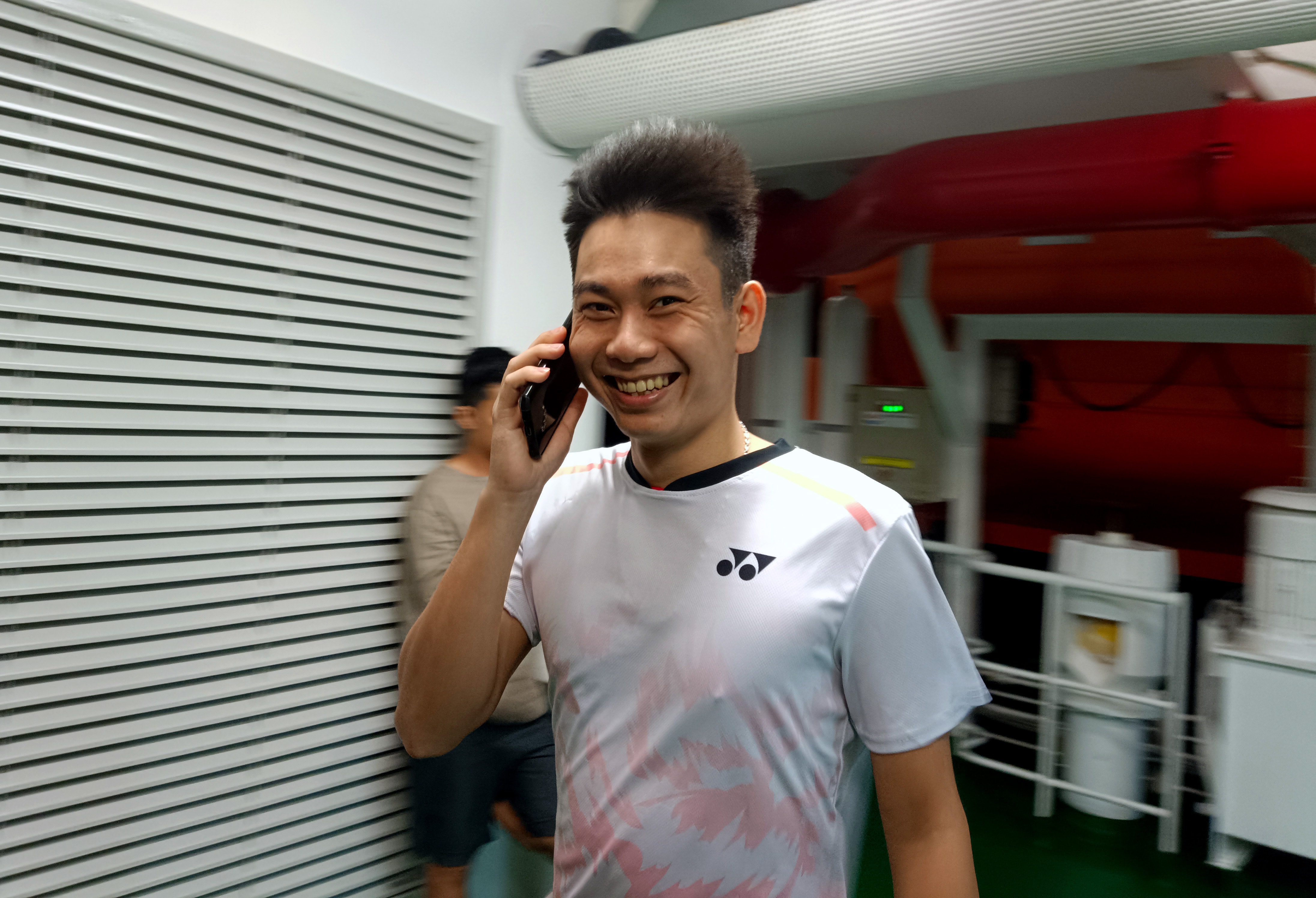 |
Viet Dung, a reporter from Thai Nguyen Newspaper, expresses his joy at finally being able to contact his family after days of no signal. Photo: Tien Dong |
After leaving Song Tu Tay, ship 490 continued to take the delegation to visit other islands. Each time they departed, the phone signal was lost, so when they learned the departure schedule from each island, each member quickly contacted their family, relatives, and colleagues to give instructions and arrange work at home, at the office, or at their unit. Each time they approached a new island and the signal returned, the "signal hunting" campaign began busily on the ship.
The difficulty of submitting news articles.
The biggest difference betweenoperationalAt sea and on land, for reporters, the process probably involves sending news articles back to the newsroom. When the ship leaves port, signal and internet access are completely lost, making it impossible to send articles directly to the newsroom using traditional methods as before.
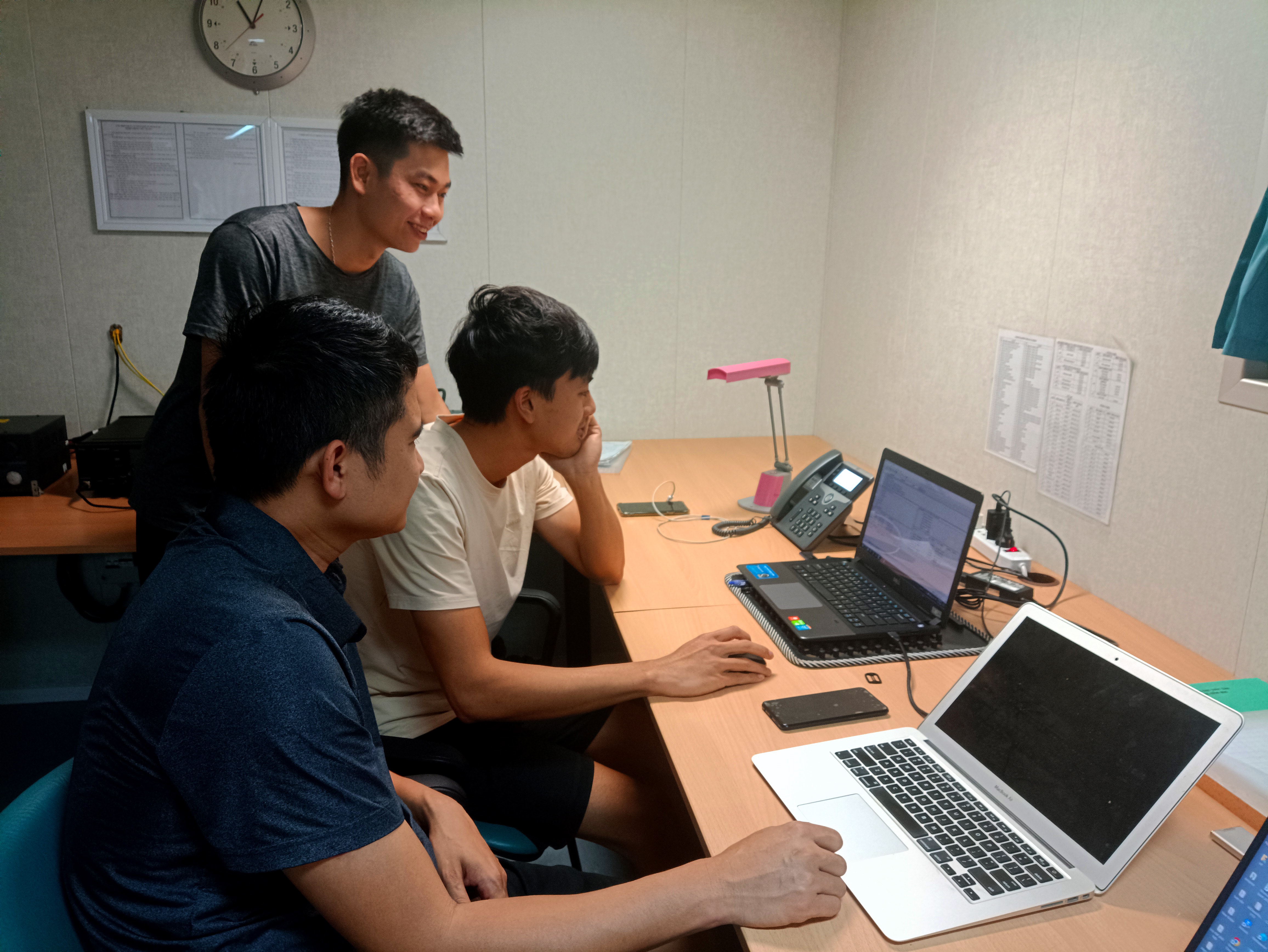 |
Reporters from Nghe An Newspaper are making the most of every hour to send news articles back to their agency on board ship 490. Photo: Quang An |
At a meeting with the press delegation before their departure to Truong Sa, the Propaganda Department of the 4th Naval Region instructed the reporters on how to send news and articles to their newsrooms. Accordingly, Ship 490 is equipped with a VSAT system, connecting and transmitting data from the ship to the Propaganda Department. Reporters who need to can go to the ship's information and communication room, send news and articles to the Propaganda Department, and then the staff will receive and assist in sending the articles to the newsrooms of the newspapers and television stations via email.
However, the Propaganda Department staff also noted that the VSAT system only works well when sending text files, audio recordings, and images in moderate quantities and sizes. For large images and especially video clips, it is very difficult to send them successfully. Therefore, reporters should consider returning to the mainland for large files, and sending articles would be more efficient once Wi-Fi, 4G, or 5G networks are available again.
 |
Sinh Ton Dong Island seen from a distance. Photo: Tien Dong |
Throughout their work on the ship and on the islands, the Nghe An Newspaper's reporting team took advantage of every opportunity to write articles while simultaneously contacting the ship's communication room to send information back to the editorial office. Each time photos and text were transmitted via the VSAT system to the mainland, everyone felt anxious and hopeful that the transmission would not fail and that the information would quickly reach Nghe An province to serve readers.
Lieutenant Tran Quoc Bao, the officer in charge of the communications room on ship 490, said: “Since the beginning of the voyage, reporters from Nghe An Newspaper, Thai Nguyen Newspaper, and Lao Cai Newspaper have come to the room to send news and articles back via the VSAT system. All news and articles have been successfully sent to the mainland as requested by the reporters. We are always ready to support reporters from various media outlets in completing their tasks.”
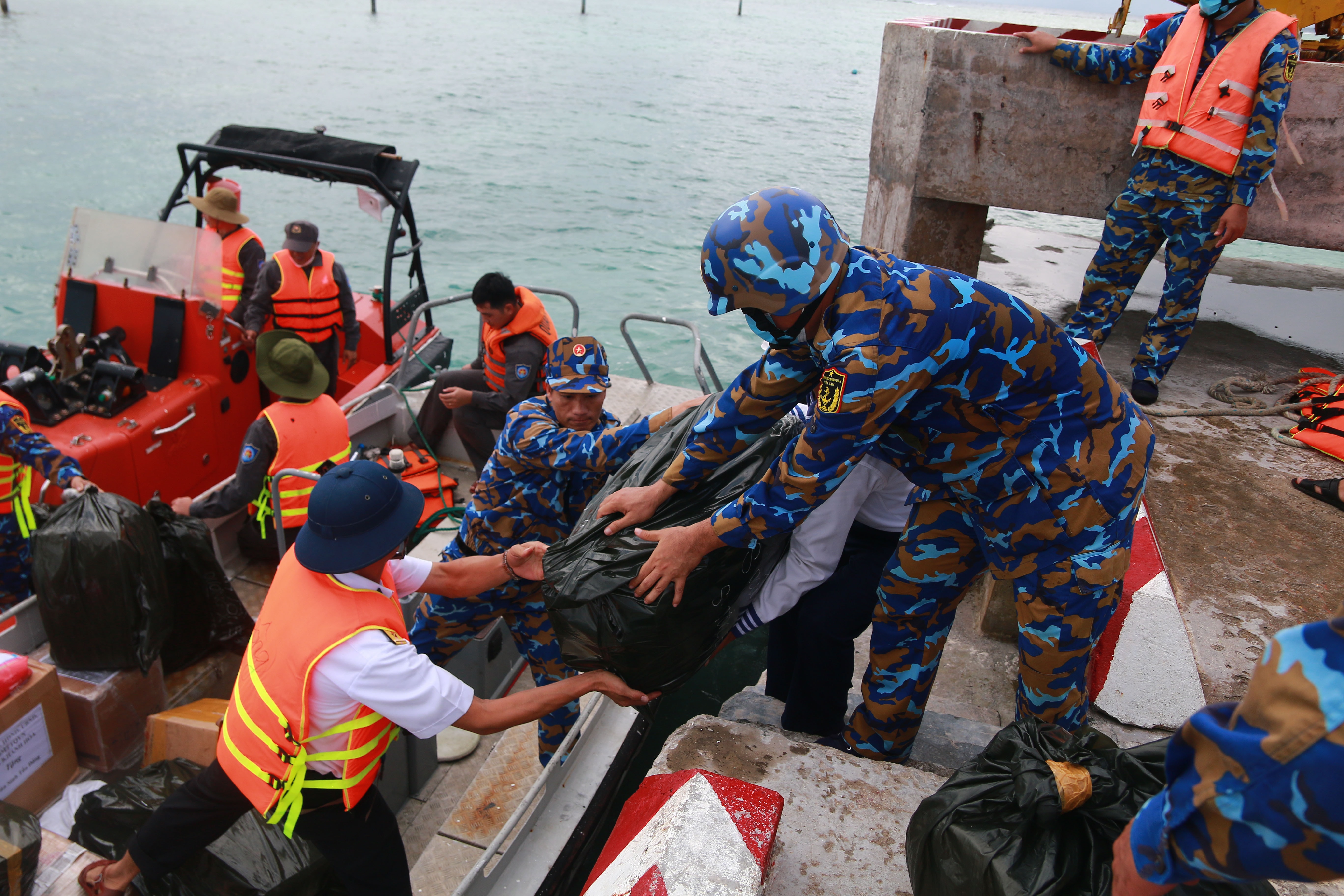 |
Transporting goods to Song Tu Tay Island. Photo: Quang An |
Upon learning that their article had been successfully sent and published, conveying stories from the remote islands back to the mainland, to their hometown of Nghe An, the team of reporters from Nghe An Newspaper working in Truong Sa always felt reassured and motivated to continue their work on the long sea voyage.
Joy at sea
During our time at sea, we experienced many interesting activities on board ship 490. The delegation on board came from many different provinces and cities, so each locality and region had its own unique culture and specialties, which we shared with each other.
After each meal, on the ship's deck or in the corridors of the cabins, members of the delegation would sit together over a cup of hot tea, sharing interesting stories about their hometowns, families, lives, experiences, or memorable stories from their journalistic assignments… Before departure, everyone made sure to bring along local specialties as gifts for each other, further strengthening the camaraderie during the long sea voyage.
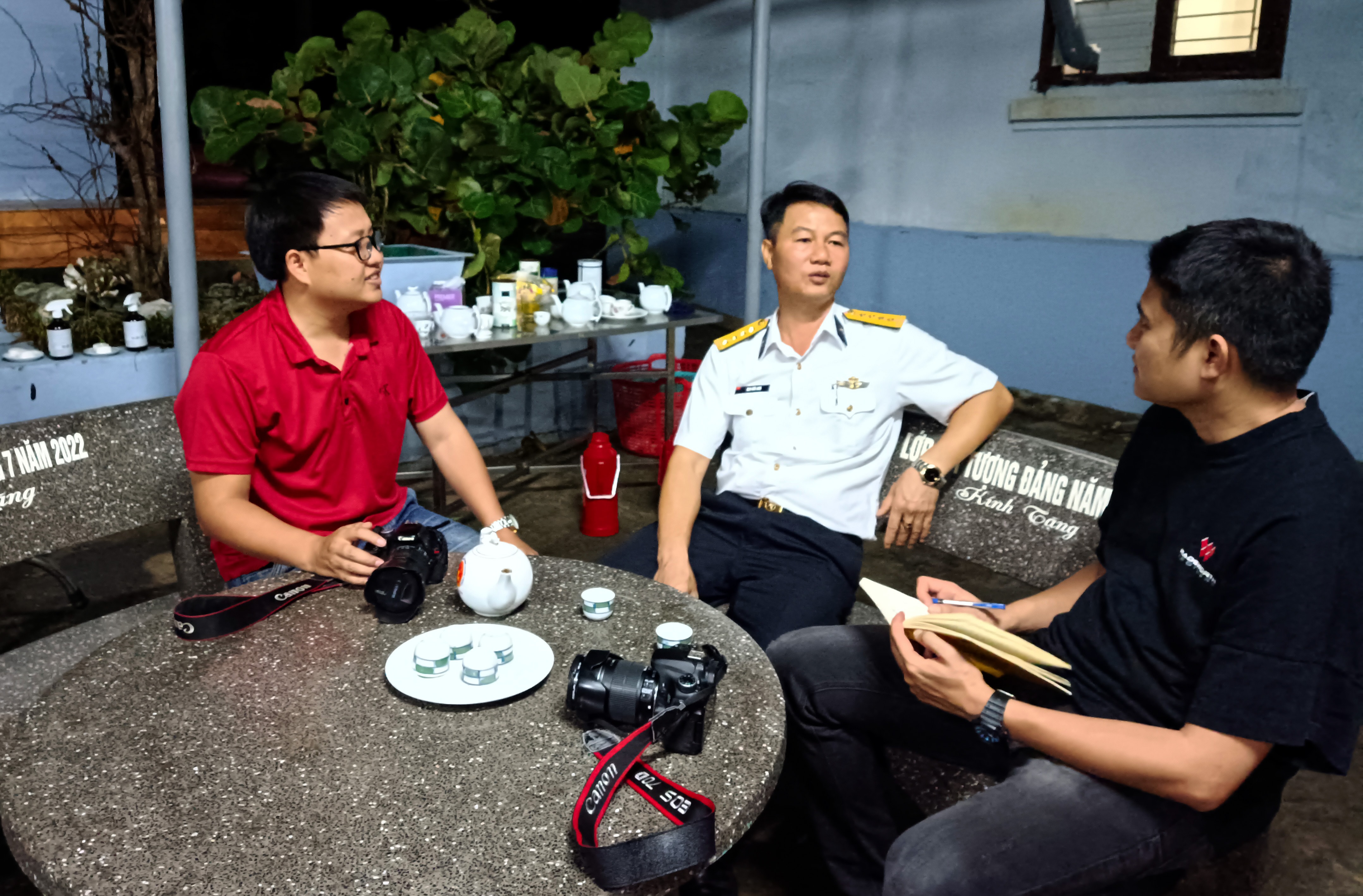 |
Reporters from Nghe An Newspaper working in the Truong Sa archipelago. Photo: Tien Dong |
Reaching the sacred Truong Sa Islands of our homeland is no easy feat, so every member of the delegation cherished every moment. Reporters took every opportunity to chat and share stories with the soldiers on duty at the islands. In the distance, laughter and warm embraces could be heard between compatriots meeting amidst the vast ocean waves. Over warm tea and sweet peanut candy, the melodious singing of reporter Le Dao (VOV) blended with the guitar playing of the sailors, creating songs about Vietnam's beloved islands that moved everyone to tears.
One of the most enjoyable experiences was fishing on board the 490 vessel. Whenever the ship dropped anchor, the crew would gather at the stern to cast their lines. According to Lieutenant Nguyen Thanh Luan, fishing from a ship requires many factors; besides skill, it also depends on luck. There were days with beautiful weather when you sat for ages without catching a single fish, and other times when you caught several "huge" fish as soon as you cast your line.
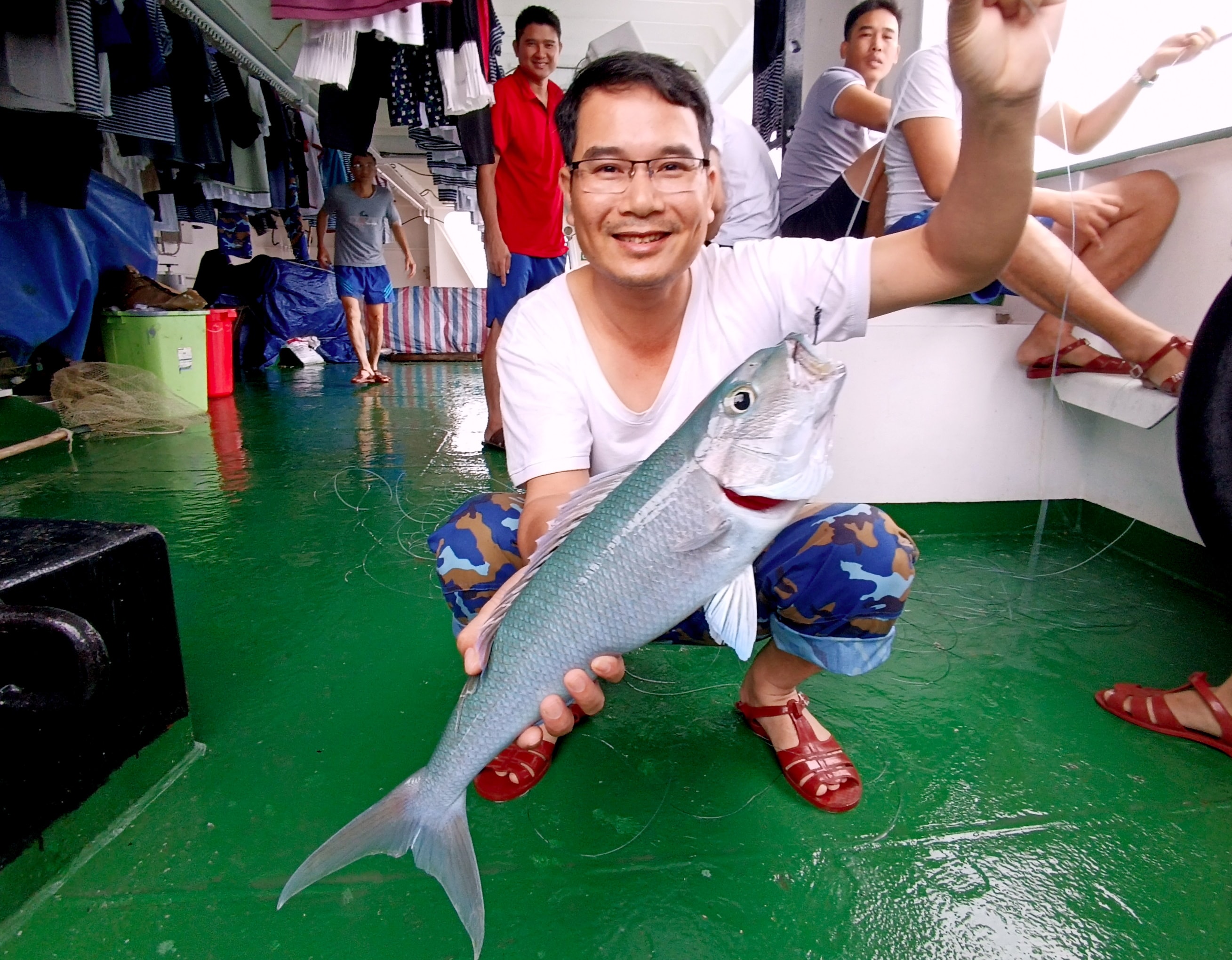 |
Lieutenant Pham Van Ban was delighted to catch a huge fish on boat 490. Photo: Quang An. |
Holding a lizardfish weighing over 7kg in his hands, Lieutenant Pham Van Ban couldn't hide his joy, as this was the first time he had caught such a large fish. The fish, about 40cm long, with a silvery body, was fresh and wriggling on the boat. This is a very difficult fish to catch in this area, so everyone was excited. It is known that fishing on the boat is not only an enjoyable experience but also a practical activity to improve the meals for the working group after many days of relying solely on frozen food.


