
Investing in one kilometer of the North-South high-speed railway requires $38 million.
Compared to China and some European countries, the investment cost per kilometer of high-speed rail in Vietnam is 1.5 times higher.
On the afternoon of November 12th, after hearing the TEDI - TRICC - TEDISOUTH consulting consortium present their final report on the pre-feasibility study of the North-South high-speed railway project, several transportation experts calculated that with a total investment of 58.7 billion USD for 1,500 km, the investment cost per kilometer is 38 million USD, nearly 1.5 times the investment cost for railway construction in Beijing and Shanghai in China (27 million USD) and Spain (26 million USD).
Experts believe this investment figure is very high for a developing country like Vietnam, with public debt exceeding 60%. Therefore, they recommend that before submitting the investment proposal to the National Assembly for approval, the Ministry of Transport should conduct a more thorough financial assessment.
Explaining this, Deputy Minister of Transport Nguyen Ngoc Dong said that other countries do not incur land acquisition costs, so they cannot be compared to China. "China's land is state-owned; when the state needs to acquire it for a project, it only handles the resettlement of residents and does not have to provide compensation. Therefore, their construction costs are much lower than ours," Mr. Dong said.
|
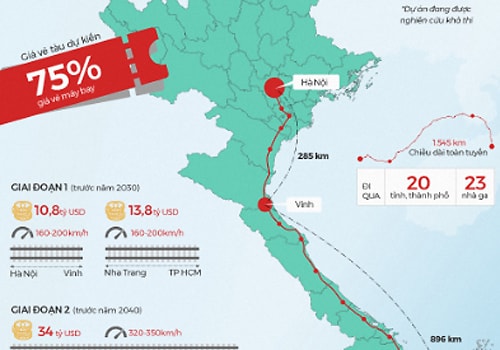
The high-speed rail project is planned in two phases. |
Furthermore, China and some European countries have an advantage over Vietnam in that they have mastered the technology for constructing high-speed rail trains, possess professional construction companies, and have well-trained personnel, while Vietnam is only just beginning to develop a roadmap for training and researching this technology.
According to Deputy Minister Dong, in order to build a high-speed rail system, Vietnam will have to purchase everything from locomotives and operating equipment to technology from abroad, which will result in much higher costs compared to producing them domestically.
A representative from the Ministry of Transport also stated that the $58.71 billion allocated for the North-South high-speed railway is only an initial estimated cost for investment in construction and equipment procurement. This cost has been calculated and broken down by consultants based on the volume of work required. "However, it is determined that there will be losses in the initial period of operation, and the state will have to support maintenance and upkeep costs for the next 10-12 years," Mr. Dong emphasized.
According to the final feasibility report for the North-South high-speed railway project, the project has a total investment of US$58.71 billion. The first phase, including the Hanoi-Vinh section (estimated US$13.97 billion) and the Nha Trang-Ho Chi Minh City section (estimated US$13.37 billion), is scheduled for completion in 2032. The remaining section connecting Vinh and Nha Trang is expected to begin construction in 2035 and be completed in 2050.
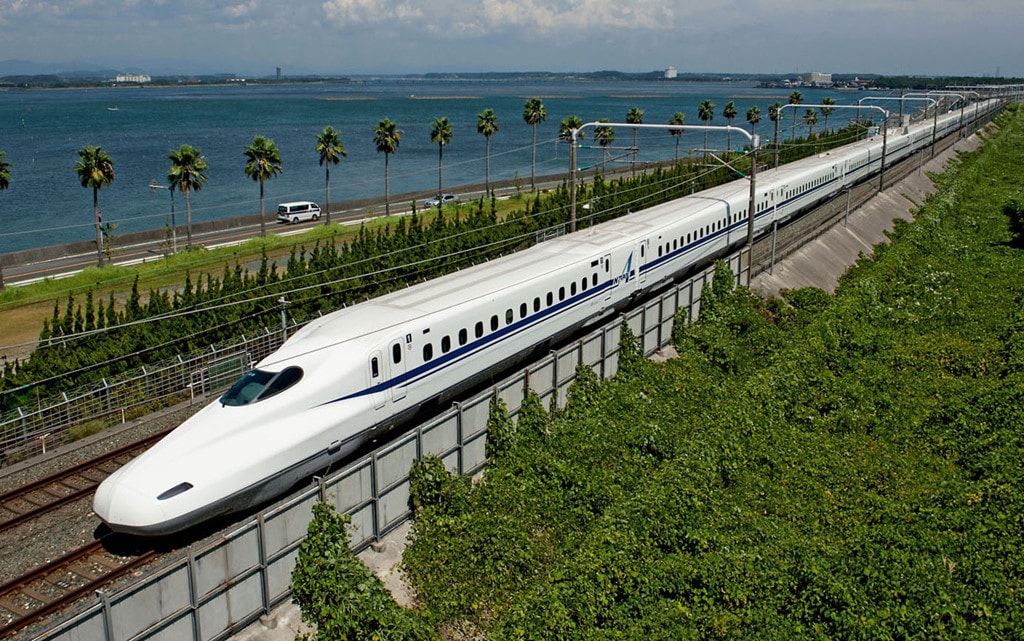 |
| Illustrative image |
The project is being implemented under a public-private partnership (PPP) model, with the state investing 80% of the total infrastructure capital. The investor will raise approximately 20% of the total project capital to purchase train equipment and recoup their investment through operation.
The Ministry of Transport expects to complete the pre-feasibility study report in November 2018; the State Appraisal Council will appraise it from December 2018 to April 2019; reports will be submitted to competent authorities from May to July 2019, and the final pre-feasibility study report will be submitted to the Government in August 2019. The project will be submitted to the National Assembly for comments in August 2019 and approved by the end of 2019.


