
To put an end to the situation where medical equipment is left idle.
Faced with the wasteful exploitation and use of countless machines and equipment in many medical facilities, the Ministry of Health has proposed a series of solutions to address the situation. However, an effective and sufficiently robust solution seems still a long way off.
Waste
As reported by the press, at the end of 2014, nearly a hundred pieces of medical equipment that were damaged and unusable were discovered at Bai Chay Hospital in Quang Ninh. At the time of inspection, the medical facility was also unable to provide documents proving the origin and source of these pieces of equipment.
In mid-August 2014, Market Management Team No. 14 (Hanoi Market Management Department) coordinated with the General Economic Team - PA81 Department (Hanoi Police) to inspect three medical examination and treatment service businesses (Nos. 38, 73, and 111 Phung Hung Street, Ha Dong District, Hanoi). They discovered and temporarily seized 12 imaging and photographic equipment showing signs of violations…
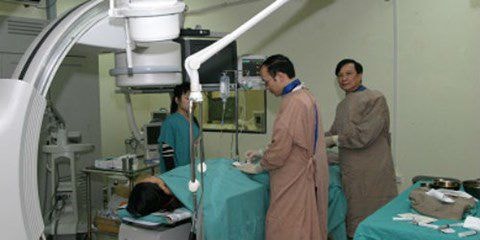 |
| Many reasons have been given by the relevant authorities for the inefficient use of medical equipment. (Image for illustrative purposes only) |
The inefficient and non-transparent use of medical equipment and supplies is not unique to these facilities but occurs in numerous healthcare centers nationwide. To detect and rectify this situation, Deputy Prime Minister Vu Duc Dam directed the health sector to take action. The inspection process revealed numerous violations, and these violations are far from over.
The most striking example is the recent scandal involving the procurement of medical equipment at the Dak Lak Department of Health and several affiliated units. Even more disheartening is the fact that the total amount spent on this equipment exceeded 150 billion VND, with many pieces of equipment currently sitting idle in warehouses. Furthermore, many contracts for the purchase of genuine medical equipment from the US, Japan, and Germany were found upon inspection to be of Chinese origin or lacking proper labeling.
Specifically, in 2012, Ea H'Leo District General Hospital was equipped with a medical gas system costing 234 million VND. The winning bidder, Minh Tam Medical Equipment Technical Center, committed to providing equipment from Smyth (USA). However, upon inspection, the equipment actually lacked any labels.
In 2014, this hospital was also equipped with an HM630 EB industrial dehumidifier, a compressor model costing 20 million VND. The winning bidder, Tay Nguyen Medical Equipment Trading Co., Ltd., claimed this was "genuine Japanese technology," but upon inspection, it was found to be "made in China" (manufactured in China)...
Is improving the workforce the solution to the current situation?
Many reasons have been given by the relevant authorities for the fact that countless pieces of medical equipment are "lying idle" in warehouses, while there is still a shortage, or even a complete lack, of equipment to serve medical examination and treatment. Among these, three main reasons stand out: weak human resources; inadequate repair and maintenance services; and insufficient technical consulting and improvement.
Specifically, according to Deputy Minister of Health Pham Le Tuan, our investment situation is not truly balanced between construction and medical equipment, as well as procurement and use. Medical equipment in general is still lacking, not standardized, and outdated compared to other countries in the region.
Most medical equipment currently in use at healthcare facilities has not undergone regular inspections, maintenance, and repairs; there is insufficient funding for investment and modernization; many localities lack the funds to purchase consumables and for maintenance and repair; the capacity of medical equipment technicians has not kept pace with technological and technical innovations; and the quality of training and deployment of personnel specializing in medical equipment technology is still low compared to requirements.
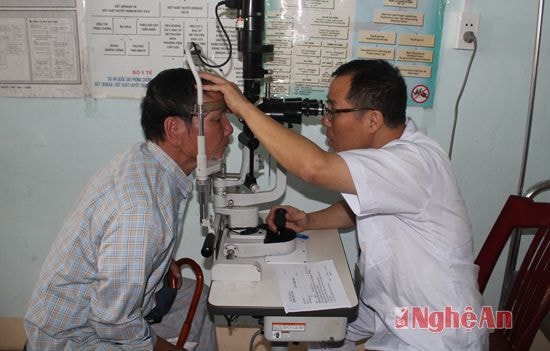 |
| Illustrative image. |
Many provincial hospitals lack dedicated medical supplies and equipment management departments and often combine them with the Pharmacy Department; there are few medical equipment manufacturing enterprises, the product range is limited, and the product quality is not high...
To address this situation, at the workshop "Improving the Efficiency of Exploitation and Use of Medical Equipment" recently organized by the Vietnam Medical Equipment Association on November 4th in Hanoi, Mr. Ha Dac Bien, representing the Vietnam Medical Equipment Association, stated that the immediate priority is to focus on human resource training.
Specifically, training for medical equipment personnel should be enhanced through hands-on instruction. Simultaneously, maintenance and repair centers should be established at the central, regional, and provincial levels, with the aim of building medical equipment repair and maintenance stations in various regions, supported by manufacturers and through their official distributors in Vietnam.
Furthermore, more attention needs to be paid to the provision of medical supplies and equipment. In particular, the Ministry of Health needs to issue specific guidelines on the functions and responsibilities of the medical supplies and equipment departments of hospitals, as the functions and responsibilities of these units vary greatly among medical facilities, even within the same level of healthcare.
According to Online Law
| RELATED NEWS |
|---|


