
The remarkable progress of the 500 kV circuit 3 transmission line project.
The 500 kV circuit 3 power line project from Quang Trach (Quang Binh) to Pho Noi (Hung Yen), inaugurated after 7 months of construction, leaves a lasting impression as a "miracle" of Vietnam's electricity industry, contributing to meeting the ever-increasing energy demand for production and daily life of the people.
Harnessing the strength of the entire political system.
The 500kV circuit 3 transmission line project is a key and urgent project of great importance to enhance the power transmission capacity through the 500 kV system from Central to Northern Vietnam, increasing the current capacity from 2,500 MW to 5,000 MW. It will improve the operational stability of the power system, increase electricity supply to Northern Vietnam in 2025 and beyond, reduce the risk of overloading existing 500kV lines and substations, and contribute to ensuring national energy security.
The 500kV Quang Trach - Pho Noi circuit 3 transmission line project is a large-scale project with a total length of 519 km, 2 circuits with 1,177 tower locations, and a total investment of over 22,300 billion VND (nearly 1 billion USD). The project involves the excavation of more than 2.5 million cubic meters of earth and rock.3, using over 705,000 m²3Concrete, nearly 70,000 tons of foundation reinforcement; the total weight of steel pole erection was 139,000 tons; and a total of nearly 14,000 km of various types of power lines were laid.
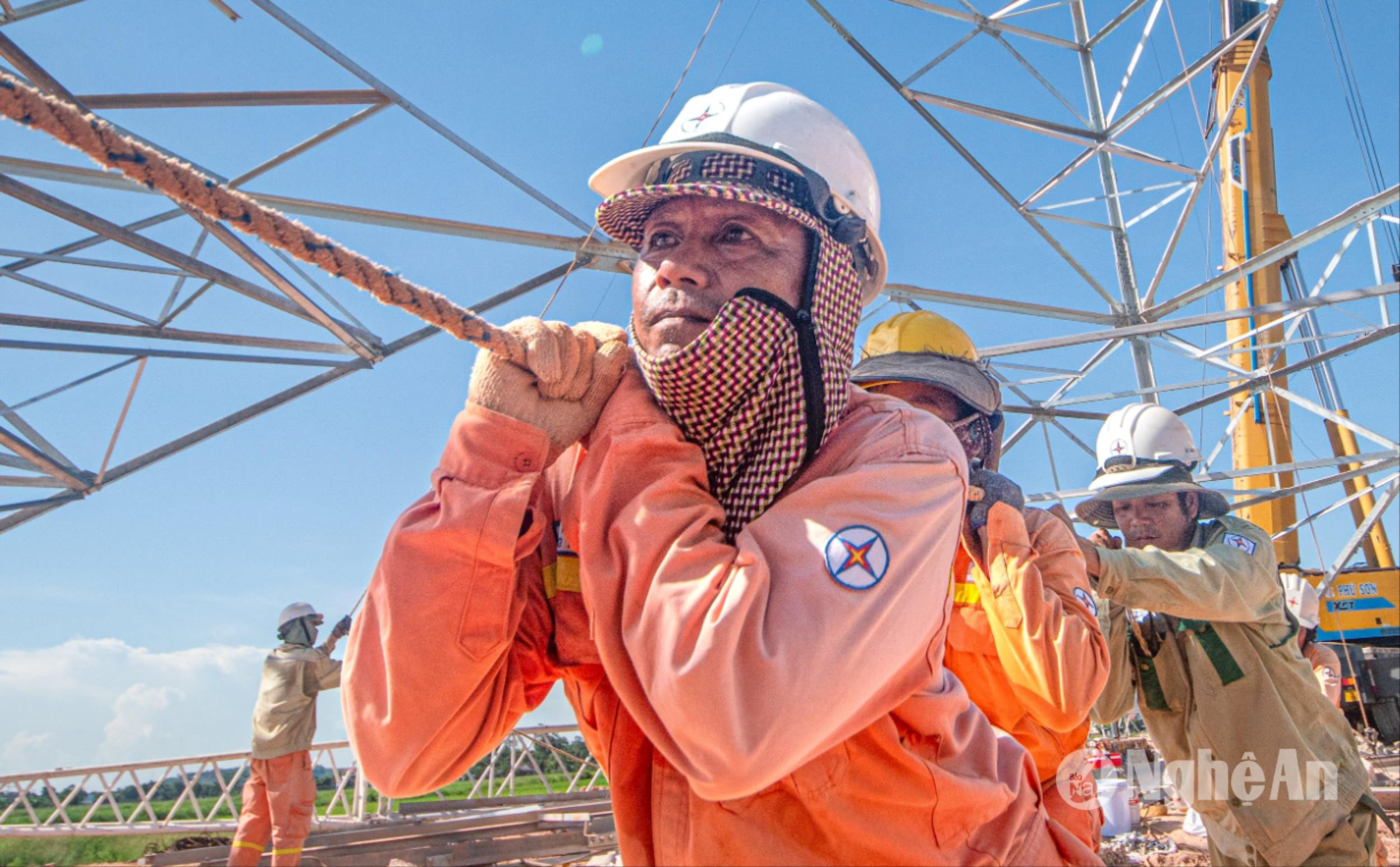
The construction process faced numerous difficulties and major challenges, including land compensation and clearance issues, a shortage of resources, and the need for specialized construction machinery and equipment along the entire route, as well as a highly skilled workforce for erecting poles and pulling wires. Furthermore, the challenging terrain of the construction site, with many locations on high, steep hills and mountains, and unfavorable weather conditions, necessitated frequent construction halts to ensure the safety of workers and equipment.
In Nam Dan district, Mr. Vo Thanh Chung, from the Vinh Power Transmission Team, said that his job involved installing the pole at position 343, pulling the tension wires between positions 357 and 360; he participated in the construction project for more than 3 months. Mr. Chung shared: "The work at the project site is extremely hard and strenuous; the weather is scorching hot, and the terrain is complex. However, I and my fellow engineers and workers all share the same will and determination to overcome difficulties and contribute to completing the project on schedule."
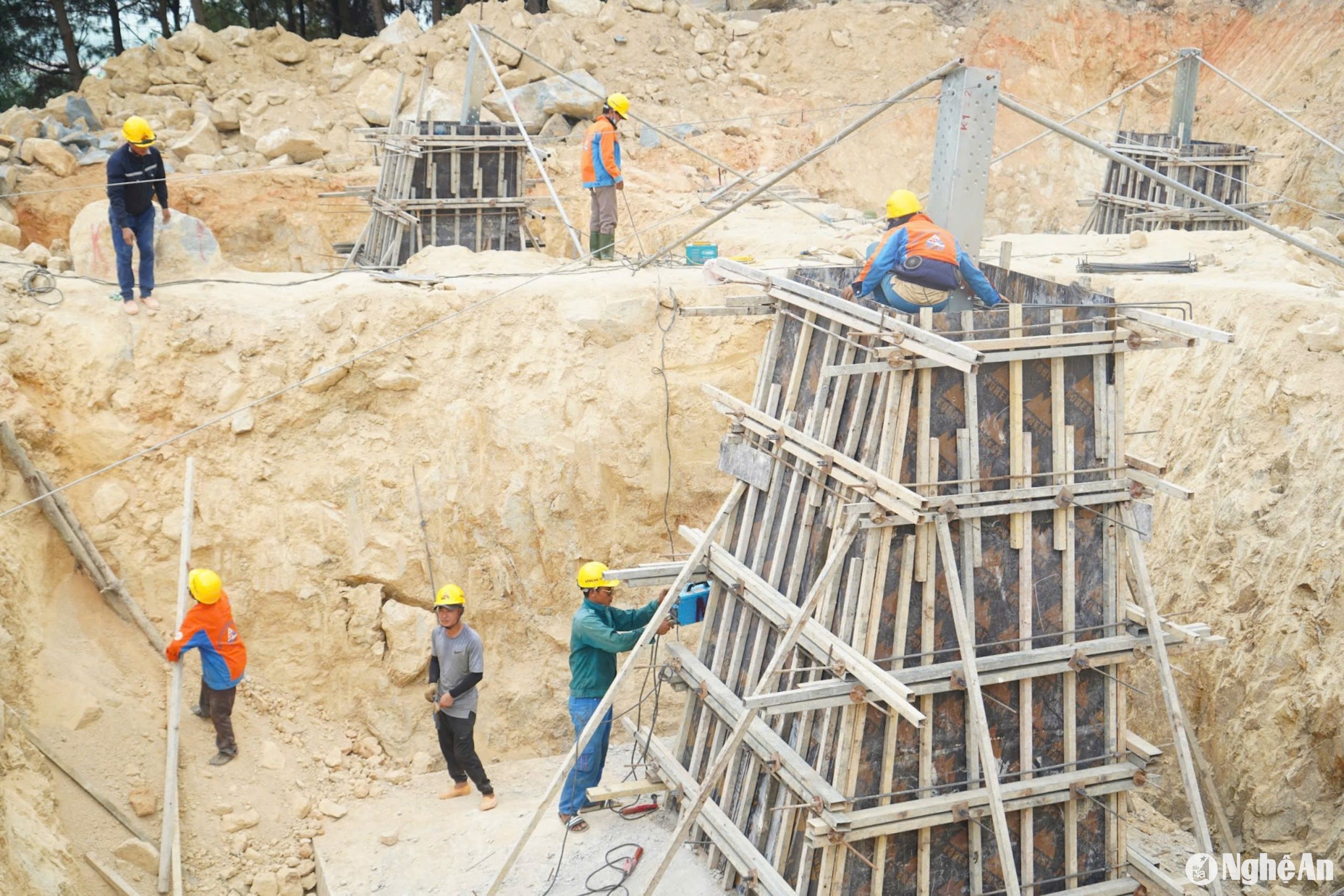
At numerous review meetings, progress monitoring sessions, and on-site inspections held recently, Prime Minister Pham Minh Chinh commended the leaders of ministries, sectors, localities, political and social organizations, EVN, EVNNPT, consulting firms, equipment suppliers, and construction units for their work demonstrating the spirit of "overcoming the sun, conquering the rain, not giving up in the face of storms," "only discussing work, not retreating," "working day and night," "eating quickly, sleeping urgently," working continuously 24/7, "3 shifts, 4 teams," and "working through holidays and Tet (Lunar New Year)." Thanks to these efforts, the project has been completed and put into operation, meeting the requirements directed by the Prime Minister.
Since the start of investment and construction, the Quang Trach – Pho Noi 500 kV transmission line project has received strong and consistent guidance from the entire political system, especially the direction and management of the Government and the Prime Minister personally. With new thinking, methods, and approaches compared to previous methods, the project implementation time has been significantly shortened, meeting the completion deadline as directed by the Prime Minister. This is unprecedented for previous 500 kV transmission line construction projects.
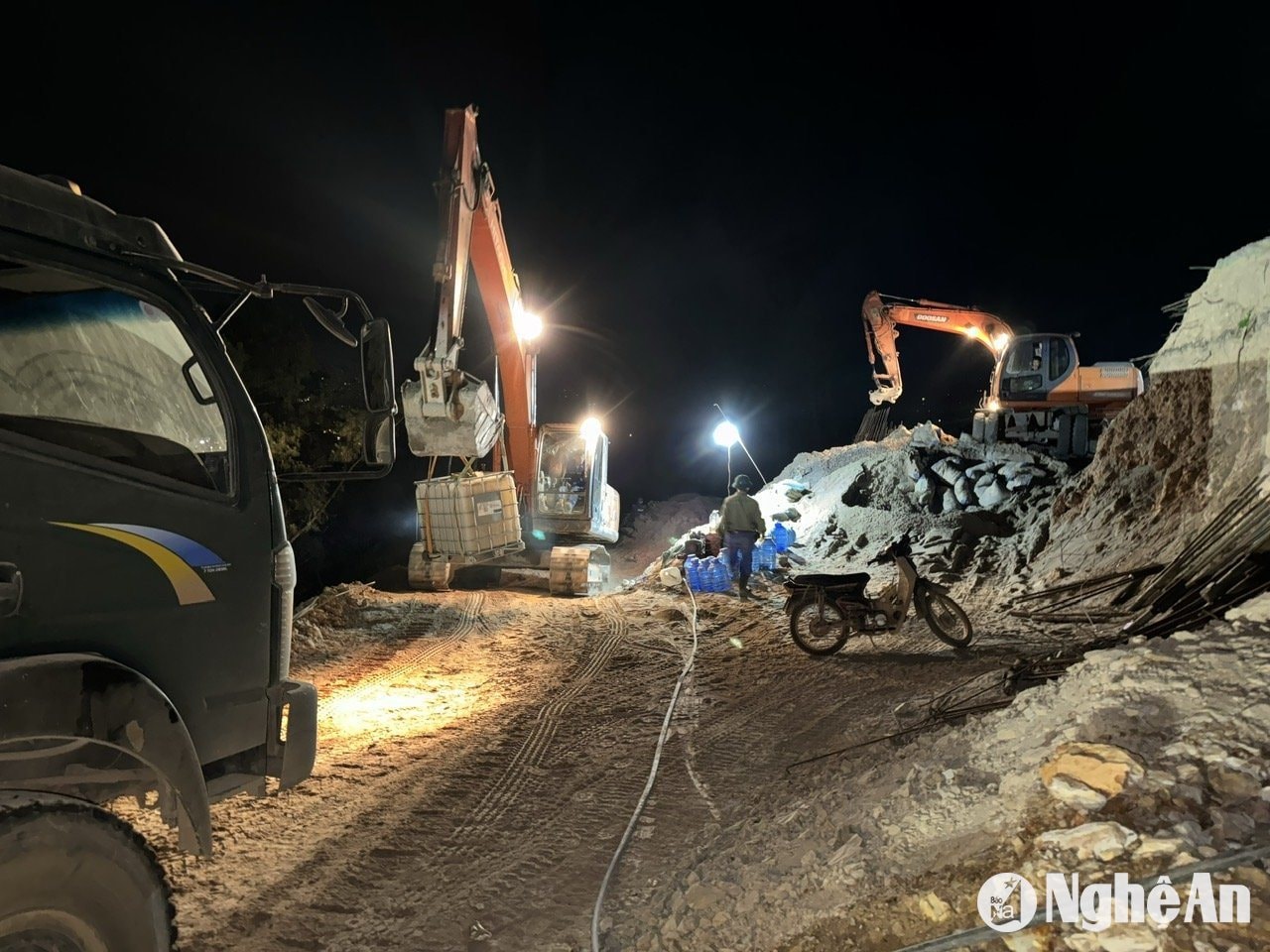
Following the direction of the Prime Minister, and with the decisive and consistent involvement of the Provincial Party Committees and People's Committees in implementing the "4-on-site" principle, EVN/EVNNPT has coordinated with local authorities to mobilize manpower, machinery, equipment, and materials in the localities where the projects pass through, thus accelerating the progress of foundation excavation and casting.
In Nghe An province, approximately 2,000 local people participated in the construction with over 180,000 man-days of labor; 700 soldiers from the military contributed about 21,000 man-days of labor; 74 volunteer youth teams with the participation of more than 1,100 members assisted in erecting poles, transporting poles, clearing land, and supporting wire pulling; security forces were constantly on duty at the sites, ready to handle any cases that hindered construction, etc.
Many lessons were learned from the project's success.
In Nghe An, the project consists of two component projects: The 500kV Quang Trach - Quynh Luu transmission line project, approximately 82.33 km long, includes 168 tower foundation locations, corresponding to 169 tower spans in the districts of Nam Dan, Nghi Loc, Dien Chau, Yen Thanh and Quynh Luu.
The Quỳnh Lưu - Thanh Hóa 500kV power line project in the province is approximately 17.5 km long, comprising 34 tower foundation locations, corresponding to 34 tower spans, located in Quỳnh Lưu district and Hoàng Mai town.
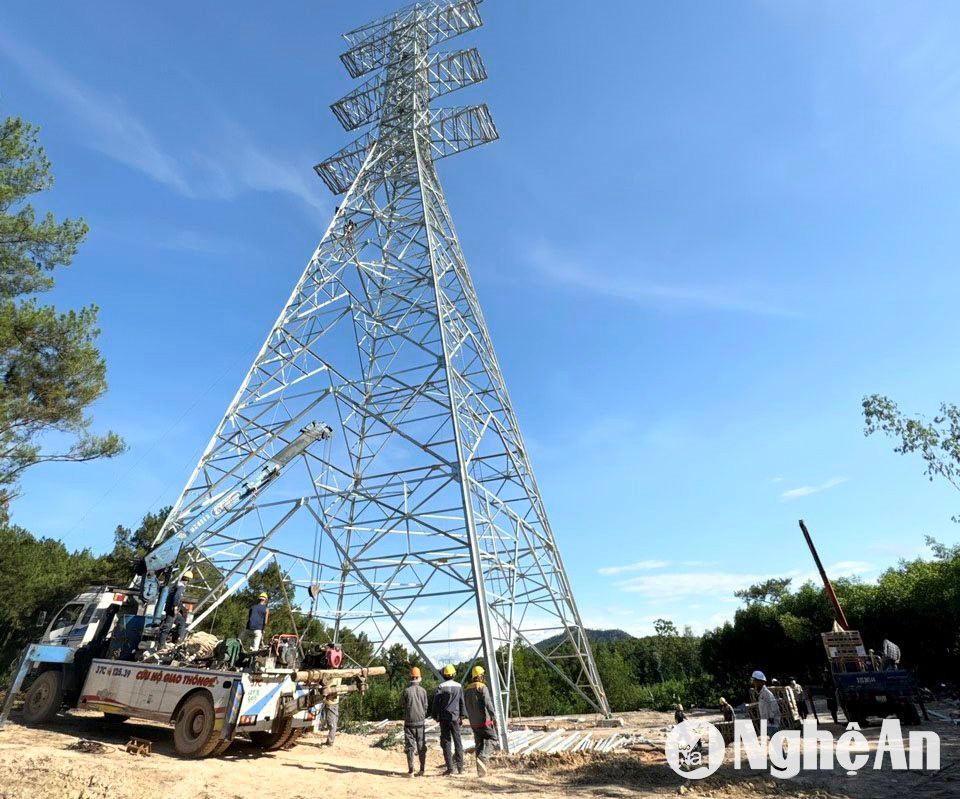
With the effective involvement of the entire political system, Nghe An province completed the handover of 202/202 pole foundation locations to the construction unit on March 10, 2024, just 52 days after the commencement of construction; and handed over all 87/87 anchorage sections on June 18, 2024, after 5 months of commencement, ensuring the progress of the project's cable laying. The "4-on-site" approach was implemented by Nghe An province throughout the project's construction.
Speaking at the project's inauguration ceremony recently, Comrade Thai Thanh Quy – Member of the Central Committee of the Party, Secretary of the Provincial Party Committee, Chairman of the Provincial People's Council, and Head of the Provincial National Assembly Delegation – stated: The 500kV power line project, completed after 7 months of construction, is a "miracle" for Vietnam's electricity industry, contributing to meeting the ever-increasing energy demand for production and daily life of the people.
The images of officials, engineers, workers, and laborers on construction sites "braving the sun and rain," working "three shifts, four teams," and "through the night and on holidays" have left a positive and admiring impression on the people. Through the success of the project, from a local perspective, Nghe An has gained valuable lessons in leadership, direction, management, and implementation to apply to other large-scale projects in the area.
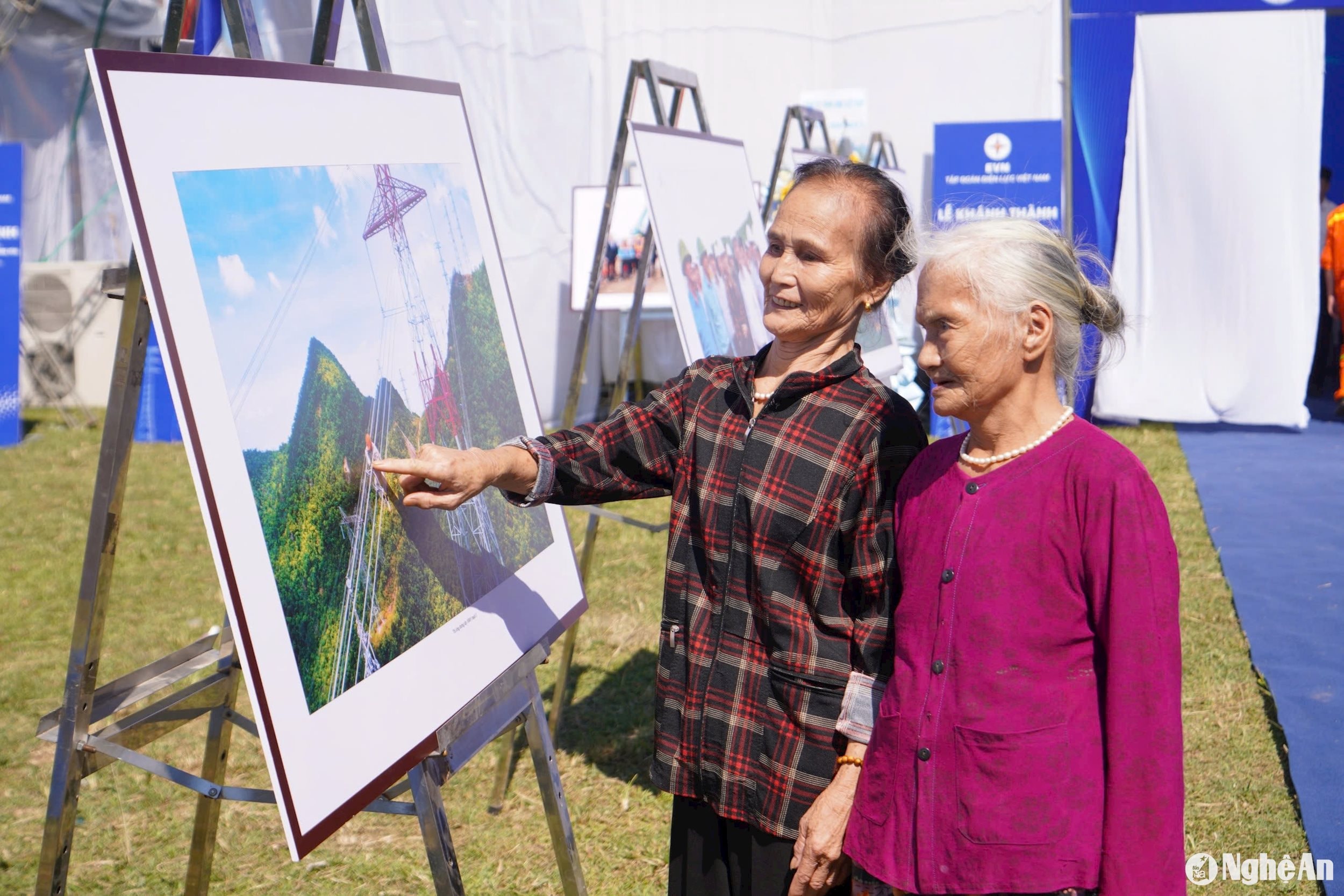
Firstly, it is essential to clearly define responsibilities and demonstrate strong political will and great effort, focusing solely on action and never retreating in carrying out tasks.
It can be said that when the plan to implement the project, spanning nearly 100 km and involving 202 foundation locations within the province, was decided upon, the province faced significant pressure due to the urgent need for timely completion. The project area was vast, spanning six districts, with many points having complex and rugged terrain. It required the acquisition and conversion of large areas of various types of forests and land, affecting many households, and necessitating the demolition and relocation of numerous structures and buildings. Following the directives of the Government and the Prime Minister, the province identified the project's implementation as a top priority and a key political task. The province immediately directed the entire political system to participate, focusing on overcoming difficulties and striving to complete the task as quickly and effectively as possible.
Secondly, the implementation of tasks was carried out urgently, decisively, and flexibly, addressing difficulties wherever they arose. The province organized numerous inspection teams to expedite project progress. In response to emerging issues and situations, provincial leaders were immediately present at the site to focus on resolving them; upon receiving reports of obstacles, the province conducted inspections and directed immediate action without waiting for written reports.
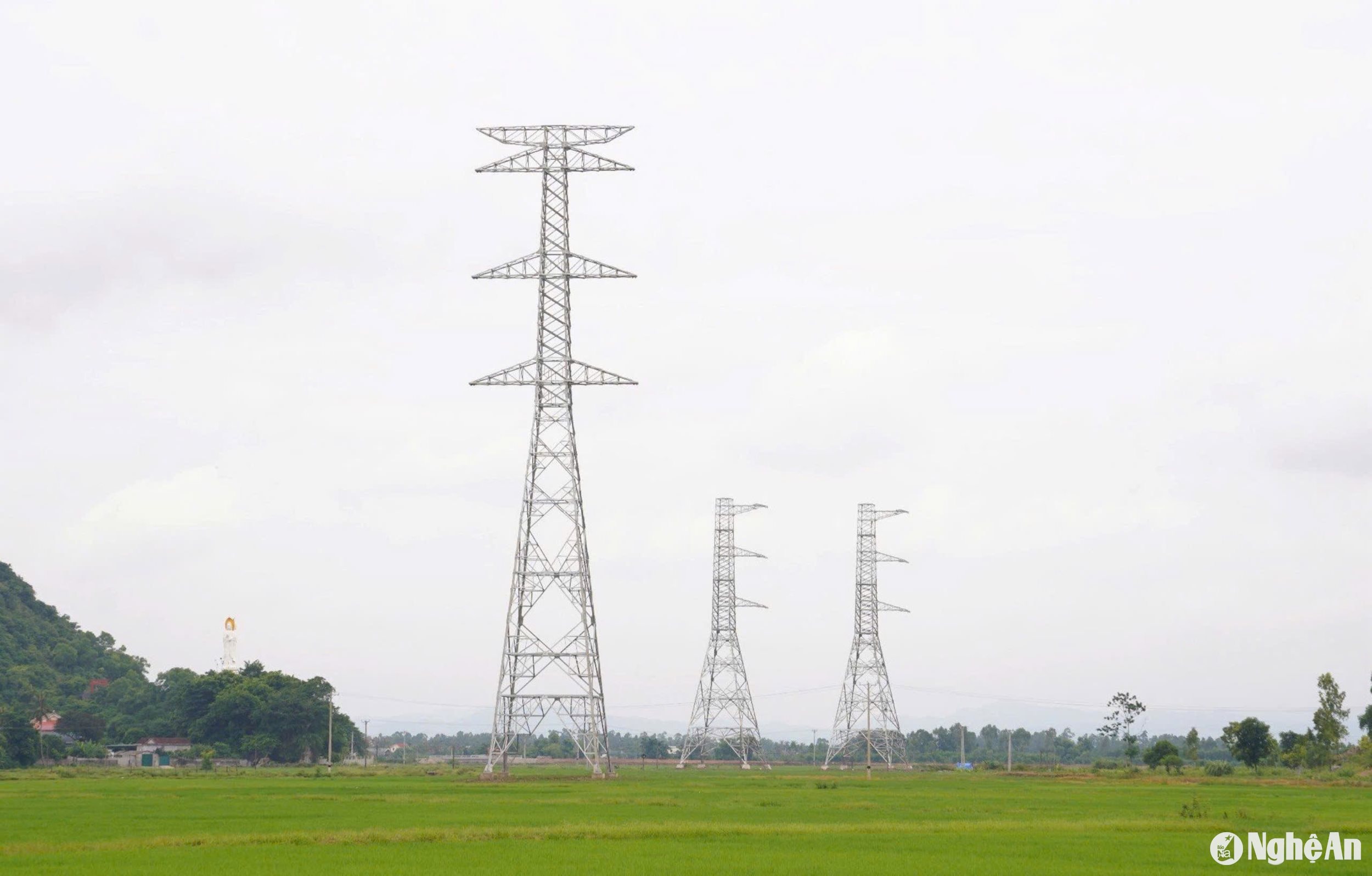
To address the issue of forest area being affected by the project, which could potentially impact the project's progress, the province proactively directed the phased implementation of forest land conversion, prioritizing areas that met the necessary conditions first, and those that did not, handing over the land as each stage was completed. As a result, the entire affected forest area was converted in a timely and compliant manner, providing land for the project.
Thirdly, clearly assign tasks to specific individuals, specifying responsibilities, timelines, and expected outcomes, coupled with regular monitoring, supervision, and evaluation; and leverage the collective strength of the entire population in project implementation.
The province proactively established a steering committee on compensation, support, and resettlement for the project; assigned a permanent project team, and maintained a daily and weekly information exchange mechanism. It intensified propaganda and mobilization efforts to gain public consensus and support for the project's implementation; and strengthened security and order in the project areas. Close and coordinated cooperation was maintained among agencies, units, and departments, especially the investor and contractors, to carry out the tasks. Over 70% of all types of construction machinery, 90% of unskilled labor, and 100% of local construction materials were mobilized for the project. Nearly 5,000 people, including citizens, officials, soldiers, and youth union members, contributed tens of thousands of man-days to support land clearance, relocation of structures, material transportation, and cable laying, contributing to the project's success.
In the coming period, Nghe An province will continue to closely coordinate with the power sector to complete the remaining tasks of the project, stabilize people's lives and production; protect the safety of the project, develop power sources and the power grid according to the plan to maximize the project's effectiveness in the province.


