
The saltwater intrusion prevention dike in Hoang Mai town has been damaged.
(Baonghean) - The saltwater intrusion prevention dike located in Quynh Di ward (Hoang Mai town) was built many years ago, and coupled with the frequent passage of heavy-duty vehicles, the dike has suffered serious erosion.
One day at the end of November, while present at the saltwater intrusion prevention dike section passing through Quynh Di ward (Hoang Mai town), we observed many large trucks carrying construction materials driving through the area.
According to regulations, vehicles traveling on the dike are only allowed to carry a load of less than 12 tons. However, according to reports from residents, many trucks are carrying loads exceeding the regulations. Yet, law enforcement rarely takes action against these violations.
Due to the long period of use of the dike, combined with the heavy traffic of trucks, the river dike has deteriorated significantly. Many sections of the dike surface have peeling stones, cracks, and uneven surfaces; in particular, many sections have subsided deeply, creating sinkholes.
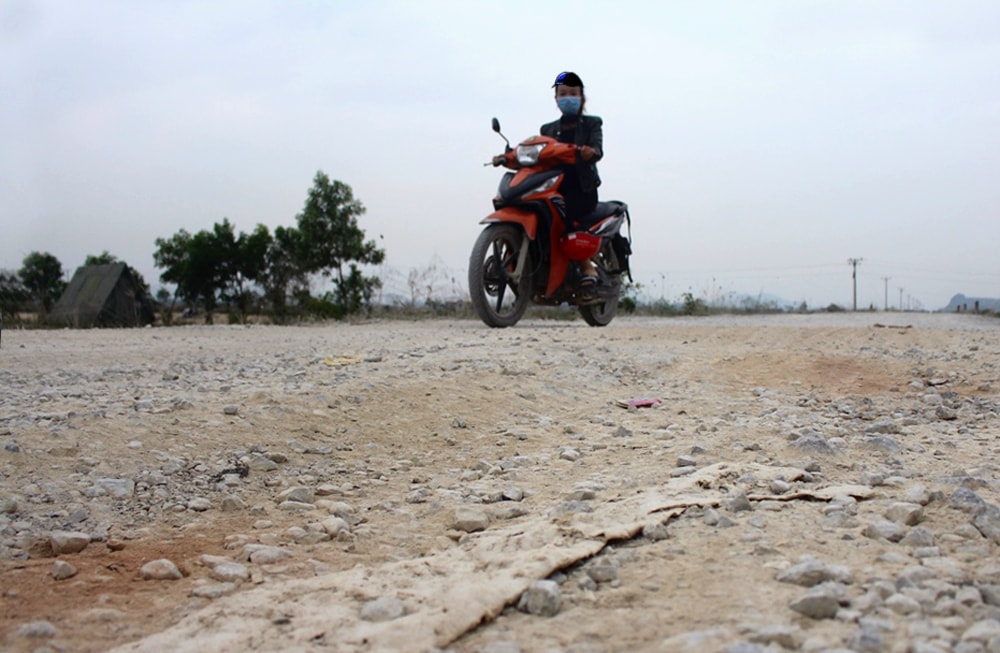 |
| The sea dike section passing through Quynh Di commune (Hoang Mai town) has its stones peeling off and is rough; in particular, many sections have suffered deep subsidence and serious damage. Photo: Viet Hung |
Mr. Nguyen Van Manh, a resident of Quynh Di ward, said: "This dike has been deteriorating for a long time. Large trucks carrying stones are constantly taking shortcuts on the dike to reach the provincial road. If no measures are taken to prevent or ban heavy trucks, the dike's infrastructure will soon be damaged, affecting irrigation and disaster prevention efforts."
Besides its primary function of preventing saltwater intrusion from affecting agricultural areas, this dike also serves as a public road connecting the localities of Quynh Di and Quynh Loc. Hundreds of vehicles carrying local residents travel along it every day.
Residents along the dike are very upset because of the difficult travel conditions; on sunny days, there is thick dust and smoke, and on rainy days, the road is prone to subsidence. In addition, traveling alongside heavy trucks poses a very high risk of accidents.
According to our research, since 2003, after the river dike project, invested in by the Nghe An Department of Agriculture and Rural Development, was completed, it was handed over to the wards and communes of Quynh Di, Quynh Loc, etc., for self-management and protection, with a total length of nearly 8 km.
Since around 2015, many large construction projects have been concentrated in Quynh Di ward, resulting in daily traffic of trucks carrying construction materials.
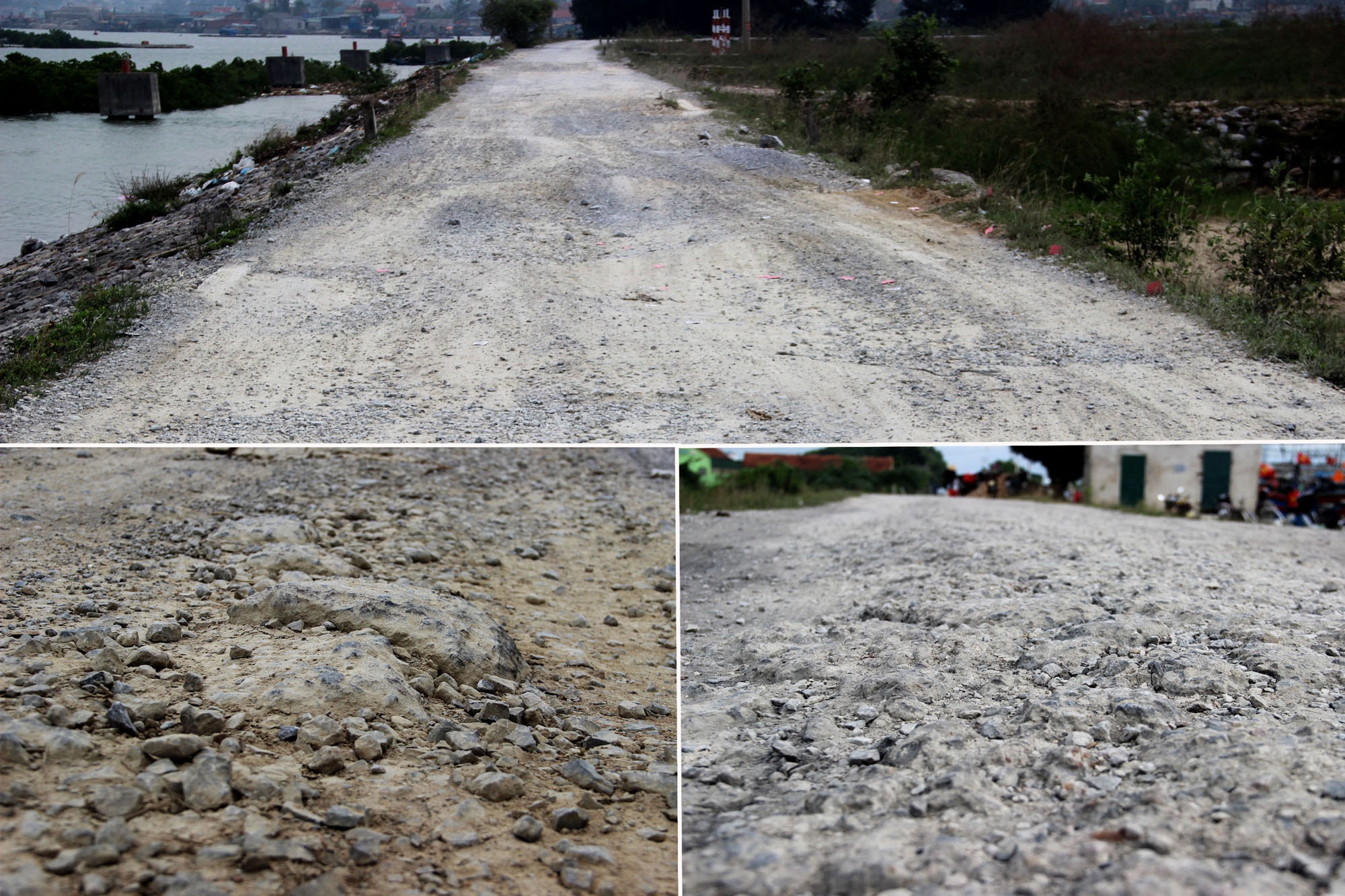 |
| The saltwater intrusion prevention dike in Hoang Mai district is severely degraded, with the road surface eroded and uneven. Photo: PV |
According to local residents, most of the vehicles transport materials from a quarry owned by a mining company located in the area to the construction site. However, to reduce travel time, many trucks have been taking a shortcut across the river dike instead of using the correct route.
According to local authorities, controlling overloaded vehicles that damage dikes remains challenging. These vehicles operate day and night to evade inspection by authorities.
Mr. Van Huy Thang, Chairman of Quynh Di Ward (Hoang Mai Town), said: “In the past, the local authorities have assigned forces to manage and protect the dike, but due to insufficient resources, they were unable to stop vehicles and check their weight for those traveling across the dike. To control and prevent overloaded trucks from damaging the dike, the authorities have requested the town's police force to intervene and take strong action against violators.”
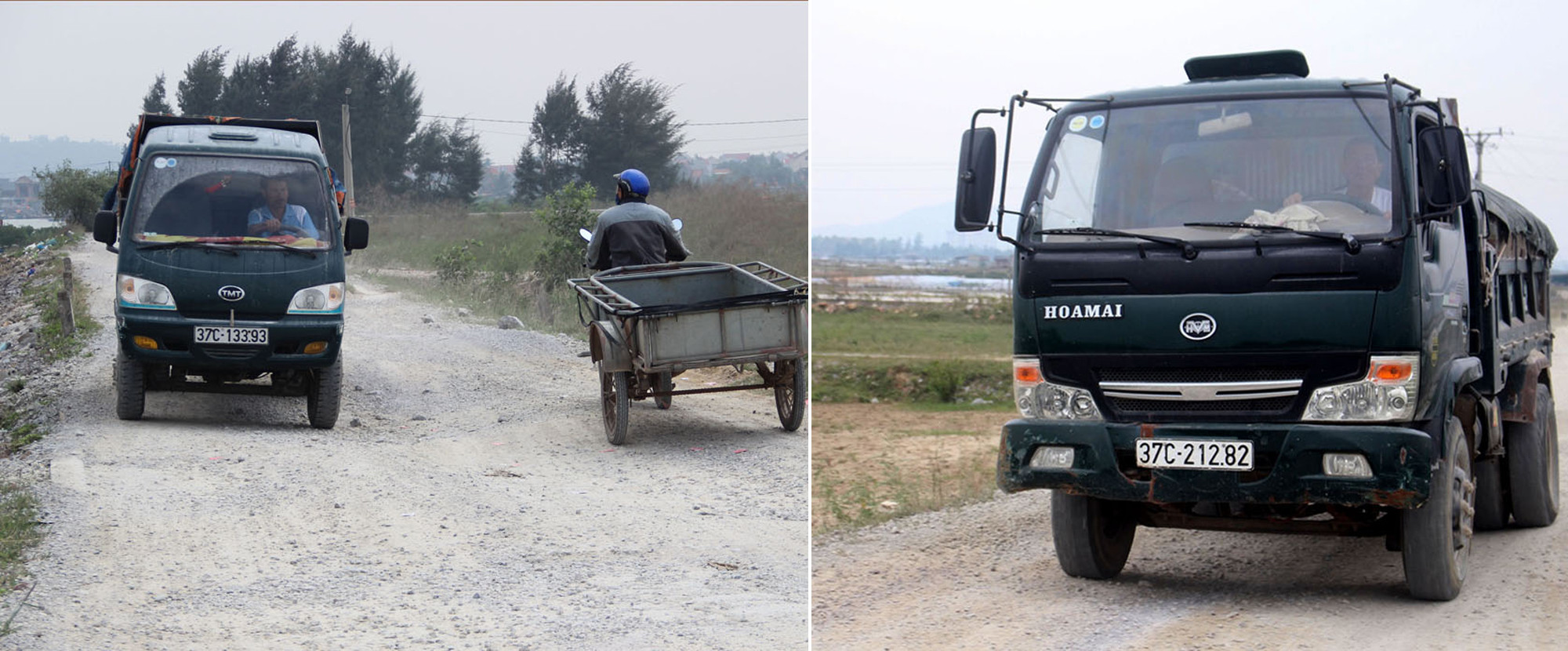 |
| The frequent passage of trucks carrying construction materials is one of the reasons for the deterioration of the dike. (Photo by PV) |
Due to the narrow road, the government has planned to upgrade this dike into a connecting road from National Highway 1 to Den Corn Bridge, approximately 5 km long. This is a climate change mitigation project, serving both as a barrier against saltwater intrusion and as a transportation route for the people. While awaiting the upgrade and repair, localities through which the dike runs need to strengthen coordination with relevant authorities to restrict the circulation of heavy vehicles, which could affect the structure and durability of this dike.


