
Residents are worried as many elevators are not safe.
(Baonghean.vn) - Elevators are now a common means of transportation in high-rise buildings, apartment complexes, and shopping malls. However, many elevators in Vinh City are old, dilapidated, and have expired inspection certificates but have not been inspected or repaired in a timely manner...
Expired, no inspection stamp.
ApartmentThe Bong Sen apartment building in Quang Trung ward (Vinh City) has 22 floors with over 100 households. Despite the large number of residents, the entire building only has two elevators, making transportation very inconvenient. During peak hours, many people have to queue to use the elevator or choose to walk because the wait is too long.
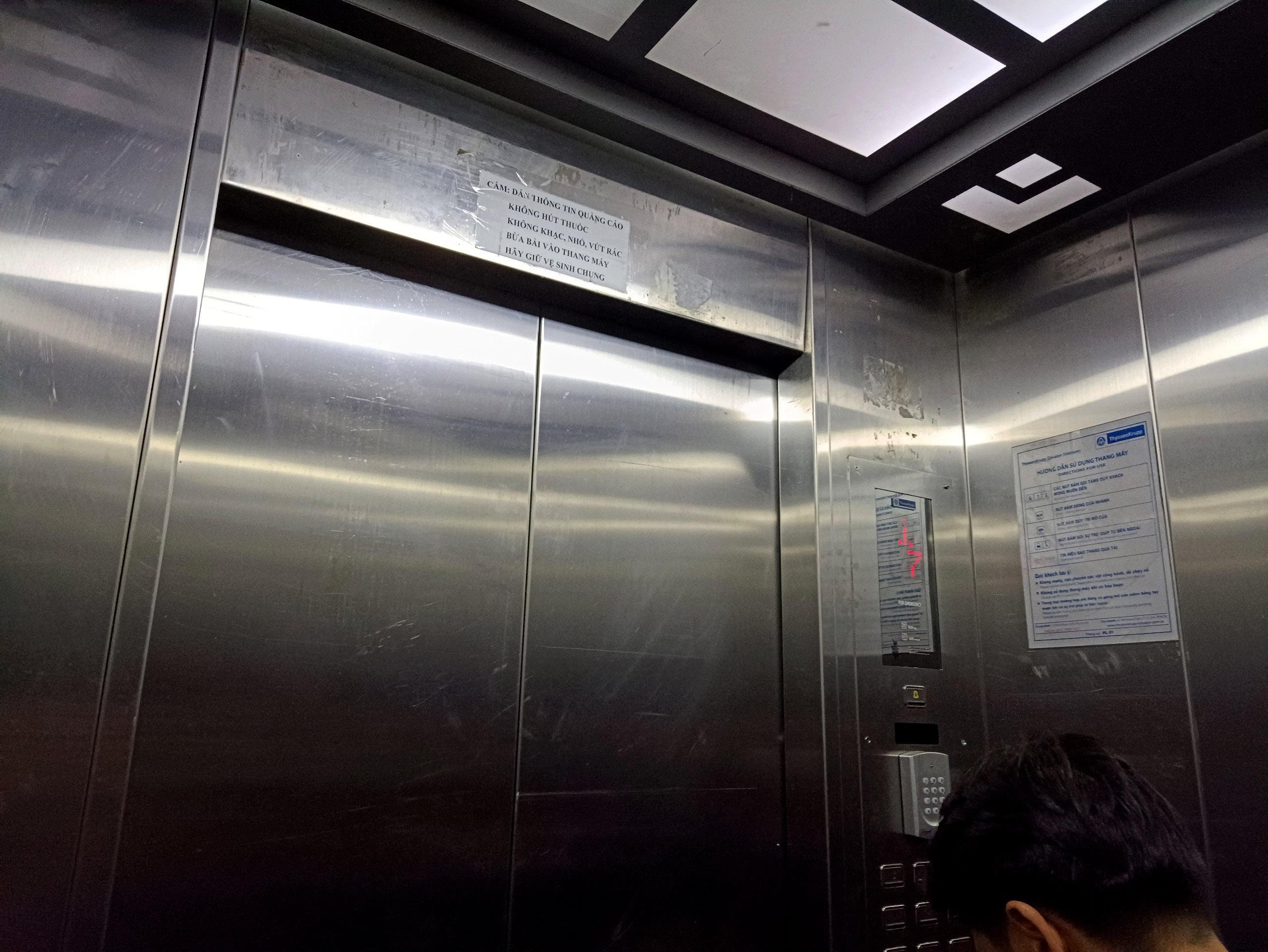 |
The elevators in the Bong Sen apartment building are old and lack inspection certificates. Photo: QA |
The elevators experienced several noticeable problems during operation, such as shaking, creaking noises, and at times, signal loss, causing concern among residents. Notably, according to our observations, neither of the two elevators in this apartment building had the required inspection stickers.
Regarding this issue, Mr. Trinh Dinh Thanh – Head of the Bong Sen Apartment Building Management Board – said: “The building's elevators have been in operation for 10 years, so deterioration is unavoidable. In fact, we have a plan to upgrade and repair the elevators, but the cost is too high to implement it at the moment.”
Mr. Thanh stated that the building management had contacted technicians to regularly inspect the elevators, ensuring the safety of residents. However, when the reporter asked why the elevators had been inspected but lacked the required inspection sticker, Mr. Thanh could not provide an explanation.
Not only at the Bong Sen apartment building, but in fact many high-rise buildings in Vinh City also lack inspection stamps, or have stamps but the inspection date has passed and the information is no longer available. For example, at the Kim Truong Thi apartment building in Truong Thi ward, the elevator in building B has an inspection stamp but the date is no longer available. At the Muong Thanh Cua Dong Hotel, the inspection date was December 8, 2016, and it was valid until December 8, 2020. To date, the inspection has expired two years ago, but it has not been re-inspected…
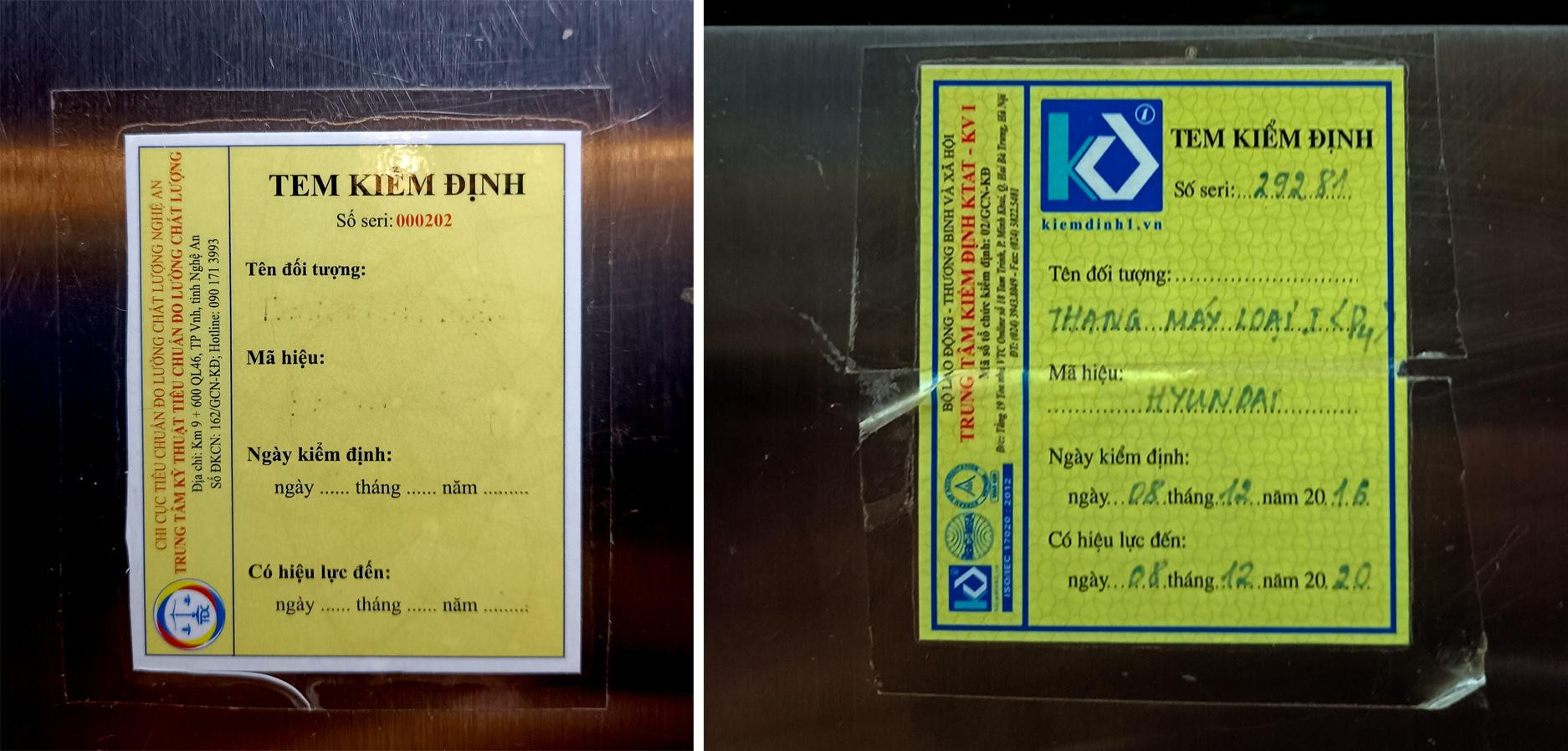 |
The elevator in building B, Kim Truong Thi apartment complex, Truong Thi ward, has no inspection date (left), and the elevator at Muong Thanh Cua Dong Hotel has expired its inspection certificate (right). Photo: QA |
Most recently, a free-fall incident occurred at an apartment building in Ben Thuy ward, Vinh City, causing many people to be terrified. Although everyone inside the elevator cabin was rescued in time, residents were subsequently afraid to use the elevator again. Upon inspection, it was discovered that the elevator's inspection certificate had expired.
Afterward, the building management contacted the authorities to inspect and repair the elevator. However, many people questioned when the elevator would have been inspected to ensure the safety of residents if the incident hadn't occurred.
Must be inspected periodically.
According to Circular No. 36/2019/TT-BLDTBXH of the Ministry of Labor, Invalids and Social Affairs, elevators are included in the list of equipment, machinery, materials, and substances that require strict safety and occupational hygiene standards. These devices are required to undergo inspection according to State regulations to ensure absolute safety for users.
The inspection cycle is clearly stipulated in the National Technical Standard on Occupational Safety for Elevators issued by the Ministry of Labour, Invalids and Social Affairs. For elevators less than 10 years in service: the periodic inspection period is 3 years. For elevators more than 10 years in service: the periodic inspection period is 2 years. For elevators more than 20 years in service: the periodic inspection period is 1 year.
 |
Many elevators in Vinh City are overloaded during peak hours. Photo: QA |
According to a representative from the Nghe An Center for Technical Standards, Metrology and Quality, Vinh City and Cua Lo Town have the highest number of elevators in Nghe An province. On average, the Center inspects about 10 elevators per month; however, many elevators whose inspection certificates have expired have yet to be checked or addressed.
Mr. Nguyen Dinh Hung, Director of the Nghe An Center for Technical Standards, Measurement and Quality, stated: Elevators must be inspected in the following cases: Before commissioning and after complete installation; Periodic inspection after the expiration of the previous inspection; Unexpected inspection due to user or unit suspicion about the quality and safety of the elevator, or at the request of a competent authority. Each type of elevator has a different technical safety inspection procedure, but the inspection process will include basic steps such as: Checking equipment records and history; External technical inspection; Checking load testing modes and processing inspection results. After successful inspection, the elevator will be publicly affixed with an inspection sticker so that building management and elevator users are aware of the inspection.
 |
Workers from the Nghe An Center for Technical Standards, Metrology and Quality inspect elevators in the area. Photo: QA |
In reality, elevator safety inspections in Nghe An province still face many shortcomings. Many building owners, hotel and apartment owners do not pay sufficient attention to this issue; they only contact authorities when incidents such as elevator falls, entrapment, or signal failures occur. Therefore, relevant authorities and local governments need to strengthen inspections and strictly penalize building owners who fail to conduct regular elevator inspections to ensure the safety of elevator users.
Clause 4, Article 23 of Decree 28/2020/ND-CP clearly states: For violations of regulations on the use of machinery and equipment requiring strict occupational safety and hygiene standards, a fine of 2 to 3 times the total cost of inspecting the violating machinery, equipment, and materials (calculated at the minimum price stipulated by the competent authority) shall be imposed, but not less than VND 20,000,000 and not more than VND 75,000,000 for the act of failing to inspect before use or failing to conduct periodic inspections during the use of machinery, equipment, and materials requiring strict occupational safety standards.


