
These 'unique' and expensive insects are sought after by diners.
In Vietnam, there are rare delicacies made from insects that not everyone has the courage to try, but once you've tasted them, you'll be hooked. Many types are quite rare and are always sought after by drinkers despite their high prices.
Beetle
Palm weevil larvae are the pupae of insects that live in the soft inner parts of the palm tree's crown, such as coconut palms, betel palms, and palm trees. Two common types are the coconut palm weevil and the date palm weevil, differing in size and color. However, the most valuable and rarest is the date palm weevil.
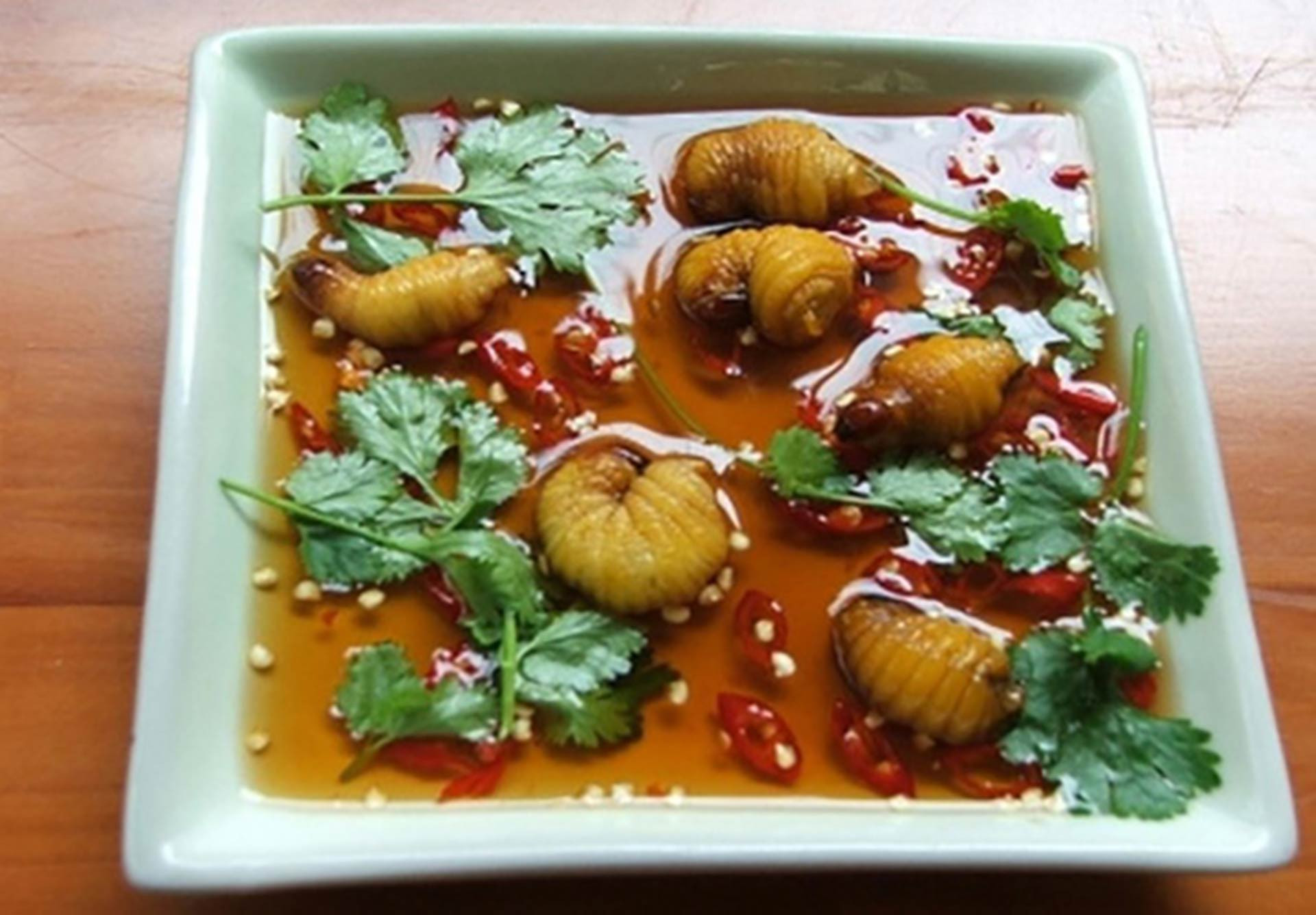 |
Date palm weevils are quite similar to coconut weevils but are larger in size. Photo: Arttimes |
According to locals in Ca Mau, each date palm tree only has one palm weevil larva. Furthermore, only wild date palms growing in mangrove forests can produce these larvae. They are natural insects and cannot be farmed. Therefore, they are very rare, and many people seek them out to enjoy.
Date palm weevils are quite similar to coconut weevils but larger in size. They are pure white, with no hairy bodies or black intestines like many other types of weevils. A single date palm weevil costs about 65,000 VND.
Coconut beetle larvae are a unique and one-of-a-kind delicacy in the coconut-growing region of the Mekong Delta. Eating them raw with fish sauce is one of the most popular dishes. However, not everyone dares to try this delicacy because the larvae resemble young caterpillars, with soft, milky white bodies that move by wriggling back and forth, and can make people scream in terror the first time they see them.
Because it's a delicious and popular dish, many households are now trying to breed coconut beetle larvae for profit. However, this is still considered a harmful organism, so breeding and raising coconut beetle larvae in any form is prohibited. On the market, coconut beetle larvae are sold for 10,000-20,000 VND per larva.
Silkworms
In the past, people only ate silkworm pupae. But now, many people buy live silkworms to prepare them into various dishes. They are sought after because they are advertised as a superfood, even better than ginseng and deer antler velvet, and have a rich, creamy, and delicious taste.
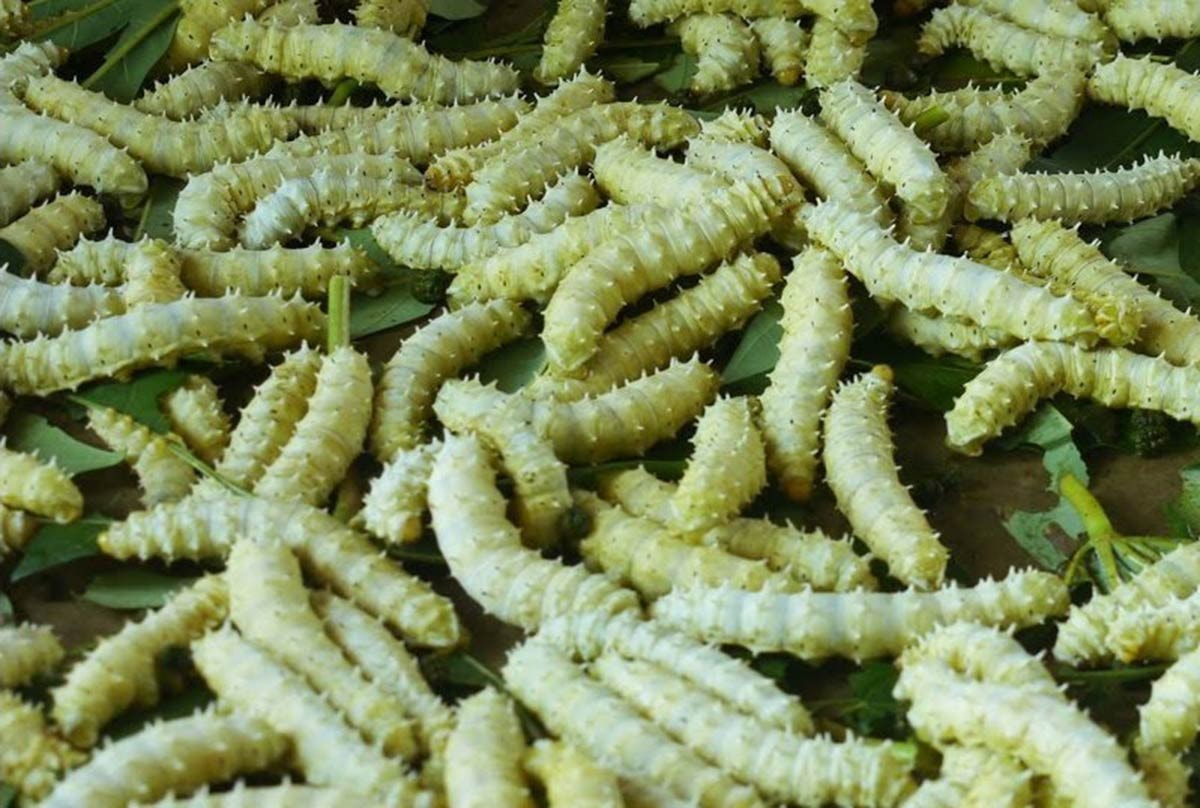 |
Many people buy live silkworms to prepare into dishes. Photo: Nhu Bang |
Therefore, more people are switching to raising silkworms for food. However, buying fresh, live silkworms is not easy; customers usually have to order in advance because silkworms mature in batches. The price of silkworms ranges from 150,000 to 200,000 VND/kg, depending on the type.
Chitin worms
The chít worm, which lives inside the chít tree, is a unique delicacy of the people of Northwest Vietnam. This type of worm can be used both as food and as a medicine with many valuable uses. Considered a "cordyceps sinensis" (a precious Chinese medicinal herb), chít worms are highly sought after.
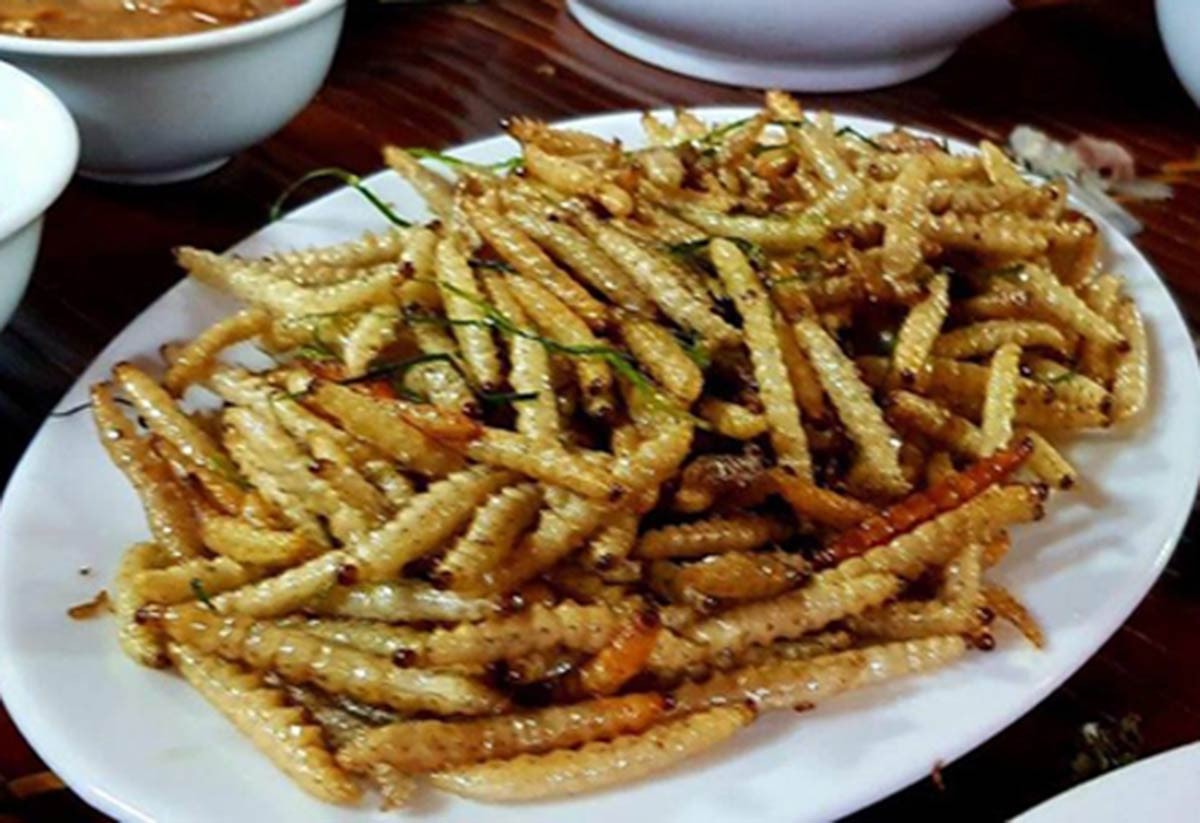 |
Silkworm larvae are often used to make medicinal wine or processed into various dishes. (Photo: Lao Cai Newspaper) |
On the market, fresh silkworm larvae are sold for about 1 million VND/kg, while the separated and dried silkworm larvae are priced at around 4-6 million VND/kg (depending on size).
Bamboo shoot worms
Bamboo worms are a type of worm that lives on bamboo shoots and are a delicacy of people in mountainous areas such as Son La and Muong Lat (Thanh Hoa). Bamboo worms are about the size of a chopstick tip and about two finger lengths long.
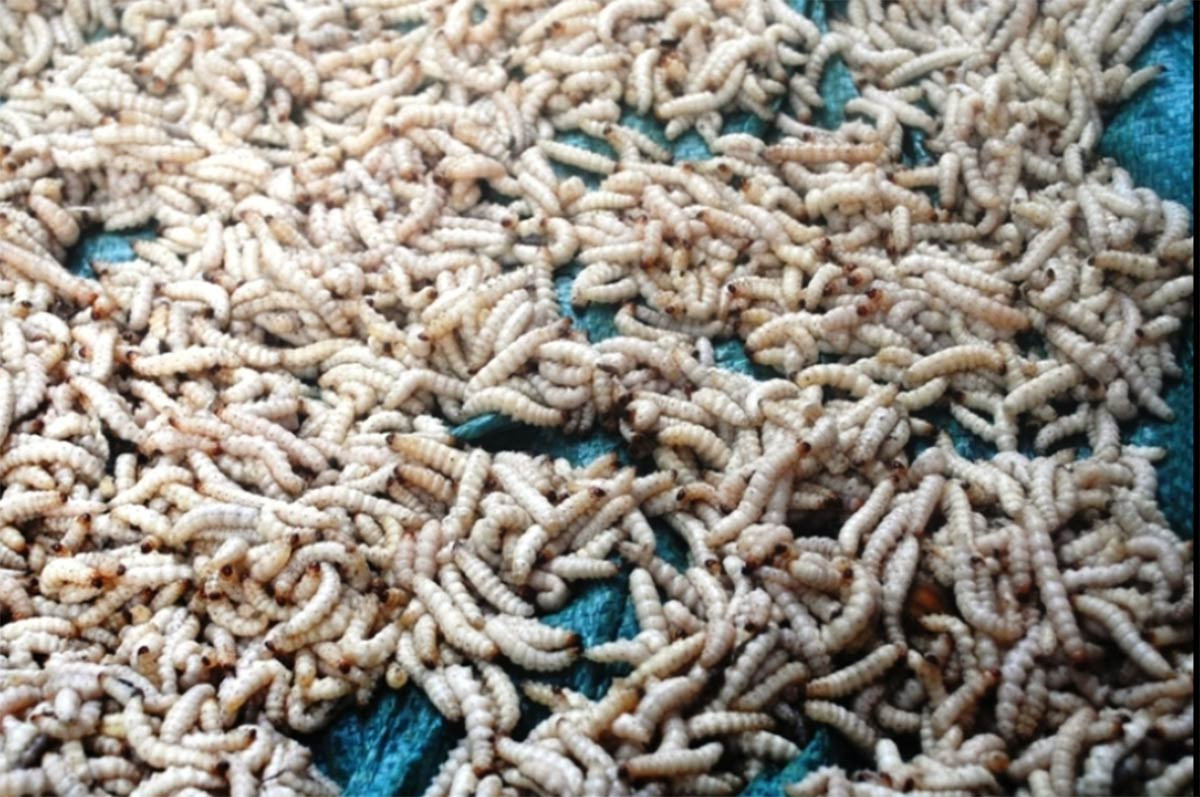 |
Bamboo shoot worms are a type of worm that lives on bamboo plants. (Photo: Dan Tri) |
Bamboo worms are similar to silkworms, but people usually buy them for cooking rather than soaking them in alcohol. The most delicious, simple, and appealing dish is stir-fried bamboo worms with lime leaves. Bamboo worms in Muong Lat town cost from 150,000-200,000 VND/kg. In Hanoi, the price of bamboo worms can reach up to half a million VND/kg.
Cassia caterpillar
The cassia caterpillar is the larva of a species of caterpillar that lives on cassia trees, and it is green like the leaves. In the Central Highlands region, cassia trees are often planted for pepper vines to climb on, and since these caterpillars only eat the leaves, farmers do not spray pesticides, waiting until they form cocoons before harvesting them.
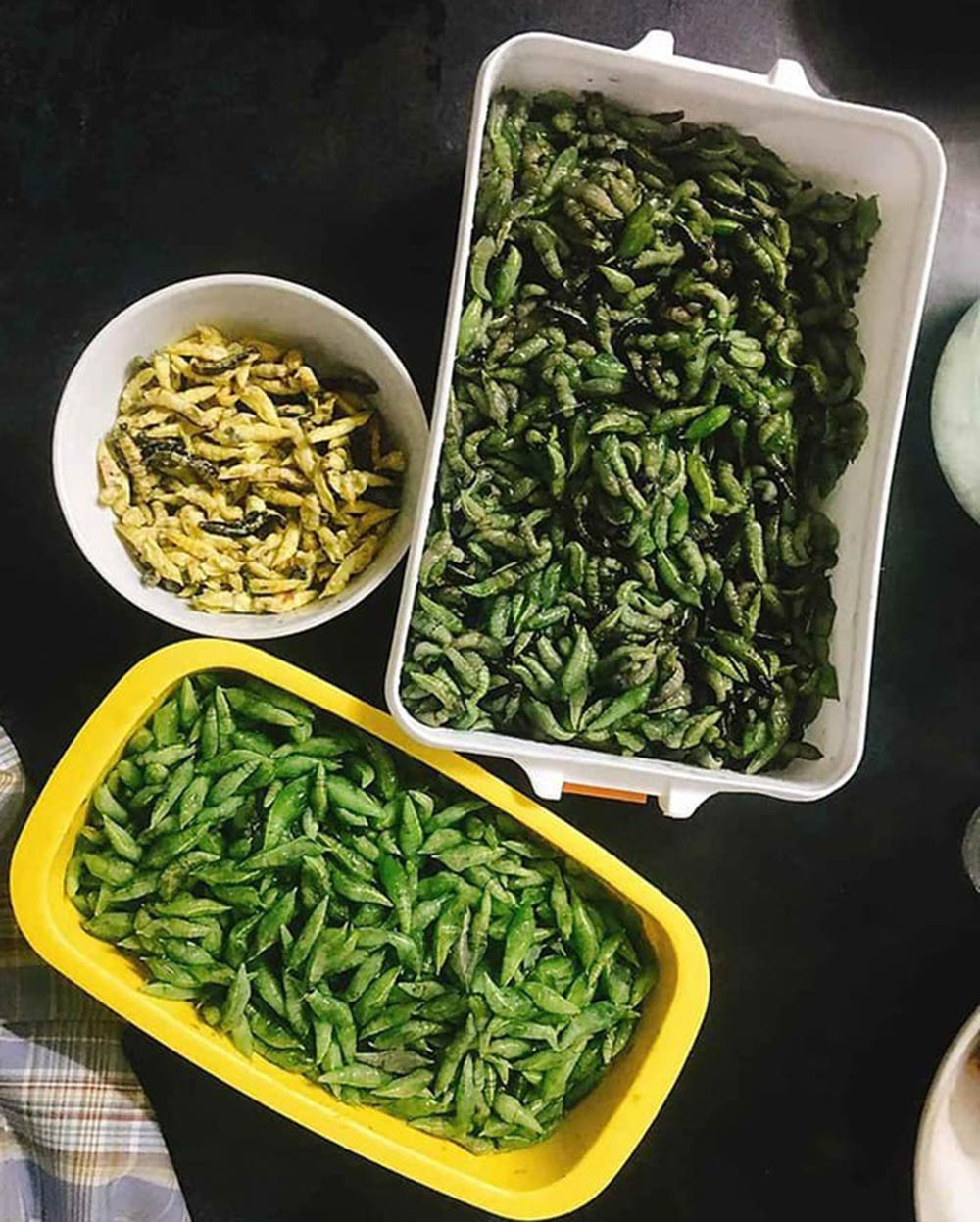 |
Cassia caterpillar. |
Similar to silkworm pupae, you can fry, stir-fry, batter-fry, boil, or even eat them raw. The silkworm pupae have a distinctive rich, nutty flavor characteristic of insect larvae. Locals usually wait until these pupae form cocoons before harvesting and processing them into food.
Although a specialty of the Central Highlands, the pupae of the Cassia fistula tree are quite popular among Hanoi residents, despite their price reaching 200,000 VND/kg.
Sandworm
It's called a sand worm because it usually lives deep in the sand and resembles a worm in shape. It's also known as a sea worm or sand worm. Sand worms are found in abundance along the coast of Quang Ninh province.
When fresh, sea worms resemble earthworms, measuring about 5-10cm in length, with some reaching 15-40cm. 1kg of fresh sea worms costs 200,000 VND, while dried ones can fetch 4-5 million VND/kg. Sea worms are expensive due to their high nutritional content and potential use in treating various ailments, particularly as a tonic for men to enhance vitality. In the past, sea worms were considered a rare and precious seafood, often offered as tribute to kings and officials.
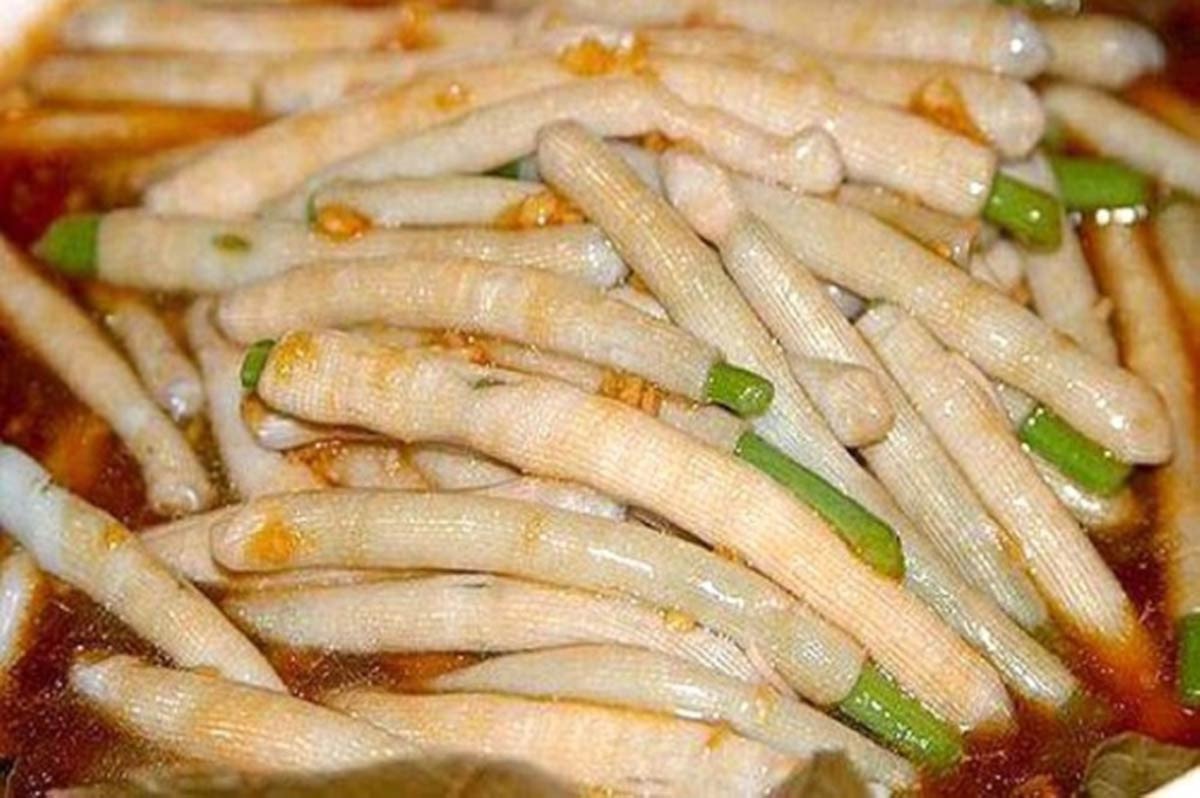 |
Sea worms. |
In cooking, sea worms are considered a special kind of MSG. Fresh sea worms are used in soups, stir-fried with fresh garlic, or roasted and served with chili sauce. Dried sea worms are simmered with bones and used in dishes related to pho and vermicelli.


