
Mountain farmers earn nearly 100 million VND/year from cage fish farming.
(Baonghean.vn) - Taking advantage of the overflow water from the Khe Bo hydroelectric dam, households living along the banks of the Khe Co reservoir in Dinh Phong village, Tam Dinh commune, Tuong Duong district have initially succeeded in developing a cage fish farming model.
In 2017, the first three households to establish a cage fish farming model on Khe Co lake in Dinh Phong village, Tam Dinh commune, Tuong Duong district were the families of Mr. Ngan Van Noi, Mr. Vi Van Puong, and Mr. Vi Van Long.
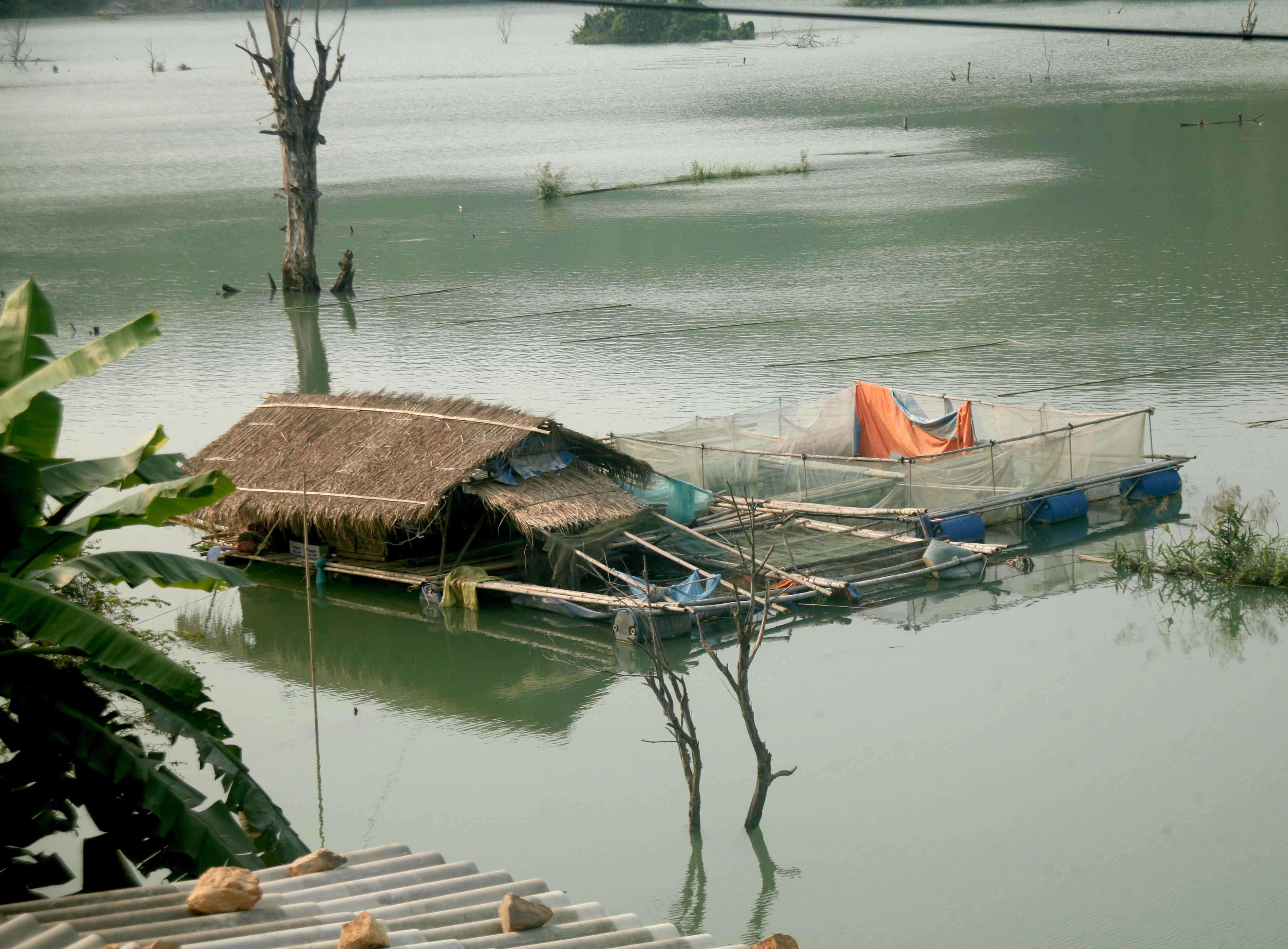 |
| The cage fish farming model has been tested since 2017 and has yielded promising results. Photo: Nguyen Hanh |
Mr. Ngan Van Noi shared: "The cage fish farming model of the households is mainly invested in by the families themselves, who research how to make cages, buy fingerlings, and then share them with each other. This helps the villagers cooperate in investing in economic development with the hope of creating a more prosperous life for the people in the highlands."
The fish that local households choose to raise are mainly grass carp, common carp, and tilapia. The fish feed is entirely natural, mainly cassava leaves, banana leaves, banana stems, and forest grasses.
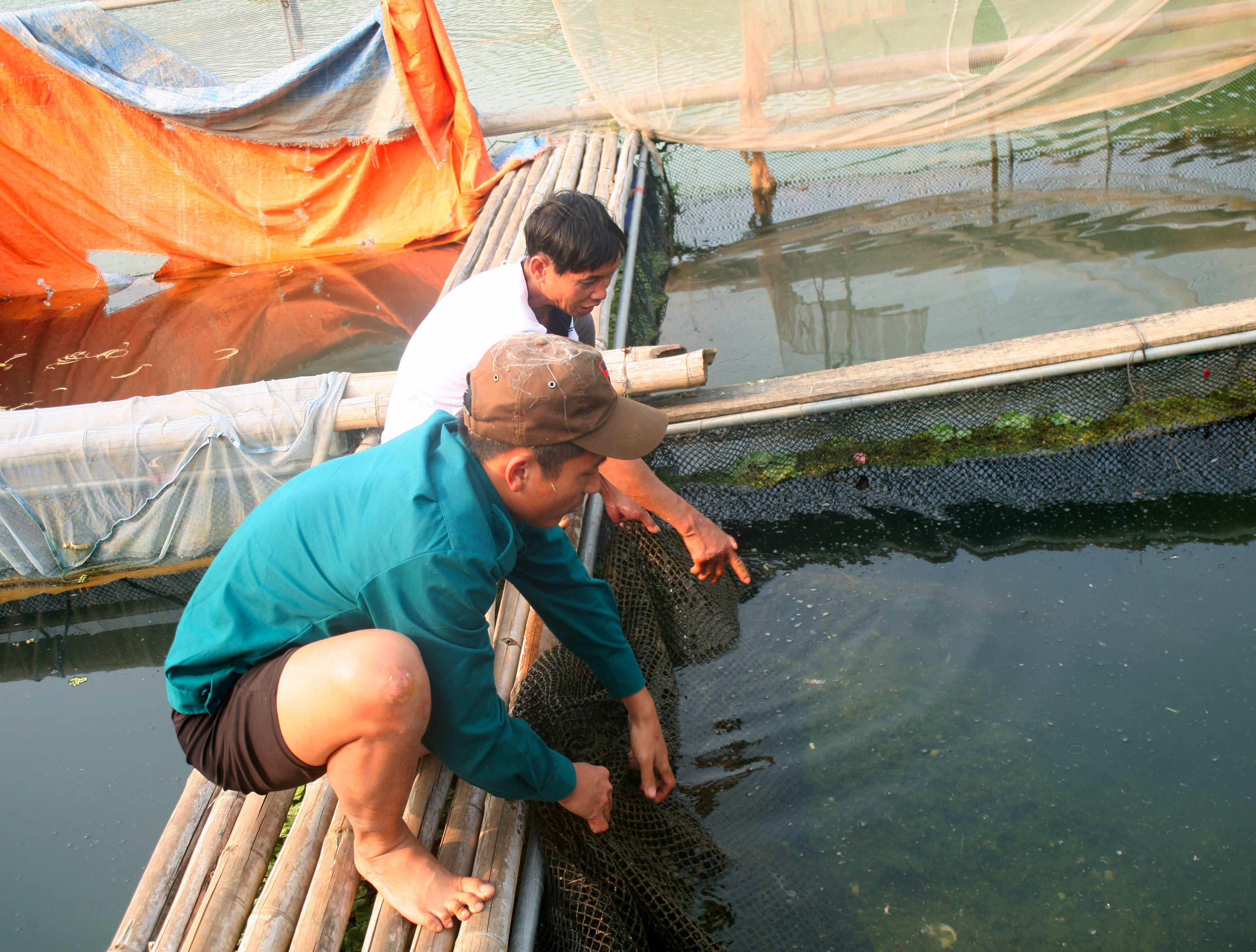 |
| Ngan Van Noi and Vi Van Long are taking care of the fish cages. Photo: Nguyen Hanh |
The fish fry selected are healthy, adaptable to the water surface, show few signs of disease, and are uniform in size.
After more than a year of implementation, each household now has 4 fish cages with the number of fish ranging from 300 to 500. Currently, the largest grass carp weigh 3kg/fish, the average is 2-2.5kg/fish, and tilapia weigh nearly 1kg/fish.
With the quality of fresh, delicious fish, and firm flesh due to being raised on natural feed, the current selling price of fish is at least 100,000 VND/kg. Calculated annually, each household earns approximately 80 million VND from cage fish farming. For the people in the highlands, this is a considerable amount of money.
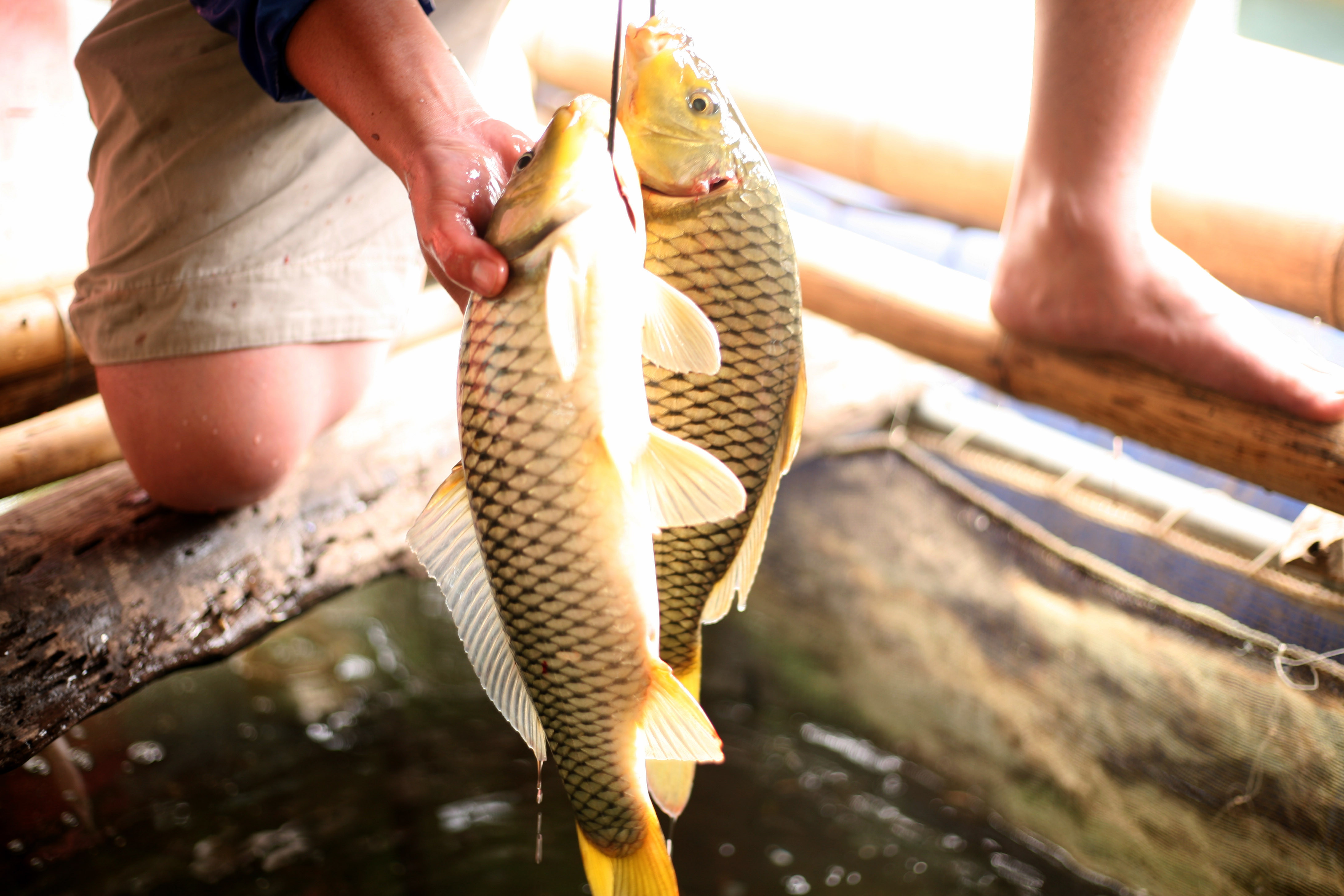 |
| The fish chosen for farming are grass carp, common carp, and tilapia. Photo: Nguyen Hanh |
Fortunately for the households, the fish in the cages always have a stable market, mainly with people and traders coming directly to the cages to buy them, so the cage owners don't have to take them to the market to sell.
According to Mr. Vi Van Long: “The technique for raising fish in cages on Khe Co Lake is quite simple. The water level chosen for the cages must be deeper than 3m, the depth of the fish cages must be 3m, and the bottom of the cages must not touch the bottom of the lake. The fish cages should be placed in areas with slow water flow and a consistently clean water source. The cages must be cleaned regularly to prevent disease. A net cover must be placed over the cages to ensure the fish do not jump out. The investment cost is low, the cage design is inexpensive, and the materials used are simple, mainly wood, bamboo, barrels, and non-shrinking woven netting.”
Based on the initial success, this year, households will invest in more fish fry and expand the model further, with the aim of creating more stable income and meeting the needs of the people.
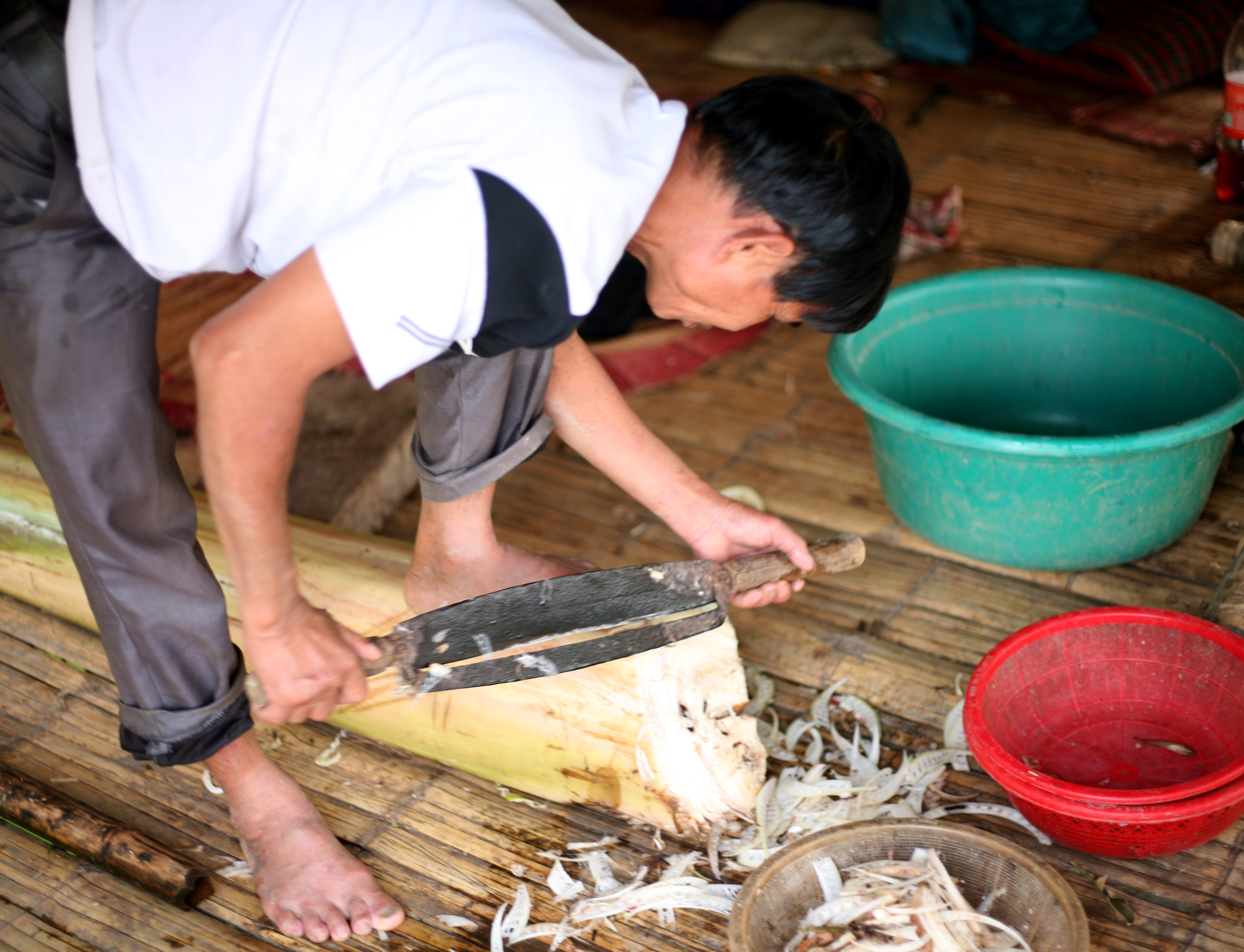 |
| Raising fish in cages is inexpensive because the food source is mainly natural. Photo: Nguyen Hanh |
Fish farming in cages on the river is creating a new direction for the people of Dinh Phong village in particular and the people of the mountainous areas of Tam Dinh commune, Tuong Duong district in general. It helps the villagers escape poverty, generate significant additional income, and improve their daily lives.


