
The unfortunate incident occurred at Song Lam Cement Joint Stock Company.
(Baonghean.vn) - Nearly 180 drivers of Song Lam Cement Joint Stock Company have gone on strike because the company's Tet bonus is unfair. This is an unfortunate incident, especially since the company is rushing to complete a large volume of work according to partner orders.
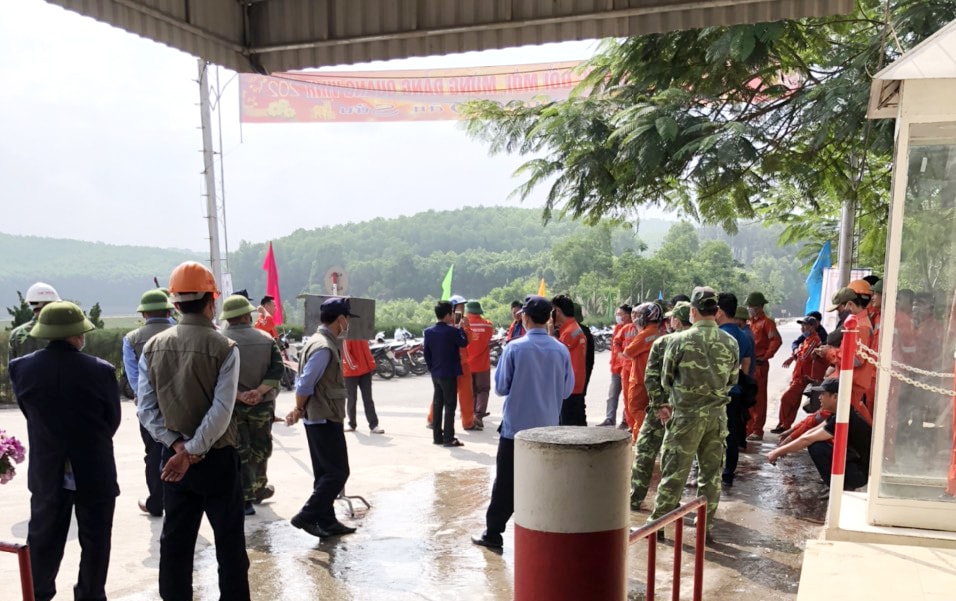 |
| 180 drivers of Song Lam Cement Joint Stock Company went on strike by walking off the road from the afternoon of February 4, 2021, because they claimed their Tet (Lunar New Year) bonuses were lower than those of other departments. Photo: Nguyen Lam |
On the afternoon of February 4, 2021, nearly 180 heavy truck drivers (FC) of Song Lam Cement Joint Stock Company simultaneously went on strike to protest because their Tet holiday bonuses were lower than those of other departments.
The reason these drivers gave was that Song Lam Cement Joint Stock Company only awarded Tet bonuses based on working days at a rate of 250,000 VND per person per day. Drivers who worked 30 days a month (12 hours a day) would receive 7.5 million VND. Many drivers, due to health issues or vehicle breakdowns, did not work enough days, resulting in lower bonuses. Meanwhile, workers in other departments of the factory received higher bonuses.
Regarding this unfortunate incident, Mr. Vu Van Lai, the fleet manager of Song Lam Cement Joint Stock Company, stated: "The payment of bonuses is the authority and responsibility of the Company's Board of Directors. The Company's leadership's application of this bonus system is correct because the drivers already receive a daily fixed salary."
Mr. Hoang Minh Tuan, Deputy Director of Song Lam Cement Joint Stock Company, affirmed that the drivers' strike has significantly impacted the company's production progress. In recent days, the company has had to hire other transport companies to ensure the transportation of clinker from Bai Son (Do Luong) to the Nghi Thiet cement grinding plant (Nghi Loc). He added that the drivers' unilateral strike was not in accordance with the law, as the company has a trade union, and the drivers did not inform the company leadership of the strike beforehand.
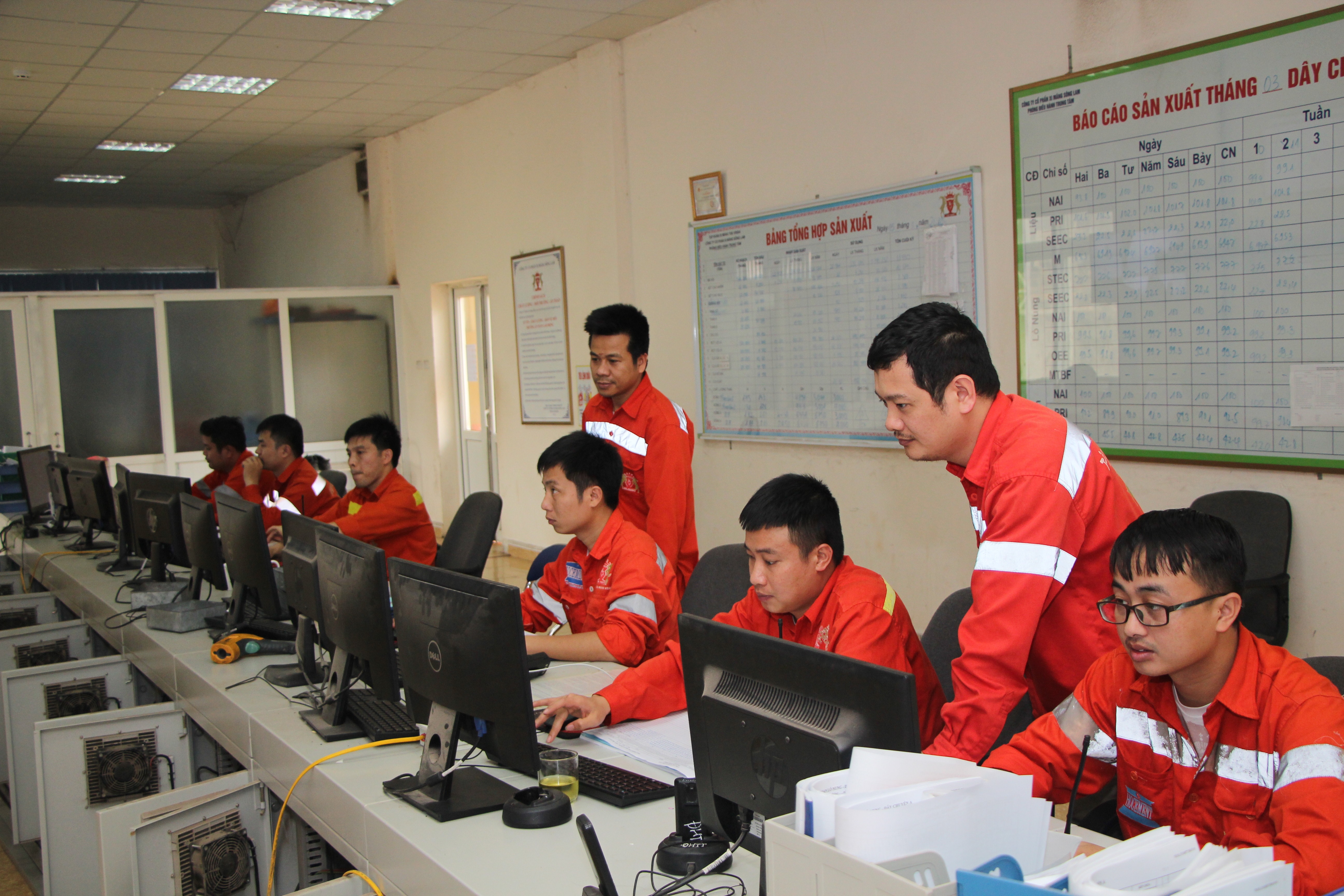 |
| Other departments of Song Lam Cement Joint Stock Company are operating normally and are satisfied with the Tet bonus. In the photo: Activities in the control room of Do Luong Cement Plant. Photo: NN |
According to Mr. Hoang Minh Tuan, the drivers' strike to protest Tet bonuses is regrettable, as this is not an issue on which workers are allowed to strike under the 2019 Labor Law. Meanwhile, the company promptly handles salary, bonus, and social insurance benefits for this workforce every month.
“Tet bonuses at companies and businesses are usually determined based on different job positions. This year, over 5,000 employees of The Vissai Group, including more than 1,500 employees at Song Lam Nghe An Cement Joint Stock Company, received different bonus amounts. However, only the drivers protested and took the actions mentioned above,” said Mr. Hoang Minh Tuan, Deputy Director of Song Lam Nghe An Cement Joint Stock Company.
Discussing this field, Mr. Nguyen Ngoc Oanh - Chairman of the Board of Directors, DirectorSong Lam Cement Joint Stock CompanyAccording to the report: The drivers' strike, which involved refusing to work, is not in accordance with the Labor Law. After the incident, many workers expressed a desire to return to work, but some individuals prevented them and threatened to assault them. The unit is coordinating with the police and relevant authorities to resolve and handle the matter in accordance with the law.
According to the 2019 Labor Law,strikeA strike is a temporary, voluntary, and organized work stoppage by workers to achieve their demands in the process of resolving labor disputes, organized and led by a workers' representative organization with the right to collective bargaining, which is a party to the collective labor dispute. A workers' representative organization, as a party to a collective labor dispute concerning interests, has the right to initiate the procedures stipulated in Articles 200, 201, and 202 of the 2019 Labor Code to strike in the following cases:
- If conciliation fails or the 5-day working period from the date the labor conciliator receives the request from the party requesting dispute resolution or from the specialized labor agency under the People's Committee expires, and the labor conciliator does not conduct conciliation.
- The labor arbitration panel is either not established, or is established but fails to issue a decision resolving the dispute, or the employer, as a party to the dispute, fails to implement the dispute resolution decision of the labor arbitration panel.
The strike process is carried out in three steps: gathering opinions on the strike; making a decision to strike and notifying the strike; and conducting the strike. Specifically, it is as follows:
Gathering opinions on strikes
Before a strike takes place, the labor representative organization that has the right to organize and lead the strike is responsible for obtaining the opinions of all workers or members of the leadership of the labor representative organizations participating in the negotiations.
The consultation process includes: agreement or disagreement with the strike; the workers' representative organization's plan regarding the start time, location, scope of the strike, and workers' demands.
Opinions are gathered directly through ballots, signatures, or other methods.
Thus, in addition to the methods of soliciting opinions through ballots or signatures, the 2019 Labor Code has added a new provision allowing "other methods of soliciting opinions to be used." This provision will facilitate the opinion-gathering process, allowing for the selection of an appropriate method depending on the circumstances and actual situation.
The time, location, and method of conducting the consultation on the strike are decided by the employee representative organization and must be notified to the employer at least one day in advance. The consultation process must not disrupt the normal production and business operations of the employer. The employer must not create difficulties, obstacles, or interfere with the process by which the employee representative organization conducts the consultation on the strike.
Decision to go on strike
When more than 50% of those surveyed agree with the content of the strike proposal, the labor representative organization issues a written decision to strike.
The decision to strike must include the following information: the results of the strike vote; the start time and location of the strike; the scope of the strike; the demands of the workers; and the full name and contact address of the representative of the workers' organization organizing and leading the strike.
Announce the start and end times of the strike.
At least five working days before the strike begins, the labor representative organization organizing and leading the strike must send a written notice of the strike decision to the employer, the district People's Committee, and the specialized labor agency under the provincial People's Committee.
If, at the time a strike begins, the employer still refuses to address the workers' demands, the workers' representative organization will organize and lead the strike.
Note that, according to Article 209 of the 2019 Labor Code, strikes are prohibited in workplaces where the strike could threaten national defense, security, public order, or human health. The Government shall specify the list of workplaces where strikes are prohibited and the procedures for resolving labor disputes in such workplaces.


