
Why shouldn't you place your laptop on your lap while using it?
Placing a laptop directly on your lap while using it might seem harmless, but it actually poses many risks to both the user's health and the device. From temperature and posture issues to radiation and the potential for reduced device lifespan, all are worth considering.
Over the years, electronic devices have been the focus of countless health concerns. Numerous negative claims have been widely circulated, and some of these are not entirely unfounded. Smartphones, for example, have been suspected of causing numerous physical and mental problems.
According to a study published in the Journal of Mental Health and Clinical Psychology (USA), excessive phone use can lead to mood disorders, insomnia, and even depression. The American Academy of Ophthalmology also warns that prolonged screen time can cause eye strain and increase the risk of nearsightedness.
However, amidst these well-founded concerns, there are also quite a few myths. One of the most common misconceptions is that radio frequency radiation from phones can cause cancer, a claim that has been refuted by numerous studies.
It's not just phones; laptops are also victims of unverified warnings. One frequently repeated claim is: "You shouldn't use a laptop on your lap because it's harmful to your health." But does this statement have any scientific basis, or is it just an unverified rumor in the modern tech world?
The truth behind the habit of placing laptops on your lap while using them.
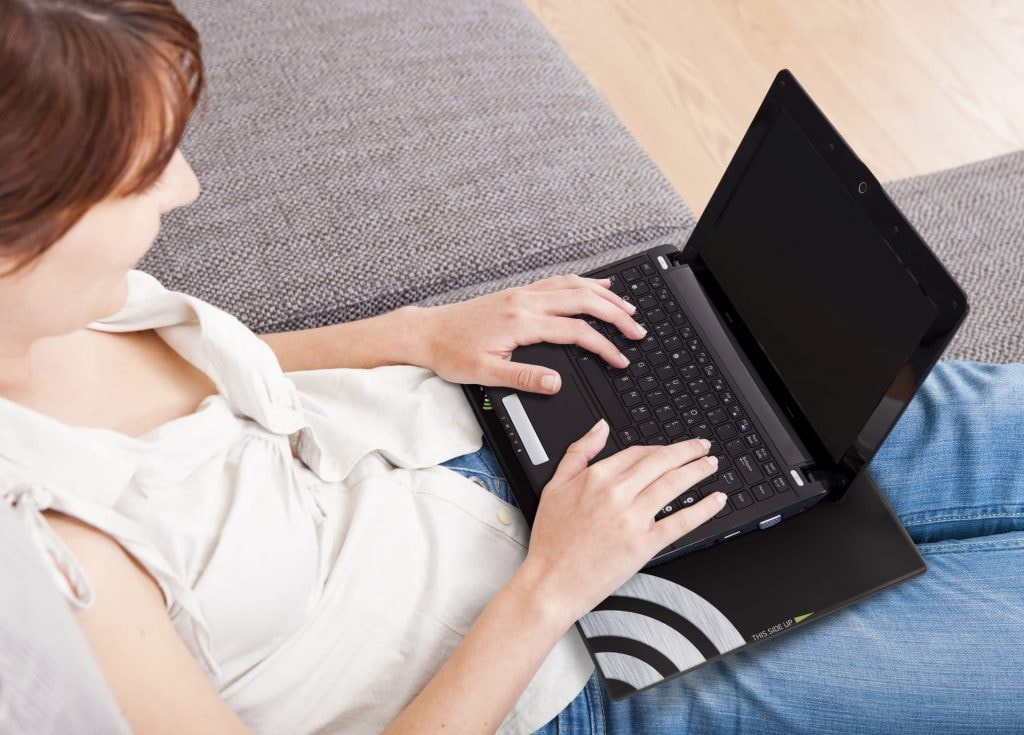
Many people assume that laptops are designed for comfortable use on the lap. However, medical studies and warnings from experts show the opposite: regularly placing a laptop on your lap can cause a range of health problems, from posture issues and skin damage to negative impacts on reproductive health.
A study published in the U.S. National Library of Medicine (NLM) indicates that using a laptop on your lap often leads users to maintain an incorrect working posture for extended periods.
Meanwhile, Princeton University Health Services (USA) warns that poor posture can lead to back pain, neck and shoulder muscle strain, and chronic fatigue. In the long term, this habit also increases the risk of repetitive strain injuries such as tendinitis and carpal tunnel syndrome.
More concerningly, the heat radiating from the bottom of laptops directly affects male reproductive health. According to research from NLM, when the scrotum is continuously heated, even by just a few degrees above normal, sperm quality can significantly decline, increasing the risk of infertility.
But that's not all; the skin is also a "silent victim." Health experts from Ohio State University (USA) also warn that close and prolonged contact with low heat sources (below 46°C) such as laptop surfaces can cause a condition called erythema, also known as "baked skin syndrome."
This is a skin discoloration characterized by dark red streaks in a grid pattern, resulting from the continuous dilation of blood vessels under the skin due to heat. In some severe cases, this condition not only causes burns or itching but can also lead to permanent damage and even skin cancer.
While most mild symptoms can be resolved with changes in usage habits, continuing to place a laptop on your lap frequently and for extended periods is not recommended.
Placing a laptop on your lap: It not only affects your health but also has other hidden dangers.damaging the device
Placing a laptop directly on your lap not only affects the user's health but also seriously damages the device itself. When a laptop is placed on your lap or soft surfaces like pillows or blankets, the airflow through the ventilation vents at the bottom and sides of the machine is obstructed.
This causes the cooling system to become less efficient, leading to a rise in internal temperatures. As a result, the device may slow down, the fan may spin noisily, and it may even experience random restarts or sudden shutdowns.
Although these signs may not appear immediately, in the long run, a lack of ventilation will silently shorten the lifespan of the internal components of the machine.
Besides the risk of heat, there's also the very real risk of dropping the laptop. When the device isn't placed on a stable surface, just one careless movement, such as changing posture, tripping over a sleeve, or standing up suddenly, can cause the laptop to slip from your lap and fall to the floor. A single fall is enough to crack the screen, dislodge keys, or worse, damage the hard drive and motherboard.
So, should you continue to place your laptop on your lap while working? The answer is definitely no. A flat, hard surface is the best option to protect both your health and your device.
If you feel uncomfortable with that fixed posture, you can use an external monitor, keyboard, and mouse to turn your laptop into a convenient workstation like a desktop computer. This solution not only improves posture and reduces strain on your wrists and eyes, but also optimizes performance and extends the lifespan of your machine.


