
During his visit to Vietnam, France aims to further strengthen its pivot towards Asia.
The French President's visit to Vietnam demonstrates a desire for closer ties with Southeast Asia and accelerates the pivot to Asia by this leading European power.
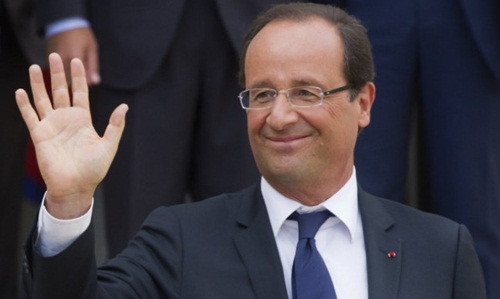 |
French President Francois Hollande. Photo: AFP. |
French President Francois Hollande is visiting Vietnam.September 5-7Following his participation in the G20 summit, the visit marked the first time a French President had visited Vietnam in 12 years.
According to experts from the French magazine "Foreign Policy," after World War II, rebuilding Europe and focusing on neighboring countries and the African region were priorities in France's foreign policy. Therefore, during this period, Paris paid less attention to Asia, viewing it as a distant region where interests were less aligned with national interests.
However, starting in the 1990s, Asia was recognized by French leaders as a top strategic challenge to overcome, with a series of speeches and official documents highlighting the region's economic potential.
The 2008 White Paper on National Defence and Security gave priority to the Asian region and called for France to increase its engagement with the continent.
Upon taking office, French President Francois Hollande expressed a desire to diversify France's presence in the Asia-Pacific region, despite the need to compete directly with the United States, which is aggressively pursuing a strategy toward the region to limit China's influence.
"The pivot to Asia is not a fad, but because France wants to be present in a region where the future world is being built. Therefore, it is clear that the Asia-Pacific will be the center of the 21st century," former French Foreign Minister Laurent Fabius stated at the headquarters of the Association of Southeast Asian Nations (ASEAN) in August 2013.
Odon Vallet, an expert from the Sorbonne University, argues that France's presence in the Pacific means it is also a major power in the Asia-Pacific region and has interests in the area.
Southeast Asia (an important part of the Asia-Pacific region) is a dynamic area with significant economic growth, contributing considerably to overall global growth. Therefore, in recent years, France's stance has shifted significantly, moving closer to this bloc.
However, this trend was initially significantly hampered by top policymakers in Paris who had inaccurate assessments of the territorial disputes in the South China Sea and adopted an indecisive stance toward China on the issue.
According to Vallet, although Vietnam and France upgraded their relationship to a strategic partnership during Prime Minister Nguyen Tan Dung's visit to Paris in 2013, the actual relationship between the two countries remains limited compared to its potential and the history of "warm" diplomatic relations, especially given that Vietnam is a country within the Francophone community.
President Hollande's missed visit to Vietnam in early 2015 also slowed this rapprochement, as some Southeast Asian nations felt that France did not fully support their position on sovereignty disputes in the South China Sea.
Following that event, France's perspective changed significantly. Its leaders realized that to further its pivot to Asia, it needed to forge closer ties with Southeast Asian nations, particularly Vietnam and the Philippines.
Paris has indirectly criticized Beijing more strongly. Through official channels, France has called on all parties involved in the conflict to engage in negotiations, as that is the only solution. But through unofficial channels, France has shown a firm stance towards China and offered more support to other countries involved in the conflict.
Recently at the 2016 Shangri-la Dialogue, French Defense Minister Jean-Yves Le Drian proposed that European countries conduct joint maritime patrols in the South China Sea.
Therefore, President Hollande's visit to Vietnam this time can capitalize on an opportunity missed in 2015, enhancing France's prestige in Vietnam.
According to L'express, President Hollande wants to use this visit to further strengthen relations with Vietnam, a country with a close historical relationship with France, and which is playing an increasingly important role in Southeast Asia in particular and Asia in general, thereby reinforcing his policy of increasing his presence in the continent.
"Accompanying President Hollande to Vietnam this time is a large delegation including more than 50 leaders and managers of leading French economic corporations. Through Vietnam, France is demonstrating its growing interest in Southeast Asia in particular and Asia in general," L'express noted.
According to VNE
| RELATED NEWS |
|---|


