
The 10 most powerful supercomputers in the world today.
(Baonghean.vn) - With advancements in technology, supercomputers have become more powerful and efficient, allowing them to solve complex problems that were previously unsolvable.
Supercomputers are specialized machines capable of performing calculations at a much faster rate than standard computers. They offer a high level of performance that allows governments and organizations to solve problems that would be impossible with conventional computers.
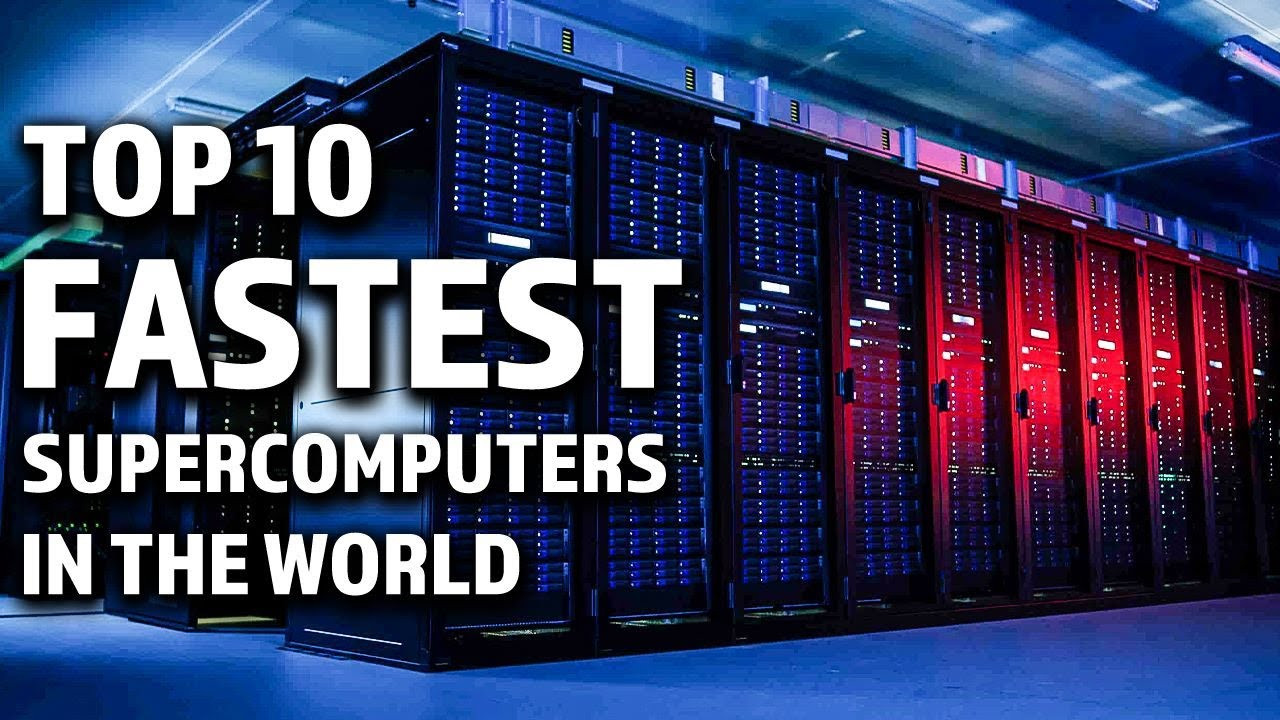 |
Illustrative image. |
They are used in a wide variety of fields, including scientific research, weather forecasting, financial analysis, physics simulation, and oil and gas exploration. Supercomputers also help scientists discover more durable building materials and study human proteins and cellular systems at an extremely detailed level.
In this article, we will explore the 10 most powerful supercomputers in the world today.
1. Fugaku Supercomputer (Japan)
Fugaku is currently the world's most powerful supercomputer, located at the RIKEN Center for Computational Science in Kobe, Japan. Developed by the Japanese semiconductor, computing, and communications research and development company Fujitsu, this supercomputer boasts a theoretical peak performance of up to 537 petaflops, or 537 quadrillion operations per second (petaflops is a unit of computing power equivalent to 1 quadrillion operations per second).
Fugaku is also the first supercomputer powered by ARM processors, a new microprocessor technology that uses simpler, less energy-intensive processing methods. According to the HPCG performance benchmark, Fugaku's performance surpasses the combined performance of the next four leading supercomputers in the world.
This is a major achievement for the Japanese government, but designing such a robust system is not cheap. Since 2014, the government has spent approximately $1 billion on research and development (R&D) and application development for the project.
Fugaku runs on two operating systems in parallel: Linux and a multi-core operating system called IHK/McKernel. Linux handles services compatible with the portable operating system interface (POSIX), while McKernel runs high-performance emulations.
It is designed to address high-priority scientific and social problems, such as weather forecasting, clean energy development, drug development, precision medicine, and exploring the laws of quantum mechanics.
2. Summit Supercomputer (USA)
Summit is currently the world's second most powerful supercomputer, located at Oak Ridge National Laboratory in Tennessee, USA. This supercomputer was developed through a collaboration between the multinational computer technology corporation IBM and NVIDIA, a multinational corporation specializing in the development of graphics processors and chipset technology for workstations, personal computers, and mobile devices. It boasts a processing power of 200 petaflops.
During the recent Covid-19 pandemic, the U.S. Department of Energy used the Summit supercomputer to enhance technological capabilities in the search for Covid-19 treatments. The power of this supercomputer could help accelerate the process of inhibiting or attacking the virus.
The Summit supercomputer is equipped with an "artificial intelligence brain" that can analyze countless simulated scenarios to determine which drug combinations might prevent the novel coronavirus (SARS-CoV-2) from attacking cells.
This supercomputer is used for research in various fields, including physics, energy, and healthcare. Summit has also supported research on Alzheimer's disease, analyzed genes potentially linked to opioid addiction, and predicted hazardous weather based on climate simulations.
3. Sierra Supercomputer (USA)
Sierra is the world's third most powerful supercomputer. It is located at Lawrence Livermore National Laboratory in California, USA. Developed by IBM and NVIDIA, it boasts a processing power of 125 petaflops. It is used for research in a variety of fields, including nuclear weapons and climate change.
The Sierra supercomputer offers six times the sustained performance and seven times the workload performance of its predecessor, the Sequoia supercomputer. It combines two types of processors: IBM's Power 9 processor and NVIDIA's Volta GPU.
Sierra is specifically designed to assess the performance of nuclear weapons systems, for predictive applications in stockpile management, and for the reliability testing and maintenance programs of U.S. nuclear weapons without any nuclear testing.
4. Sunway TaihuLight Supercomputer (China)
Sunway TaihuLight is currently the world's fourth most powerful supercomputer. It is located at the National Supercomputing Center in Wuxi, China. Developed by the China National Research Center for Computer Technology and Engineering, this supercomputer boasts a processing power of 93 petaflops. It is used for research in various fields, including climate modeling and earth system science.
The computing power of the Sunway TaihuLight comes from its self-manufactured multi-core SW26010 central processing unit (CPU), which includes both computing and management processing elements.
A single SW26010 CPU delivers peak performance exceeding 3 teraflops thanks to its 260 processing elements (integrated into a single CPU). Each processing element has a user-controlled cache memory, significantly reducing memory bottlenecks in most applications.
Beyond supporting life sciences and pharmaceutical research, TaihuLight has been used to simulate the universe. However, China is striving for even greater achievements, having declared its goal of becoming a leader in artificial intelligence (AI) by 2030.
5. Tianhe-2A Supercomputer (China)
Tianhe-2A is the world's fifth most powerful supercomputer. It is located at the National Supercomputing Center in Guangzhou, China. Developed by the China National University of Defense Technology, this supercomputer boasts a processing power of 61 petaflops.
China spent 2.4 billion yuan (approximately $390 million) to build this supercomputer. Currently, it is mainly used in simulation applications, analyzing government security-related issues, as well as materials science and engineering research.
6. Frontera Supercomputer (USA)
Frontera is currently the sixth most powerful supercomputer in the world. It is located at the Texas Advanced Computing Center in Texas, USA. This supercomputer was developed by the American computer technology corporation Dell and has a processing power of 23.5 petaflops.
Frontera unlocks new possibilities in engineering and research by providing extensive computing resources that enable scientists to easily solve a wide range of complex challenges across many fields.
Frontera has two computing systems: the first focuses on performance with double precision, while the second focuses on single-precision stream-memory computing. It also incorporates cloud computing interfaces and multiple application nodes for hosting virtual servers.
Frontera supercomputers are used for research in a variety of fields, including particle physics and earth sciences.
7.SupercomputerPiz Daint (Switzerland)
Piz Daint is the 7th most powerful supercomputer in the world. It is located at the Swiss National Supercomputing Centre. This supercomputer was developed by the Seattle-based supercomputer manufacturer Cray and has a processing power of 21.2 petaflsop.
The Piz Daint supercomputer, named after the Piz Daint mountain in the Swiss Alps, runs on Intel Xeon E5-26xx and NVIDIA Tesla P100 processors.
This supercomputer is used for research in various fields, including materials science and fluid dynamics. Additionally, it can process and analyze data from some of the world's most data-intensive projects, such as data collected from experiments at the world's largest particle accelerator located in Switzerland.
8. Trinity Supercomputer (USA)
Trinity is currently the world's eighth most powerful supercomputer. It is located at the Los Alamos National Laboratory in New Mexico, USA. This supercomputer was also developed by supercomputer manufacturer Cray and has a processing power of 20.2 petaflops.
The Trinity supercomputer was built to provide extraordinary computing power to the U.S. National Nuclear Security Administration. Its aim is to improve the geometric and physical accuracy of nuclear weapons simulation code, while ensuring that nuclear stockpiles are safe, secure, and efficient. This supercomputer is also used for research in other fields such as energy and climate modeling.
9. AI Bridging Cloud Infrastructure Supercomputer (Japan)
AI Bridging Cloud InfrastructureIt is the 9th most powerful supercomputer in the world. It is located at the National Institute of Advanced Industrial Science and Technology in Tokyo, Japan. This supercomputer was developed by the semiconductor, computing and communications research and development company Fujitsu and has a processing power of 19.9 petaflops.
AI Bridging Cloud Infrastructure SupercomputerIt is used for research in many different fields, including artificial intelligence and machine learning.
10. SuperMUC-NG Supercomputer
SuperMUC-NG is the 10th most powerful supercomputer in the world. It is located at the Leibniz Supercomputing Centre in Germany. This supercomputer was developed by the multinational computer technology corporation Lenovo and has a processing power of 19.5 petaflops.
The SuperMUC-NG supercomputer serves European scientists in a wide range of fields, including genomic analysis, fluid dynamics, cosmic fundamental force analysis, life sciences, medicine, and astrophysics.
According to a report by UK market research firm Technavio, the global supercomputer market will grow to $12.5 billion between 2021 and 2025, achieving a compound annual growth rate (CAGR) of 20% during the forecast period.
The increasing use of advanced technologies such as artificial intelligence, machine learning, and cloud technology is the main reason behind this growth. The need for highly complex models to solve intricate physics, chemistry, and environmental problems can further accelerate this growth.
In general, with increasingly complex applications in the near future, the demand for supercomputers will therefore increase. Government organizations are expected to be the highest-revenue end users.


