
4 remedies for dizziness according to the type of illness.
Dizziness is a common ailment among middle-aged and elderly people. It is also frequently seen in premenopausal women with hot flashes, dizziness, and lightheadedness. Patients with low blood pressure also often experience symptoms of dizziness and lightheadedness...
According to traditional medicine, dizziness is described under the term "huan vung" (dizziness/vertigo).
Dizziness is a feeling of unsteadiness, like standing on a wobbly plank, a feeling of instability, as if you want to fall to the left and then to the right, like a drunk person walking on a level surface but unable to stand steadily...

The books all mention dizziness as one of the common ailments in traditional Chinese medicine and include specific remedies for each type of the condition:
- The book "Su Wen Zhi Zhen Yao Da Lun" states: "All symptoms of dizziness and vertigo are related to the liver" (Chư phong tác huyễn, giai thuộc vu can), treating the liver is the main focus.
- The "Essentials of the Golden Treasury" (by Trong Canh) states: "If there is phlegm in the lower abdomen, the chest and ribs feel full, and the eyes become blurry" (Tâm hạ hữu đờm ẩm hung hí chi mãn, mục huyễn).
- The Danxi Heart Method also states: "Without phlegm, there is no dizziness" (Vô đờm bất tác huyễn), the main treatment is to eliminate phlegm.
- And "Ha Gian Luc Thu" records: "Wind and fire are both yang, yang transforms, yang governs movement, the interaction of two yangs (wind and fire) will cause change" (feng huo jiao yang, yang da jian hua, yang zhi hu dong, liang yang xiang bo, ze wei chuan chuan), treating fire is the main thing.
- The Complete Works of Music states: "Without deficiency, there is no dizziness" (vô hư bất tác huyễn), treating deficiency is the main focus.
Traditional Chinese medicine classifies dizziness into four types: liver yang excess, phlegm obstruction in the middle burner, kidney essence deficiency, and qi and blood deficiency. Each type has its own specific herbal remedy.
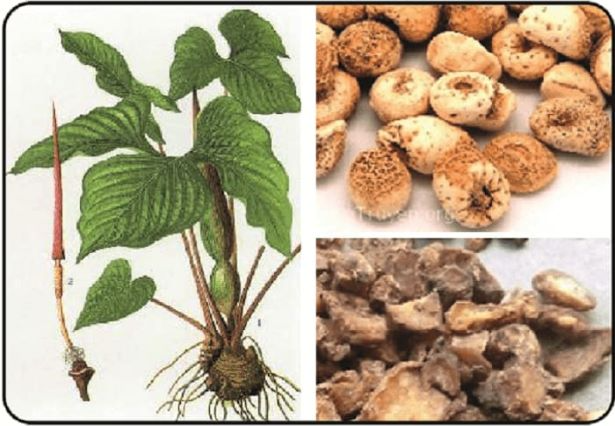
1. Dizziness due to excess liver yang
- Symptom:Dizziness, tinnitus, headache, eye strain, increased dizziness and headache if angry, flushed face, irritability, insomnia with many dreams, bitter taste in the mouth, red tongue with yellow coating, wiry pulse.
- Treatment:Calm the liver, calm the wind.
- The herbal remedy - Tian Ma Gou Teng Yin consists of:Ingredients: Gastrodia elata 12g, Uncaria rhynchophylla 12g, Poria cocos 10g, Loranthus parasiticus 12g, Eucommia ulmoides 15g, Scutellaria baicalensis 10g, Achyranthes bidentata 10g, Poria cocos 12g, Gypsum 10g, Leonurus artemisia 10g, Poria cocos 12g. Decoction: Drink one dose per day, divided into two portions after meals. Drink while the medicine is still warm.
Analysis of the herbal remedy:Gastrodia elata and Uncaria rhynchophylla are the main ingredients for treating dizziness and vertigo. Eucommia ulmoides, Poria cocos, Loranthus parasiticus, and Cassia obtusifolia treat dizziness and also nourish kidney essence. Scutellaria baicalensis clears heat from the upper respiratory tract and acts as an assistant, while the remaining ingredients are messengers.
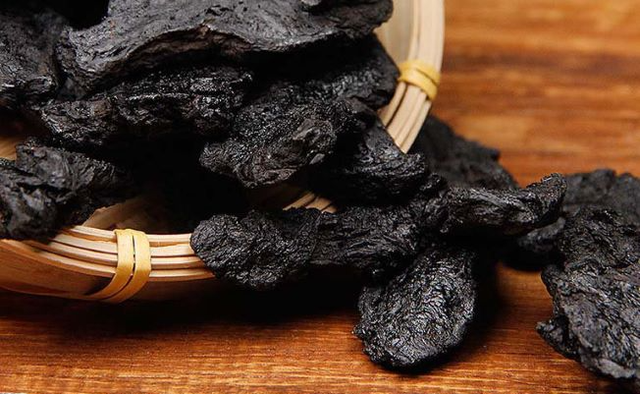
2. Phlegm-Dampness Syndrome
- Symptom:Dizziness, heavy head, fullness and congestion in the upper chest and abdomen, nausea, vomiting, poor appetite, excessive sleepiness, dirty white tongue coating, soft and slippery pulse.
- Treatment:Jujube fruit helps to expel phlegm, strengthen the spleen, and harmonize the stomach.
- The herbal remedy - Ban Ha Bach Truat Thien Ma Thang consists of:8g Pinellia ternata, 10g Gastrodia elata, 10g Poria cocos, 8g Citrus reticulata peel, 12g Atractylodes macrocephala, 6g Glycyrrhiza glabra, 3 large dates, 3 slices fresh ginger. Decoction to be taken once a day, divided into 2-3 doses. Drink while the medicine is still warm.
Analysis of the herbal remedy:Pinellia ternata and Gastrodia elata dispel wind and phlegm; Atractylodes macrocephala and Poria cocos strengthen the spleen and eliminate dampness; Citrus peel dispels dampness, dissolves phlegm, and promotes qi circulation; Glycyrrhiza glabra, Ziziphus jujuba, and ginger harmonize the flavors of the herbs and tonify and promote qi circulation.
3. Kidney essence deficiency
- Symptom:Dizziness, mental fatigue, forgetfulness, back pain and leg weakness, nocturnal emissions, tinnitus, insomnia, and frequent nightmares.
- Treatment:Nourish the kidneys and replenish essence. For kidney yang deficiency, use the Yougui Wan formula; for kidney yin deficiency, use the Liuwei Zhibai formula.
+ The 'You Gui Wan' herbal remedy:Rehmannia glutinosa 12g, Dioscorea opposita 16g, Cornus officinalis 12g, Lycium barbarum 8g, Eucommia ulmoides 12g, Cuscuta chinensis 6g, processed Aconitum carmichaelii 3g, Cinnamomum cassia 3g, Angelica sinensis 16g, deer antler extract 5g. Decoction: Drink one dose per day, divided into 2-3 portions. Drink while the medicine is still warm.
It has the effect of nourishing the kidneys and improving sperm quality, and treating dizziness and vertigo.
+ The song "Six Tri-Bá"Ingredients: Rehmannia glutinosa 16g, Dioscorea opposita 12g, Cornus officinalis 12g, Paeonia lactiflora 8g, Poria cocos 8g, Alisma orientalis 8g, Anemarrhena asphodeloides 10g, Phellodendron amurense 8g. Decoction: Drink one dose per day, divided into 2-3 portions. Drink while the medicine is still warm.
It has the effect of nourishing yin and tonifying the kidneys, replenishing yin, clearing heat, and treating dizziness and vertigo.
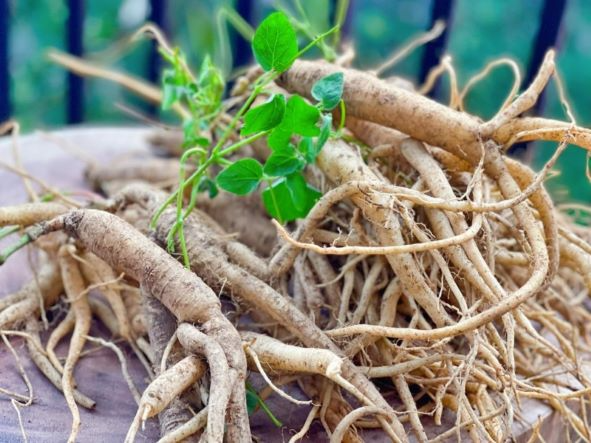
4. Deficiency of both Qi and Blood
- Symptom:Dizziness, increased physical activity, pale complexion, insomnia, fatigue, lethargy, poor appetite, pale tongue, weak and thready pulse.
- Treatment method:Replenishes vital energy and blood, strengthens the spleen, and calms the mind.
- The "Ten-Ingredient Tonic" consists of:12g Codonopsis pilosula, 12g Poria cocos, 12g Atractylodes macrocephala, 12g Glycyrrhiza glabra, 12g Rehmannia glutinosa, 12g Paeonia lactiflora, 12g Ligusticum chuanxiong, 12g Angelica sinensis, 12g Astragalus membranaceus, 4g Cinnamomum cassia. Decoction: Drink one dose per day, divided into 2-3 portions. Drink while the medicine is still warm.
In this formula, Rehmannia glutinosa, Ligusticum chuanxiong, Angelica sinensis, and Paeonia lactiflora nourish the blood; Codonopsis pilosula, Poria cocos, Atractylodes macrocephala, and Glycyrrhiza glabra nourish the qi; and Astragalus membranaceus and Cinnamomum cassia strengthen and enhance the effects of nourishing qi and blood.


