
Hoanh Son Temple - a unique historical architectural work
(Baonghean.vn) - Hoanh Son Temple, located in Khanh Son commune (Nam Dan district), was built and completed in 1763, dedicated to Uy Minh Vuong Ly Nhat Quang - the eighth son of King Ly Thai To. Hoanh Son Temple is famous for its many unique decorative wood carvings.
 |
| Located on an area of approximately 2,500 m²2,Hoành Sơn communal house is located on the right bank of the Lam River, in Hamlet 4, Khánh Sơn Commune, Nam Đàn District. Previously, the communal house was known as Nam Hoa communal house, then Làng Ngang communal house, belonging to Nam Kim commune. Photo: Thành Cường |
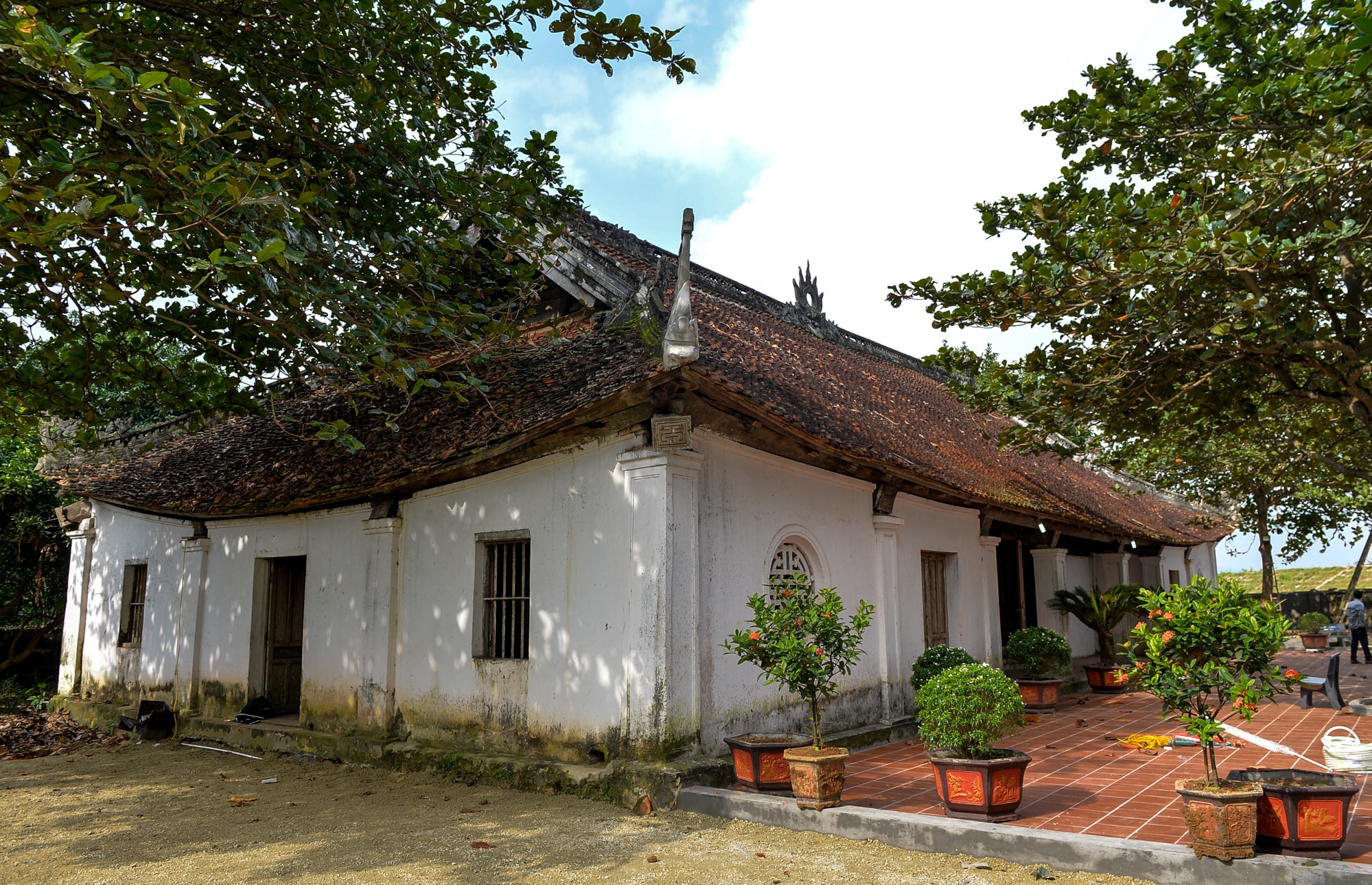 |
| According to the few surviving documents, Hoành Sơn communal house was built in the twelfth month of the year Nhâm Ngọ, the 23rd year of the Cảnh Hưng reign (1763), and completed by the end of the following year (Quý Tỵ 1764). The initiator and supervisor of this construction was Đặng Thạc, a graduate under King Lê Hiển Tông (1740 - 1786), belonging to a powerful and influential family in the region. Photo: Thành Cường |
 |
| Hoành Sơn communal house has 8 trusses and 7 bays, with a total of 32 round ironwood columns. Among them are 12 main columns, 5.75m high and 0.45m in diameter, and 20 secondary columns, nearly 4m high and 0.42m in diameter. Inside the communal house, a collection of sculptural artworks adorns the tops of the columns. Photo: Thành Cường |
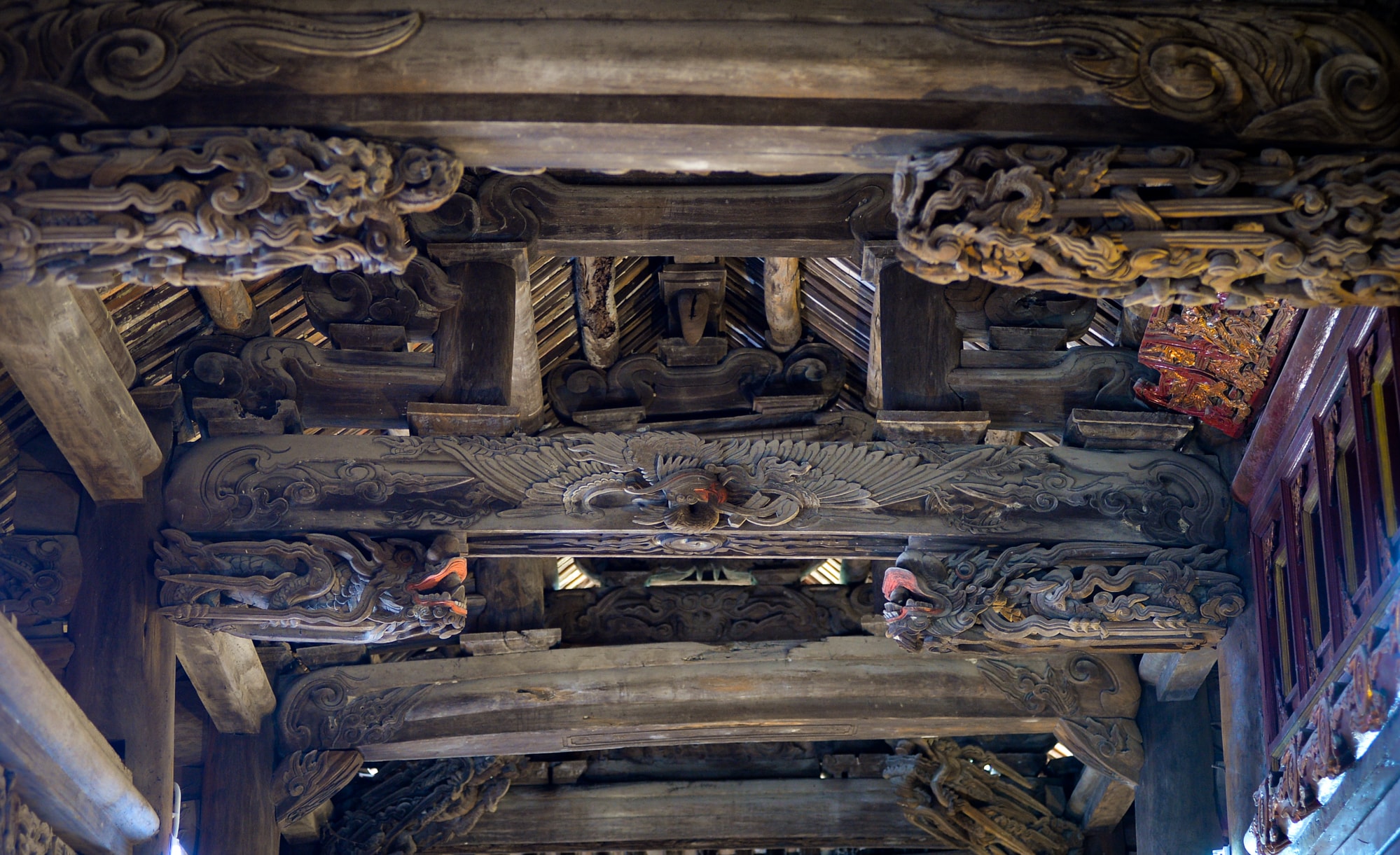 |
| Although it's the communal house of a small village, Hoành Sơn communal house boasts a large scale and distinctive architectural artistry, to the point that many believe the local people have accomplished the "impossible." The roof trusses are connected in a "stacked" structure, featuring beautiful carvings of "two dragons worshipping the moon." The communal house's columns all have a diameter of over 50cm and form the load-bearing foundation of the entire structure. Photo: Thành Cường |
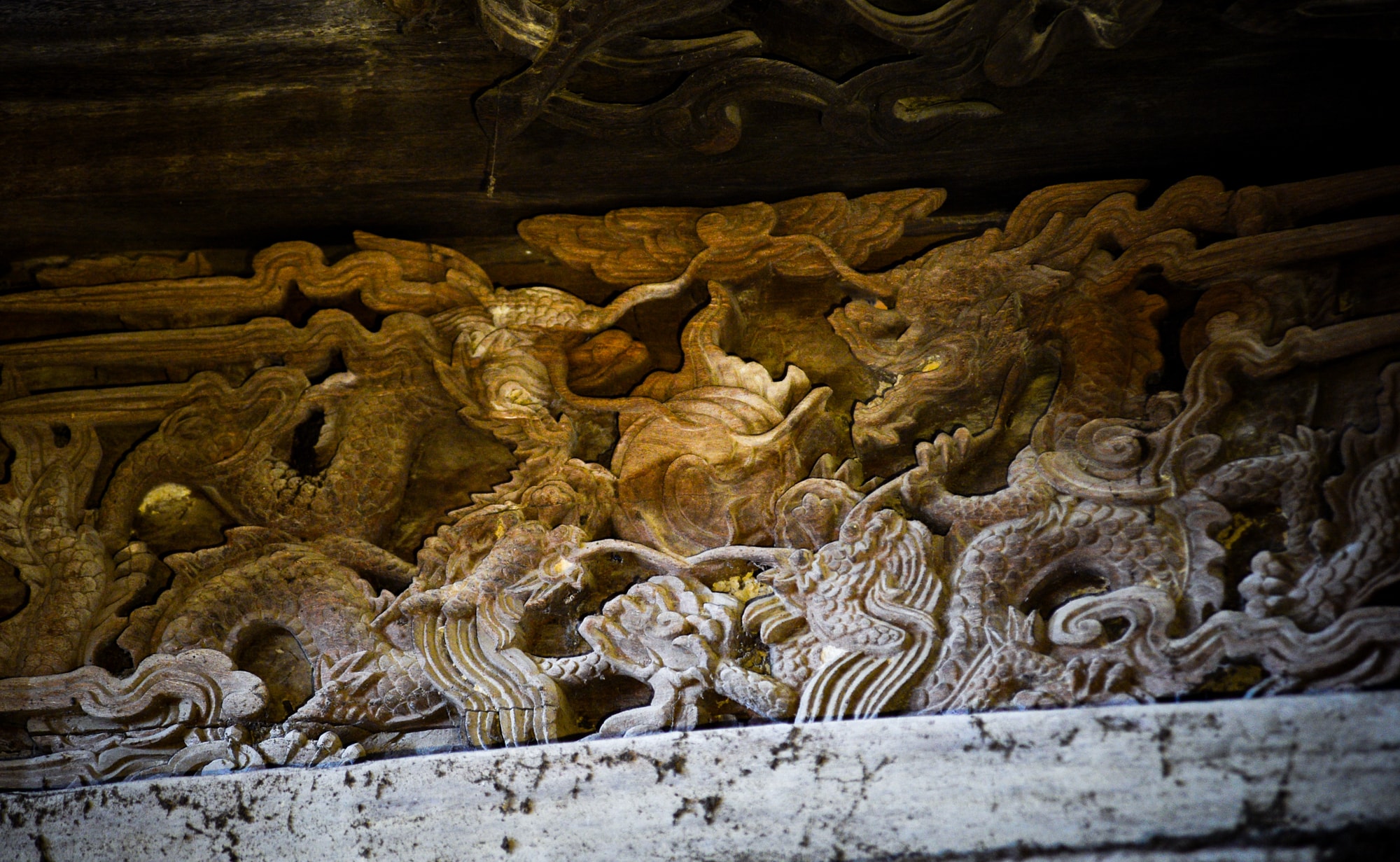 |
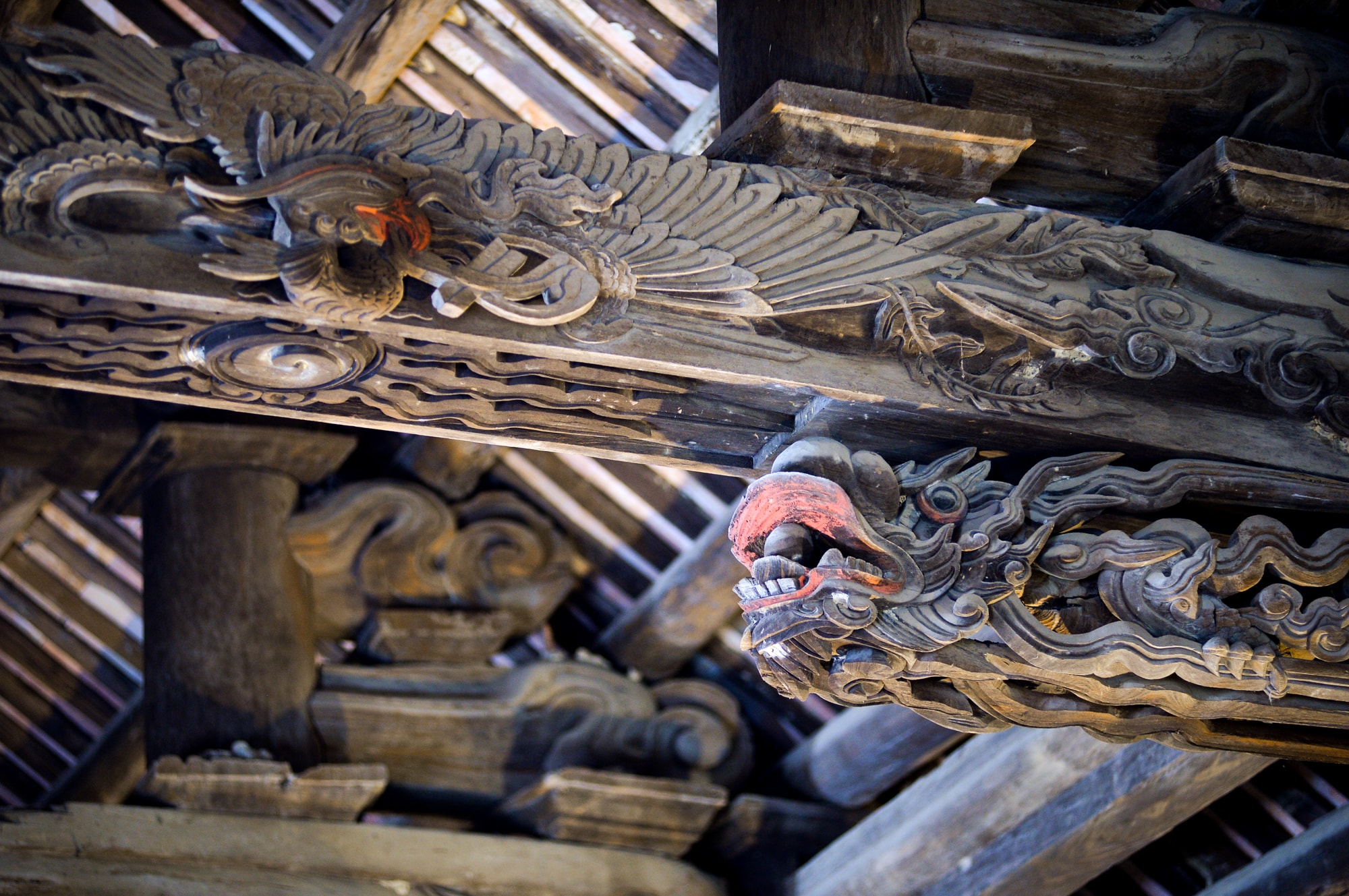
| The intricate carvings inside the temple are highly elaborate and sophisticated, depicting scenes such as the Eight Immortals, riding cranes, playing chess, boat racing, the Four Sacred Animals, the Four Seasons, symmetrical eagles in each section, and dragon nests… These motifs express a philosophical perspective on life imbued with the humanistic spirit of the nation and reflect a masterful level of carving artistry. Photo: Thanh Cuong |
 |
| The pillars in the main hall of the communal house are carved with the image of two large dragons embracing the pillars and facing downwards towards the ground. The roof features images of coiled dragons, seated tigers, and kneeling mythical creatures; the roof tiles are laid in a yin-yang style. Photo: Thanh Cuong |
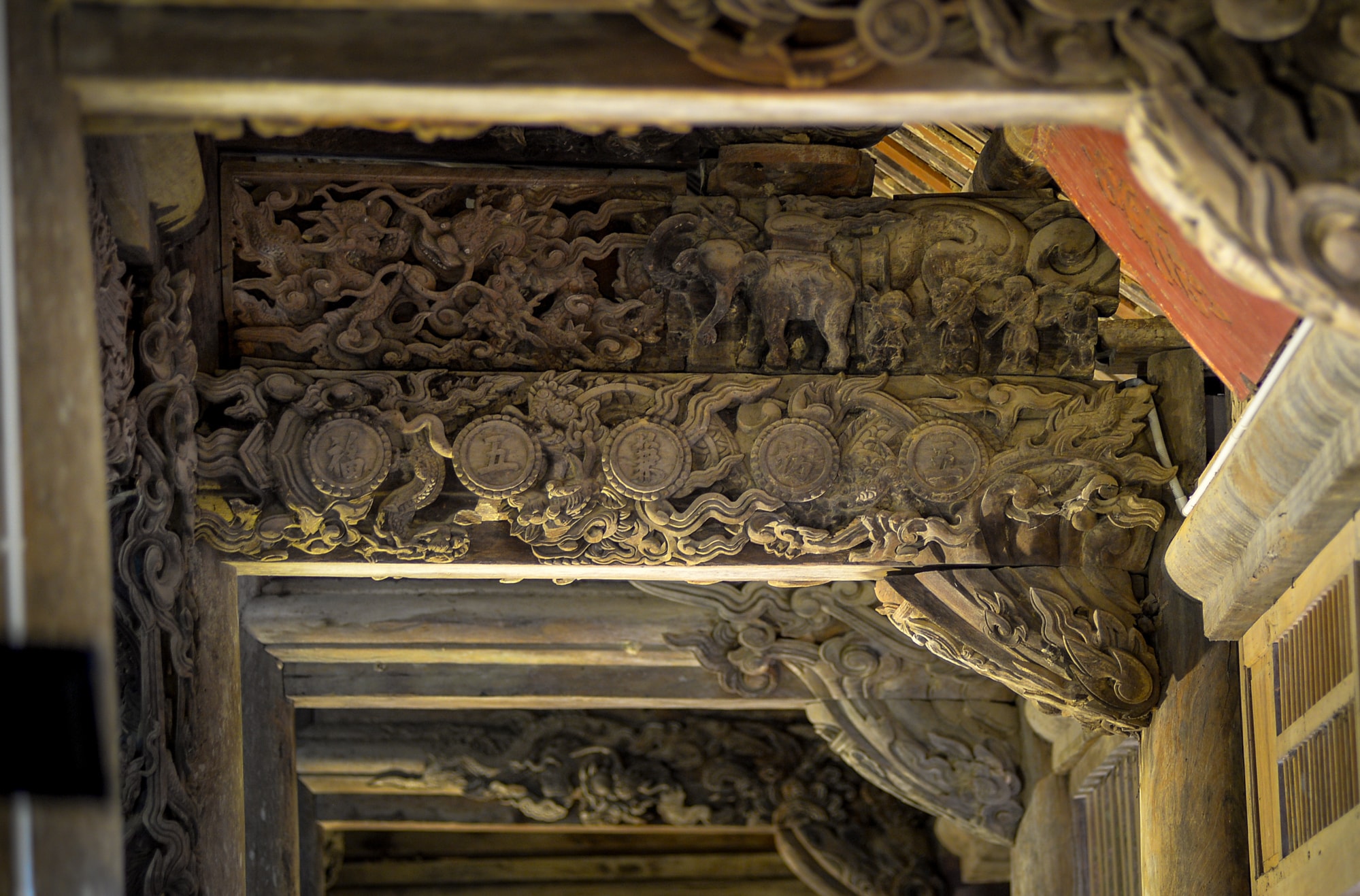 |
| The beams are carved with swirling patterns, and the ends depict a variety of rich and lively themes such as "bamboo and birds," "plum blossoms and birds," dragons, phoenixes, and stylized flowers and leaves... Particularly, the wooden panels depict some quite unique themes and stories such as "rowing a boat" or the story of "Four hermits in Changshan Mountain," and "Cheng Tang's marriage to Yi Yin." The carvings are done in a relief style, meticulously depicting the images, gestures, and movements of the motifs and characters, making the artwork extremely vivid, sharp, and graceful. Photo: Thanh Cuong |
 |
| armpitsThe carvings are done in a combination of openwork and relief carving styles. Besides dragons and phoenixes, the themes here also include scenes depicting the simple lives of the people, such as fishing, plowing, cooking rice, festivals, or folk tales. Photo: Thanh Cuong |
 |
| Previously, the temple regularly hosted two major festivals: the festival of blessings in February and the procession of the deity on the 15th day of the 6th lunar month. Although these festivals have faded over time, Hoành Sơn Temple remains a significant cultural and spiritual center for the people of Khánh Sơn commune and surrounding areas. |
 |
| For 250 years, situated right on the banks of the Lam River, the temple has witnessed countless changes in this rural area through the vicissitudes of history. It is expected that on November 30, 2020, coinciding with the 990th anniversary of the name Nghe An, Hoanh Son Temple will be officially recognized as a Special National Monument. This is an honor not only for the people of Khanh Son and Nam Dan, but also for the people of Nghe An, Central Vietnam, and the entire country. |


