
The Nguyen Canh family in Nghe An province
(Baonghean) - Nghe An - home to many famous and prestigious families that have made significant contributions to the country, including the Nguyen Canh family.
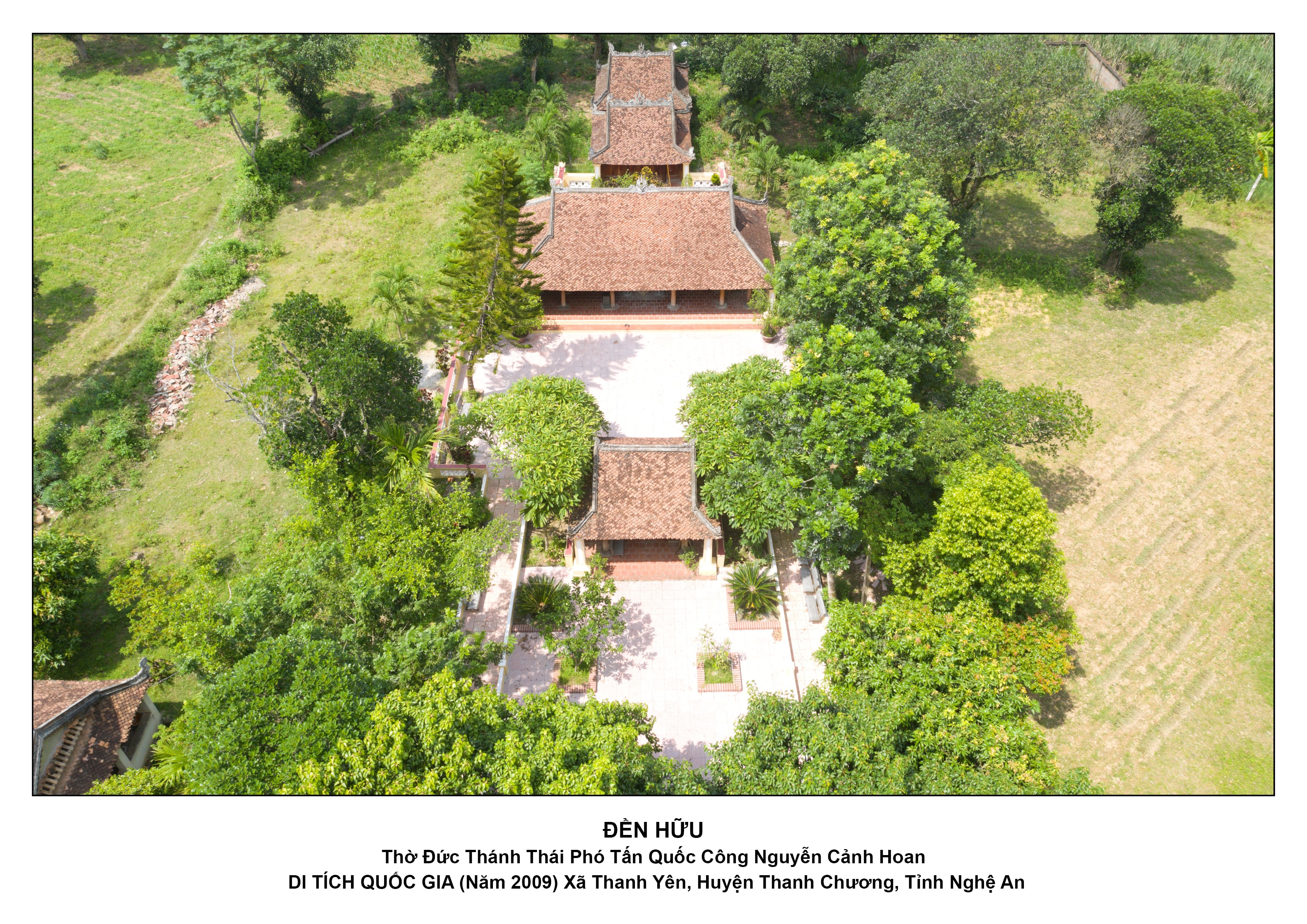 |
Nghe An has long been considered a land of "spiritual and talented people," the birthplace of many famous figures and national heroes. This land is also home to many renowned families, including the Nguyen Canh family – a family with a rich cultural tradition, associated with many famous names, and a source of pride for Nghe An province.
Based on genealogies and some documents preserved at the Nguyen Canh family temples in the Thanh Chuong and Do Luong areas, it appears that the Nguyen Canh family in Nghe An originated from Thien Ly village, Dong Trieu district, Hai Duong province (now part of Quang Ninh province), migrating to Ngoc Son village, Thanh Chuong district in the early 15th century. This is associated with the event of Trieu Tien Hau Nguyen Canh Lu seeking refuge in Thanh Chuong due to war and unrest. Starting as a boatman on the Lam River, he built a large family lineage, considered one of the "aristocratic and noble" families of Nghe An, with many famous generals and loyal officials who contributed to their homeland.
Having existed and developed for over 600 years, the Nguyen Canh clan, with 25 generations, 100 branches, and over 100,000 members, resides mostly in the districts of Thanh Chuong, Do Luong, Nam Dan, Nghi Loc, Yen Thanh, Quynh Luu, and many other localities inside and outside the province. It is associated with many related cultural heritage sites such as ancestral temples, shrines, village communal houses, and ancestral halls – places of worship for deities who are historical figures of the clan. Having established their foundation in Nghe An province, the Nguyen Canh clan has affirmed its position and influence as a clan with a tradition of loyalty to the king and patriotism, linked to the event of enthroning Tran Quy Khoang, grandson of Tran Nghe Tong, as king in 1409 and continuing the rebellion against the Ming army by father and son Nguyen Canh Chan and Nguyen Canh Di under the banner of Tran Quy Khoang.
The Nguyen Canh family in Nghe An has produced many talented generals, especially during the Le Trung Hung period. For five consecutive generations, descendants of the Nguyen Canh family in Nghe An served as generals, making significant contributions to the restoration of the country under the Later Le dynasty. For example, in the fifth generation, five members of the Nguyen Canh family (father, sons, brothers) participated in supporting the Le dynasty, but the one whose greatest contribution is recorded in many historical texts was the Grand Tutor and Duke of Tan Quoc Nguyen Canh Hoan.
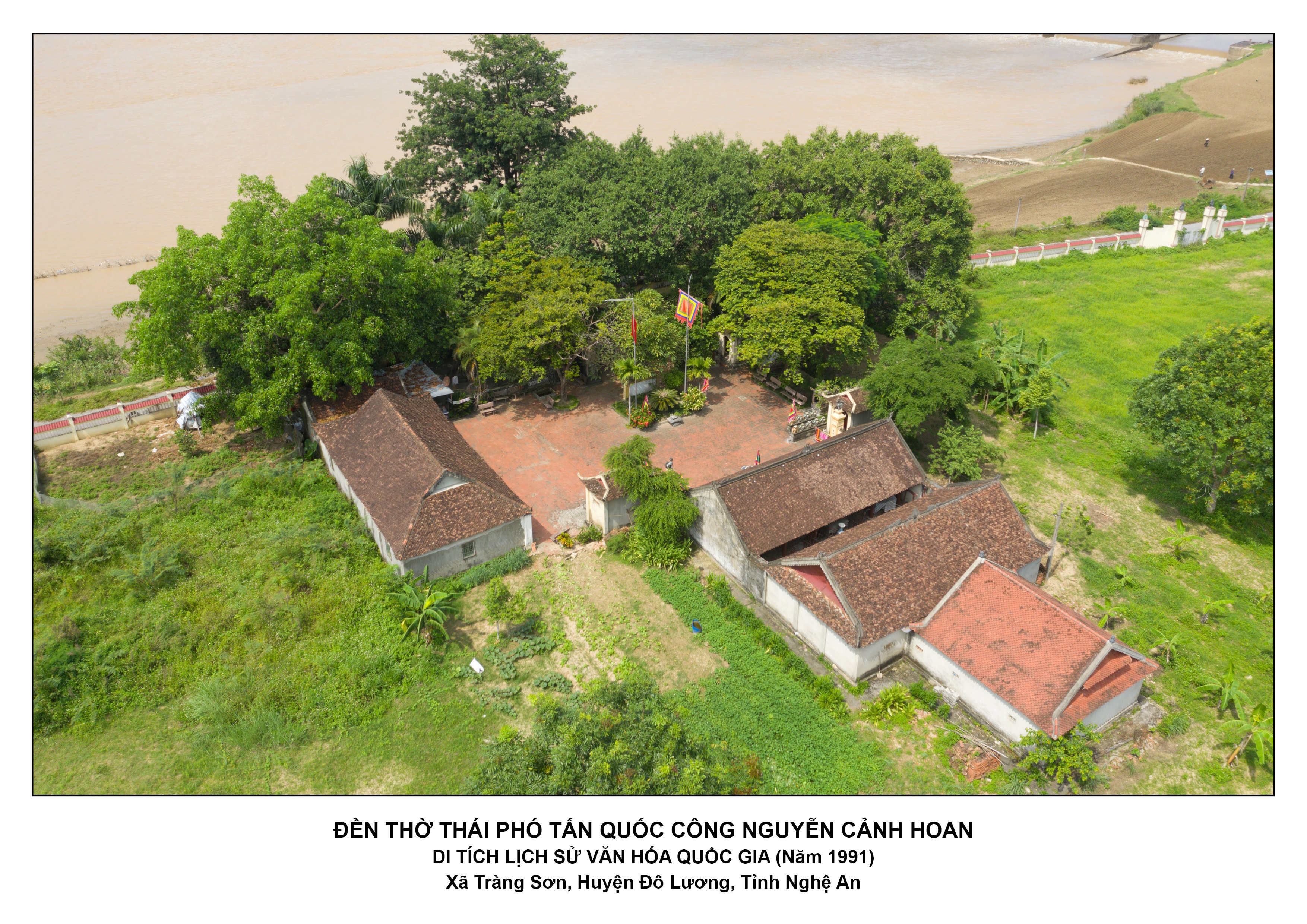 |
Nguyen Canh Hoan, born in 1521 and died in 1576, was the second son of Phuc Khanh Duke Nguyen Canh Huy, belonging to the 5th generation of the Nguyen Canh family. At the age of 14, he passed the provincial examination. At 15, he, along with his father and three brothers, Trung Duke Nguyen Canh Han, Cuong Duke Nguyen Canh Van, and Lap Duke Nguyen Canh Chieu, went to pay homage to King Le Trang Tong in Sam Chau. The King bestowed upon him the title of Duong Duong Marquis, and he became one of the important close advisors of the Le dynasty.
During his 40-year military career, Nguyen Canh Hoan, along with his subordinates, many of whom were descendants of the Nguyen Canh family, repeatedly contributed to repelling the Mac Dynasty's forces in the northern region as well as in the provinces of Nghe An and Thanh Hoa. He was also highly regarded by Grand Tutor Trinh Kiem as a resourceful and courageous man, victorious in every battle, and was granted the royal surname Trinh Mo, belonging to the lineage of the Trinh lords. After his death, to commemorate the contributions of Tan Quoc Cong, many localities in Nghe An province erected temples to worship him and honored him as their tutelary deity.
In the sixth generation, the Nguyen Canh family had 4 Dukes and 11 Marquises, including Nham Linh Marquis Nguyen Canh Kien, the second son of Tan Quoc Cong Nguyen Canh Hoan, who joined his father in battle to serve the court at the young age of 12. During his military career, he won over 40 battles and was bestowed with many important titles by the court, such as: Deputy Commander-in-Chief; Left Commander-in-Chief of the Commander-in-Chief's Office; Left Commander-in-Chief of the Southern Army's Commander-in-Chief; Chief Physician of the Imperial Medical Institute; Grand Tutor and Left Minister of the Court; and Thu Quan Cong. Besides his contributions to supporting the Le dynasty and defeating the Mac dynasty, he was also a skilled physician who frequently treated the poor and officials of the time.
 |
The eighth generation included three dukes and two marquises, most notably Left Commander-in-Chief Nguyen Canh Que (1605-1658), Duke of Lieu. He was intelligent and resourceful, achieving many victories in his military career. Lord Trinh bestowed upon him the title of Marquis of Loc and married his daughter, Princess Trinh Thi Ngoc Loan, further promoting him to "Royal Son-in-Law, Commander-in-Chief, Deputy Commander of the Imperial Guard, Duke of Lieu".
In 1630, Nguyen Canh Que was assigned to govern the Hoan Chau region. During this time, he was not only a talented commander who led the land and naval forces from Quynh Luu to Deo Ngang Pass, but he also organized and trained the naval force into an elite army of the Le Trung Hung dynasty.
His four sons, Duke Tín Nguyễn Cảnh Hiệu, Marquis Yên Thọ Nguyễn Cảnh Tường, Marquis Vĩnh Thọ Nguyễn Cảnh Thung, and Marquis Thọ Tường Nguyễn Cảnh Nông, were assigned to command the coastal naval forces in the Thanh Hóa, Nghệ An, and Hà Tĩnh regions. They also worked alongside their father to protect the sea and, together with the people, reclaimed land, established villages, and stabilized production.
Throughout the Tay Son, Nguyen, and modern periods, generations of the Nguyen Canh family have remained loyal to the country and made many contributions to building their homeland. A notable figure during this period is Nguyen Canh Quy, of the 12th generation of the Nguyen Canh family, who established a clan army called "Thien Ly Phuong" to suppress bandits, protect the people, and ensure their peace and prosperity. He was granted the title of Yen Duc Marquis by King Quang Trung.
In addition, there was Thuoc Vo Hau Nguyen Canh Tru, who held the position of "imperial commissioner to govern Kinh Bac," and he once prevented and confiscated boats from King Le Chieu Thong from crossing the Xuong Giang River to seek help from the Qing army against the Tay Son dynasty.
The Nguyen Canh family also left behind an important historical work for the country, which, although a family genealogy, is considered a national history of Vietnam. This is the book "Hoan Chau Ky," a cultural heritage of the country, contributing to and clarifying certain events related to the country's history during a specific period.
 |
The mausoleum complex commemorating the revered Grand Tutor and Duke of Tan Quoc, Nguyen Canh Hoan, and the founding ancestors (Ru Cam, Trang Son, Do Luong, Nghe An). |
The Nguyen Canh clan in Nghe An province is also known for a distinctive traditional cultural practice that has been maintained for hundreds of years - the "Decade-Annual Ceremony". The more than 350-year history of the Tan Quoc Cong Nguyen Canh Hoan Temple Festival and the "Decade-Annual Ceremony" is a culmination of the glorious historical tradition of the Nguyen Canh clan, further enriched by the fine cultural traditions of the nation.
Every year, on the 15th day of the third lunar month, descendants of the Nguyen Canh family and the local people gather at the temple of Tan Quoc Cong Nguyen Canh Hoan to perform a ceremony that the people in the area call the "Vegetarian Festival". And every ten years, the family organizes a large-scale festival called the "Ten-Year Festival". This is an opportunity for the descendants to "reflect on the past and learn from the present," praising and educating about the glorious traditions of the Nguyen Canh family, embodying "Loyalty, Diligence, Benevolence, and Righteousness".
Every Vietnamese person is deeply imbued with the teachings of their ancestors, that "Birds have nests, people have ancestry," reminding each other to remember their roots. And it is the historical tradition of the family lineage that serves as the foundation for generations to continue developing, the strength that unites and brings together descendants.
According to statistics: During the feudal period, the Nguyen Canh family had 18 Duke titles, 76 Marquis titles, 16 Count titles, 3 Viscount titles, and 3 Baron titles. During the two wars of resistance against French colonialism and American imperialism, 3,500 members of the Nguyen Canh family enlisted in the army, including 456 martyrs, 873 wounded and sick soldiers, 29 families of martyrs, 1 Hero of the Armed Forces, and 3 Heroic Vietnamese Mothers. Continuing this tradition, the descendants of the family are currently striving their best to build and protect the nation.
Furthermore, the Nguyen Canh family is renowned for its studiousness and academic achievements. During the Nguyen dynasty, notable figures included Nguyen Canh Thai Dieu, a Second-Class Doctor of Philosophy, and Nguyen Canh Cu, a Vice-Doctor of Philosophy. In the Ho Chi Minh era, there was the family of Professor Nguyen Canh Toan. Currently, the Nguyen Canh family boasts over 80 PhDs, more than 200 Master's degree holders, and many descendants who are military personnel, doctors, People's Artists, Meritorious Artists, teachers, and hold important positions in Party and State agencies.


