
Pepper prices today, March 16, 2025: Sharp decline across the board.
Today, March 16th, domestic pepper prices are at 158,000 - 159,000 VND/kg. Prices have dropped sharply across the board, by 1500 to 2000 VND/kg compared to yesterday. Pepper production in 2025 is also at risk of declining.
Domestic pepper prices today
The highest pepper purchase price recorded in key pepper-growing regions (Dak Lak, Lam Dong, Gia Lai, Dak Nong, Ba Ria - Vung Tau, Binh Phuoc) was 159,000 VND/kg.
Specifically, in Dak Nong province, the price of pepper is 159,000 VND/kg, a sharp decrease of 2,000 VND/kg compared to yesterday.
In Gia Lai, the price of pepper is 158,000 VND/kg, a decrease of 1,500 VND/kg compared to yesterday.
In Dak Lak, the price of pepper is 159,000 VND/kg, a sharp decrease of 2,000 VND/kg compared to yesterday.
In Binh Phuoc and Dong Nai provinces, the price of pepper today is 158,000 VND/kg, a decrease of 2,000 VND/kg compared to yesterday.
In Ba Ria - Vung Tau, the price of pepper today is 158,000 VND/kg, a decrease of 2,000 VND/kg compared to yesterday.
Thus, the lowest price for pepper in the domestic market today is 158,000 VND/kg.
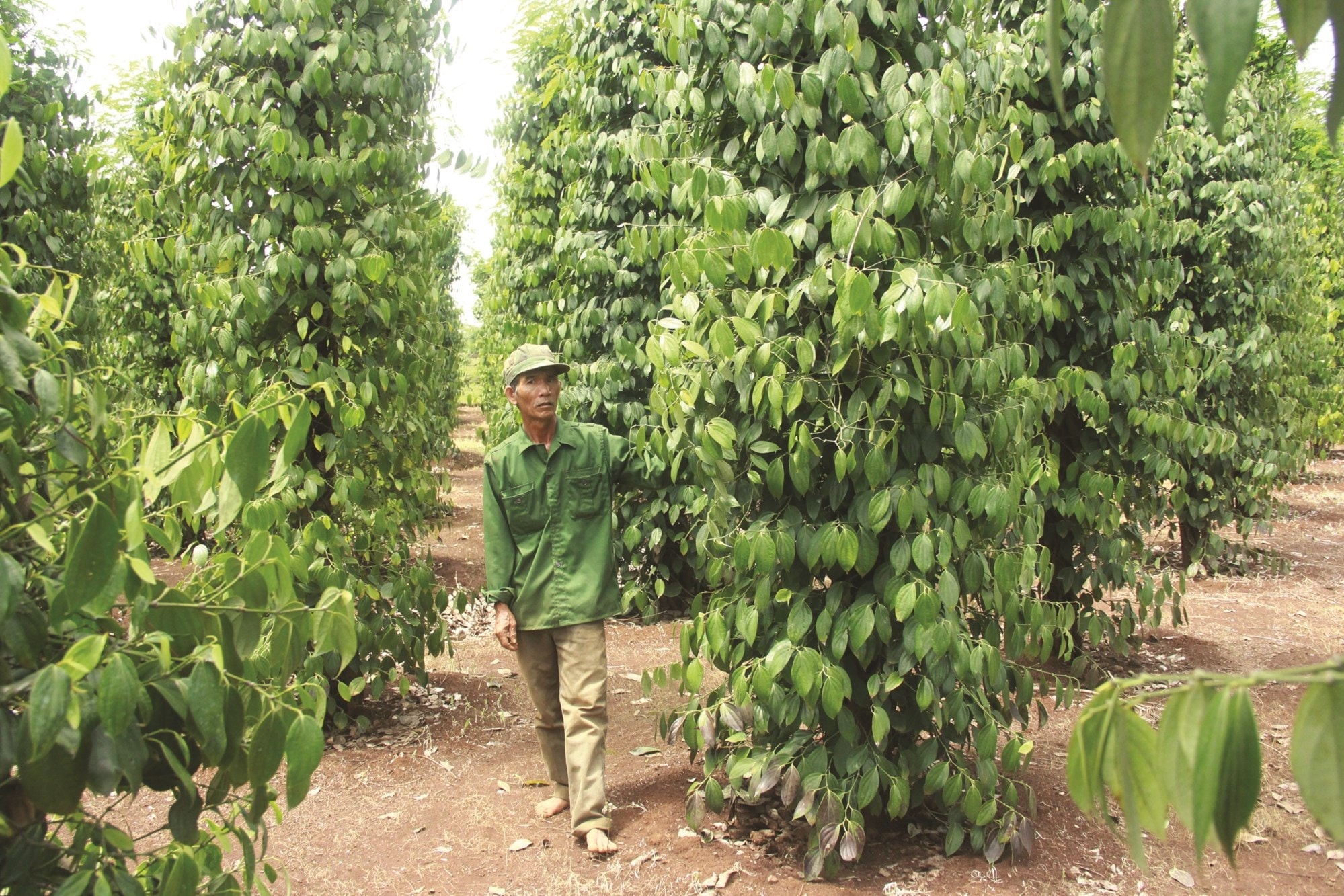
Gia Lai is entering the dry season with intensely hot weather. At this time, farmers in the province are rushing to harvest pepper to finish the season on time and prepare to care for the plants for the next crop.
Many households reported that this year's pepper yield is higher than in previous years. Along with that, pepper prices have doubled compared to last year, reaching their highest level in many years, bringing great joy to pepper growers.
Amidst the sharp rise in pepper prices, agricultural experts advise farmers against expanding planting areas spontaneously, to avoid oversupply like in previous years. Instead, sustainable farming is a crucial solution, in which the application of organic farming models and reduced use of pesticides will help improve product quality and stabilize the market.
According to Mr. Phan Dinh Tham, Head of the Agriculture and Rural Development Department of Ia Grai district, farmers need to link with businesses and cooperatives to ensure stable output and avoid the risk of bumper harvests leading to price drops. At the same time, applying new techniques, using organic fertilizers, and saving irrigation water will help pepper plants develop more sustainably.
Today's world pepper prices
On the world market, based on quotations from exporting companies and export prices in various countries, the International Pepper Association (IPC) has updated the prices of various types of pepper traded on the international market on March 16th (local time) as follows:
Indonesian Lampung black pepper prices remained unchanged from yesterday at US$7,265/ton. Similarly, Muntok white pepper prices also stayed the same as yesterday at US$10,252/ton.
The price of Brazilian ASTA 570 black pepper remained unchanged from yesterday at $6,900 per ton.
Malaysian ASTA black pepper prices remained unchanged from yesterday at US$9,800/tonne. Additionally, the price of ASTA white pepper from the same country also stayed the same as yesterday at US$12,300/tonne.
Prices for all types of Vietnamese pepper remained stable compared to yesterday. Specifically, the price of Vietnamese black pepper (500 gr/l) reached US$7,000/ton; and the price of black pepper (550 gr/l) reached US$7,200/ton.
Similarly, the price of Vietnamese white pepper remained unchanged compared to yesterday at $10,000 per ton.
The Vietnam Pepper and Spice Association predicts that global demand remains stable, especially in the US and Europe. With low inventories and reduced production, pepper prices are forecast to continue to remain high in the near future.
According to the Vietnam Pepper and Spice Association (VPSA), pepper prices are currently maintaining high levels thanks to stable demand from the US and European markets, helping pepper growers reap significant profits.
However, many farmers tend to hoard pepper in anticipation of price increases, leading to a shortage of raw materials. This has put processing businesses in a difficult position, forcing them to use existing inventory to fulfill signed export contracts. Sometimes, even farm-gate prices are higher than export prices, putting significant pressure on their operations.
Vietnam currently has over 110,000 hectares of pepper plantations, with an average yield of 26 quintals/hectare, double the global average. However, the projected pepper production for the 2024-2025 crop year is only about 172,000 tons, a decrease of 2% compared to the previous year and 47% compared to the 2018-2019 crop year. The main reasons are the shrinking pepper cultivation area and increasingly fierce competition from Brazil, Indonesia, and India.
Globally, pepper production in 2025 is also at risk of declining due to unfavorable weather conditions in India, affecting supply and potentially driving pepper prices higher in the near future.


