Society

Discover the ancestral church ruins containing a 'giant' beehive.

Huy Thu December 3, 2024 16:37

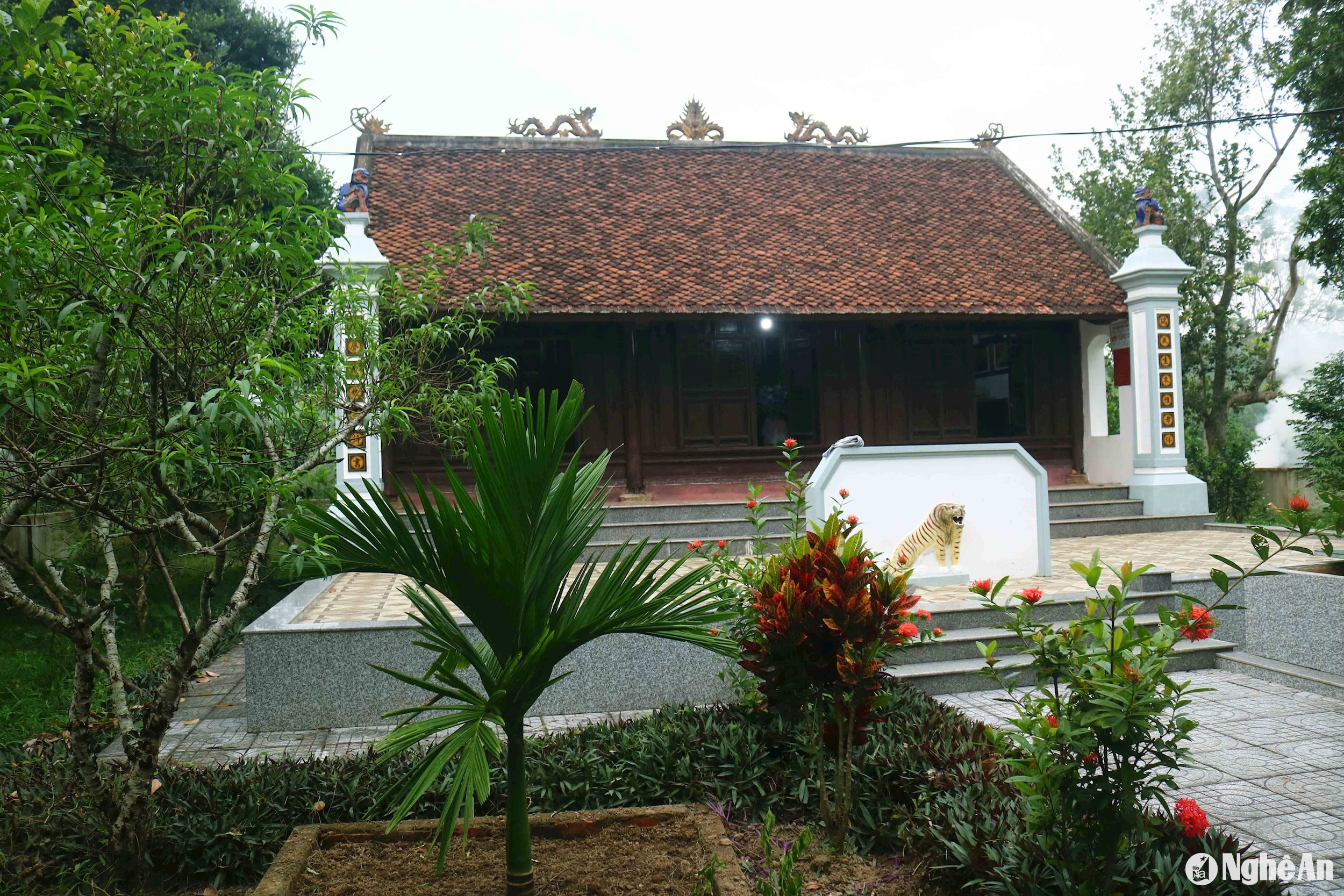
The Nguyen Tu family church in Trung Phuc Cuong commune (Nam Dan district) is an elaborately carved architectural work, classified as a provincial-level historical and cultural relic.
bna_1.jpg
The Nguyen Tu family ancestral temple in Tan Hoa hamlet, Trung Phuc Cuong commune, was built during the Nguyen dynasty to worship the ancestors and descendants of the family. It is known that the Nguyen Tu family originated from the Nguyen Huu family – a renowned scholarly family in the Trung Can region with famous figures such as Tham Hoa Nguyen Van Giao, Hoang Giap Nguyen Huu Lap, Pho Bang Nguyen Tu Tai, and painter Nguyen Tu Nghiem... Photo: Huy Thu
bna_2.jpg
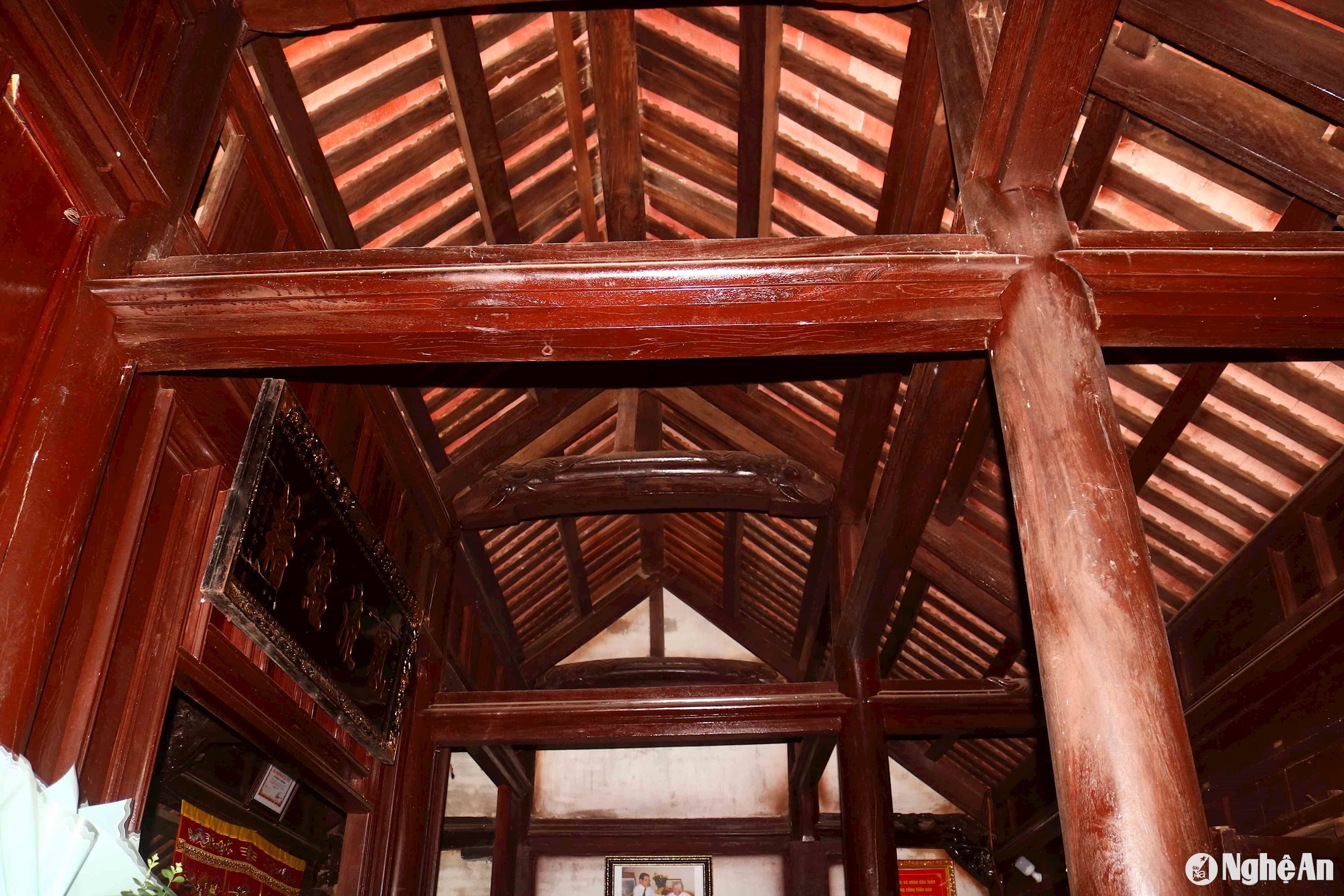
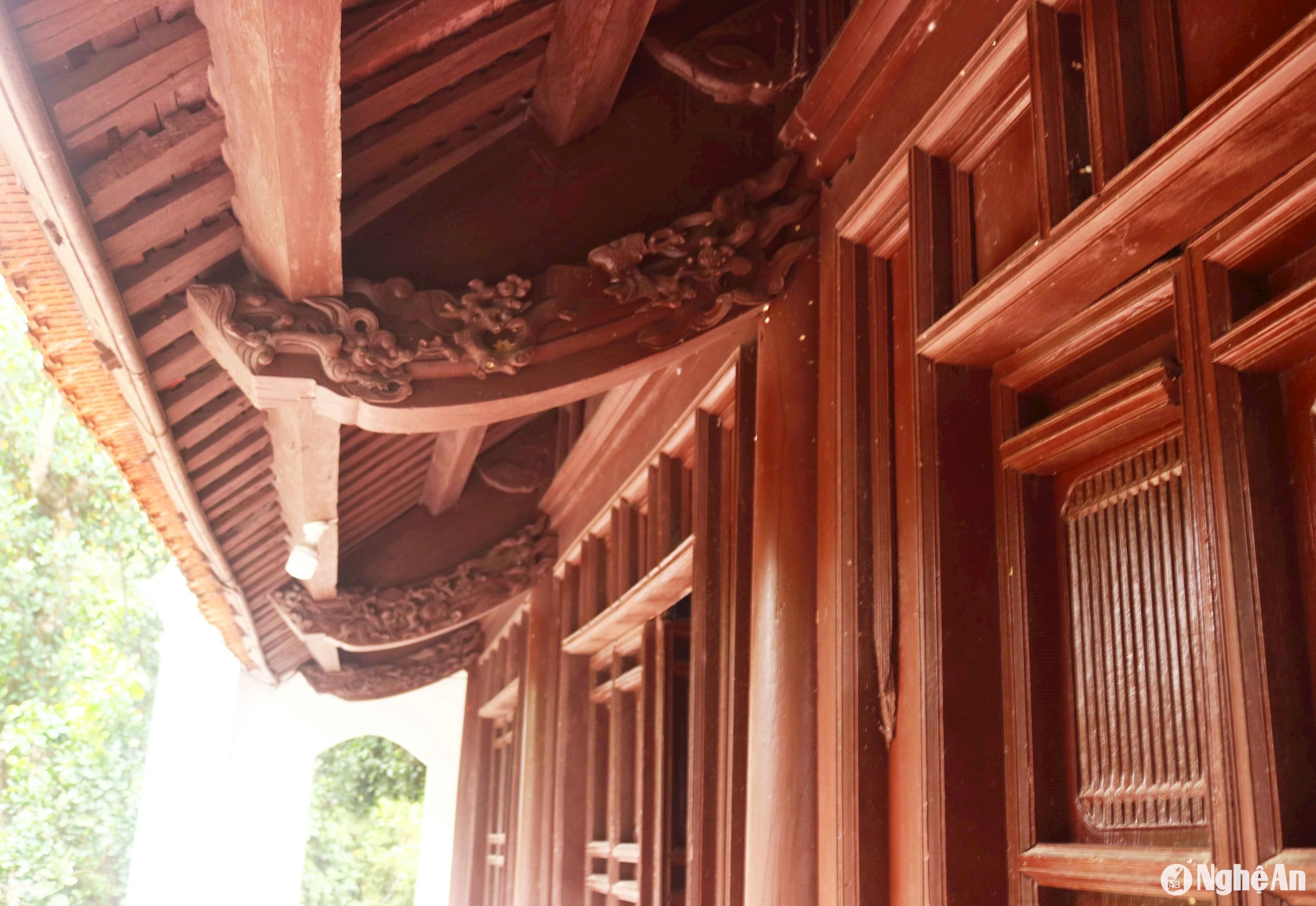
The ancestral temple is made of wood with three bays, a yin-yang tiled roof, and a front entrance with "upper window, lower panel" doors. A distinctive feature of the Nguyen Tu ancestral temple is its elaborately carved and beautifully crafted wooden frame structure. Photo: Huy Thu
bna_3.jpg
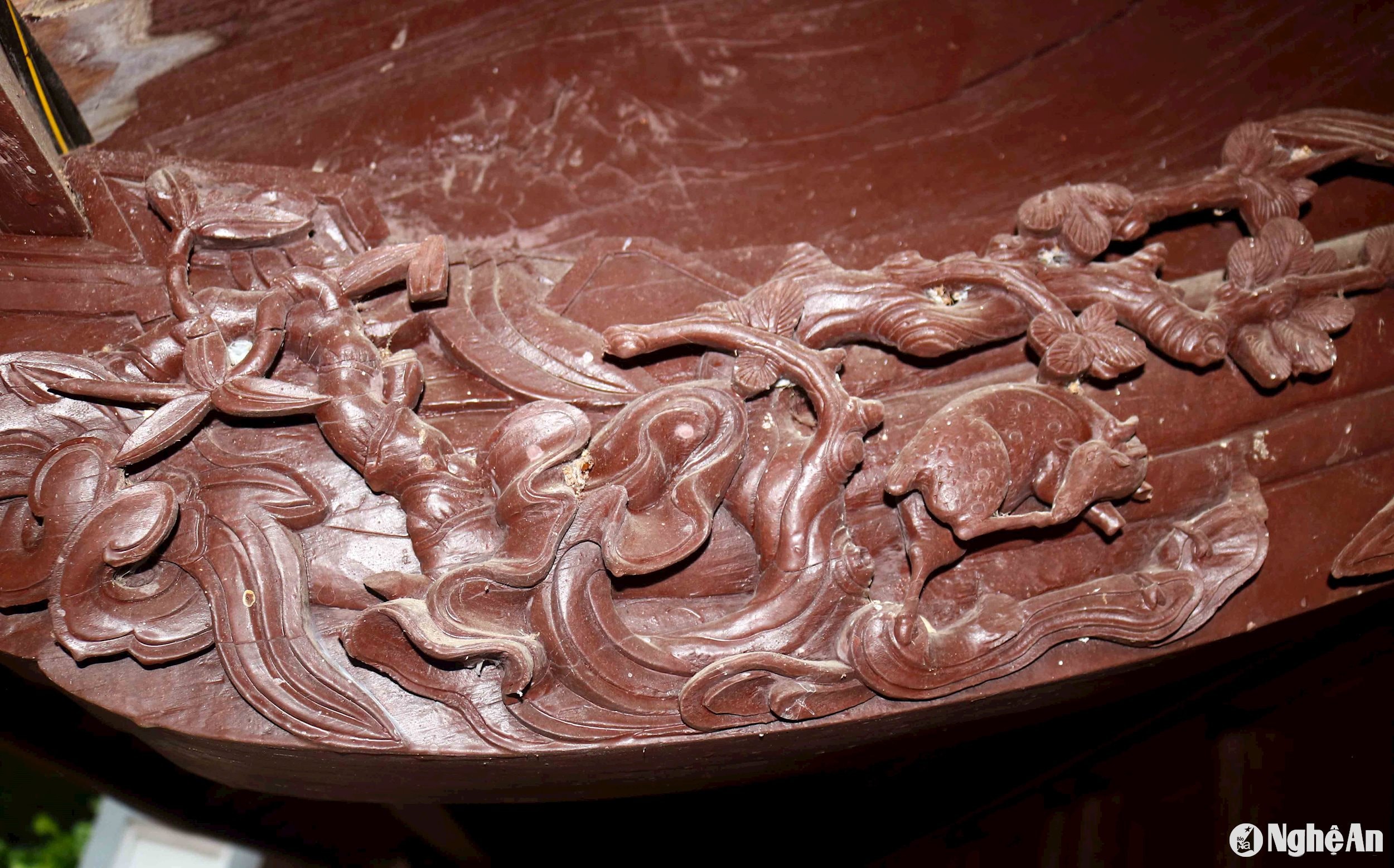
Both the front and back eaves are carved with many traditional themes. Images of "pine and deer," "fish in a net under the moon," "plum blossoms transforming into dragons," etc., are depicted vividly and skillfully. However, due to various factors, the sculptures on the wooden structures of the church have been damaged to some extent. Photo: Huy Thu
bna_4..jpg
The church was built in the four-pillar style, with smooth, gabled beams and rafters. Previously, the church's wooden frame was left unfinished, but during a recent renovation, it was painted for protection. Photo: Huy Thu
bna_5..jpg
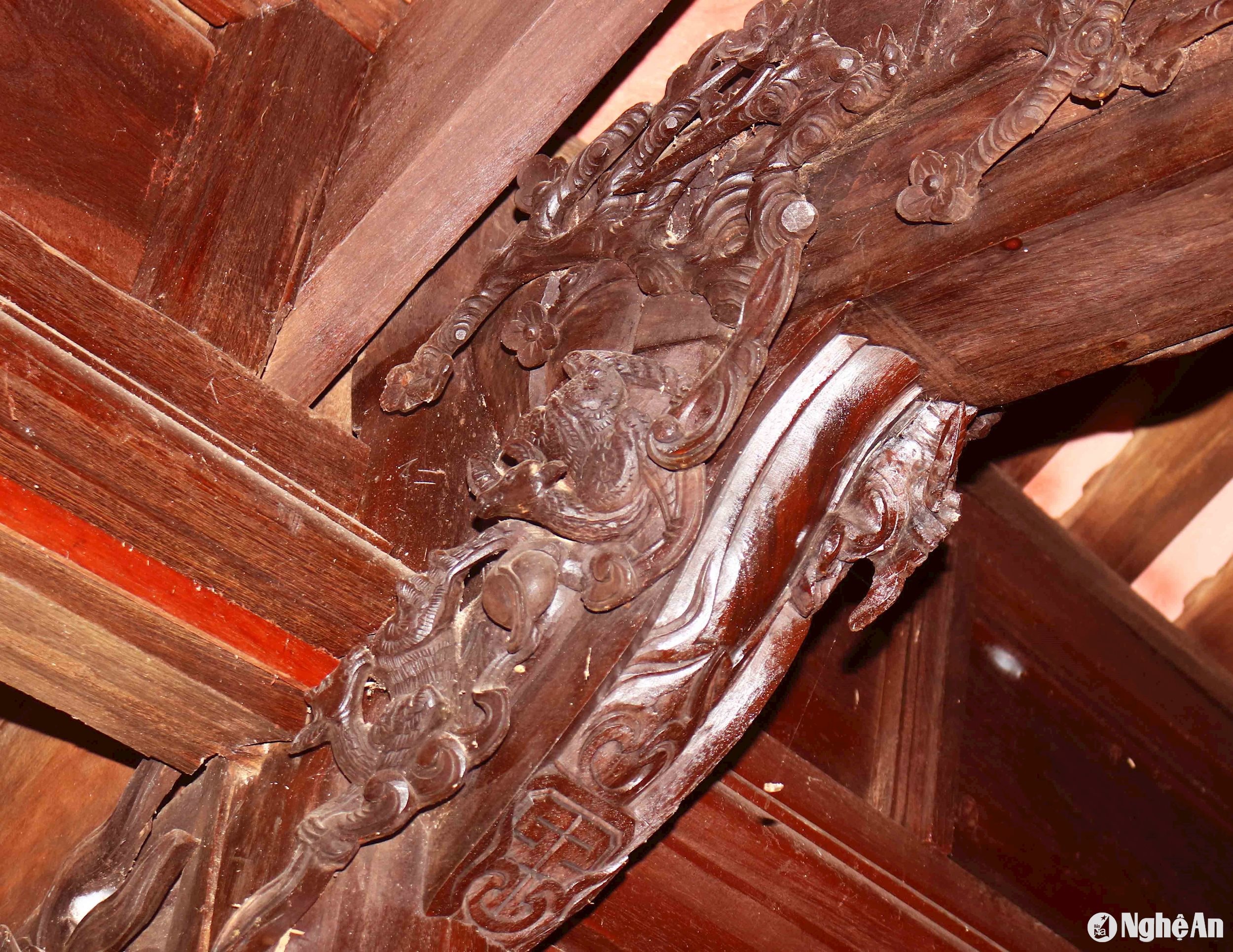
The carvings on the wooden frame of the Nguyen Tu family's ancestral church are quite diverse. Besides images of nature, animals, plants, and flowers, there are also human figures such as "Sitting Together," "Seeking a Master to Learn from," etc., conveying many humanistic and educational messages. Photo: Huy Thu
bna_6..jpg
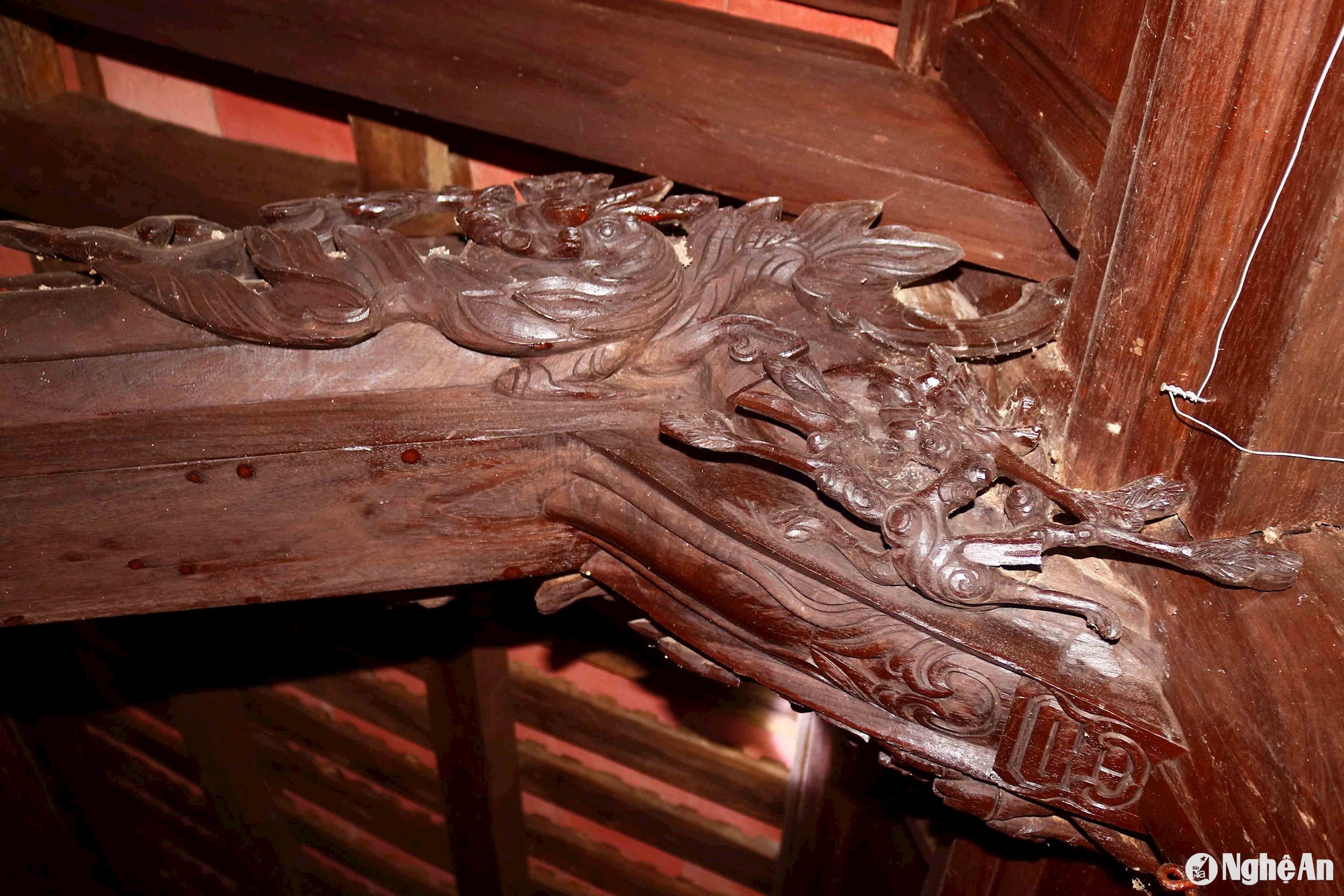
Above the central crossbeam, the image of a "phoenix" with its wings spread wide in a soaring pose is carved with graceful and delicate detail. Photo: Huy Thu
bna_7.jpg
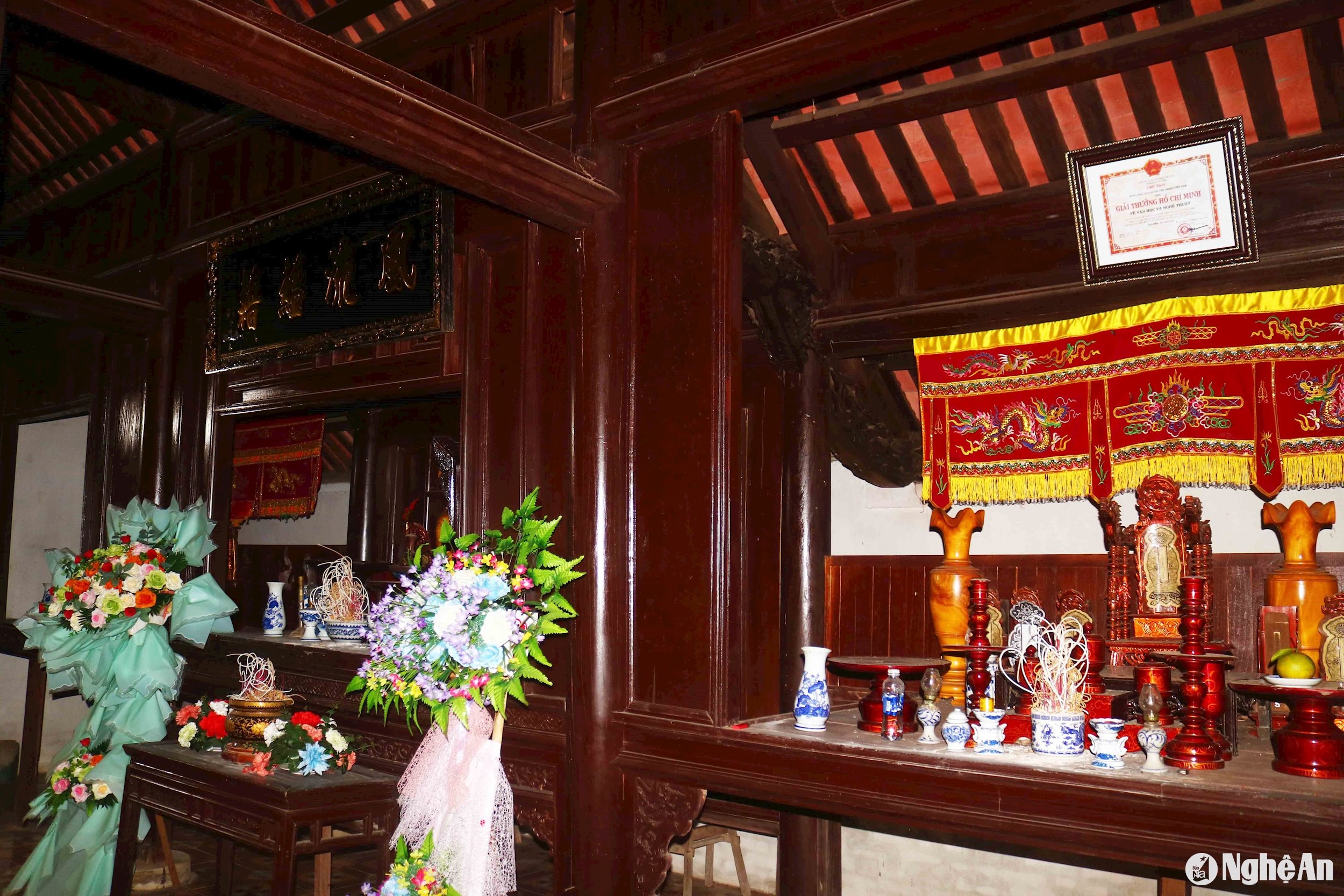
Located outside the Lam River dike, the site is frequently flooded annually, so the altar is designed in the style of a ceremonial cabinet, about 1 meter above the ground, with an open space underneath. The cabinet's structure is mortise and tenon jointed with the main and secondary pillars, enclosed by wooden panels at the back, and features an open doorway at the front, creating a distinctive ceremonial cabinet system typical of ancestral temples in flood-prone areas. Photo: Huy Thu
bna_8.(1).jpg
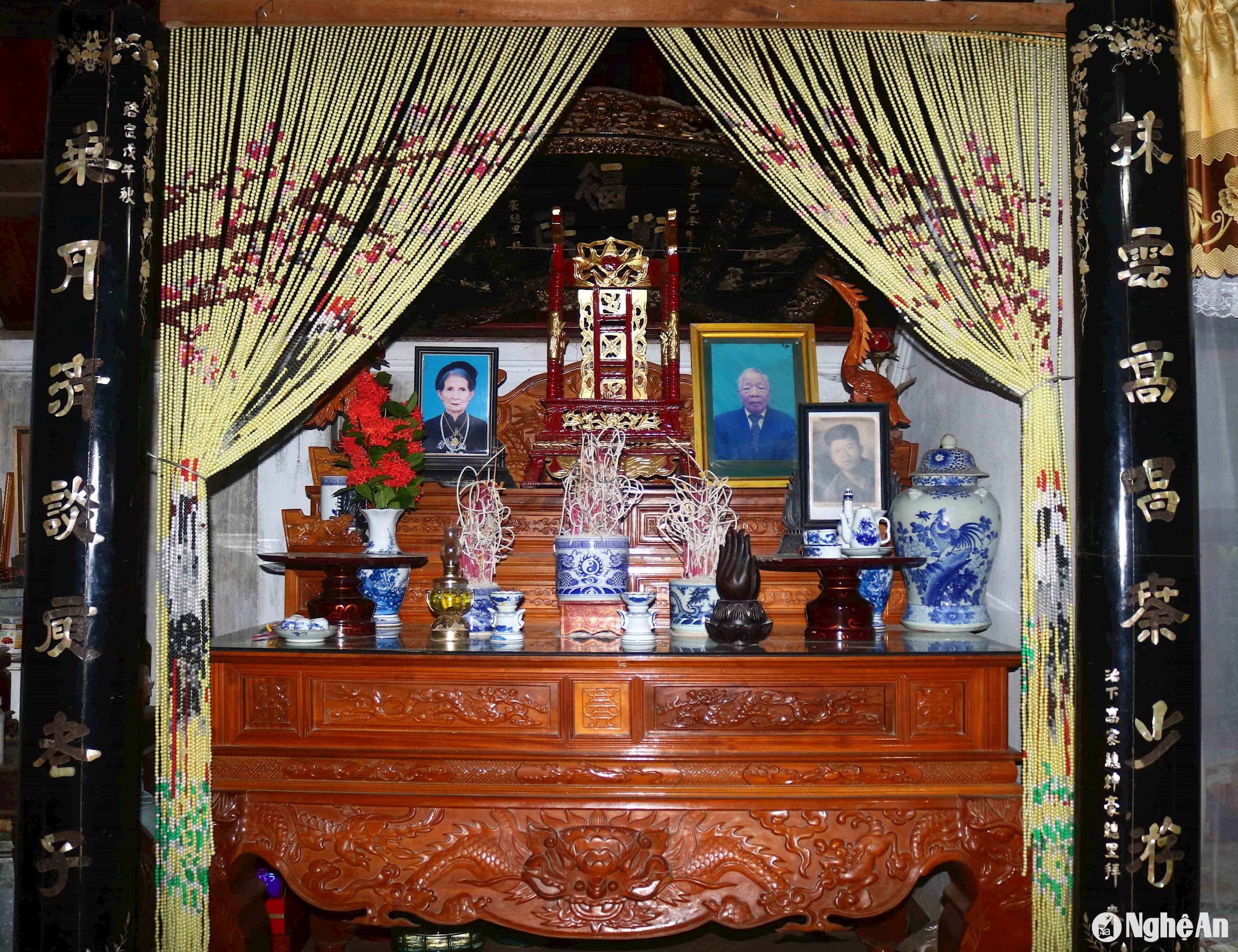
The attic contains four altars: the earth god (at the front of the house), the ancestors of the family lineage (in the middle), and descendants of the family (on either side). Each altar has a shrine and many ancient ritual objects. Photo: Huy Thư
bna_9.jpg
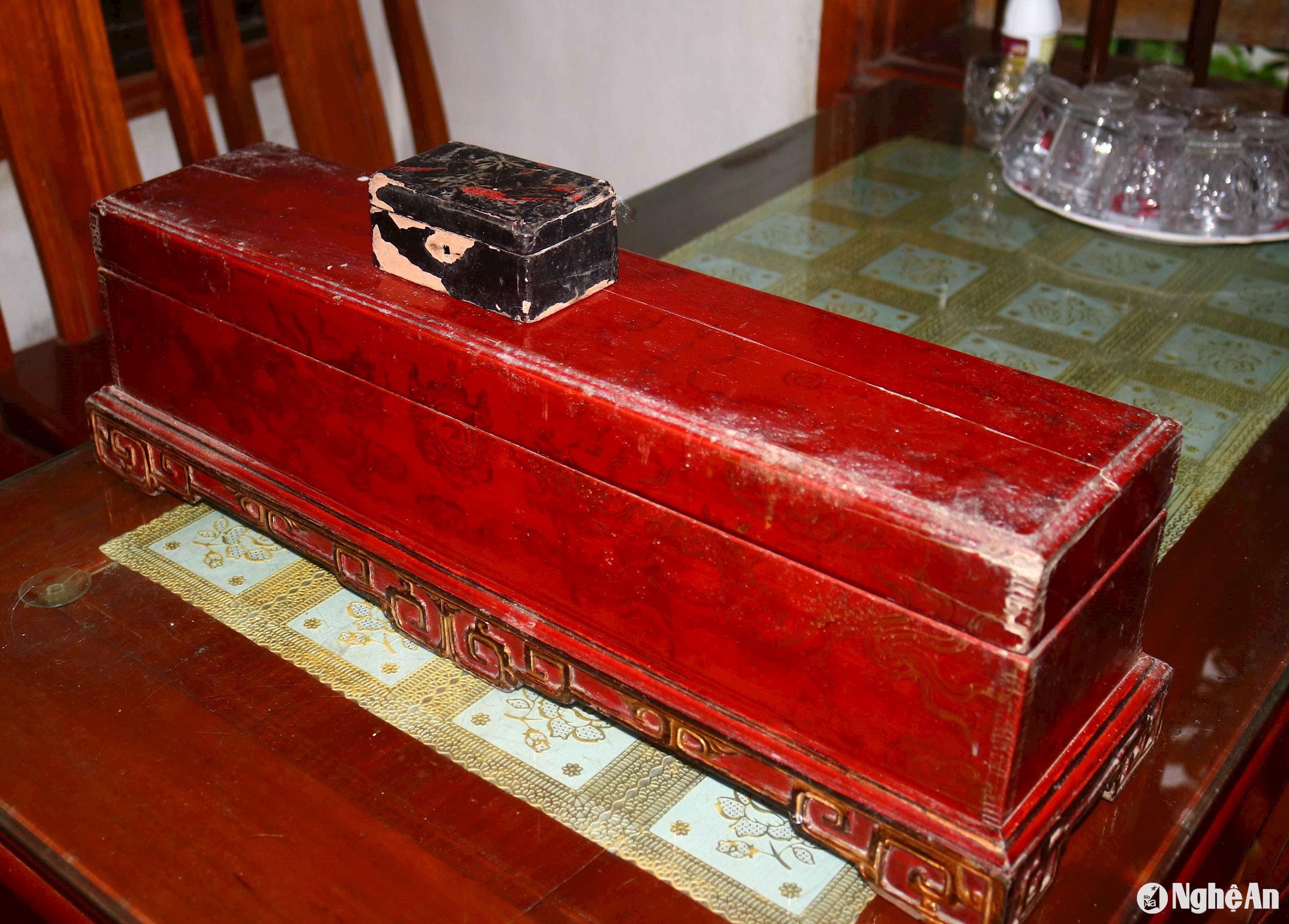
The church still preserves many ancient artifacts such as incense altars, imperial decree boxes, ancient jars, and many items used by high-ranking officials of the Nguyen dynasty, such as seal boxes and book boxes... Photo: Huy Thu
bna_8.jpg
Previously, due to rampant theft, the precious mother-of-pearl inlaid calligraphy and couplets of the Nguyen Tu family's ancestral temple were moved to the home of Mr. Nguyen Tu An, a descendant of the family and the caretaker of the historical site, for safekeeping to prevent theft. Photo: Huy Thu
bna_10.jpg
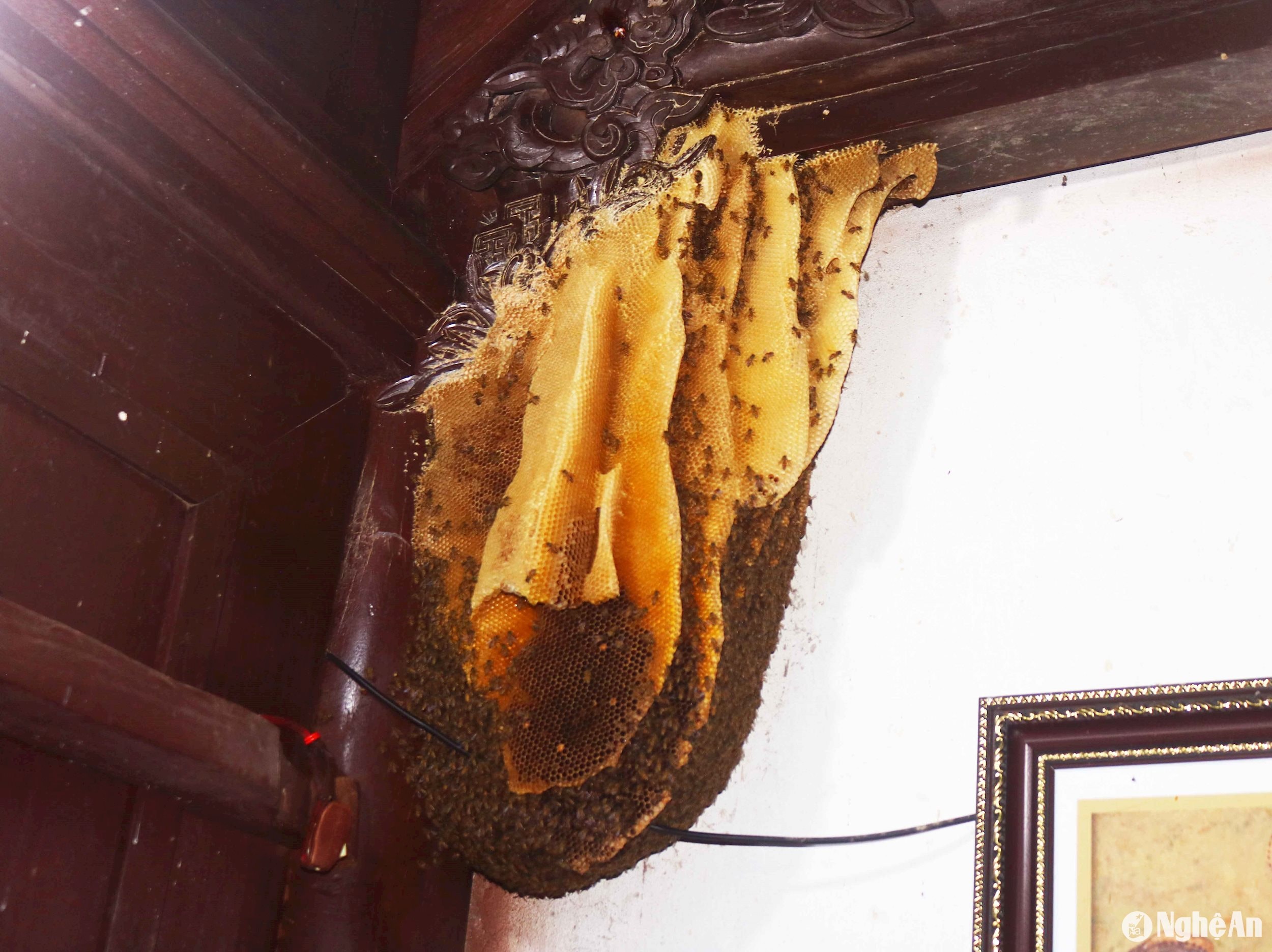
What's particularly striking is the enormous beehive in the Nguyen Tu family's ancestral temple, surprising many visitors. The hive, hanging from a pillar near the right gable wall (when viewed from inside), measures nearly 1 meter in length and contains multiple layers of golden honey. According to descendants of the Nguyen Tu family, this bee colony has been nesting in the temple for four years. Despite numerous annual ceremonies, rituals, and memorial services, with incense burning profusely, the bees have remained in the same spot, and the hive has only grown larger. (Photo: Huy Thu)

0 0 0
x
Discover the ancestral church ruins containing a 'giant' beehive.
Google News
POWERED BYFREECMS- A PRODUCT OFNEKO