
The man who "awakened" the barren land.
(Baonghean.vn) - Leaving behind their nomadic lifestyle, Mr. and Mrs. Quang Van Hong have risen to become masters of their new lives in the Kim Lien resettlement village (Ngoc Lam, Thanh Chuong). Through their hard work and perseverance, tea plantations and rice paddies have flourished on what was once barren land.
When we arrived at the home of Mr. Quang Van Hong (born in 1969) and Mrs. Luong Thi Lien (born in 1976) in the Kim Lien resettlement village (Ngoc Lam commune, Thanh Chuong district), the sun was already high in the sky. However, their house was deserted. Upon asking the neighbors, we learned that the couple had packed their lunches and gone to the tea plantations early that morning to work, and were resting there during their lunch break.
Following the directions, we found our way to Khe Hoi Hill, where nearly 13 acres of lush green tea plants, ready for harvest, belong to Mr. Hong and Ms. Lien. Mr. Hong said this is the sixth year that the PH1 tea variety has taken root on Khe Hoi Hill. Thanks to the healthy growth of the tea, traders come directly to the village to buy it as soon as it's harvested. Cherishing the money from selling the still-intact tea, Mr. Hong and Ms. Lien never imagined that one day their family could settle down and have a stable life.
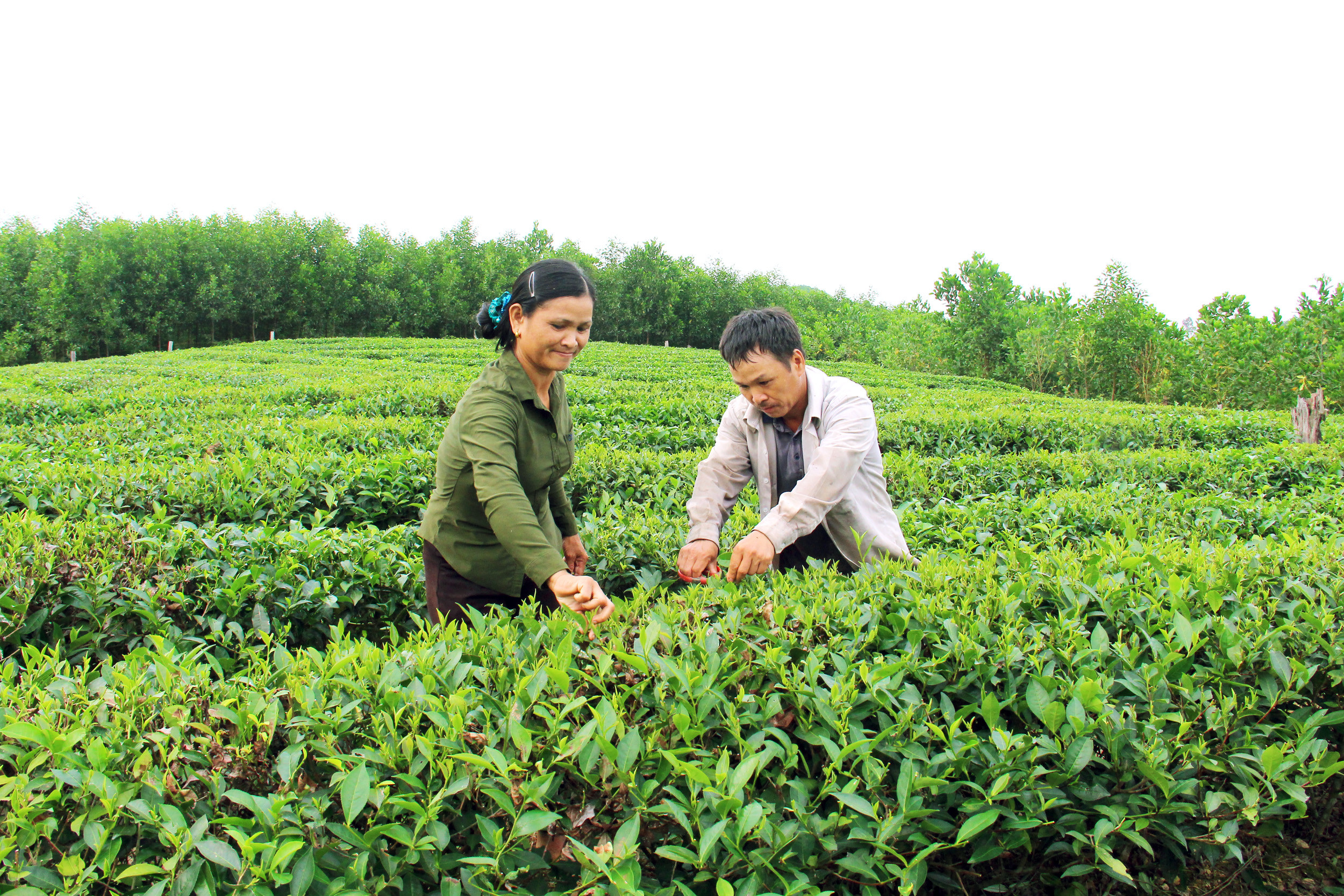 |
| Mr. and Mrs. Quang Van Hong at the Khe Hoi tea hill they reclaimed in Kim Lien resettlement village (Ngoc Lam commune, Thanh Chuong district). Photo: Quynh Thanh |
Recalling the early days of moving to the new land, like hundreds of other families in the village, the couple faced countless difficulties as they were unfamiliar with the environment and climate of their new homeland, while their arable land was limited, with only 3 acres of paddy fields.
Initially, seeing many people returning illegally to the area where the Ban Ve hydroelectric reservoir was being built, the couple were very worried. But after a while of getting used to their new life and participating in training courses on farming and livestock raising techniques, the couple decided not to rely on government support and boldly started their own production.
Starting with the 3 sao (approximately 0.3 hectares) of rice paddies allocated to them near Khe Hoi, the couple began building embankments, channeling water to improve the soil, and introducing new rice varieties according to the training they had received. Although their hands, accustomed to handling straw and planting rice seedlings, now had to use hoes to dig the soil and plant rice by hand, it felt somewhat strange at first. However, once they got used to it, they found wet rice farming less strenuous than dry rice farming, and the yield and efficiency were much higher. Thanks to the 600 kg of rice harvested each season, the whole family no longer worried about a shortage of rice.
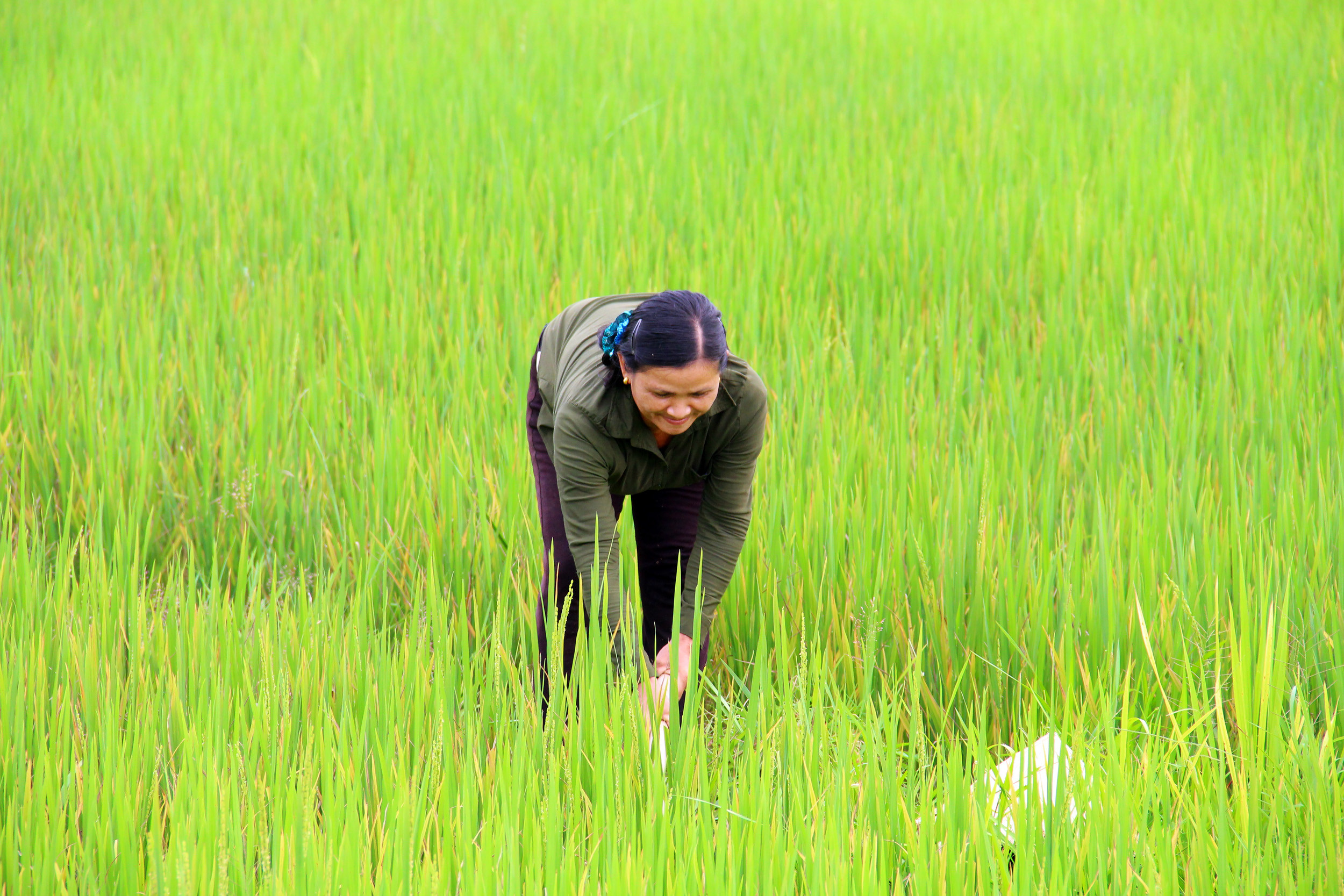 |
| Ms. Luong Thi Lien and her husband reclaimed land along Khe Hoi stream to cultivate rice paddies. Photo: Quynh Thanh |
Gradually, seeing the effectiveness of wet rice farming and the surplus land along the streams and ravines, the couple continued to reclaim an additional 3 sao (approximately 0.3 hectares) of land. Now, they have 5 sao of thriving wet rice paddies, providing not only enough food but also surplus rice to sell, providing money for emergencies such as illness.
Farming provided enough to live on, but during the off-season, they felt their labor was being wasted just tending to their two buffaloes. So in 2012, they took a gamble and decided to reclaim the Khe Hoi hilly area. He was even more motivated after learning that the government was providing tea seedlings to resettled people for land reclamation and economic development. They used all their savings to hire people to help them dig the land, weed, and clear the wild vegetation on an area of nearly 13 acres. After more than two months of hard work, the land was finally formed and the paths were laid. At this point, he received the seedlings and hired more people to plant and water them.
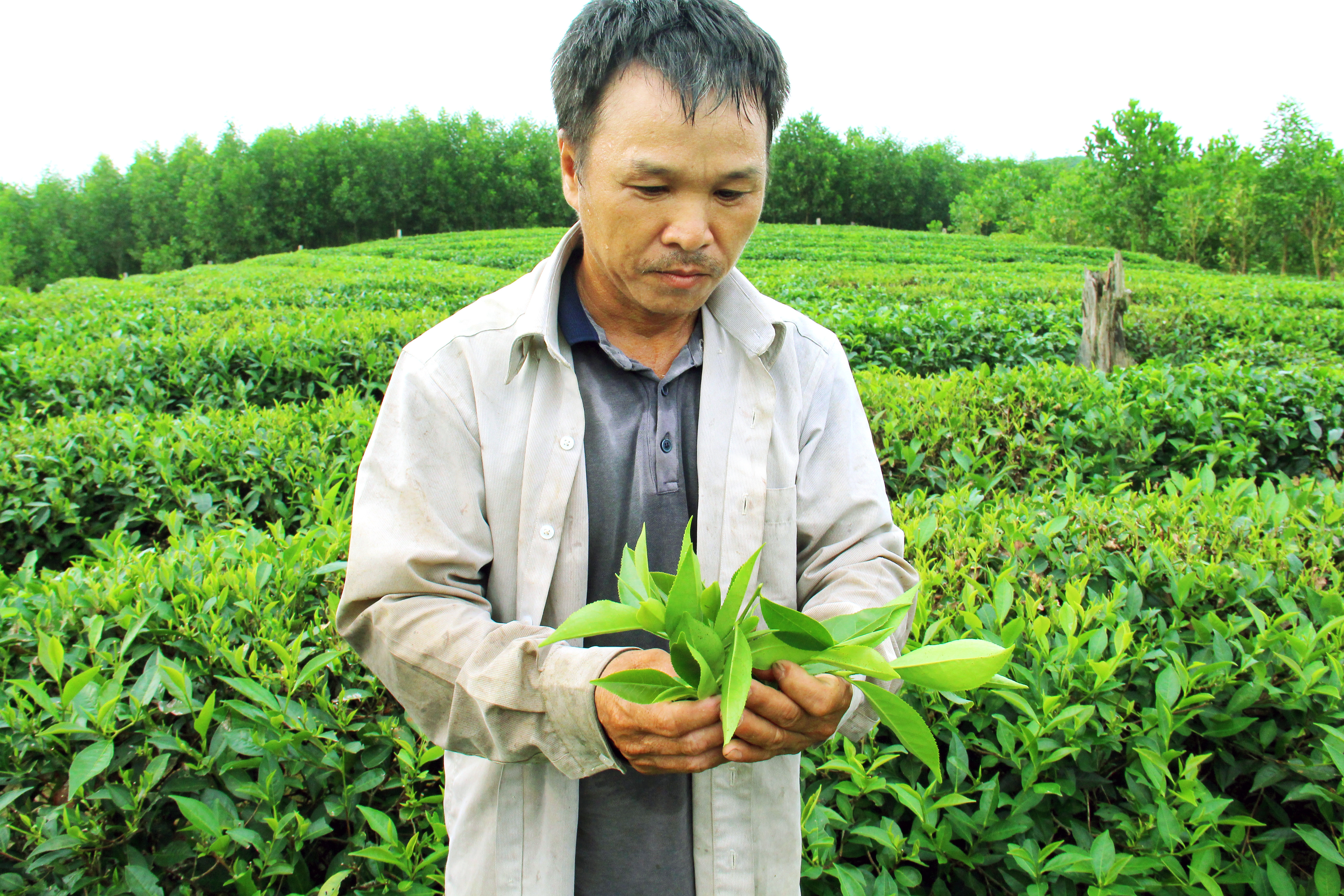 |
| After the initial awkwardness in the new land, Mr. Quang boldly planted the PH1 tea variety, which yields high quality and quantity. Photo: Quynh Thanh |
Only after the tea plants took root did the couple breathe a sigh of relief. Because they had poured so much heart and effort into the tea plantation, there was hardly a day when the couple could rest easy at home. From morning until dusk, they would tend to each tea bush and rice field.
Now that the tea plants have yielded their fifth harvest, the 30 million VND they spent hiring people to improve the land is almost recouped, so the couple's worries have lessened.
With the money earned from selling tea, the couple took advantage of their spacious hillside land to buy four buffaloes for grazing. From then on, their lives gradually became stable in their new homeland.
Mr. Lo Huy Hung, Chairman of the Ngoc Lam Commune People's Committee, commented: "Mr. and Mrs. Quang Van Hong are exemplary entrepreneurs for the people of Ngoc Lam. Thanks to their determination to escape poverty and their independence from government support, the couple has gradually risen to self-reliance and integrated into life in their new hometown."


