
Looking back at 21 strikes and the role of grassroots trade unions in Nghe An.
(Baonghean) - From 2010 to the present, Nghe An province has experienced 21 strikes and numerous labor disputes. This shows that the role of trade unions in enterprises remains weak and has many shortcomings. While many large enterprises with foreign investment have invested in Nghe An, reforming the organization and operation of trade unions is essential.
In early October 2016, nearly 3,000 workers at Matrix Vinh Company, located in the North Vinh Industrial Zone, simultaneously went on strike. They demanded that the company address labor rights issues such as stressful working hours, insufficient lunch allowance, short lunch breaks, and inadequate restroom facilities. This action by thousands of workers forced the company to cease operations. The situation dragged on, but the company and the workers still could not reach a common ground.
Two days later, the Chairman of the Provincial People's Committee, Nguyen Xuan Duong, arrived at the company and requested that relevant departments, the Southeast Economic Zone, and the company organize a dialogue with the workers to resolve their legitimate rights and ensure the company resumes stable operations.
Following the directive from the Chairman of the Provincial People's Committee, a dialogue was held between the company and the workers. During this dialogue, the leaders of Matrix Vinh Company promised to address the issue of ensuring clean restrooms for workers, increase the lunch allowance from 12,000 VND to 15,000 VND per meal, and install additional time clock machines to facilitate workers clocking in four times a day.
In addition, the company also considered increasing seniority pay; addressing the issue of team leaders verbally abusing workers... At this point, nearly 3,000 workers finally agreed to return to work.
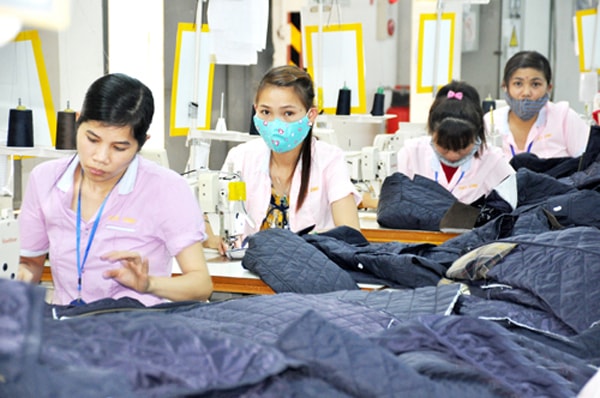 |
| Workers in Nghe An still face many difficulties in their lives. (Illustrative image) |
This is just one of 21 strikes that have occurred in Nghe An province since 2010. Collective labor disputes and strikes have been on the rise in recent years. These strikes are becoming increasingly complex in terms of the content of the disputes, the time required for resolution, and the number of participants, negatively impacting the province's socio-economic situation.Meanwhile, the role of trade unions at all levels remains too vague and inadequate.
“The strikes were not conducted according to legal procedures, and the grassroots trade unions didn't even know when a strike would occur. This proves that the grassroots trade unions haven't grasped the desires and thoughts of the workers to convey them to the business owners; they haven't truly cared about the legitimate interests of the workers,” acknowledged Mr. Nguyen Chi Cong, Head of the Policy and Legal Affairs Department of the Nghe An Provincial Federation of Labor.
| Nghe An province currently has nearly 16,000 businesses with approximately 70,000 workers. However, according to updated data from the Nghe An Tax Department, only less than 10,000 businesses are currently under management, including 32 state-owned enterprises, 45 foreign-invested enterprises, nearly 5,000 limited liability companies, and 4,000 joint-stock companies... Notably, only over 450 of these businesses have established trade unions. This significantly impacts the rights of workers, especially in the event of disputes. |
Currently, the general situation is that the lives of workers in Nghe An are still full of hardships, with low wages and income; and working conditions do not meet requirements...
TAccording to Mr. Nguyen Tu Phuong, Chairman of the Nghe An Provincial Labor Union, most businesses are paying workers the same wage as the regional minimum wage. The majority of businesses still disregard occupational safety and hygiene. Very few businesses conduct regular quarterly dialogues with workers as required by regulations. Workers' interests are not being met, leading to the constant risk of conflict and disputes between workers and employers, resulting in strikes.
Speaking about the limitations of trade union activities, Mr. Nguyen Chi Cong acknowledged that grassroots trade union officials in enterprises do not dare and cannot protect workers. Meanwhile, the number of trade union officials at the higher levels is small and they also lack regular attention.
Labor laws and trade union laws currently delegate authority to grassroots trade union officials—who are essentially employees of the business owners. Meanwhile, these officials lack the skills, knowledge, time, and assertiveness to exercise this right.
“In reality, business owners have not provided the necessary conditions for grassroots trade unions to operate, neither in terms of time nor funding. The percentage of businesses with trade union organizations is still too low. Meanwhile, workers do not yet truly trust and place their faith in trade union organizations. In the future, the role of grassroots trade unions will remain difficult to fulfill due to the dependence of trade union officials on businesses through their jobs, income, and personal interests,” Mr. Cong added.
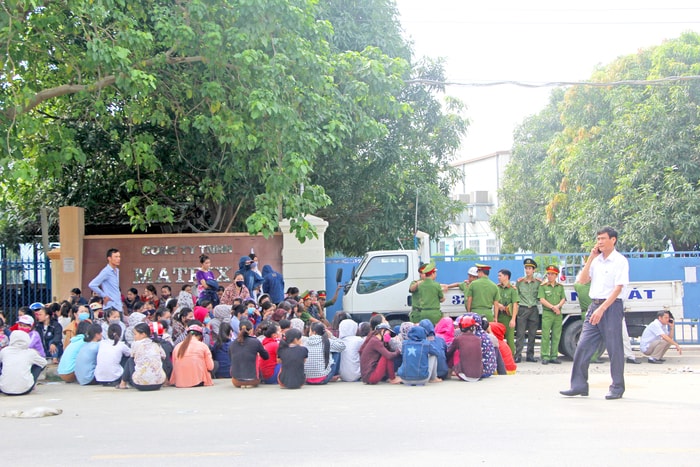 |
| Nearly 3,000 workers at Matrix Vinh Company went on strike in October 2016. (Photo: Archival image) |
To address these limitations, the People's Committee of Nghe An province recently organized a scientific workshop on reforming the organization and operation of trade unions in Nghe An under the conditions of international economic integration. At this workshop, delegates argued that, in the short term, Nghe An needs to accelerate the establishment of trade union organizations, so that grassroots trade unions are present and perform their functions in all enterprises, especially small enterprises; at the same time, it needs to promote dialogue to resolve difficulties and build harmonious and stable labor relations.
The Nghe An Trade Union also needs to shift from passive to active protection by focusing its resources on negotiating with business owners to build "technical barriers" within enterprises, such as collective labor agreements, regulations, labor standards, and wage scales, to protect workers from afar.
Furthermore, bureaucratization in trade union activities must be eliminated. Activities involving interaction, meetings, and understanding the concerns and aspirations of workers should be conducted in workers' dormitories and outside of working hours; social activities should be strengthened, and opportunities for union members to enjoy recreation and entertainment after work should be organized.
Tien Hung
| RELATED NEWS |
|---|


