
Prime Minister: Building a society safe from natural disasters.
Speaking at the National Conference on Disaster Prevention and Control on March 29, Prime Minister Nguyen Xuan Phuc clearly stated that it is necessary to recognize that natural disasters follow no pattern and have a significant impact on the peaceful lives of the people. If people are left hungry, cold, and homeless due to poor disaster prevention and awareness, then it is our responsibility.
|
| Prime Minister Nguyen Xuan Phuc speaks at the conference. Photo: VGP/Quang Hieu |
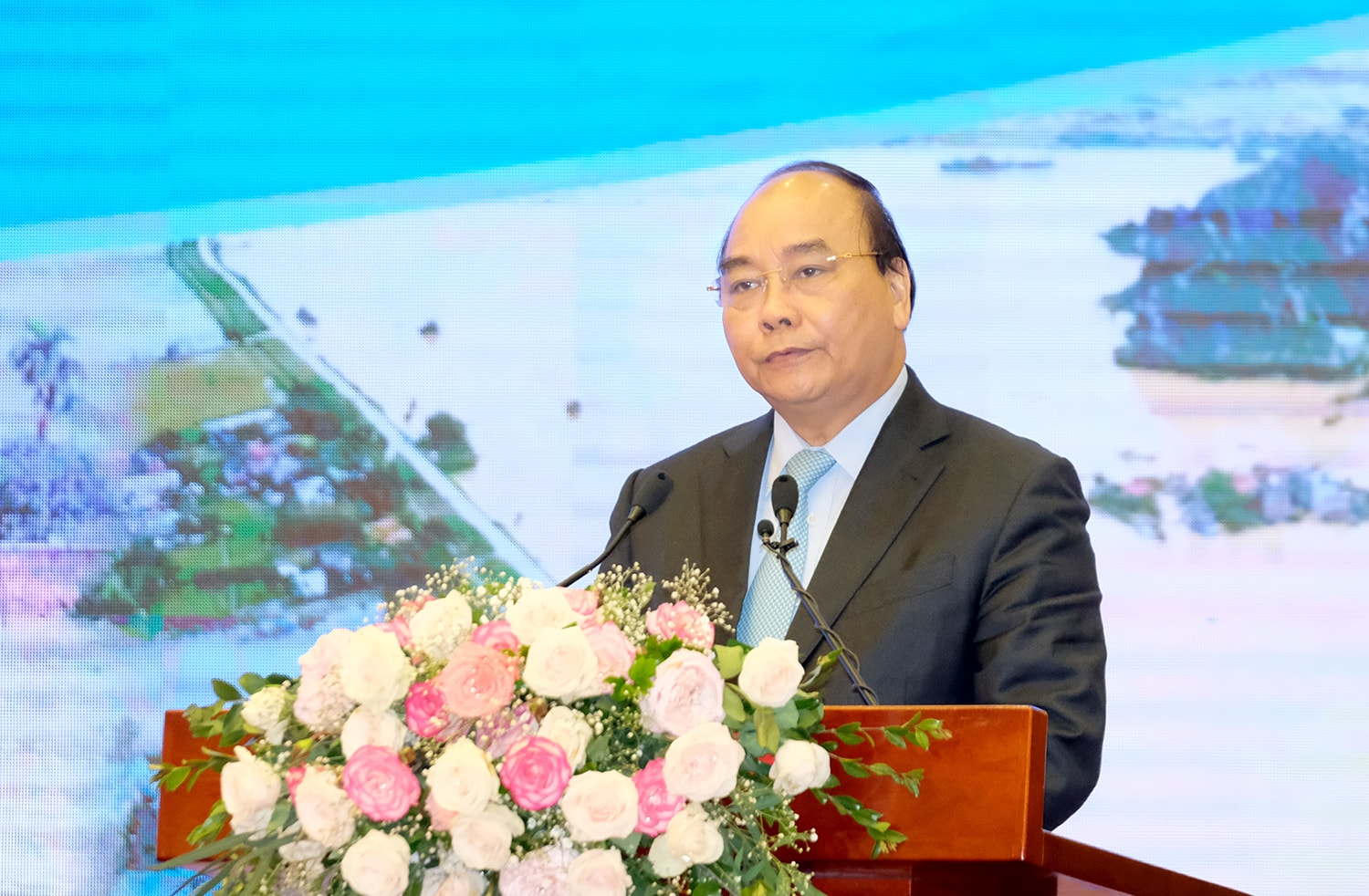
As a country that "weathers storms in the morning and scorching sun in the afternoon," the Prime Minister stated that Vietnam has a tradition of resilience in fighting floods and droughts to protect the peaceful lives of all its people. Therefore, this conference is very important, with the participation of a large number of leaders from localities, ministries, domestic and international organizations, scientists, and experts to discuss practical and creative measures to address this issue. The Government will listen and absorb as much as possible, thereby formulating a Government Resolution on disaster prevention and control.
The Prime Minister stated that Vietnam is one of the five countries most threatened by natural disasters. We have made efforts, but the damage remains significant, often amounting to 1-1.5% of GDP. With 16 typhoons and 4 tropical depressions in 2017, we suffered losses of 60 trillion VND.
In particular, the Prime Minister emphasized that we must recognize that natural disasters follow no pattern and have a significant impact on people's peaceful lives. If people are left hungry, cold, and homeless due to poor disaster prevention and awareness, then it is our responsibility.
|
| The Prime Minister emphasized the crucial importance of disseminating information and knowledge about disaster prevention and control. (Photo: VGP/Quang Hieu) |

Therefore, the Prime Minister emphasized that "the greatest spirit and the most overarching guiding principle is to build a society safe from natural disasters."
Accordingly, disaster prevention and control must be the responsibility of the entire political system, the entire population, and the entire society, implemented according to the principle of the State and the people working together, effectively utilizing resources from the State, organizations, and individuals both domestically and internationally.
Disaster prevention and control should be implemented based on risk management. Full attention must be paid to prevention, response, and recovery efforts. To minimize damage, prevention must be the primary focus, prioritizing investment in prevention (rather than just response and recovery), and effectively implementing the "four on-the-spot" principle.
Implement integrated and synchronized management solutions across systems, river basins, regions, and sectors; apply scientific and technological achievements while inheriting traditional experiences.
Disaster prevention and control must be incorporated into the socio-economic development plans of the entire country and of all sectors to minimize risks from natural disasters; businesses should be encouraged to invest in disaster prevention and control through public-private partnerships with appropriate mechanisms and policies.
Solutions must combine structural and non-structural approaches, integrating post-disaster recovery and upgrading with the need for better reconstruction. Investment in disaster prevention and mitigation infrastructure must serve multiple purposes.
Ensuring the implementation of international commitments to which Vietnam is a party complies with the provisions of international law and Vietnamese law.
|
| The Prime Minister highly appreciated the applied scientific research on disaster prevention and control. Photo: VGP/Quang Hieu |

Arrive in the storm zone before the storm arrives.
Based on the above perspectives, the Prime Minister believes that there must be a better organizational structure and institutions for disaster prevention and control, with the spirit of "efficient and effective, with competent and highly responsible officials, linking responsibility with the interests of the people, and focusing on the people."
Agreeing with Mr. Le Huy Ngo, former Minister of Agriculture and Rural Development, who stated that making phone calls is good, but going to the storm-affected area before the storm arrives, staying close to the people, and proactively implementing evacuation measures is better, the Prime Minister shared his experience working in the locality. He noted that during floods, the authorities had to order the disposal of people's pigs and provide compensation to prevent people from clinging to their pigs and staying in their homes during the storm or carrying them on boats, which could lead to accidents, boat capsizing, and fatalities. Therefore, officials in this field must have a high level of responsibility towards the people.
Therefore, "This conference is to instill a sense of responsibility in the government and the nationwide disaster prevention and control system to care for the people. Only with dedication can creativity be achieved; indifference to storms and floods is unacceptable," the Prime Minister said.
|
| The Prime Minister visits the exhibition booth showcasing the Disaster Warning System. Photo: VGP/Quang Hieu |
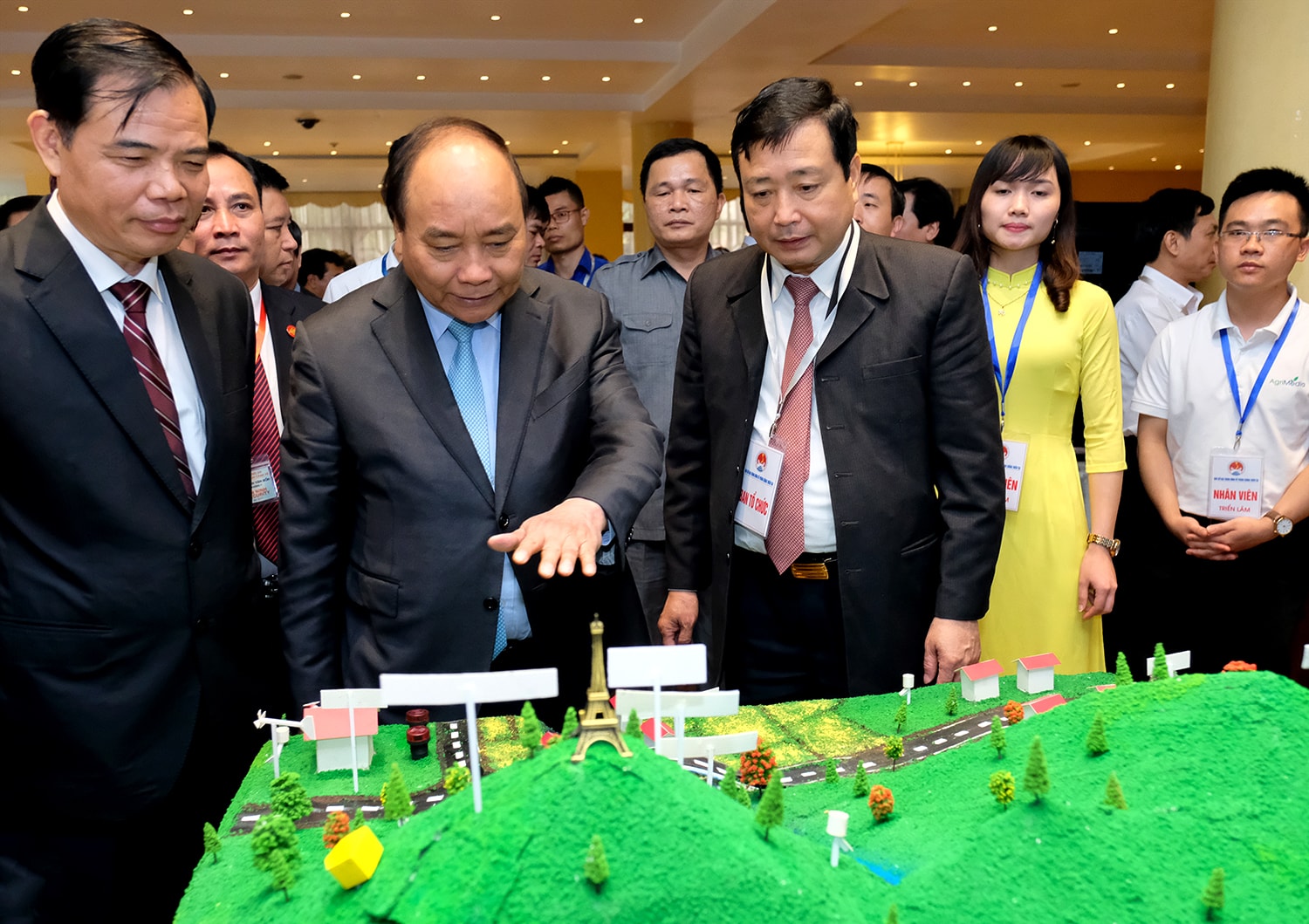
In addition, the Prime Minister emphasized the need to improve operational capacity. The Central Steering Committee for Natural Disaster Prevention and Control and the Steering Committees at all levels must operate continuously, effectively, efficiently, and proactively, not just during the rainy season.
Emphasizing the need to promote the application of science and technology, especially in monitoring, observation, and forecasting, the Prime Minister stressed the importance of preventing a recurrence of landslides that caused numerous fatalities like last year. Furthermore, he stressed the need for strict discipline and order, stating that "meetings on flood and natural disaster prevention must include all responsible individuals to make decisions."
Communication about disaster prevention and control must be given top priority because it relates to the lives and property of the people. Improving the capacity of disaster prevention and control staff, especially those at the grassroots level, is also crucial.
Regarding institutions and policies, the Prime Minister stated that they will continue to be improved, including financial policies to support this work, promote social participation, and create conditions for public-private partnerships…
Suggesting specific solutions for different regions, the Prime Minister stated that for mountainous areas including the North, Central, and Central Highlands regions, landslides, flash floods, dam safety, and population relocation are issues that require significant attention in guidance. The operational procedures for interconnected reservoirs must be clarified.
For the Northern Delta and North Central regions, it is essential to ensure the safety of flood control structures, including dike systems. "Don't let a situation arise where termite mounds as big as drums in the dikes go unnoticed, only to burst open during heavy rains, leaving no time to escape." We must avoid a "locking the stable door after the horse has bolted" approach to dike protection. Safety must be ensured for the entire region, especially the capital city of Hanoi.
|
| The Prime Minister visits an exhibition showcasing flood prevention plans. Photo: VGP/Quang Hieu |
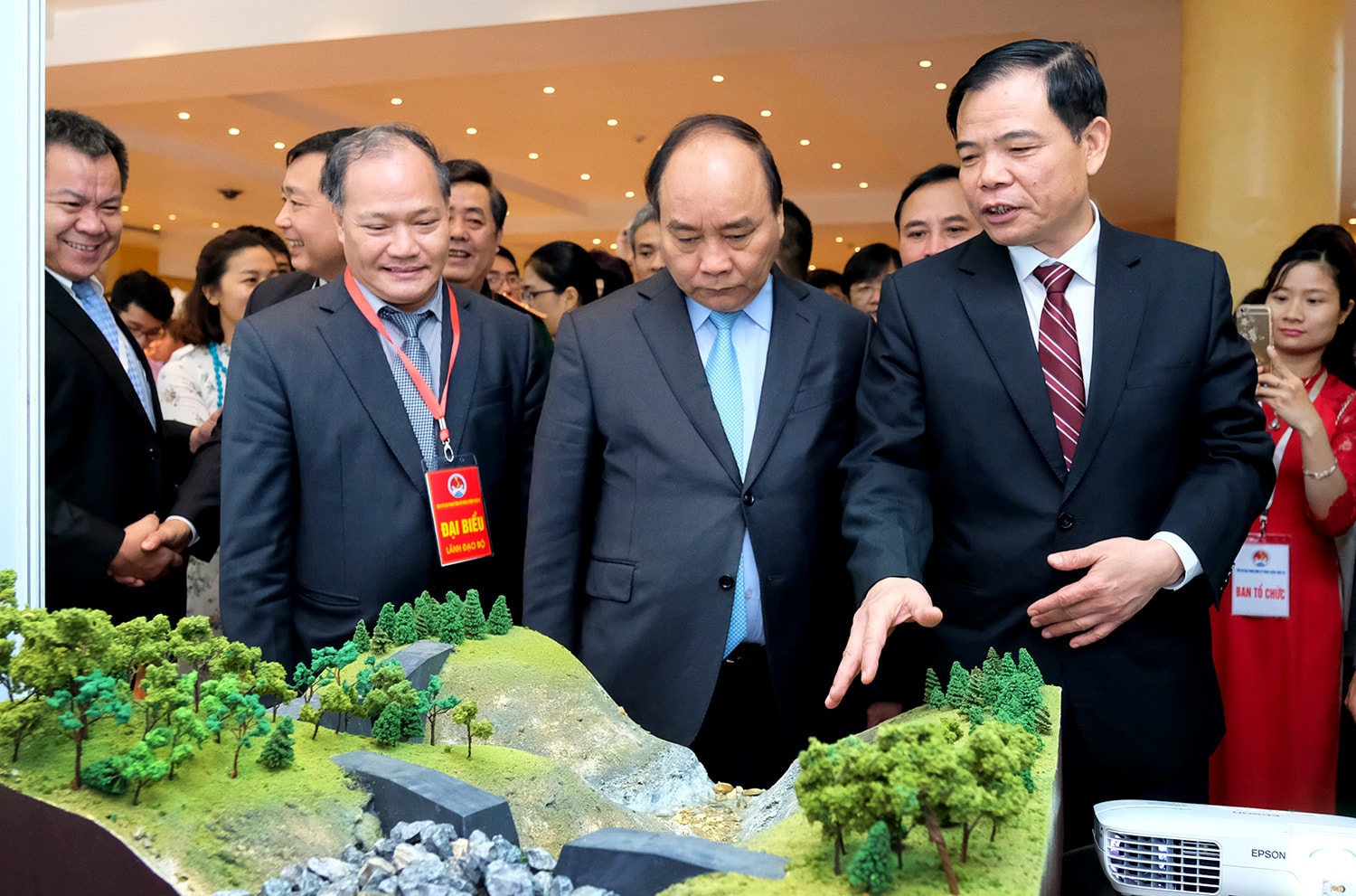
For the coastal areas of Central Vietnam and the Central Highlands, which have steep slopes, attention must be paid to dam safety, inter-reservoir management procedures, flood discharge, boat mooring areas, and aquaculture.
For the Mekong Delta region, it is necessary to effectively implement Government Resolution No. 120/NQ-CP with a spirit of "working in harmony with nature" in responding to climate change.
For maritime and coastal areas, complacency is unacceptable; the process of ships entering and leaving must be strictly controlled, with coordination between border guards and local flood and storm prevention forces. "Don't let the situation arise where ships don't return despite repeated calls." Contingency plans are needed in case of super typhoons.
For large cities, it is necessary to review standards and drainage capacity, especially minimizing the filling in of lakes to create construction sites and reduce water storage space. Attention should also be paid to the care of trees in the city, preventing situations where falling trees cause fatalities, as has happened in some cases.


