
Learn about tire information when choosing to buy them.
Basically, you should equip yourself with knowledge about tires to choose the right tires for your vehicle, and you should use standard and optional tires as specified by the manufacturer.
When using a car, equipping yourself with knowledge about tires and understanding tire information is crucial in choosing the right tires for the type of vehicle you are using.
To find information about tire size and specifications, look at the tire's surface. The tire surface will display complete information including: Manufacturer's name, vehicle type, size specifications, speed, and permissible load.
Find the tire size information on the tire.
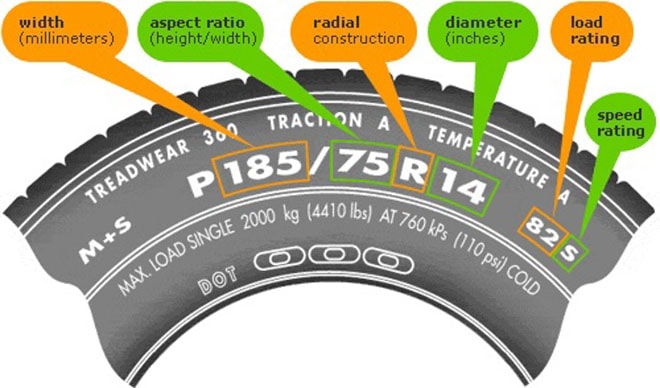
For example, the tire shown above has specifications P185/75R14 82S, in which:
P – Indicates the type of vehicle used: The letter P is an abbreviation for "Passenger," used for passenger vehicles. Besides P, we may also encounter other terms such as: LT "Light Truck": used for pickup trucks and light trucks; T "Temporary": temporary replacement tires...
185 - This is an indicator of the tire width, measured in millimeters (mm).
75 - The ratio between the sidewall height and the tire width: calculated as the ratio of thickness/width of the tire. In the example above, the thickness is 75% of the tire width (185)
R - Tire structure: Most common tires on vehicles have a Radial structure, corresponding to the letter R. Additionally, tires may have other letters such as B, D, or E, but these are now very rare on the market.
14 - Rim diameter: Each tire is designed for a specific rim size; for example, a size 14 tire fits a 14-inch rim.
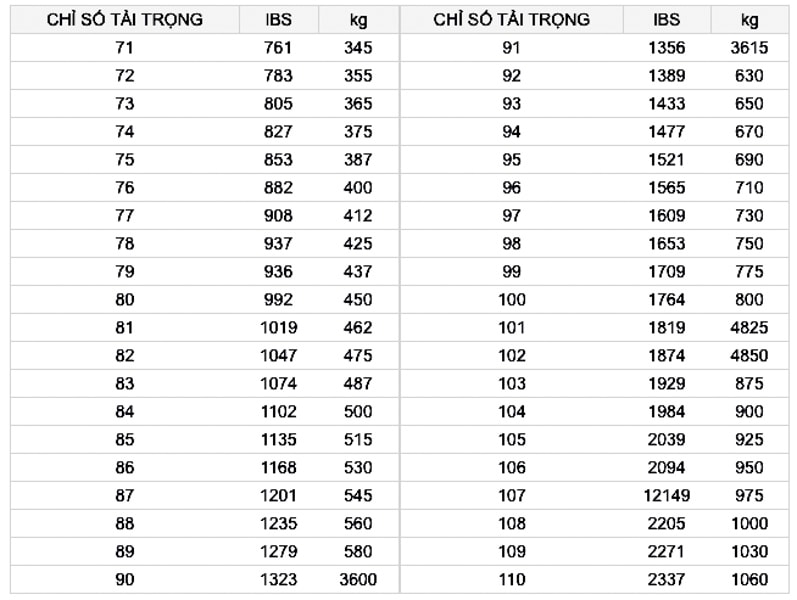
82 - Tire load capacity; this tire has a load capacity of 380 to 925 kg (load capacity table below).
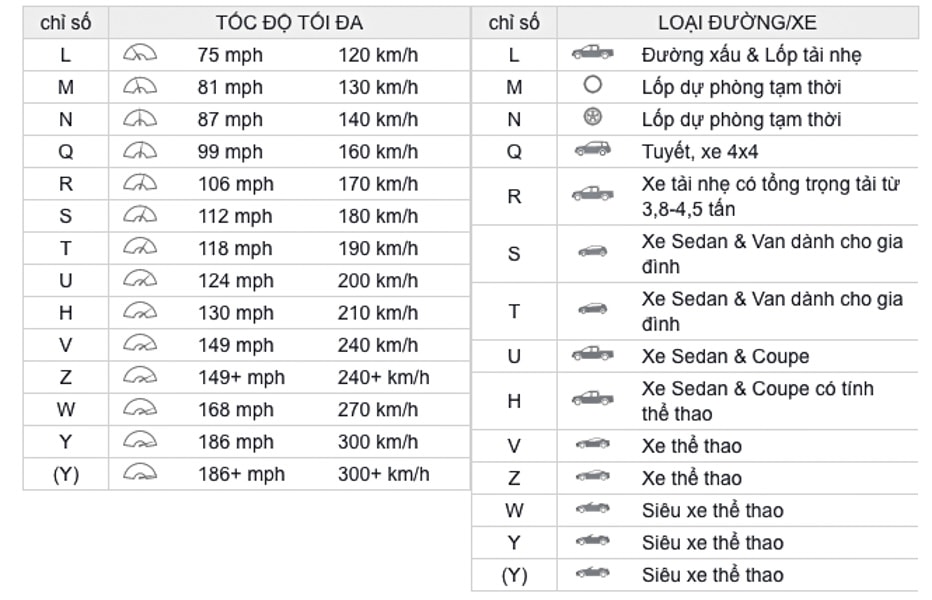
S - Maximum speed allowed by the tire; this tire has a maximum speed of 180 km/h (speed chart below).
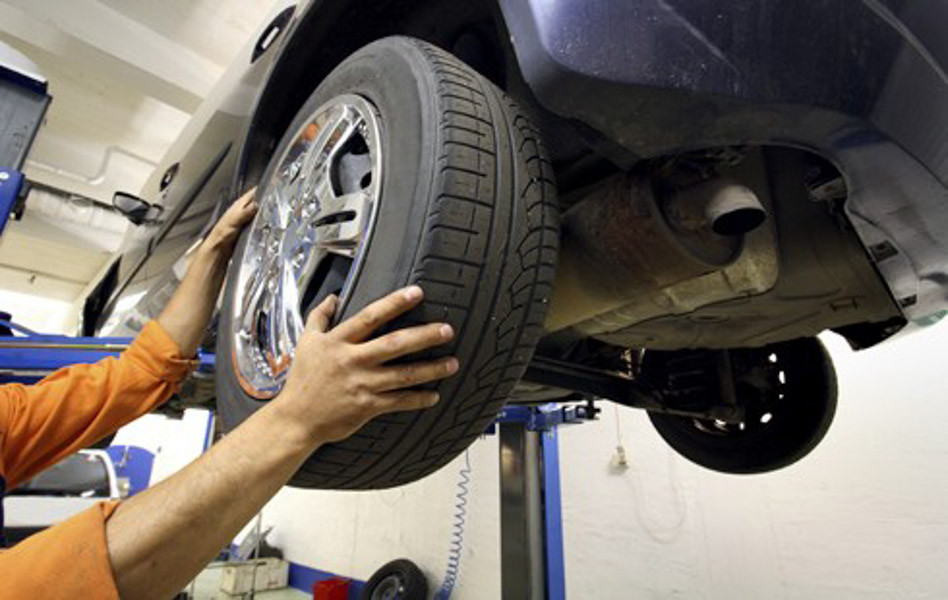
It indicates the internal construction of the tire. The tire construction can be "Radial ply," like most tires, or D, indicating a "Beared ply" construction, or B, indicating a "Belted" construction.
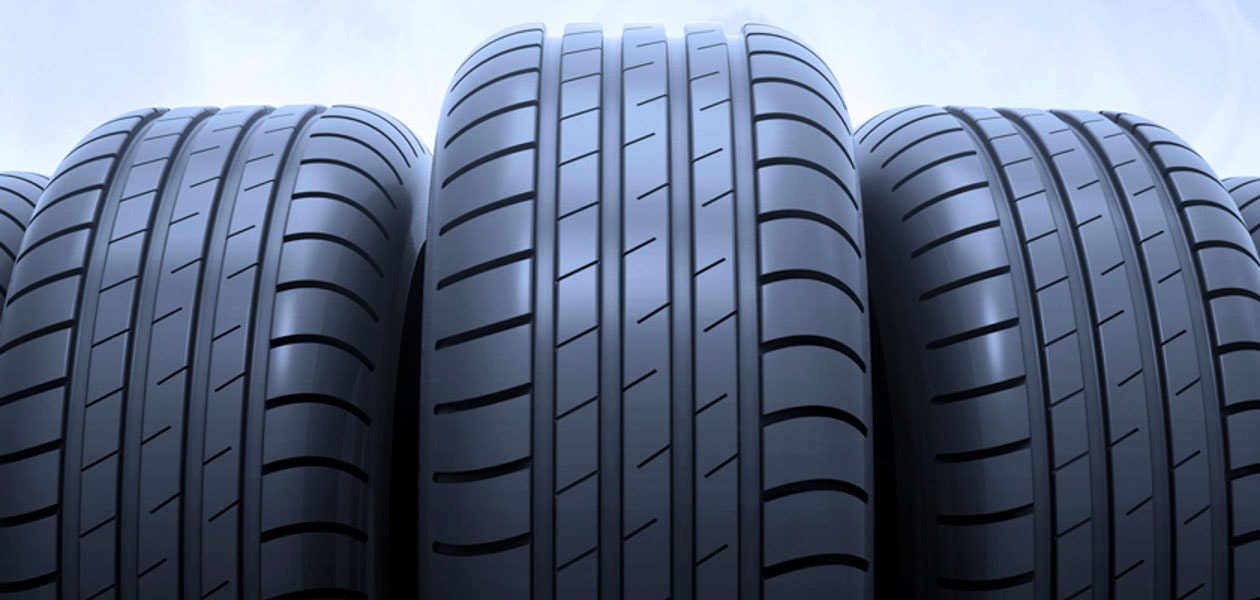
This number is in inches and indicates the appropriate wheel diameter for which the tire is designed to fit the vehicle. It is recommended to use tires of the same type, construction, and size for all wheels. Note that for safety, do not use different types, constructions, or sizes of tires on the same axle (except for a T-type spare tire).

This index indicates the tire's load-carrying capacity at its maximum pressure. The numbers are based on the tire load capacity chart in the table below. For example, 97 = 1,609 pounds = 730 kg.
Speed index
This rating indicates the maximum safe speed at which a tire is certified to carry a load under specified conditions. The speed rating range is from A (lowest) to Y (highest), with one exception: H is between U and V. To find the maximum speed for a tire, refer to the speed rating chart. Driving above the permitted and legal speed limits is neither recommended nor encouraged.
Hopefully, the information above will help you understand how to read tire specifications to choose the right tires for your vehicle. To find out the appropriate tire type recommended by the vehicle manufacturer, you should look in the owner's manual or on the sticker on the car door. It's always best to replace your tires with those recommended by the manufacturer to ensure safety.


