
Typhoon No. 6 weakened into a low-pressure system and caused heavy rain.
According to the National Center for Meteorological and Hydrological Forecasting, Typhoon No. 6, after making landfall in the central provinces of Vietnam, has weakened into a tropical depression.
According to the National Center for Hydro-Meteorological Forecasting, Typhoon No. 6, after making landfall in the central provinces, weakened into a tropical depression and continued to weaken into a low-pressure area. However, today, the circulation of the storm...Typhoon No. 6Heavy rain continues to fall across a wide area in the northern region.
Last night (September 23), Typhoon No. 6 weakened into a tropical depression and made landfall in the area from Thua Thien Hue to Quang Nam. This morning (September 24), Typhoon No. 6 further weakened into a low-pressure area.
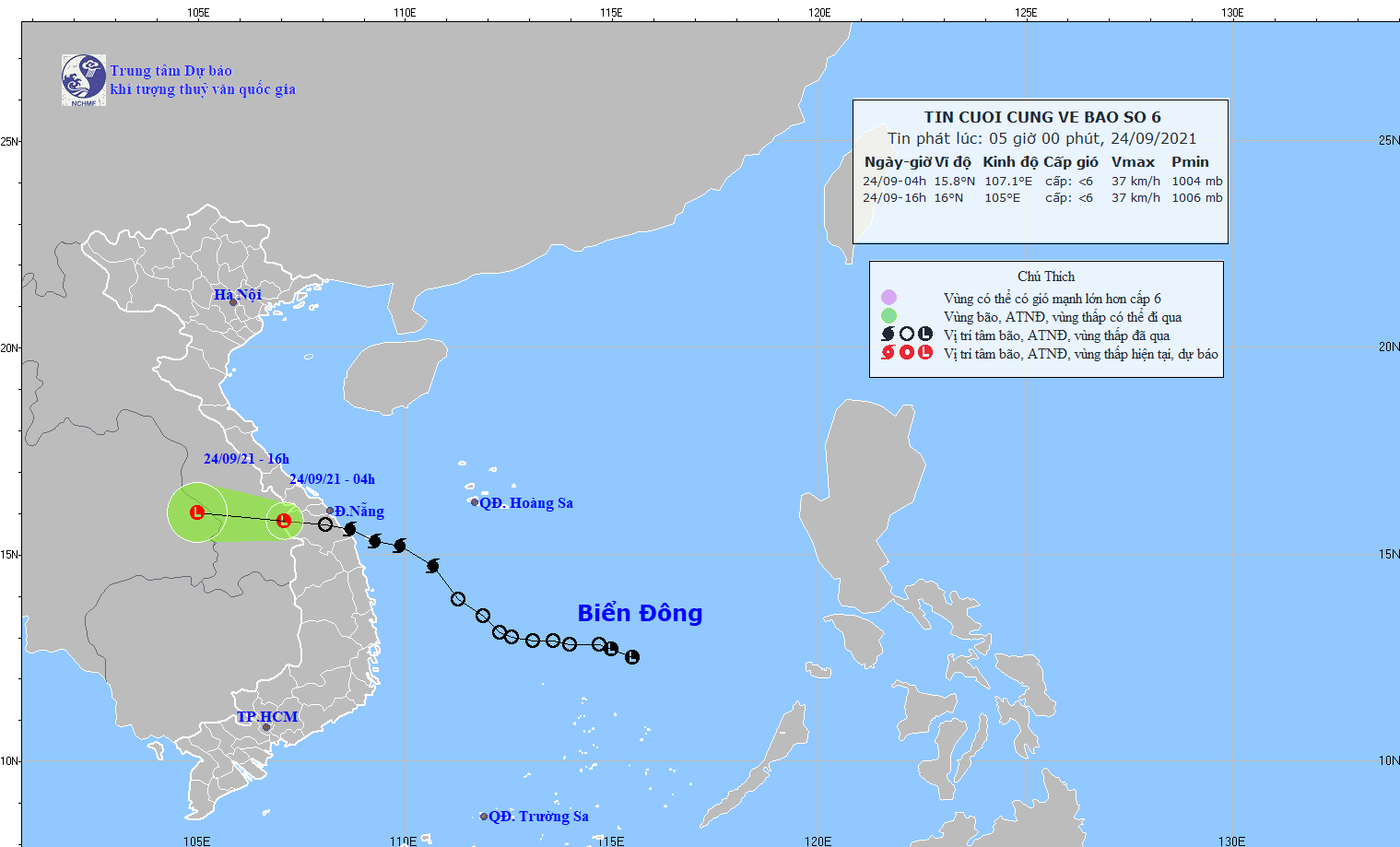 |
| Typhoon No. 6 made landfall and weakened into a tropical depression. (Image: National Center for Hydro-Meteorological Forecasting) |
At 04:00 on September 24th, the center of the low-pressure area was located at approximately 15.8 degrees North latitude and 107.1 degrees East longitude, over the Vietnam-Laos border. The strongest wind speed at the center of the low-pressure area decreased to below level 6 (below 40 km/h).
The forecast for the next 12 hours indicates that the low-pressure system will move mainly in a west-northwest direction, traveling at a speed of 15-20 km per hour.
On the night of September 23rd, the provinces of Binh Dinh, Quang Ngai, Quang Nam, Kon Tum, and Gia Lai continued to experience heavy rain with total rainfall of 50-100 mm, and in some places over 150 mm. Today, September 24th, the remnants of Typhoon No. 6 continue to cause very heavy rain in the area from Ha Tinh to Da Nang, with total rainfall generally 100-200 mm, and in some places over 250 mm.
Forecasts for September 24-25 indicate that the heavy rain area affected by the circulation of typhoon No. 6 will continue to expand to Thanh Hoa and Nghe An provinces. The northern delta and midland areas will experience moderate to heavy rain with total rainfall generally ranging from 50 to 150 mm, and in some places exceeding 200 mm.
This will put mountainous areas in the central provinces and the northern midland region at high risk of flash floods, landslides, and localized flooding in low-lying areas and along rivers.


