
To preserve and promote the historical and cultural values of the Ben Thuy area.
(Baonghean.vn) - What more can be done for Ben Thuy is a concern not only for individuals associated with Ben Thuy during its glorious historical periods, but also for all those who love their homeland, who love the brave and resilient city of Vinh.
From 4 layers of heritage...
Associated with the birth and development of Vinh city, the Ben Thuy area contains layers of extremely important historical sediment.
The first layer of heritage,Associated with this event, this area was chosen by King Quang Trung to build Phuong Hoang Trung Do. Although the construction was left unfinished, Phuong Hoang Trung Do remains a historical landmark, contributing to positioning Vinh in the nation's history.
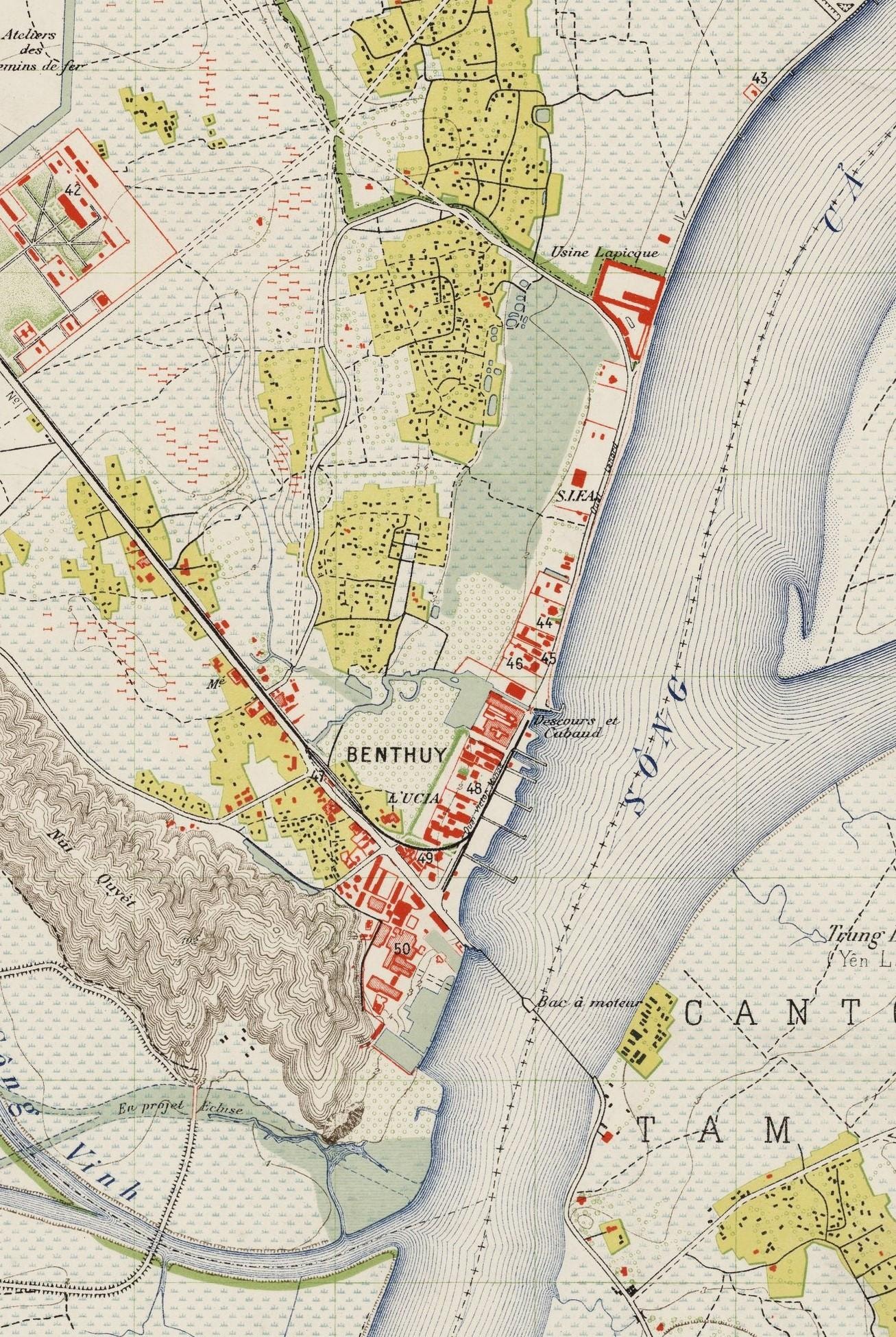 |
| Map of Ben Thuy in 1936. Archival photo. |
The second layer of heritage,It is noted that Ben Thuy in particular, and Vinh - Ben Thuy in general, became a leading industrial and commercial center in Central Vietnam. After the French established a stable foothold in Nghe An, Ben Thuy received massive investment from domestic and foreign capitalists. The port and railway station were invested in, and numerous factories and workshops were built.
Along a stretch of approximately 6 kilometers from the foot of Con Meo Mountain down to the La Phic canned fish factory in the area bordering Hung Hoa, there were numerous wharves, oil depots, wood workshops, processing plants, liquor warehouses, match factories, power plants, etc. Among them, the Ben Thuy Match Factory was the most modern factory in the world at that time, producing 150 to 190 million matchboxes annually and exporting to many countries around the world. The Ben Thuy area at that time employed around 3,000 workers, out of 7,000 to 8,000 workers in the entire city. This was a crucial foundation for the Nghe Tinh Soviet Uprising of 1930-1931.
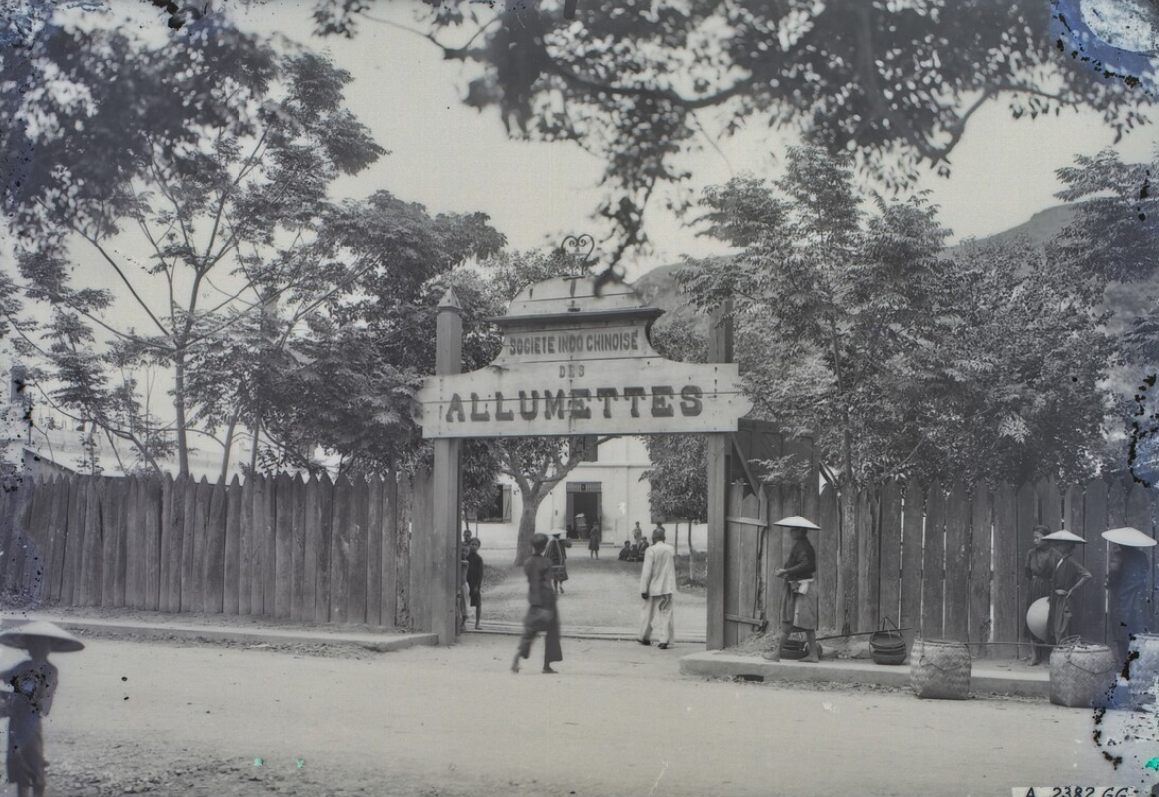 |
| Ben Thuy Match Factory in the 1920s. Archival photo. |
Third layer of heritageIt is associated with the Nghệ Tĩnh Soviet Uprising, with Bến Thủy being the first place to "rise up," and with the demonstration on May 1, 1930, at Bến Thủy Crossroads, where the worker-peasant alliance took place right in the middle of the battle.
Fourth layer of heritageBen Thuy is recognized as a heroic location in the struggle against the destructive war waged by the American invaders. Ben Thuy was one of the areas with the highest concentration of bombs and ammunition in the North. Between 1964 and 1968 alone, the US bombed the Ben Thuy ferry area 2,912 times, dropping 11,377 bombs. After the war, this area has 52 martyrs and 14 heroic units and individuals. Among them, the Ben Thuy Ferry Unit has 23 martyrs and has been awarded the title of Hero twice.
...to ideas and planning
Although historically significant, the Ben Thuy area is also a scenic spot, boasting the most beautiful landscapes in Vinh City. Historically, all plans and designs for this area have primarily focused on public purposes.
Since the end of the last century, the planning for Quyet Mountain Forest Park has been established and implemented. The temple dedicated to Emperor Quang Trung was built and inaugurated in 2008. In 2002 and 2003, the city conceived the idea and invited consultants to survey and develop a project to build a small war park, with the survey scope covering the entire strip of land along the Lam River, upstream of Ben Thuy Bridge, and the area at the foot of Quyet Mountain, where there are many relics of tunnels dug deep into the mountainside during the war against the US.
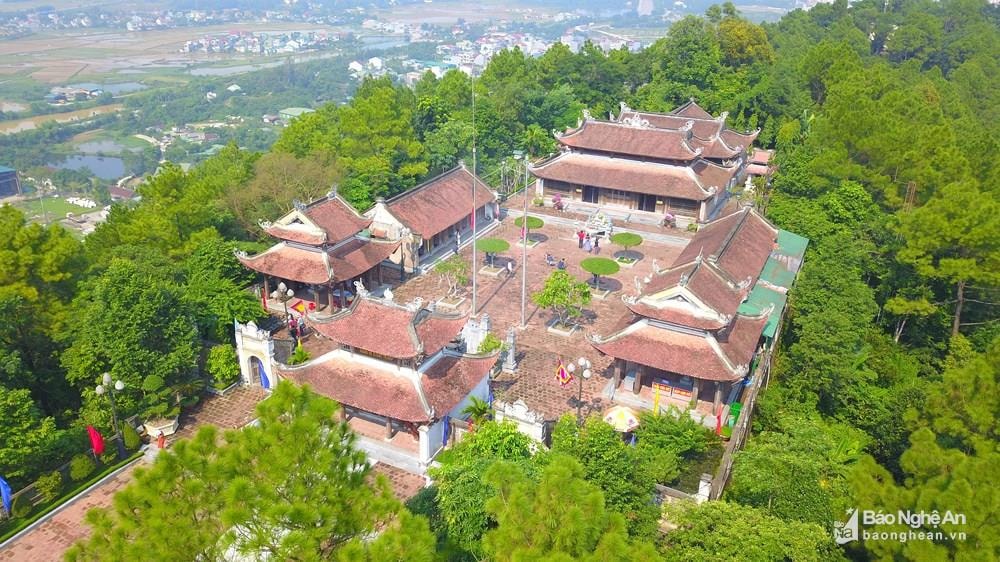 |
| The temple dedicated to Emperor Quang Trung on Mount Quyet. Photo: Nguyen's book. |
In particular, the Project "Building Vinh City into a cultural and information center of the North Central region (2006-2020), issued under Decision No. 2862/QD-UBND dated August 7, 2007, of the Provincial People's Committee, identified the restoration of the Ben Thuy Crossroads historical site. It clearly states:“Renovate the Ben Thuy lamppost intersection historical site and the Match Factory model, reconstruct and recreate the setting of the Ben Thuy pontoon bridge and Ben Thuy ferry (heroic landmarks), build a Ben Thuy victory monument, and organize a system of cultural and tourism services along the Lam River.”
In 2015, in the revised master plan for Vinh City for the period up to 2030, with a vision to 2050, developed by the consulting firm Nikken Sekkei (Japan) and approved by the Government, the strip of land along the Lam River, upstream of Ben Thuy Bridge, was still shown on the map as public land, while the strip downstream was designated as mixed-use land.
On December 18, 2017, the Provincial People's Committee issued Decision 6103/QD-UBND approving the "Planning of the System of Historical Sites in Nghe An Province with orientation to 2030 and vision to 2050," which includes two historical sites in this area: Ben Thuy Crossroads and Vinh Power Plant. In addition, a small war relic park has also been planned within the Quyet Mountain Forest Park project, which the Vinh City People's Committee is currently seeking investment for.
Concerns about the current situation
Regarding historical sites, this area features the Quang Trung King Temple on Quyet Mountain; the Truong Thi - Ben Thuy 1930-1931 Monument, associated with the Ben Thuy Crossroads National Historical Site; and the Vinh Power Plant, which has been classified as a National Historical Site. A commemorative plaque marking President Ho Chi Minh's visit to the Vinh Power Plant in 1957 has also been erected in this area.
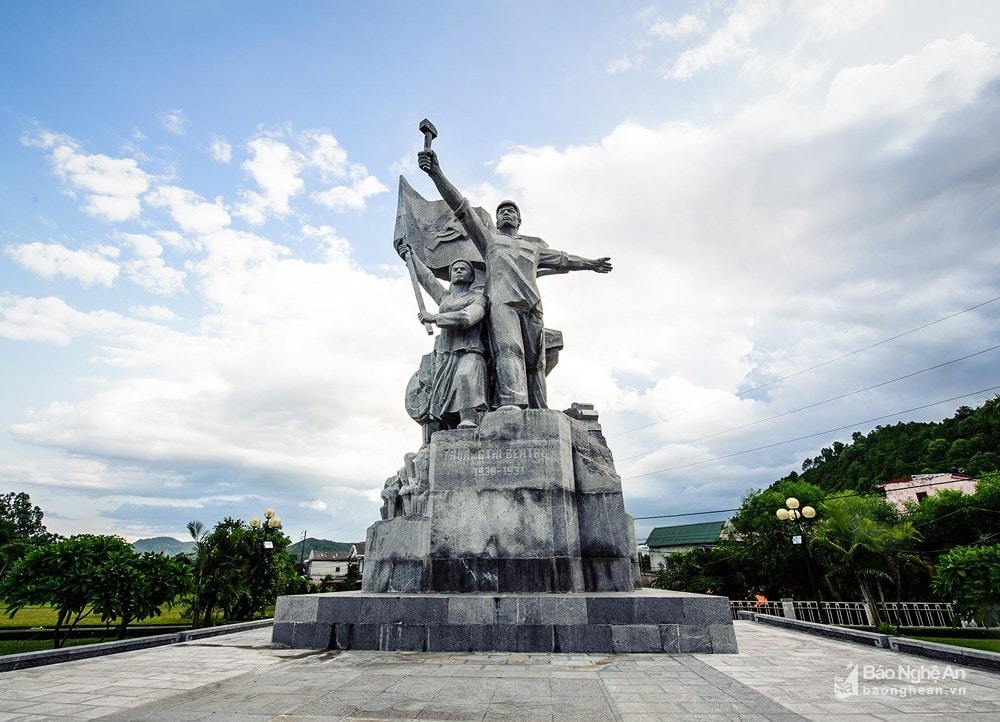 |
| The Trường Thi - Bến Thủy 1930-1931 monument, erected at the Bến Thủy intersection, was inaugurated on September 12, 2012. Photo: Sách Nguyễn |
According to Decision No. 201/QD-UBND dated January 17, 2018, of the People's Committee of Nghe An province approving the Inventory of historical sites and scenic spots in Nghe An province, only the Ben Thuy port site and the site where Comrade Le Mao sacrificed his life have been included in the Inventory for future recognition as historical sites.
Other sites of great historical significance and value, such as the Ben Thuy Match Factory, the Ben Thuy ferry, and the Ben Thuy pontoon bridge, have not only failed to be recognized as historical relics but have also not been included in the inventory. This is a significant shortcoming of the cultural sector.
Most importantly, although the Vinh planning map still designated the strip of land along the Lam River upstream of Ben Thuy Bridge as public land in 2015, in reality, since 2008, the province had approved a plan for a large real estate project on this strip of land, extending from the foot of Ben Thuy Bridge 1 to the Hai Chau Company's wharf, covering an area of 12 hectares.
Essentially, this project encroaches upon the area of the French-era Match Factory (later the Vinh Wood Factory), leaving only a small area of over 3 hectares to the north, adjacent to National Highway 1, which is currently a residential area. There is information that this 3-hectare area has been planned as a park. Within the project area is also the location of the northern abutment of the Ben Thuy pontoon bridge, with the remaining traces being a reinforced concrete pontoon abutment with four spans extending into the river. This location is also considered to have historical value. Currently, the company has erected a very sturdy and beautiful stone monument here. (On the southern bank, Ha Tinh province has classified and erected a monument as the "Historical Monument of the Southern Abutment of the Ben Thuy Pontoon Bridge").
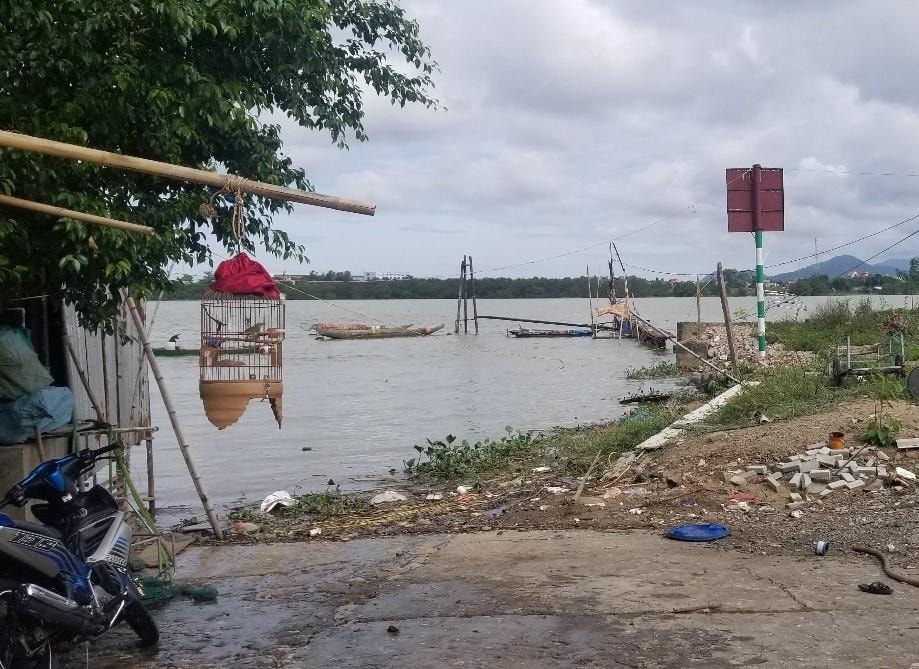 |
| Remnants of Pier No. 3 at Ben Thuy Ferry Terminal. Photo: Pham Xuan Can |
Regarding the Ben Thuy ferry, the most clearly visible remaining trace is Ferry Terminal No. 3, located a few hundred meters downstream from Ben Thuy Bridge 1. Here, the ferry abutment remains, a reinforced concrete embankment approximately 4 meters wide, sloping down towards the river. The access road to the ferry is believed to have retained its original alignment. This is considered the most important and busiest ferry terminal during the anti-American war period.
What else can be done for Ben Thuy?
First, the Department of Culture needs to supplement the inventory of historical sites: the Match Factory site; Ben Thuy Ferry; the northern abutment of the Ben Thuy pontoon bridge; and the system of tunnels from the anti-American war era on the northeastern slope of Quyet Mountain. Along with that, it is necessary to urgently survey, assess the current state and value, classify, and demarcate the sites for protection. This will provide a legal basis for protecting the sites and preventing damage.
Downstream of the Ben Thuy Bridge, it is necessary to survey and classify the historical site of Ben Thuy Port, recognizing its historical value as a leading trading port in Central Vietnam during the French colonial period, as well as its glorious historical value during the anti-American war. Survey and classify the Ben Thuy Ferry Terminal No. 3, representing the entire system of ferry terminals during the anti-American war, as a historical site. Determine the scope and demarcate the protected area for the relics to ensure that another project currently being surveyed and planned in this area does not overlap or encroach upon it. Study the reconstruction of the ferry terminal and erect a commemorative plaque.
Upstream of the Ben Thuy Bridge, a plan should be implemented to build a park on the land currently occupied by a residential area, connected to the Truong Thi - Ben Thuy 1930-1931 monument. This land also contains a corner of the French colonial-era match factory and the later Vinh wood factory. A model or commemorative plaque should be erected to record the historical value of the match factory as one of the largest and most modern factories in Indochina; and also as one of the cradles of the Nghe Tinh Soviet of 1930-1931.
Regarding the remnants of the northern abutment of the Ben Thuy pontoon bridge, it is necessary to study and determine its historical value, as there are currently many different documents and pieces of information about the time of its construction and its historical significance. Based on this, an appropriate course of action should be chosen.
Given the exceptional historical value of Ben Thuy throughout different periods, and based on its current state, it is essential and feasible to undertake several tasks to preserve and promote the historical and cultural values of this place before it is too late. We shouldn't just lament or blame. Instead, we should act while we still can!
 |


