
Predictions about the Covid-19 pandemic in 2022
Experts predict that 2022 could be the year Covid-19 "is no longer a pandemic," largely due to increased global vaccination rates and the growing availability of antiviral drugs.
Instead, nCoV has become a long-lasting virus, with its severity gradually decreasing, and it has become a part of the new normal.
Throughout medical history, many respiratory pathogens have developed following similar patterns, from the 1918 Spanish flu to the 2009 swine flu. Covid-19 may remain dangerous in the post-pandemic era. In fact, seasonal influenza killed 62,000 Americans between October 2019 and April 2020, according to the Centers for Disease Control and Prevention (CDC). But according to experts, hope for a return to normal life is within reach.
Covid-19 has become a seasonal disease.
When it becomes a long-lasting disease, Covid-19 will not significantly impact community life. Billionaire Bill Gates once stated: "It will no longer be a deciding factor in whether we should work in the office, watch football in the stadium, or go to the cinema."
These types of pathogens are called "endemic," circulating throughout the world and causing mild symptoms because many people already have immunity from vaccinations or past infections. Patients may experience coughing and a runny nose, but vaccine adjustments are usually sufficient to prevent hospitalization or death.
Similar to other respiratory viruses, Covid-19 will peak at certain times of the year, most likely during the autumn and winter months. Therefore, Covid-19 and seasonal influenza outbreaks will likely coincide in the future.
 |
| A group of friends gathered at a restaurant in Auckland, New Zealand, in December 2021. Photo: NY Times |
Those infected with COVID-19 only need to wear masks and self-isolate at home.
According to Shaun Truelove, an epidemiologist and infectious disease expert at the Johns Hopkins Bloomberg School of Public Health, if the virus becomes endemic, then patients will only need to wear masks in public and stay indoors while they are sick. The expert suggests maintaining other preventative measures such as handwashing and limiting contact in high-risk areas.
"We don't necessarily need to implement new regulations (to stop Covid-19), we just need to continue with measures that have proven effective," said Professor Timothy Brewer of the UCLA Fielding School of Public Health.
Dr. Truelove hopes people will be mindful of their personal health and self-isolate at home when they are sick. "You should work from home if you have symptoms, and take a day or two off if you feel unwell," he said.
In fact, many countries around the world are considering shortening the quarantine period for confirmed cases or those in contact with COVID-19 patients. On December 29th, Spain announced a reduction in quarantine from 15 days to 10 days. Italy also abolished the quarantine requirement for close contacts of COVID-19 patients. Those in close contact (F1) do not need to quarantine if they have received both doses of the vaccine or have had COVID-19 within the last 120 days. They only need to wear KN95 or N95 masks.
Effective treatment of Covid-19 with medication.
By the end of 2021, most countries had adopted a strategy of living with Covid-19, abandoning lockdowns and social distancing measures to create momentum for economic recovery. According to experts, 2022 will mark new advances in Covid-19 treatment, replacing the strong restrictive measures of the past two years of the pandemic.
The U.S. Food and Drug Administration (FDA) has approved two pills to combat Covid-19.Merck's molnupiravirandPfizer's PaxlovidBoth are effective against mutations. The decision was made after the European Medicines Agency gave the green light to Paxlovid.
Since the pandemic began, scientists have placed high hopes on convenient and easy-to-use treatments. While COVID-19 drugs don't stop the spread or flatten the epidemiological curve, they do help reduce mortality rates among patients.
Molnupiravir and Paxlovid are just the beginning. With Omicron rampant and other variants continuing to emerge, scientists believe the world needs a large stockpile of drugs to combat these new enemies, especially if variants have the potential to reduce the effectiveness of vaccines.
Many experts are researching a next-generation drug that precisely targets weaknesses in the molecular structure of nCoV. Others are examining whether it should be used in combination with or independently of oral COVID-19 medications.
Home testing plays an important role.
The demand for rapid tests (also known as antigen tests) surged when the Delta variant became dominant. With the emergence of Omicron, more and more people became familiar with self-collecting nasal swabs at home. Typically, standard PCR tests are performed at hospitals or medical facilities, and results take several days. According to experts, the patient's condition can change during this waiting period.
"Rapid antigen testing answers the question, 'Am I infected with the novel coronavirus?' This is something you need to know before deciding to meet someone," said Joseph Allen, associate professor at Harvard TH Chan University.
US officials and those in many other countries are working to expand the use of antigen tests, arguing that this is the right strategy. According to Professor Rachael Piltch-Loeb of Harvard TH Chan University, health authorities need to help the community become familiar with self-testing at home.
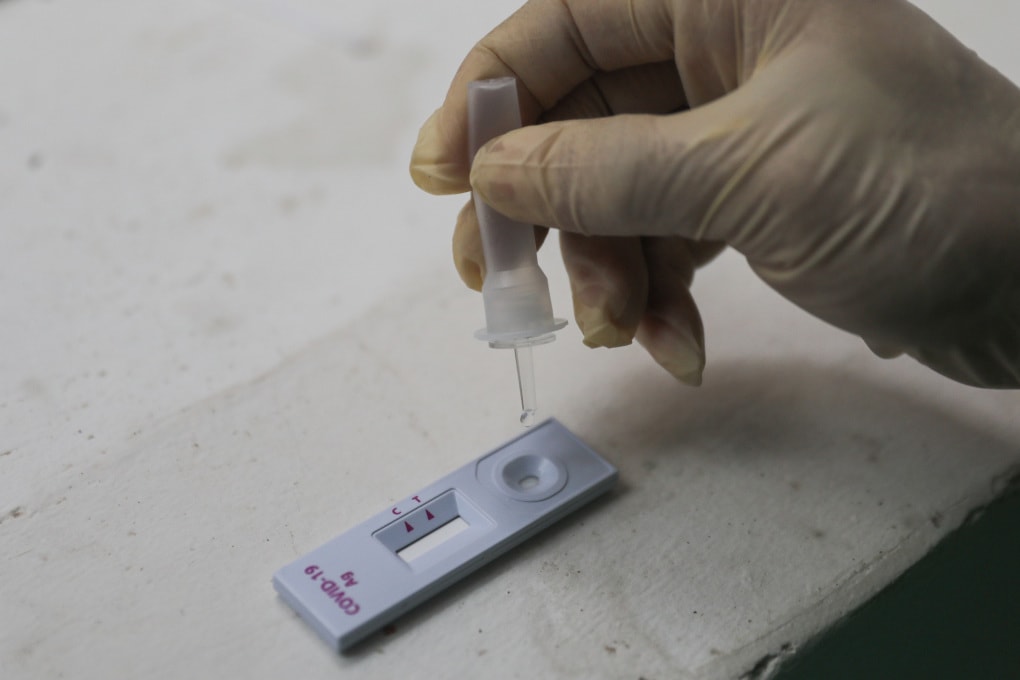 |
| Free kits were distributed to delivery drivers at a location on No Trang Long Street, Binh Thanh District, on September 29th. Photo: Quynh Tran. |
Get your Covid-19 vaccinations regularly.
Some experts suggest that in 2022, people worldwide may need more than three doses of the Covid-19 vaccine, or even annual routine vaccinations like the flu. If new variants of the novel coronavirus continue to emerge, scientists will adjust the annual booster vaccine program to meet actual needs. Experts are also researching a universal vaccine that would prevent all variants of the novel coronavirus.
In the past, health and public health experts have repeatedly adjusted vaccination strategies to suit the situation. They have recommended booster doses of the measles, mumps, and rubella vaccine after recording several outbreaks of infection.
Recently,Israel administers the 4th dose.The vaccine was administered to a group of healthcare workers starting on December 27th. Kent Sepkowitz, a doctor at the Memorial Sloan Kettering Cancer Center in New York, also supported this approach. He believes that receiving all doses of the vaccine and booster shots is the best way to combat the pandemic.
Annual vaccinations can be challenging. Convincing people, especially vaccine skeptics, will be difficult. With Covid-19 becoming a seasonal illness that no longer causes severe symptoms, some people may become complacent and skip vaccinations. During the 2019 flu pandemic, which preceded Covid-19, only 48% of American adults were vaccinated.
According to some experts, in 2020, Covid-19 caught the community by surprise and caused panic, but it also marked a significant leap forward in science and medicine. In 2021, the pandemic at times pushed the world to the brink of despair, but it also saw an unprecedentedly rapid vaccination campaign. Many people expect 2022 to be the year when humanity learns to live with the pathogen, and Covid-19 gradually becomes part of the "new normal".
"We're not going in circles. Pandemics will all end," said Syra Madad, senior director at NYC Health Plus Hospitals.


