
The 'open' approach of the Thai community along the Con River.
(Baonghean.vn) - Located on the left bank of the Con River, Bong village, Thanh Son commune (Anh Son district) was once considered a remote, difficult, and impoverished place. Life is gradually changing, and the Thai people here are striving to preserve their traditional culture and engage in production and business.
"The locals are already very diligent."
Honestly, just thinking about going to Thanh Son commune (Anh Son district) made us apprehensive. Because it was the beginning of the year.Gregorian calendarIt was also the end of winter, and the incessant rains would make the already dilapidated road even muddier and more slippery. Sensing this, my friend, an official from the Women's Union in the commune, said: "It's not as good as National Highway 7A, but the road to Thanh Son isn't as difficult as before. Just go there and you'll see."
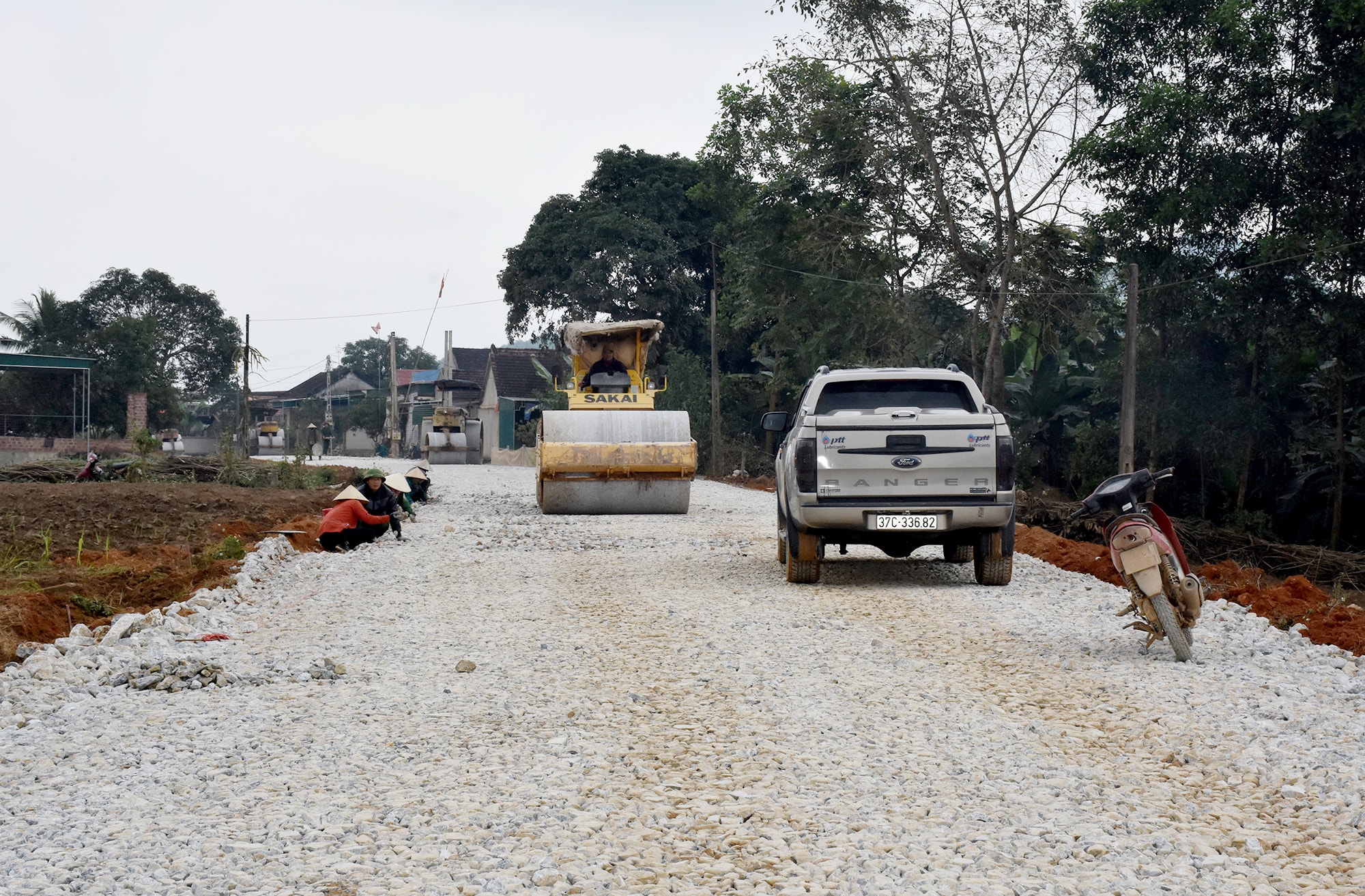 |
The road to Bản Bộng village, Thành Sơn commune (Anh Sơn district) is currently under construction. Photo: Công Kiên |
The road leading to the Thanh-Binh-Tho sugarcane growing area in Anh Son district is under construction, with the section passing through Thanh Son commune still quite messy. However, the roadbed has been paved with gravel, significantly reducing the amount of mud and soil, making it much more convenient for people and vehicles to travel on.
Turn onto the suspension bridge.Con RiverWe quickly arrived at Bong village, a place that once gave the impression of being remote and isolated. Many roads have been paved with concrete, and spacious, well-built stilt houses create a highlight of the village landscape. The riverbank in front is covered with endless green vegetables, and the surrounding hills are lush with acacia and bamboo trees...
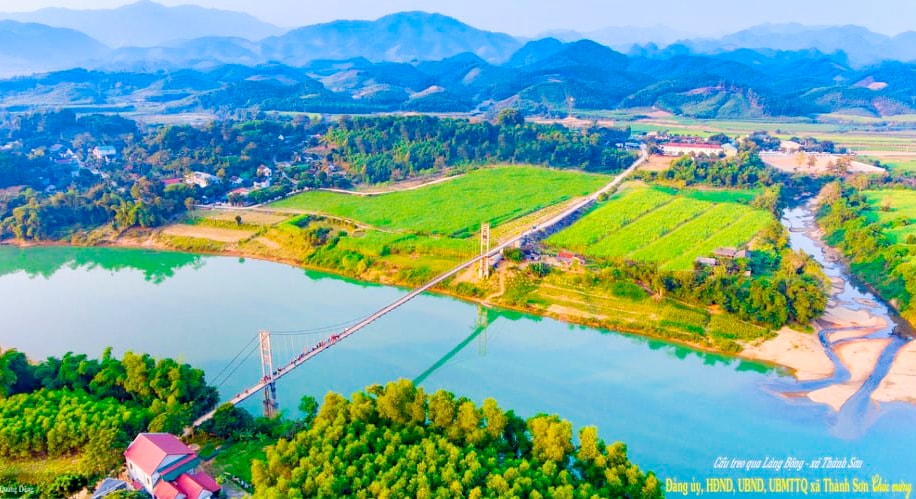 |
| A suspension bridge spans the Con River, leading to Bong village, Thanh Son commune (Anh Son district). Photo: Nguyen Quang Dung |
The "leader" of Bong village, Mr. Vi Van Duong, said: "Following the policy of merging villages, Bong village is now called Hung Thanh village. The village currently has 241 households, over 1,000 inhabitants, mainly of the Thai ethnic group, whose main source of income is from forestry and livestock farming. I am now the village head, but the villagers still call me the village chief."
We went to the house.Folk artistLo Thi Huong, considered one of the best Thai ethnic women singers of the "khap" folk songs in Nghe An, said, "In recent years, Bong village has changed a lot. The Thai people are now well-off and no longer have to worry about making ends meet like before."
"Because every household has a hillside garden and raises many buffaloes, cows, pigs, and chickens, they always have an income. The road to the village is being paved, and this Lunar New Year will have a new road, no more muddy conditions, which will certainly be much more joyful," said Mrs. Huong.
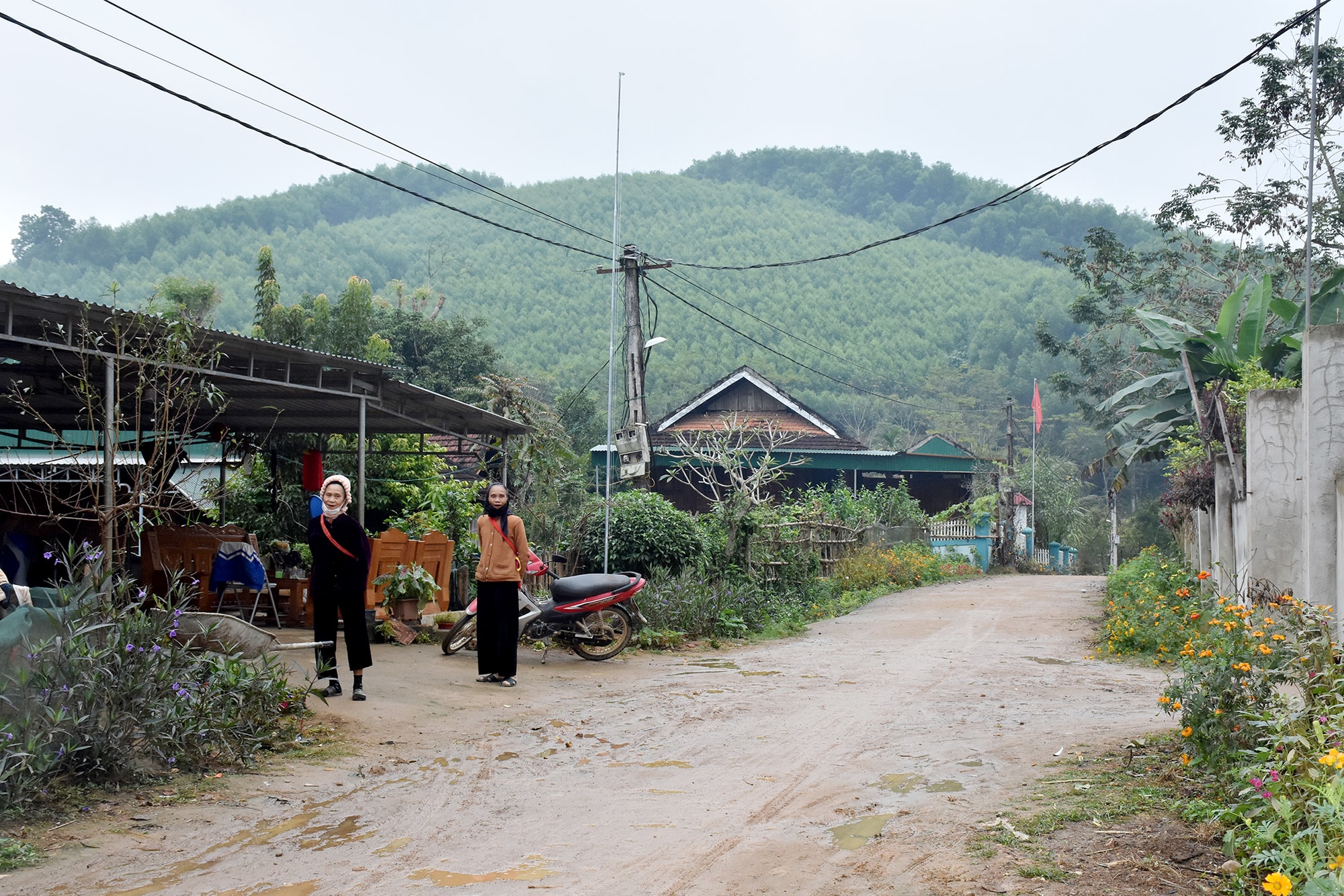 |
A view of Bong village, Thanh Son commune (Anh Son district). Photo: Cong Kien |
According to artisan Lo Thi Huong, in the past, the people of Bong village often believed in only doing "just enough." This meant that they only needed to grow rice, cultivate fields, and raise pigs and chickens for their family's food needs; and only enough buffalo and cattle for plowing and pulling. Therefore, when crops failed or livestock and poultry were affected by disease, many households were left penniless and starving because they lacked a reserve source of income.
Things are different now; the local people are much more diligent, knowing how to care for rice fields and raise livestock and poultry, their hands rarely resting. The hills and forests, once covered in weeds, are now being planted with acacia trees by households, yielding hundreds of millions of dong in income every 4-5 years. Women are expanding this gardening model.clean vegetablesThis allows them to secure their own food supply while also earning extra daily income.
Thanks to this, many families have been able to build beautiful and spacious houses, purchase modern amenities for their daily lives, and provide their children with a proper education. At the same time, they have contributed financially alongside the government to build village roads and cultural facilities, transforming and revitalizing the appearance of these remote villages...
Towards the ideal destination
We followed the path down to the edge of the Con River, formerly a ferry landing connecting the left and right banks. An ancient kapok tree leaned over, casting its shadow on the river, surrounded by newly leveled ground. The elders of Bong village said that this location used to have a shrine called Ban Bung Shrine (likely a phonetic variation of Ban Bong).
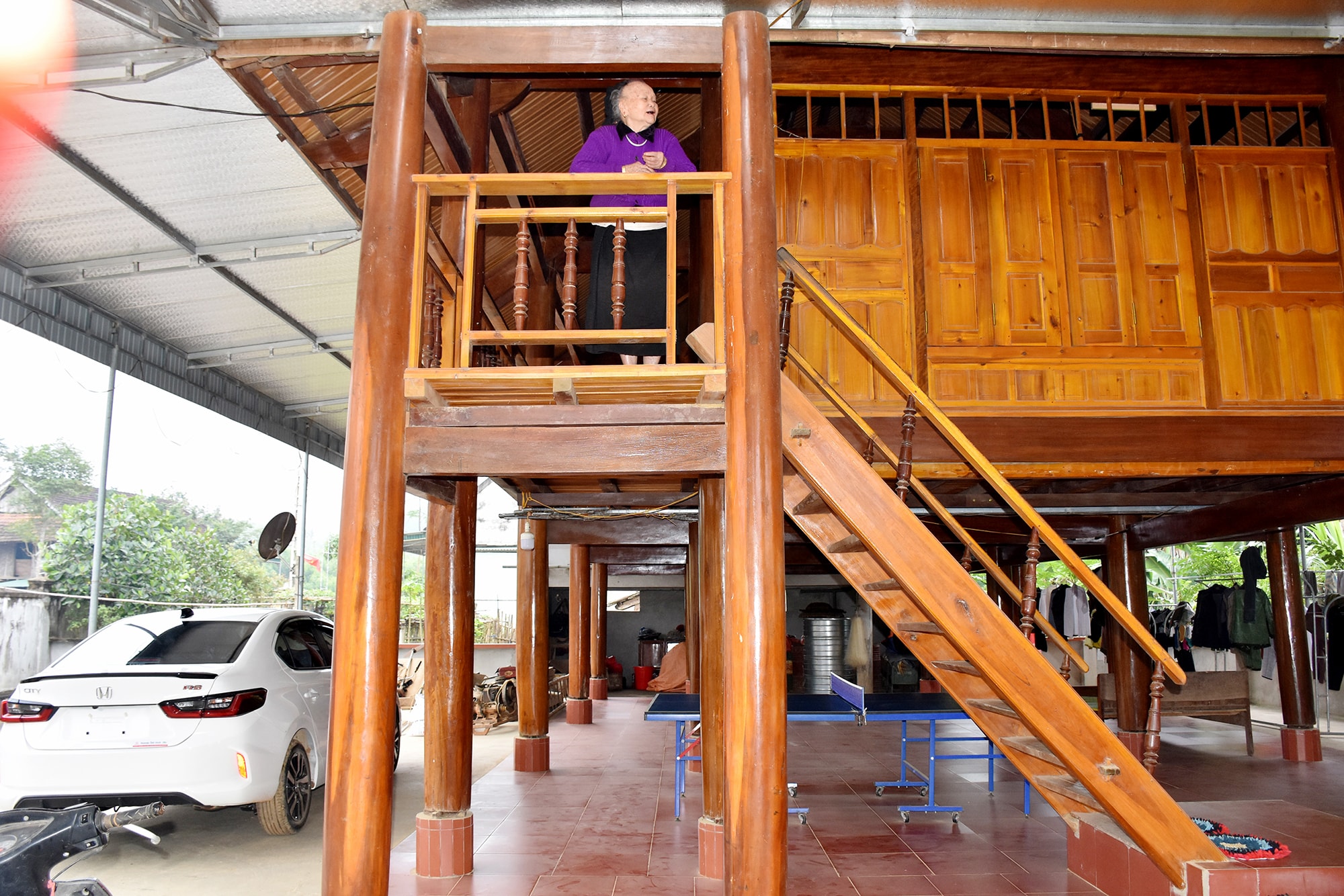 |
The well-maintained stilt houses in Bong village will serve as homestay accommodations for tourists. Photo: Cong Kien |
Every year, between mid-May and October in the lunar calendar, after the rice harvest, the Thai clans in Bong village take turns holding ceremonies to thank the mountain and river gods for blessing their fields and gardens with bountiful harvests. After the ceremonies, the villagers celebrate around jars of rice wine, joining hands to form a circle dance and perform the captivating Lam Vong dance.
Over the years of fierce warfare, the Bung village shrine was neglected, falling into disrepair and eventually collapsing, remaining only in the memories of the elderly. Recently, the People's Committee of the commune mobilized the villagers of Bung and appealed for donations to restore the shrine. Basic funding has been raised, the site has been leveled, and soon the Bung village shrine will be restored and the traditional rituals will be held, contributing to the preservation of the village.spiritual lifeto make it richer.
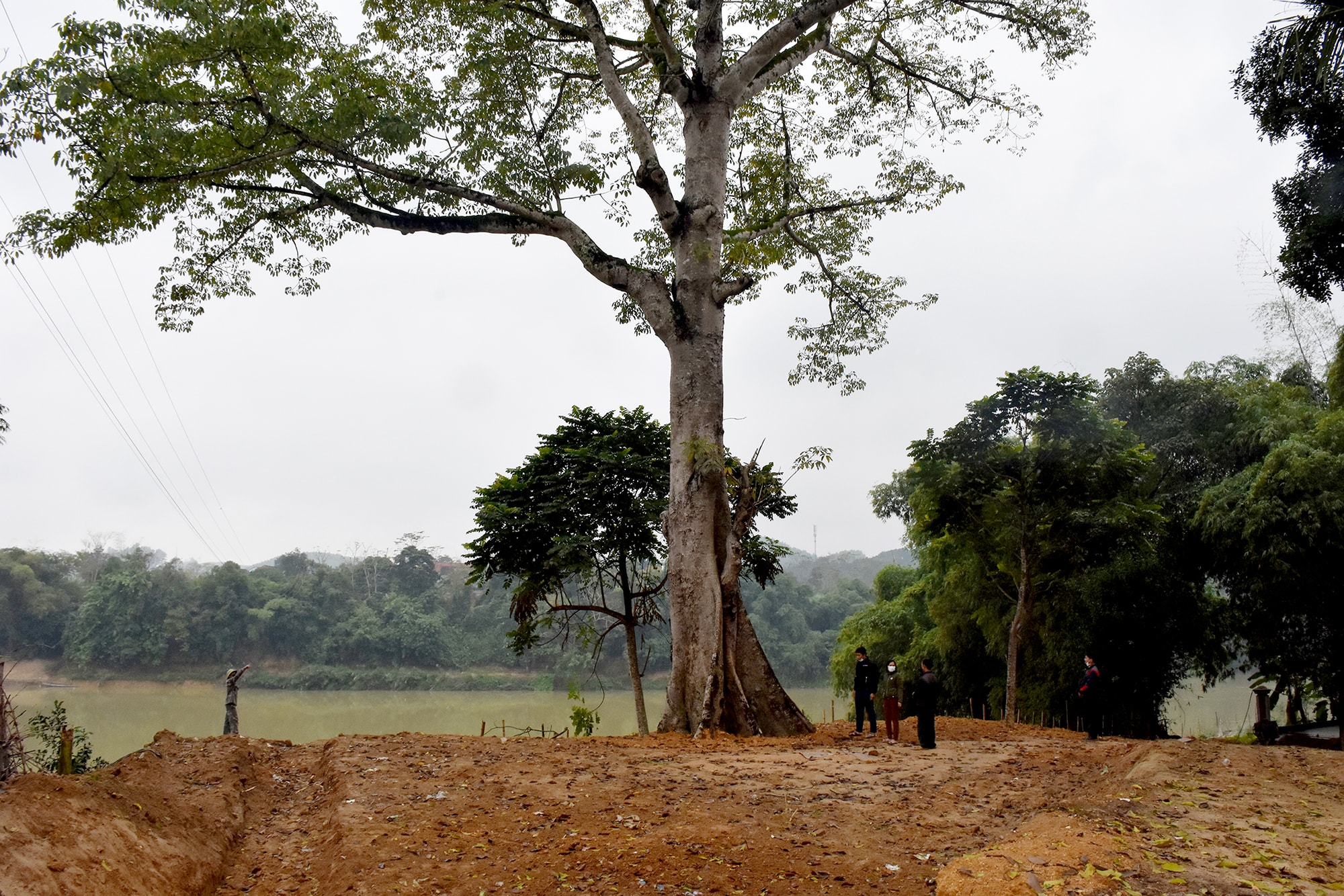 |
Location of the reconstructed Bung village shrine. Photo: Cong Kien |
According to Mr. Dao Anh Tan, Chairman of the People's Committee of Thanh Son commune, the commune is developing a community tourism project in Bong village, based on the life and cultural identity of the Thai ethnic people there. The people of Bong village have preserved their cultural space, customs, and traditions, as well as the beauty of their ancient culture. These include the gong culture, culinary culture, and traditional brocade weaving.
Recently, many well-off families have built spacious stilt houses, which can serve as landmarks.homestayTo welcome and serve tourists, the restored Bản Bung shrine, and eventually the Cửa Sông temple, will create additional highlights for visitors to experience the cultural life when they set foot in the Thái village downstream of the Con River.
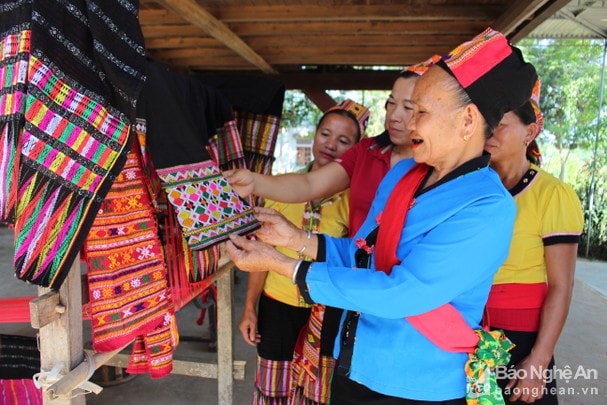 |
| Traditional brocade weaving of the Thai people in Bong village. Photo courtesy of Thai Hien. |
Furthermore, there used to be a fairly large lotus pond in the middle of the village, which has been used for rice cultivation for many years. In the near future, the commune will encourage villagers to switch to growing lotus, creating an attractive landscape to draw visitors.touristsThis means that the lush green mountains and forests, the picturesque riverbanks, the prosperous villages, and the fragrant lotus ponds are certainly ideal destinations...
“The most important issue is that basic transportation infrastructure has been improved, and the income and living standards of the Thai people in Bong village are gradually rising. If the community tourism development project is successfully implemented, it will contribute to preserving cultural identity while promoting all aspects of life, and the appearance of the village will become even more vibrant.”


