
Discover the interesting things in Lam Thanh.
Located on the banks of the Lam River, in Hung Thanh commune, Hung Nguyen district, Lam Thanh mountain (also known as Thanh hill, Dong Tru mountain, Nghia Liet) is not only a beautiful natural landscape, but also a historical site classified as a national historical and cultural relic, associated with many interesting stories.
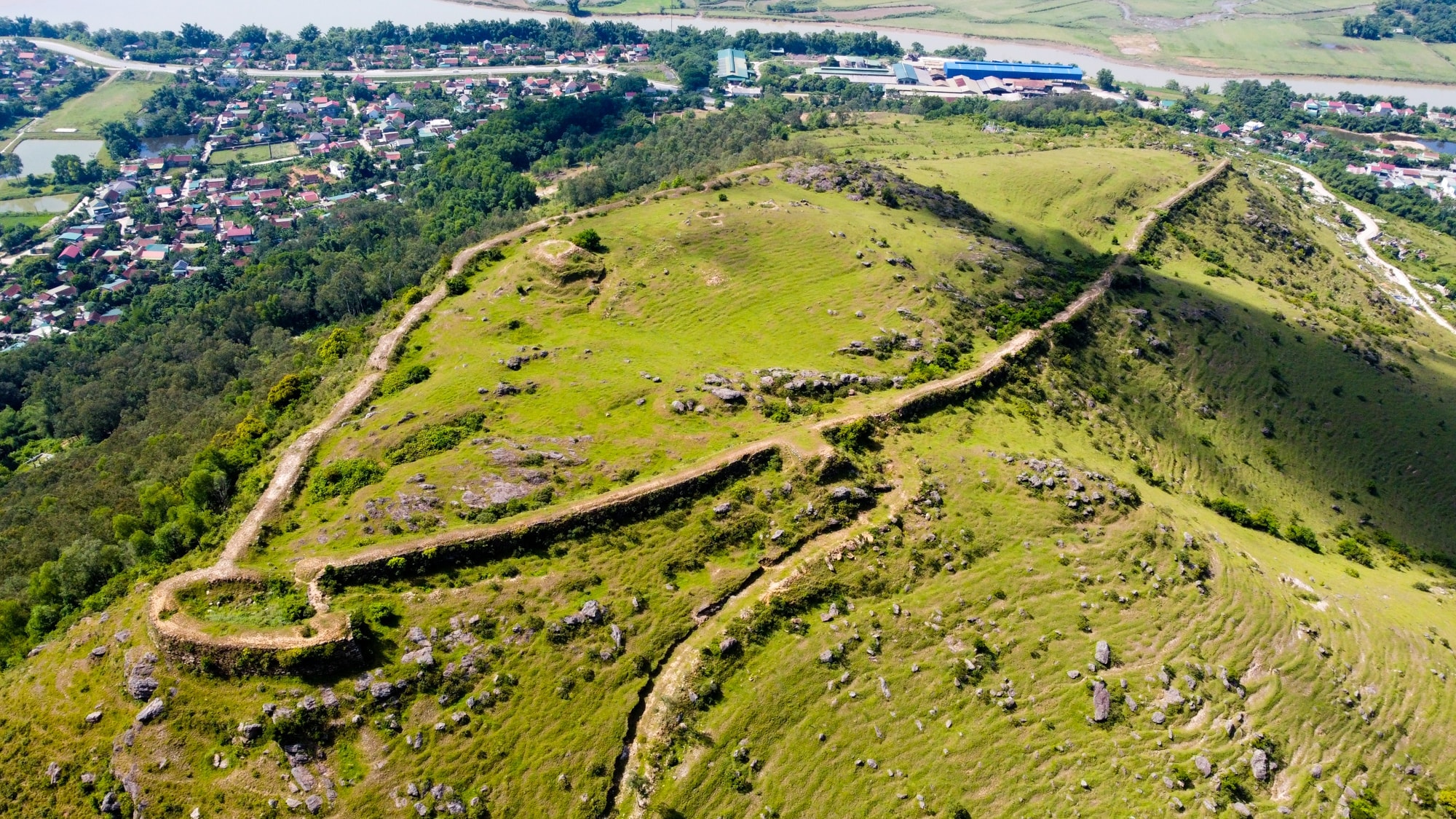
"New location" on the tourist map
I arrived in Lam Thanh on a day in April, when the roads stretched through rice paddies in their prime, and a cool breeze blew in from the Lam River. Lam Thanh Mountain stood majestically, possessing a serene and pristine beauty.
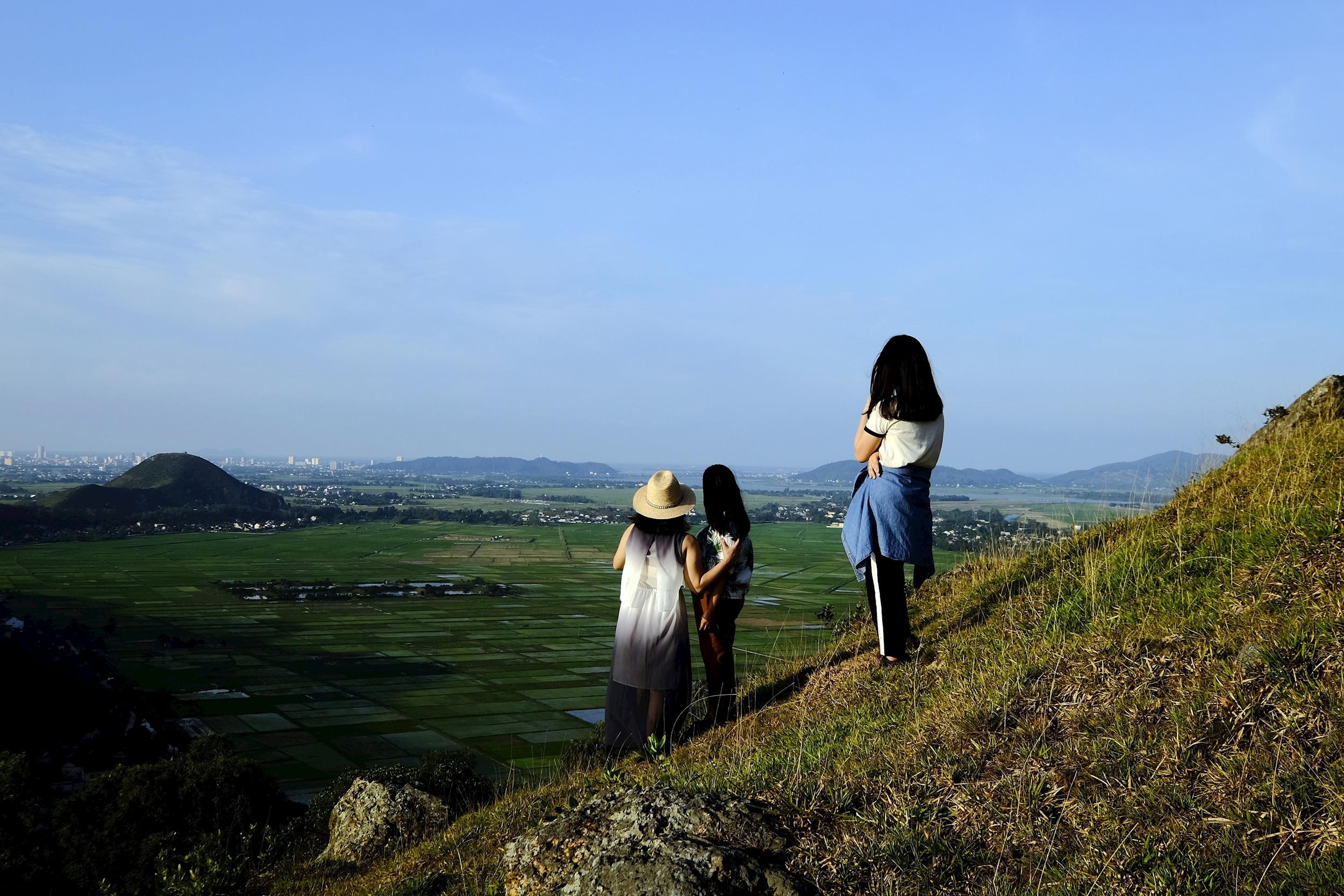
From the mountaintop, one can gaze out at the fertile land of Hung Nguyen, the vast fields, and the poetic Lam River. Perhaps it is this beauty that has made Lam Thanh known in so many of our ancestors' poems?
According to documents from the Nghe An Department of Culture, Sports and Tourism, in the poem "Dang Lam Thanh Son Hoai Co Phu" by Deputy Scholar Dang Nguyen Can (1867-1923), there is a line:"South of Hung District - Standing tall on the mountain - Determined to be Lam Thanh..."This poem was later translated by his close friend, Dr. Nguyen Van Trinh (1872-1949), who was then the Prefect of Hung Nguyen, and included the following line:"Mount Lam Thanh rises majestically on the other side - The scenery is so beautiful that you never want to tire of looking at it..."Indeed, Lam Thanh has an irresistible charm.
During our exploration of Lam Thanh, we met a group of students from Vinh University who were enjoying the fresh air after their mountain climbing adventure.
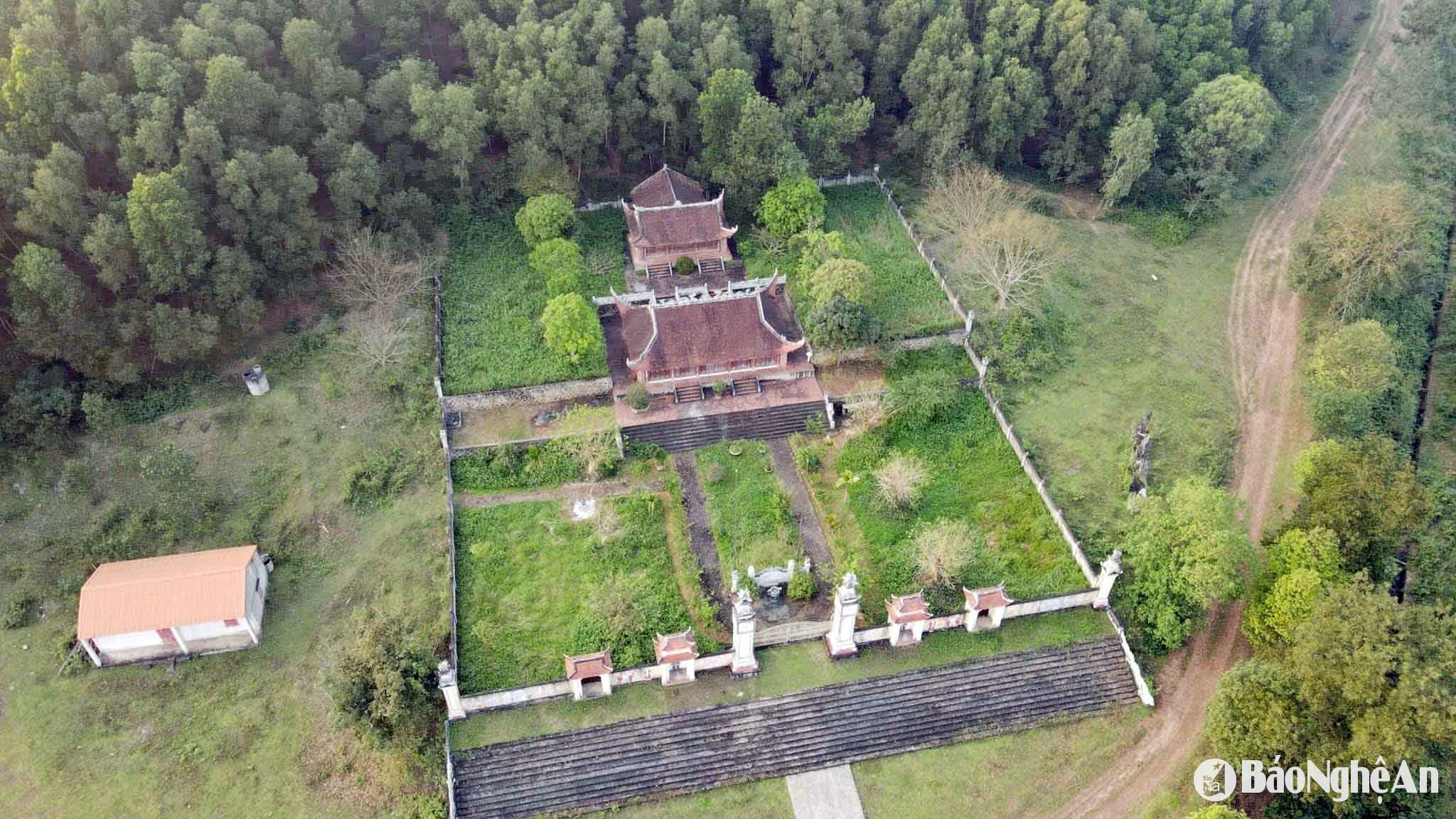
"When my friend invited me to Lam Thanh, I didn't have high expectations. But as soon as I arrived, I exclaimed: 'How can there be such a beautiful and ancient place!' Learning more about the historical site made it even more interesting," shared a young person from Do Luong, their eyes still fixed on the Lam Thanh Mother Goddess Temple located at the foot of the mountain.
Amidst the hustle and bustle of modern life, Lam Thanh has become a favorite destination for young people who enjoy exploring and learning about cultural and historical values.
On travel forums, Lam Thanh is gradually emerging as a "new destination" for light trekking trips, weekend picnics, or overnight camping in the pine forest. People come here not only to breathe the fresh air and admire the Lam River from an altitude of over 150m, but also to slow down and "touch" the remnants of a glorious past.Nguyen Thanh Loc - President of the Student Union of Vinh University


Sharing that same love, the people of Hung Thanh commune are also deeply connected to Lam Thanh mountain as an important part of their spiritual lives. Ms. Nguyen Thi Hoa (born in 1965), residing in Phu Hung hamlet, emotionally recounted her peaceful childhood intertwined with Lam Thanh mountain. As a child, she didn't think much about it, only that she enjoyed going up the mountain, picking wild berries, and playing in the shade of the trees.
Growing up, listening to her parents and grandparents recount the heroic historical stories associated with Lam Thanh, about the glorious achievements of countless generations before her throughout history, Ms. Hoa felt a special connection to this place. Lam Thanh is not just a mountain, a beautiful natural landscape, but also a living witness to a glorious period of history.
.jpg)
Today, Lam Thanh is home to many young people, families visiting for weekends, and groups researching local history… These presences contribute to preserving and promoting the invaluable values of Lam Thanh, making this historical site more vibrant in the modern era.
Listen to history
Having withstood the test of time, Lam Thanh is not only beautiful in its scenery but also rich in cultural and historical value. According to the book "Nghe An Ancient Tales," during the Ly and Tran dynasties, when the kings marched south to fight the enemy, they often encamped at Lam Thanh Mountain. Lam Thanh Mountain was chosen as a stopping point to prepare provisions and recruit more soldiers on their way to suppress the enemy and expand the territory. This can be explained by Lam Thanh's strategic location on the main highway.
During the Trần Dynasty, Yên Quốc Pagoda, a large Zen monastery, was built at the foot of the mountain, along with Ân Quốc Pagoda in Phù Thạch on the southern bank of the Lam River. During the Hồ Dynasty, Hồ Quý Ly placed great emphasis on military training to defend against Ming invasion. From 1397 onwards, Hồ Quý Ly ordered the construction of Rum Citadel. From 1400, Rum Citadel became an important base for the Hồ Dynasty. However, after the Hồ Dynasty's resistance against the Ming failed, Hồ Quý Ly and his son were captured and taken to Jinling. The Ming Dynasty established a colonial administration over Vietnam, transforming Nghệ An into a prefecture and choosing Lam Thành as its capital.
.jpg)
.jpg)
Speaking of Lam Thanh, one cannot fail to mention the Lam Son Uprising led by King Le Loi of Binh Dinh. Following Nguyen Chich's strategy, the rebel army advanced into western Nghe An province along the upper road and captured Tra Lan citadel (also known as Tra Long, now located in Bong Khe commune, Con Cuong district). Afterward, the rebels sailed down the Lam River to capture Nghe An citadel, using it as a springboard to seize other citadels. King Le Loi of Binh Dinh ordered his troops to besiege Nghe An citadel, blocking enemy reinforcements and forcing them to surrender due to hunger and cold. In February 1427, when their forces were exhausted, surrounded on all sides, unable to secure reinforcements, and terrified by the strength of the Lam Son rebels, the enemy general opened the citadel gates and surrendered with 10,000 troops.
Having captured Lam Thanh, Nghe An was liberated, and the Lam Son rebels divided into offensive columns, spreading out across all regions to reclaim the entire territory of Dai Viet.
“Lam Thanh Mountain stands there, witnessing countless ups and downs in history. In particular, for nearly 400 years, Lam Thanh was the capital of Nghe An province. Many important events of the country took place here, many outstanding national figures were present here, and many historical and cultural relics of the homeland have existed and continue to exist here...”
The artwork "Lam Thanh - The Historical Mountain", by author Thai Kim Dinh
.jpg)
Given its immense cultural and historical value, Lam Thanh Mountain Relic was recognized as a National Historical and Cultural Relic by the Ministry of Culture in 1962 (Decision No. 313/VH-VP dated April 28, 1962). In July 2024, the People's Committee of Hung Nguyen District held a meeting to clarify some issues related to the demarcation of the protected area and the promotion of the value of Lam Thanh Mountain National Historical Relic.
To continue protecting and promoting the value of the relic, it is necessary to maintain the current state of Protection Zone 1 and Protection Zone 2. Protection Zone 1 is the area containing the original constituent elements of the relic and must be protected in its original state in terms of layout and space; Protection Zone 2 is the area surrounding or adjacent to Protection Zone 1. At the same time, a survey of access routes to the relic should be conducted, directional signs should be erected, and the management of the relic in the area should be improved as soon as possible. Lam Thanh Mountain has also been included in the tourism development plan for the period 2022-2025 to preserve and promote its cultural and historical image.
However, the site has not yet been restored or renovated as expected. Many parts of the site have deteriorated or been abandoned, causing regret. It is time for more attention to be paid to the preservation and restoration of the Lam Thanh Mountain historical and cultural site to awaken the potential and strengths of this scenic spot with significant cultural, historical, and tourism value for our homeland.


