
Farmers in Nghe An are rushing to harvest rice and other crops to escape Typhoon No. 3.
In order to minimize damage caused by Typhoon Yagi and its remnants, farmers in Nghe An are urgently harvesting rice and other crops.
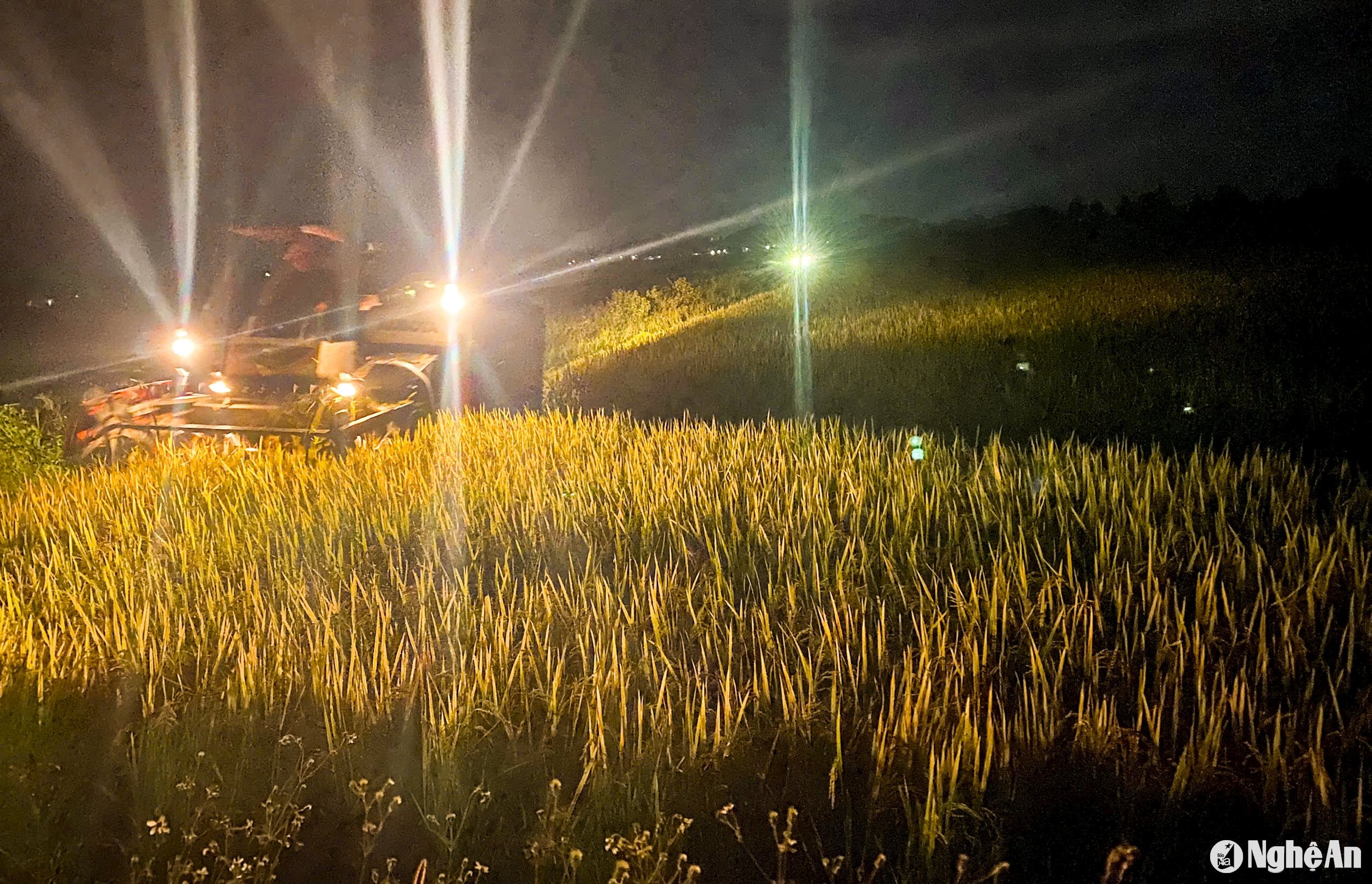
Due to being located at the end of the canal and facing drought and a lack of irrigation water for the early rice crop, the rice of the people in Hamlet 8, Nghi Lam Commune (Nghi Loc District) ripened later than in other areas.
Ms. Nguyen Thi Lam, head of Hamlet 8, said: “The entire hamlet has 37 hectares of rice fields. This year, due to a lack of irrigation water at the beginning of the season, the rice bloomed and ripened later than usual. While other hamlets in the commune have already harvested their rice, the rice in our hamlet is only 75-80% ripe. Hearing about Typhoon No. 3, and determined to harvest while the rice is still green, the hamlet mobilized harvesting machines to start harvesting yesterday.”
Due to the approaching storm, four combine harvesters worked through the night last night (September 3rd) in the fields of the people in Hamlet 8. Once the rice was harvested, traders bought it right in the fields.
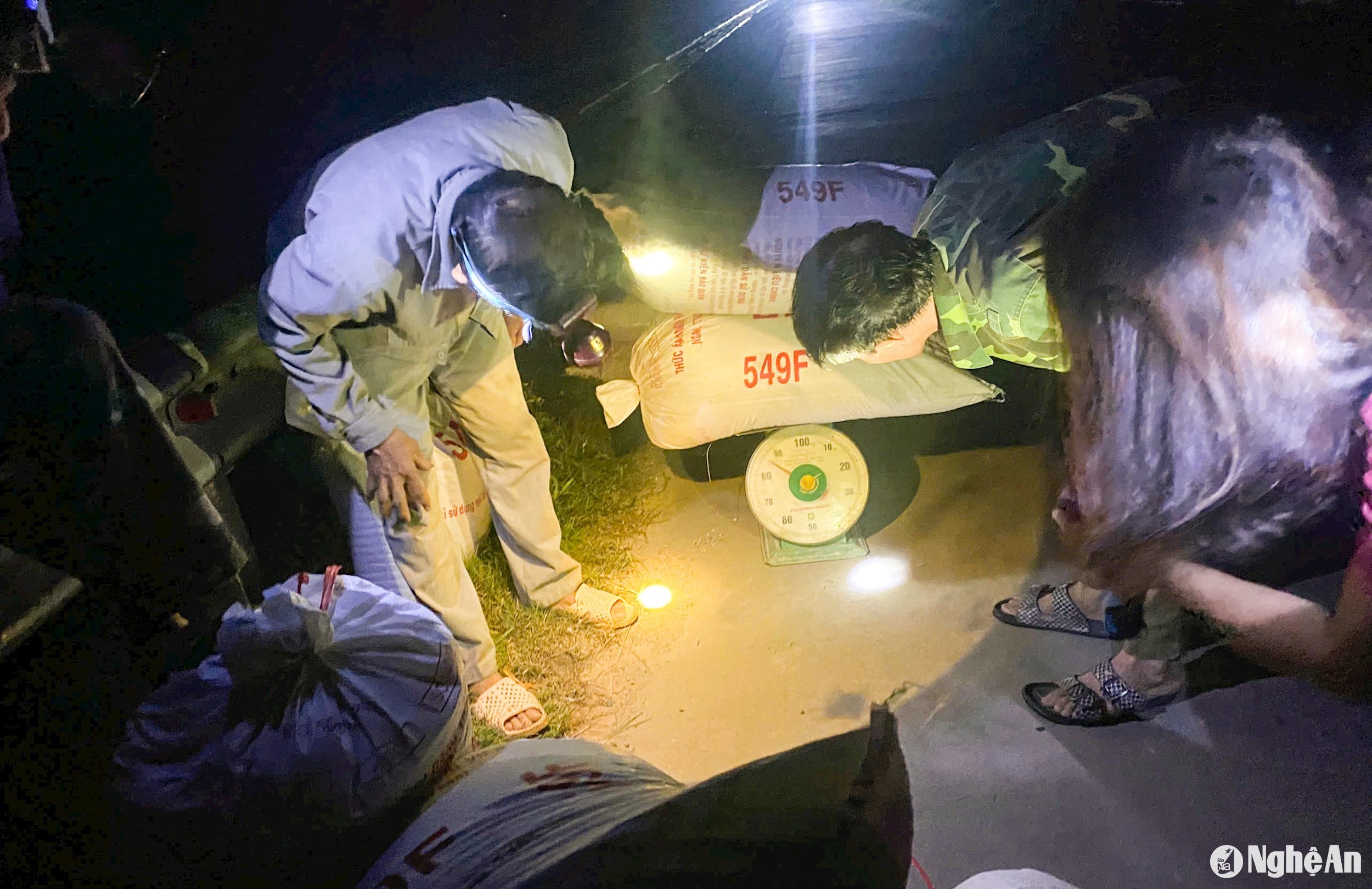
Ms. Tran Thi Thu, a resident of Hamlet 8, said: “My family has 4 sao (approximately 0.4 hectares) of rice fields. We finished harvesting at 11 PM, getting nearly 1 ton of rice, which we sold immediately to traders. Luckily, we managed to harvest before the rain and storms; and since we sold the rice right away, we don't have to worry about the heavy rain and strong winds in the coming days preventing us from drying it.”
With the goal of harvesting all the ripe rice before the storm, from yesterday to today, officials and people of Hamlet 8 have been working in the fields, urging combine harvesters to quickly harvest, finishing one area before moving on to another, working through lunchtime to complete the task before the rain arrives.
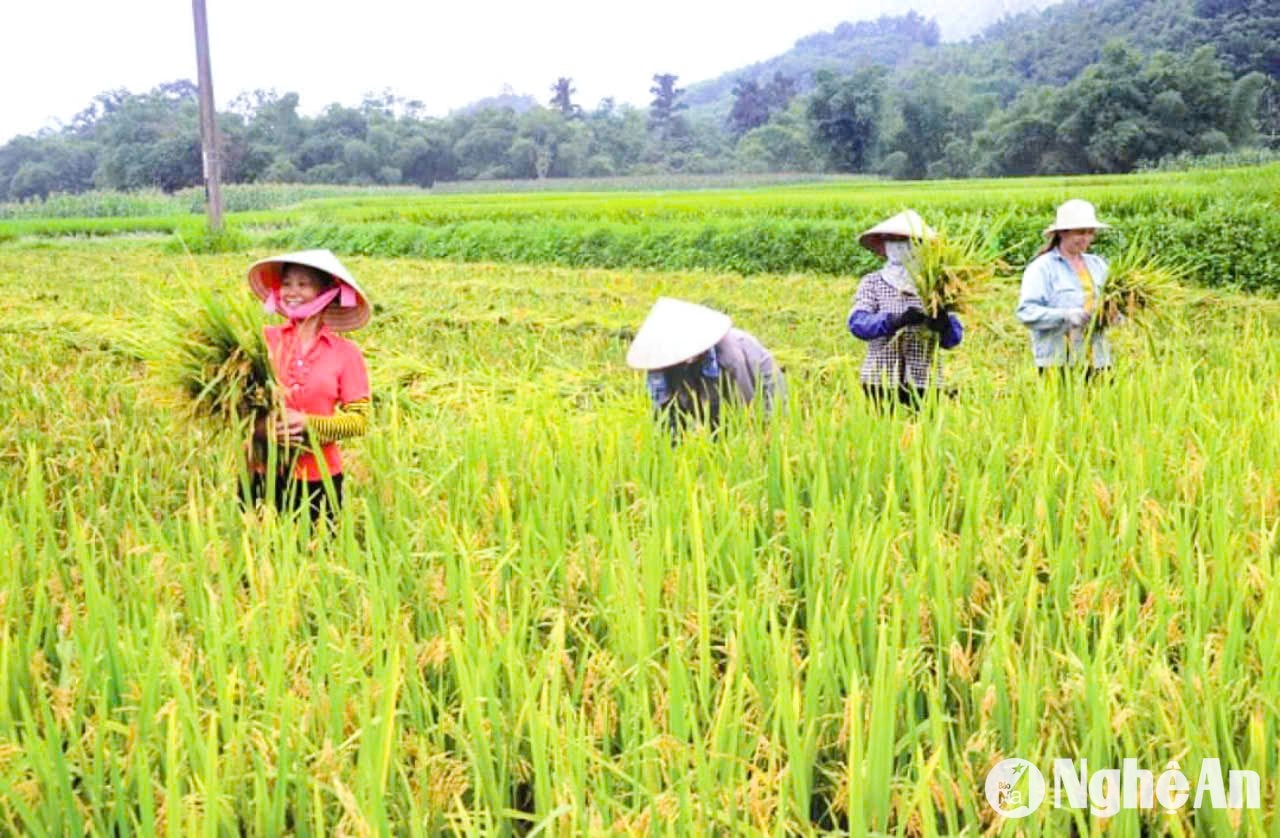
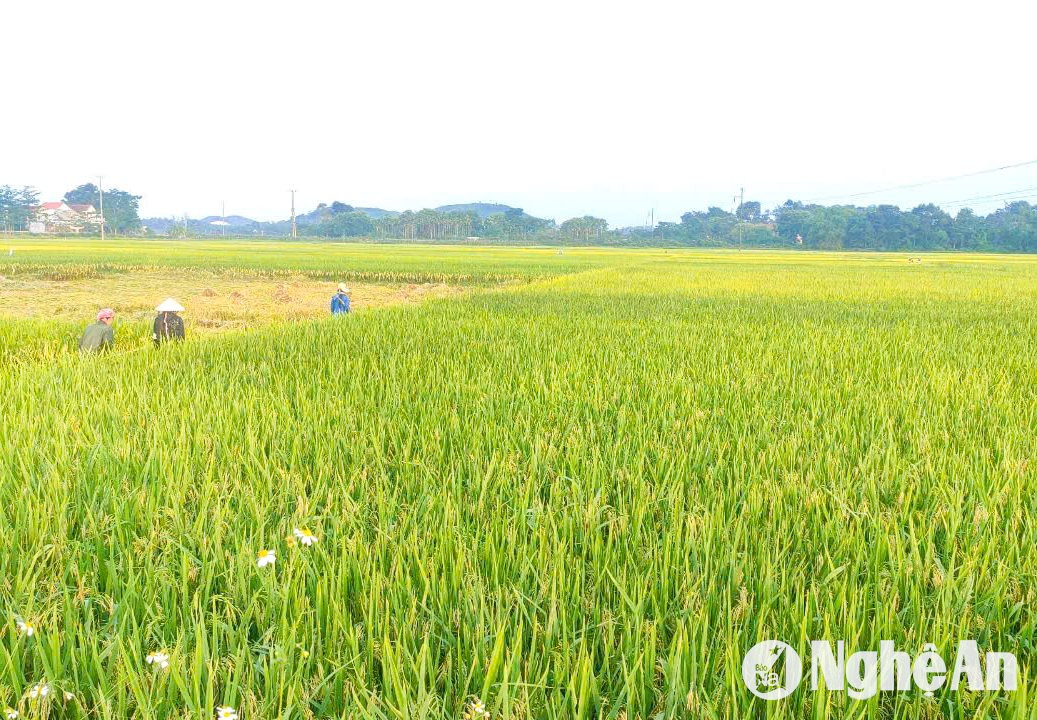
In many areas, the summer-autumn rice crop is not yet fully ripe, but to minimize damage caused by storms and heavy rain, people are urgently harvesting it. In some fields, due to the unique terrain, machines cannot access them, so people have mobilized relatives to help harvest by hand.
Mr. Pham Kim Hao, Vice Chairman of the Farmers' Association of Linh Son commune (Anh Son district), said: "The rice in this area was planted late, so it's not fully ripe yet, only about 70%. To avoid rain and storms, for the past two days, farmers have called in harvesting machines to concentrate on harvesting. Currently, there are 6 harvesting machines operating at full capacity in the fields."
"In the low-lying, waterlogged fields where the rice is ripe and golden, and where harvesting machines can't reach, people borrow labor or exchange workers to harvest by hand. This is because if it rains or there are strong winds, the rice grains will fall over, making harvesting difficult and reducing yield and quality."
Since hearing news of typhoon number 3, people in Thuong Tan Loc, Kim Lien, and Nam Anh (Nam Dan district) have been rushing to the fields to harvest their mature glutinous corn crops. Chu Van Quan's family, who cultivates 5 sao (approximately 0.5 hectares) of glutinous corn, contacted traders to buy fresh corn and mobilized laborers to harvest it to prevent it from breaking or falling over.
In just two days (September 3rd and 4th), the entire area of glutinous corn belonging to the family was harvested. “If the corn is ripe enough, harvesting it gradually and selling it little by little will fetch a better price. If the corn is too young and harvested and sold in large quantities at once, the price will drop. To avoid losses from the storm, we have to accept it.”
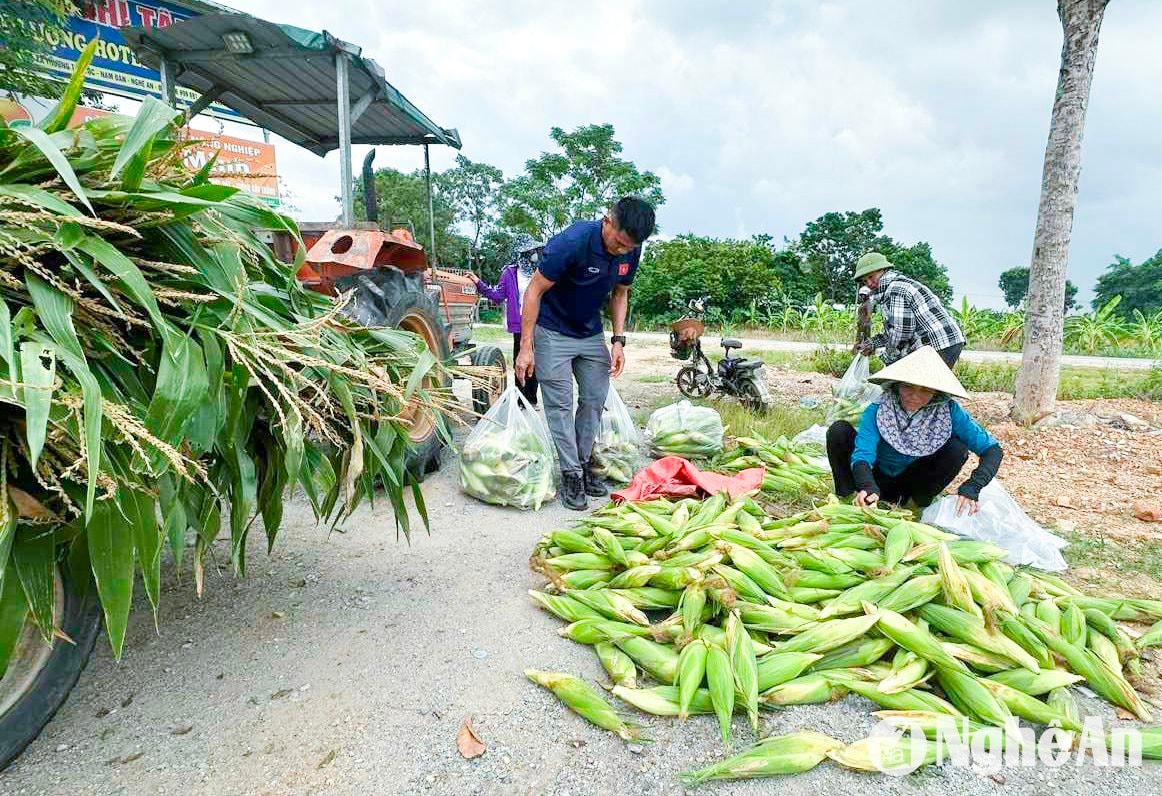
People in key vegetable-growing areas are also urgently harvesting their ripe vegetables, especially those that are easily damaged by heavy rain.
In the fields of Quynh Luong commune (Quynh Luu district), people are actively harvesting sweet cabbage, bok choy, and mustard greens; traders are also flocking to the fields to buy vegetables and transport them to distributors. Although the weather before the storm was hot, humid, and stifling, in order to finish harvesting before the storm arrived, people only took a lunch break before rushing back to the fields. "All the hard work and money have been invested, and now that it's time to harvest, if we don't finish in time, everything will be lost," said Ms. Nguyen Thi Lan.
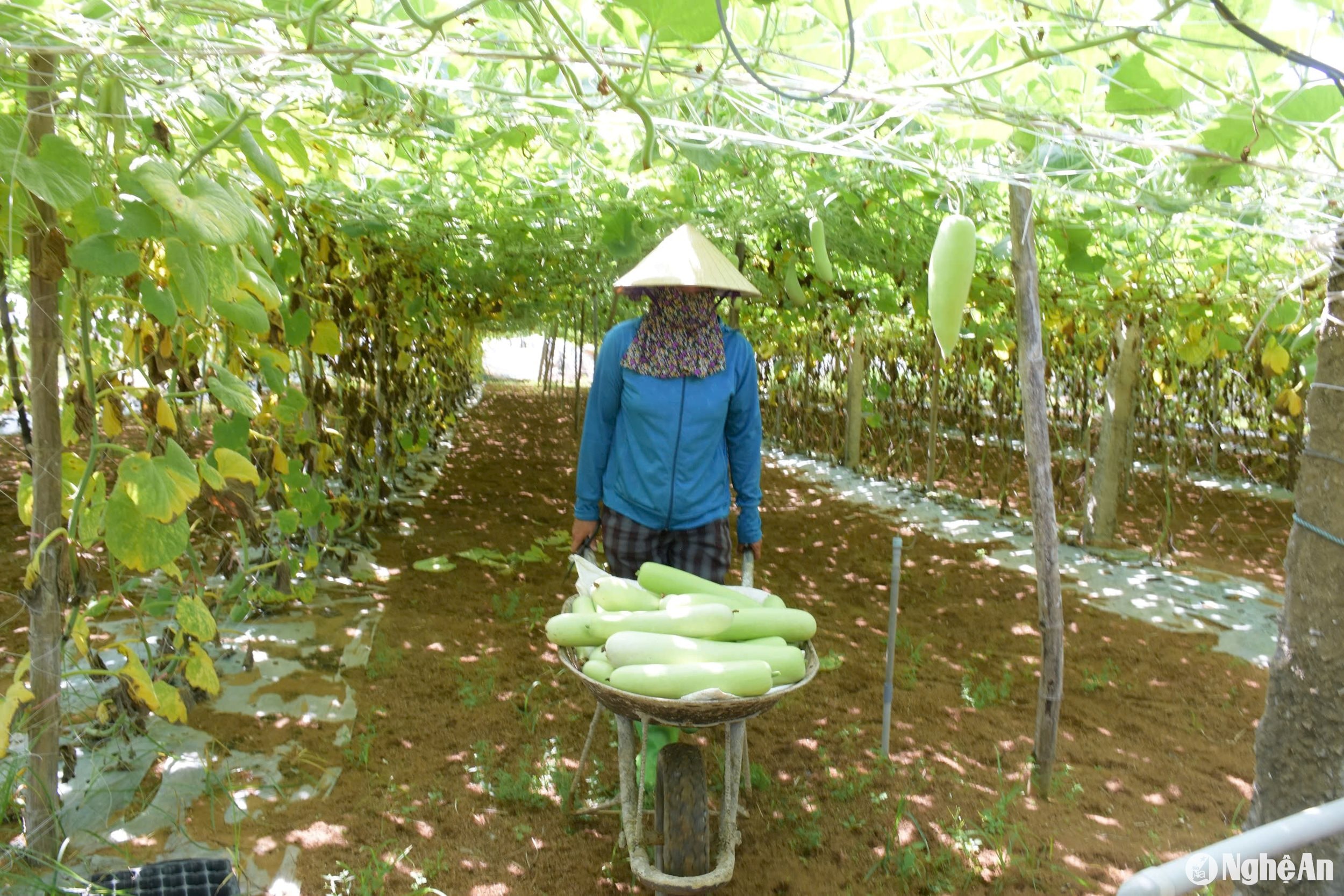
In Quynh Lien commune (Hoang Mai town), people are actively harvesting gourds in their gardens to avoid damage from storms that could collapse the trellises, break the fruit, or crush it. Because gourds are easy to preserve and can be stored for a long time, people are not too worried about sales.
Besides harvesting, people in the onion-growing areas are also urgently moving their onions to higher ground to avoid flooding and damage. Mr. Tran Van Su, a farmer in Quynh Lien commune who grows 5 sao (approximately 0.5 hectares) of onions, heard about Typhoon No. 3 causing heavy rain, so he mobilized his wife and children to move the onions from low-lying, flood-prone areas to higher ground.
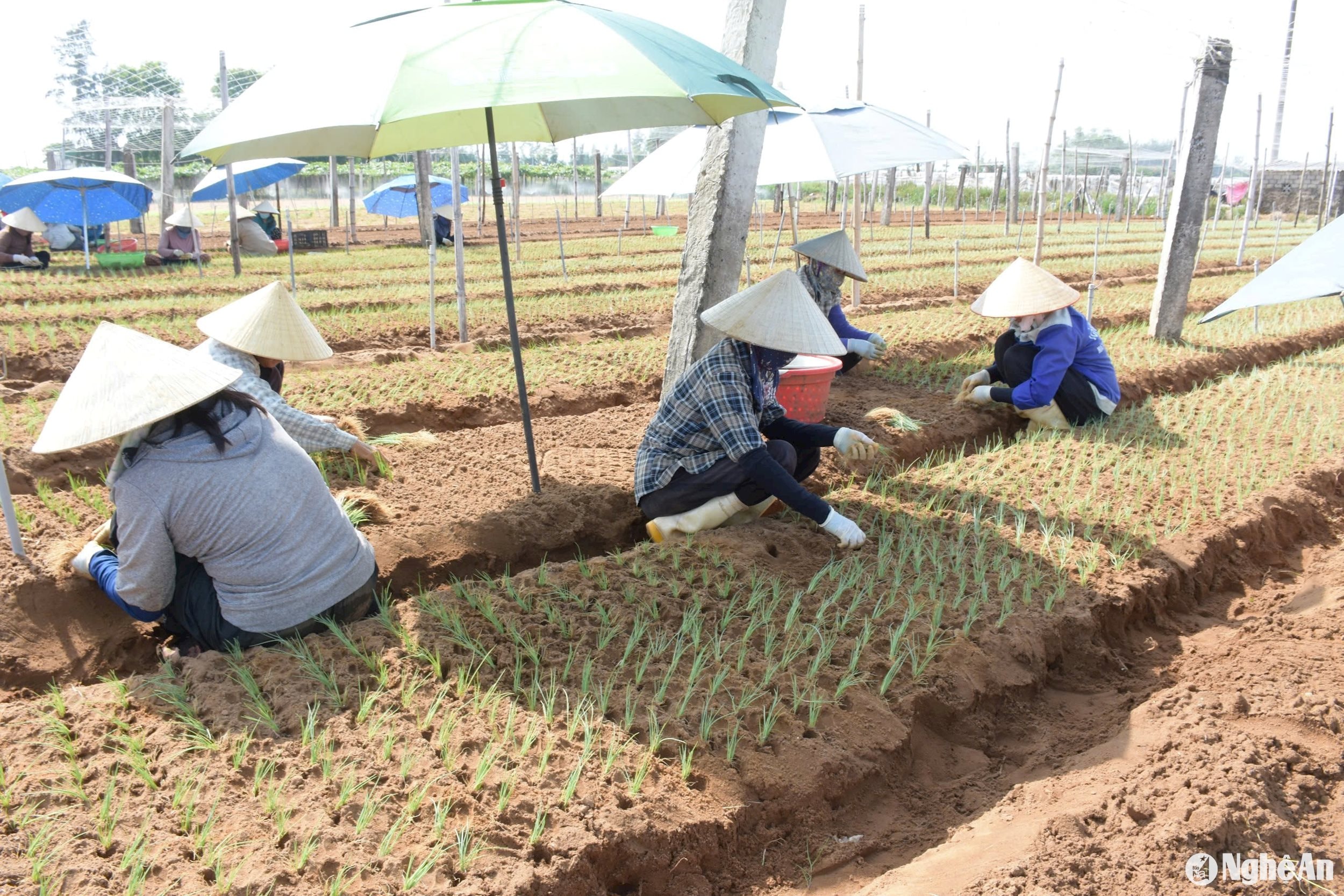
Mr. Su said: "Onion plants are easily damaged and their roots rot if flooded by rain. Therefore, we have to move them to higher ground to plant them temporarily, waiting for the heavy rains to pass before replanting them in the same area."
According to weather experts, Typhoon No. 3 (Yagi) is a very strong typhoon, potentially reaching level 14 with gusts up to level 17, thus affecting a very wide area. The level of natural disaster risk caused by Typhoon No. 3 in the northern part of the East Sea has been raised to level 4 (very high risk) by the National Center for Meteorological and Hydrological Forecasting. The area of strong winds also expands rapidly as the typhoon intensifies, most clearly demonstrated by the very wide affected area. In addition, heavy thunderstorms occurring before the typhoon's impact are also a point to note, as thunderstorms are often accompanied by tornadoes and strong gusts of wind. Depending on the trajectory of Typhoon No. 3, a period of heavy and widespread rainfall is also possible in the northern provinces and the northern and central parts of Central Vietnam.


