
Farmers in Nghe An province invest 1.7 billion VND to bring seawater into shrimp farming.
(Baonghean.vn) - Faced with increasingly polluted water sources, Mr. Hoang Xuan Tin in Quynh Bang commune (Quynh Luu district) boldly invested 1.7 billion VND to install a pipeline to bring seawater directly to his shrimp ponds.
In 2011, recognizing that the water sources used for shrimp farming were becoming increasingly polluted due to the discharge of waste from factories and industrial zones, and considering that Loc Thuy Cooperative was also considered a difficult area for shrimp farming due to its abundant freshwater resources and its location between the Lach Quen and Lach Con ports, resulting in heavily polluted water, Mr. Hoang Xuan Tin in Quynh Bang commune (Quynh Luu district) devised a solution: installing pipelines to draw saltwater directly from the sea into his family's shrimp ponds.
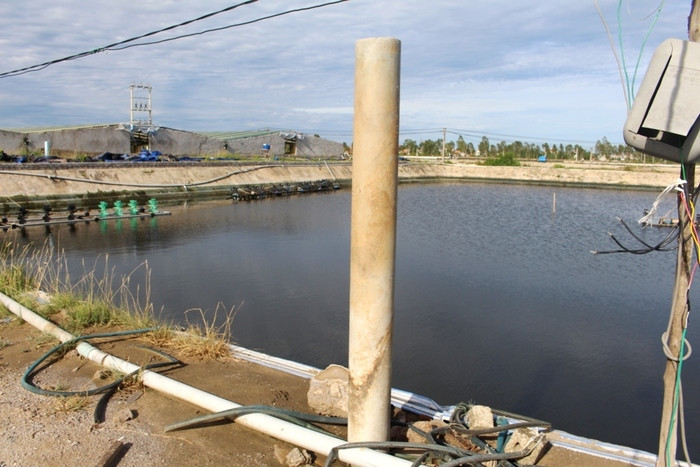 |
| Pipes are pre-installed in the fish pond; when it's time to stock, they just need to be connected to provide seawater. Photo: Viet Hung |
After surveying the terrain and conditions, Mr. Tin hired workers to excavate and install approximately 4,300 meters of 200mm diameter plastic pipes from the sea to the fish ponds. After 20 days of construction, the system to bring seawater directly to the ponds was completed at a total cost of 1.7 billion VND.
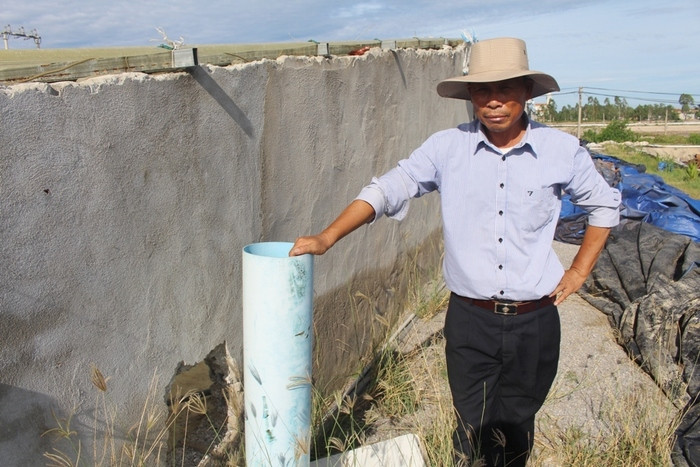 |
| Mr. Hoang Xuan Tin, from Quynh Bang commune (Quynh Luu district), invested 1.7 billion VND in a pipeline to bring seawater directly to his fish pond. Photo: Viet Hung |
When using saltwater from the sea, shrimp farming becomes more favorable. Because they have control over the water source, especially clean water, most shrimp farming seasons are successful. "Having a source of seawater allows us to be very proactive in shrimp farming. Because the water is clean, the farmed shrimp rarely get sick, and productivity and yield are higher than before," Mr. Tin shared.
After pumping seawater into the ponds, he then takes freshwater from the Do Luong canal system and mixes it in a ratio of 60% seawater to 40% freshwater. Next, he treats the water with chlorine before pumping it into each pond to stock the shrimp fry.
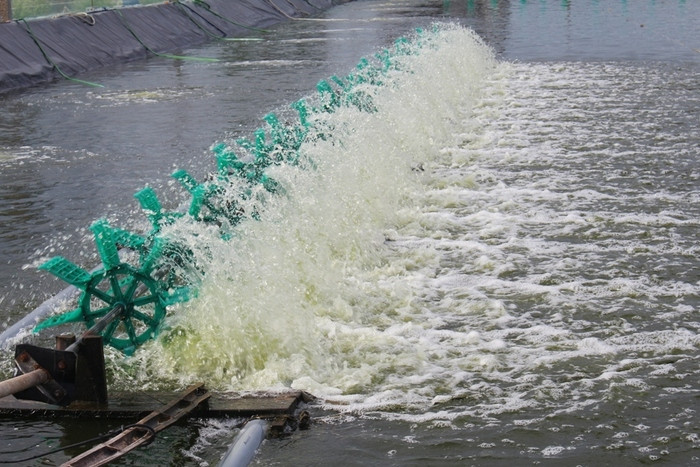 |
| The seawater has been mixed with freshwater, and this pond will provide water for the second stocking cycle. Photo: Viet Hung |
Thanks to a scientifically-based farming process and a bold investment in pipelines bringing seawater to the ponds, Mr. Tin's family has achieved continuous success in shrimp farming over the past five years. With 12 ponds divided into 2-3 stocking cycles per year, each pond averages a yield of 4-5 tons.
Recently, he finished harvesting the first crop of shrimp from 3 ponds, yielding 4.5 tons per pond; after deducting expenses, he earned a profit of 700 million VND. For the second crop, Mr. Tin plans to stock 8 ponds.
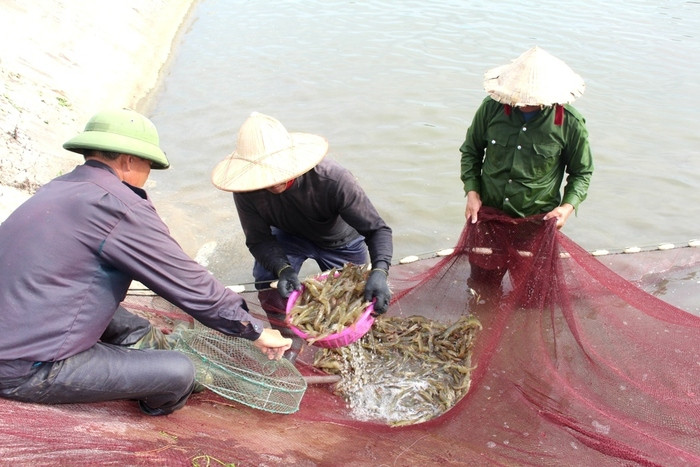 |
| Thanks to their ability to secure a reliable water source from the sea, Mr. Tin's family has enjoyed successful shrimp farming for many years. Photo: Viet Hung |
Currently, most shrimp farmers in Quynh Bang commune draw water from the Mai Giang River. Due to water pollution, if the water is not carefully treated before being introduced into the ponds, shrimp diseases are very likely to occur. With Mr. Hoang Xuan Tin's investment in pipelines to bring seawater directly to his ponds, shrimp farming will be easier and disease outbreaks will be minimized.
Viet Hung
| RELATED NEWS |
|---|


