
Farmers in Nghe An province raise eels without mud in cement tanks.
(Baonghean.vn) - As the "eel mine" of Nghe An province, Yen Thanh is a major supplier of eels to many localities, but natural resources are becoming increasingly scarce. Raising eels in mudless cement tanks, a method being guided by the Yen Thanh Agricultural Extension Station, is proving to be an effective solution helping many farmers get rich.
Raising eels in cement tanks is a new model, different from traditional methods, contributing to improved economic efficiency and creating a source of clean food for the market.
To help people develop this profession, with the assistance of the Provincial Agricultural Extension Center, the Yen Thanh Agricultural Extension Station is implementing and currently expanding this program in the communes of Do Thanh, Long Thanh, Ly Thanh, and Khanh Thanh...
Thanks to the application of proper farming techniques, many models have developed on a large scale, bringing high economic value and opening up new avenues for creating product value chains through linkages.
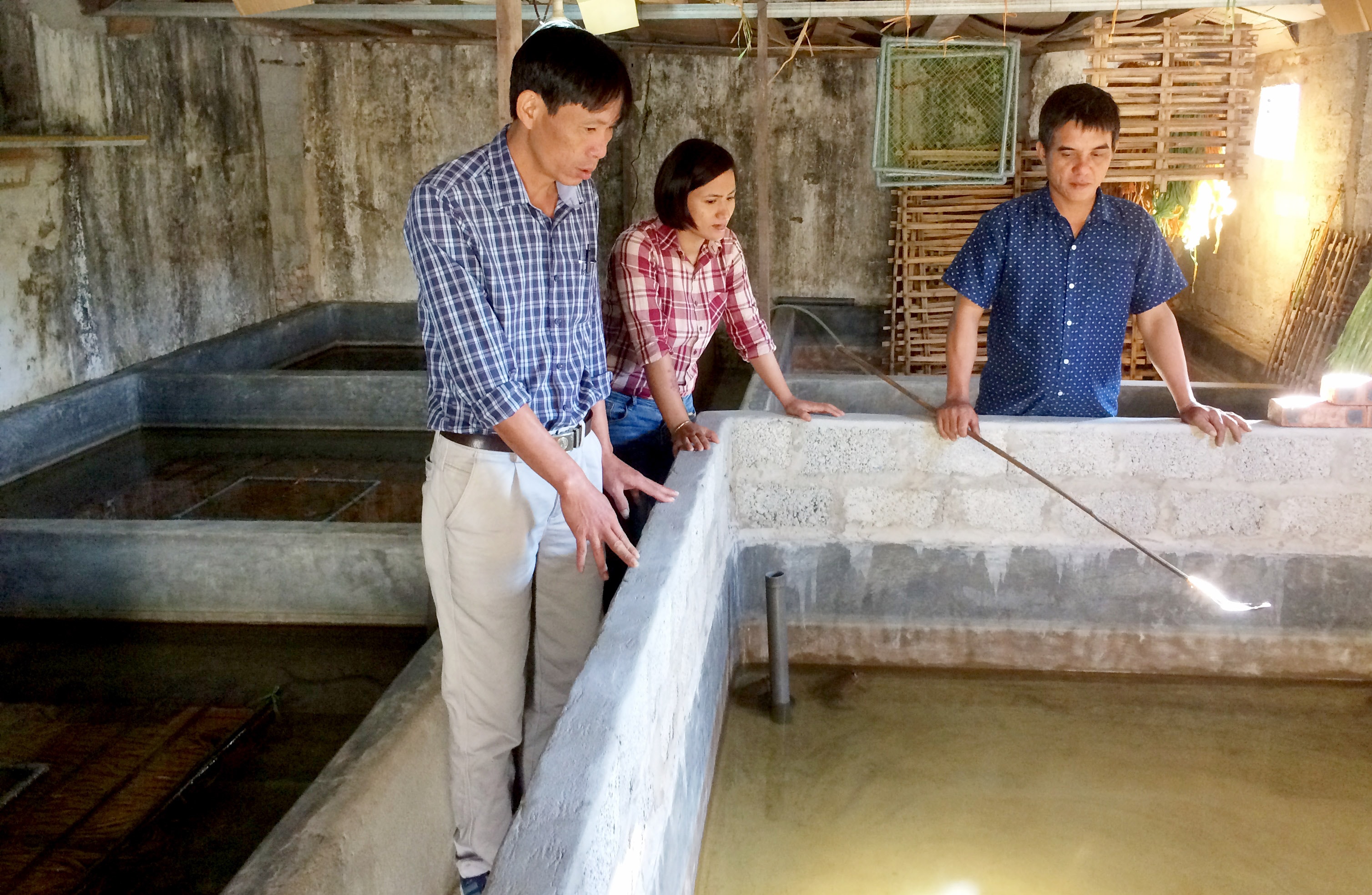 |
| The model of eel farming in cement tanks by the family of Mr. Nguyen Ba Dinh in Giap Ngoi hamlet, Long Thanh commune (Yen Thanh district). Photo: Thai Duong |
Typically, in Giap Ngoi hamlet, Long Thanh commune, the eel farming model in cement tanks of Mr. Nguyen Ba Dinh's family attracts many visitors seeking to learn from his experience.
Within the grounds of the three small houses, he invested in building six cement tanks, each with an area of 5 square meters.2Beneath the thin bamboo mat, thousands of golden-yellow eels are being cared for and nurtured according to proper technical procedures.
Mr. Dinh shared that raising eels doesn't require much expense or labor, but it does require knowledge and understanding of eel biology to develop appropriate farming methods. Thanks to this, his family raises two batches of eels annually, harvesting over 3.2 tons of commercial eels; with market prices ranging from 150,000 to 180,000 VND/kg, after deducting expenses, they earn an income of 60-70 million VND.
According to eel farmers who raise eels in mudless cement tanks, the first step is selecting and domesticating the fry. The fry used for farming are small wild eels (60-80 eels/kg) purchased from people who catch them using traps in the rice fields.
Before being released into the rearing tanks, the eels are thoroughly washed and treated with salt water or a diluted potassium permanganate solution to disinfect, eliminate fungi and parasites present in the natural environment, and minimize the risk of disease during the rearing process.
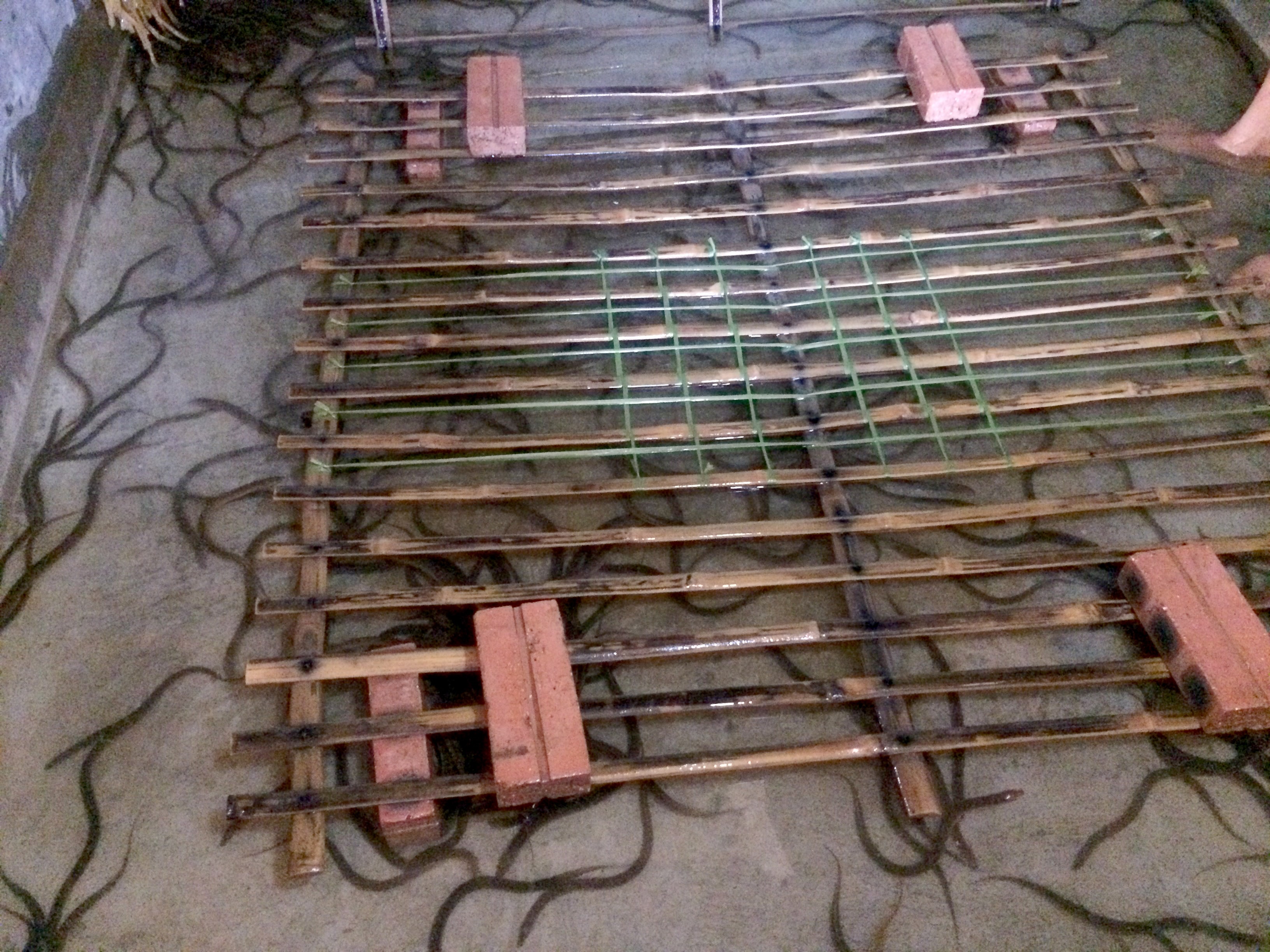 |
| The stocking density of eels in the tanks is approximately 200 eels/m2; after 5 months of rearing, the eels will reach a weight of 0.2 kg/eel. Photo: Thai Duong |
After two months of acclimatization, juvenile eels will adapt to the new environment, with a survival rate of over 90%, and can be raised normally at a density of 200 eels/m².2The eels will gain weight quickly, develop uniformly, and there will be no losses; after 4-5 months of farming, they will reach a weight of 0.2 kg/eel, meeting the standards for sale.
As one of the first households in Yen Thanh district to participate in the mudless eel farming model, Mr. Nguyen Van Khanh's family in Dong Phu hamlet, Khanh Thanh commune, has now expanded the area of their breeding tanks to 60 square meters.2.
According to Mr. Khanh, this model yields relatively high economic efficiency, but requires very strict technical requirements for raising the eels, from constructing the tanks and ensuring clean water systems to weaving bamboo mats for shelter; especially, the food source for the eels is considered the most important factor. Because they are raised in cement tanks, the only food for the eels is fresh freshwater fish or snails readily available in rice fields, ponds, and lakes. After being washed, these foods are ground into a paste and mixed with a small amount of rice bran for binding. The eels are fed only once a day, either early in the morning or late in the evening.
Being a highly sensitive species prone to temperature and environmental changes, the water level in the breeding tanks must always be maintained at 0.35 m, with stable temperatures according to the season. After feeding the eels, the water must be changed immediately within about an hour. Absolutely no leftover food should be allowed to accumulate, as this leads to environmental pollution, difficulties in controlling diseases, and issues related to food safety and hygiene.
Therefore, eels raised in cement tanks are considered a clean food source, with nutritional content comparable to eels living in their natural environment. They are currently popular with consumers, but the supply is still insufficient to meet market demand.
In 2017, from the agricultural development support fund for new rural construction, each eel farming model in Yen Thanh district received 38 million VND in support. This helped households build cement tanks, select breeding stock, source feed, and treat water sources, contributing to the protection and regeneration of aquatic resources, enriching the culinary culture, and showcasing a unique specialty of Nghe An province.


