
Promoting the spiritual legacy of the August Revolution in the digital age.
The August Revolution of 1945 was the first great victory of our people since the Party's leadership, marking a major turning point in the history of the Vietnamese nation. Eighty years have passed, but the spiritual value of that historic autumn remains undiminished. In the digital age, this legacy is not only preserved through historical records and artifacts, but also strongly permeates the awareness and actions of each citizen, becoming a driving force that motivates them to contribute to building and protecting the Fatherland.
When history "lives" in the hearts of young people.
These days, the Trung communal house (Tan Nam block, Truong Vinh ward) has become a meeting place for many young people and history enthusiasts.
Perhaps, when pausing under the roof of an old village pavilion, one's heart is filled with nostalgia for autumn.August RevolutionEvery year, Trung Temple stands as a historical witness, preserving the heroic memories of the homeland during those days of fervent struggle for power.
.jpg)
Amidst the crowds visiting the historical site, Nguyen Anh Thu (born in 2006), from Van Tien Hamlet, Truong Vinh Ward, calmly opened her phone and scanned the QR code placed right in front of the temple. In just a few seconds, a wealth of valuable information about the site appeared.
Pointing to the QR code they had just scanned, Thu and her friends excitedly tried to see how many details about the location they had guessed correctly. According to the code, the temple was built in 1843 (during the Nguyen dynasty). It was here, during a period of intense activity...Nghe Tinh SovietIt was the site of revolutionary struggles under the leadership of the Party. In particular, during the August 1945 General Uprising, on August 17th, the Viet Minh led the people of Yen Dung village in an uprising to seize power and chose Trung communal house as their headquarters.
.jpg)
After the August Revolution, following President Ho Chi Minh's call to eradicate illiteracy, Trung communal house became a center for literacy education for the people. Throughout various revolutionary periods, Trung communal house also served as a gathering place to bid farewell to generations of local youth who enlisted in the army to defend the Fatherland.
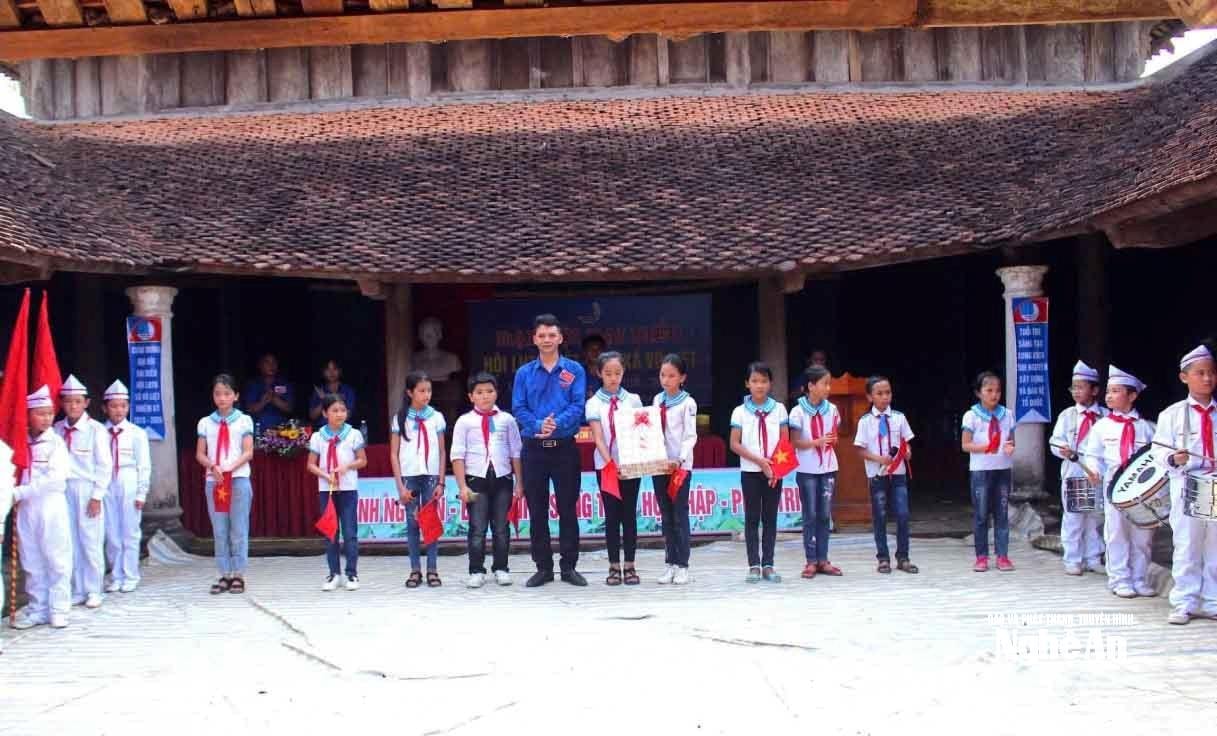
Contributing to the discussion, Mr. Le Dang Sang, Deputy Secretary of the Youth Union of Truong Vinh Ward, said that in order to widely disseminate the historical and cultural values of the relic, political and social organizations in the area have regularly organized "back to the roots" classes, combined with thematic activities, and integrated ceremonies for admitting new Youth Union and Party members right at the relic site.
.jpg)
These activities not only help the younger generation better understand the revolutionary traditions of their homeland, but also create a connection between historical knowledge and practical experience, arousing pride and a sense of responsibility to preserve and promote the heritage.
To better understand the widespread public interest in historical values in general, and the August Revolution in particular, one cannot overlook the exhibition space at the Nghe An - Nghe Tinh Soviet Museum.
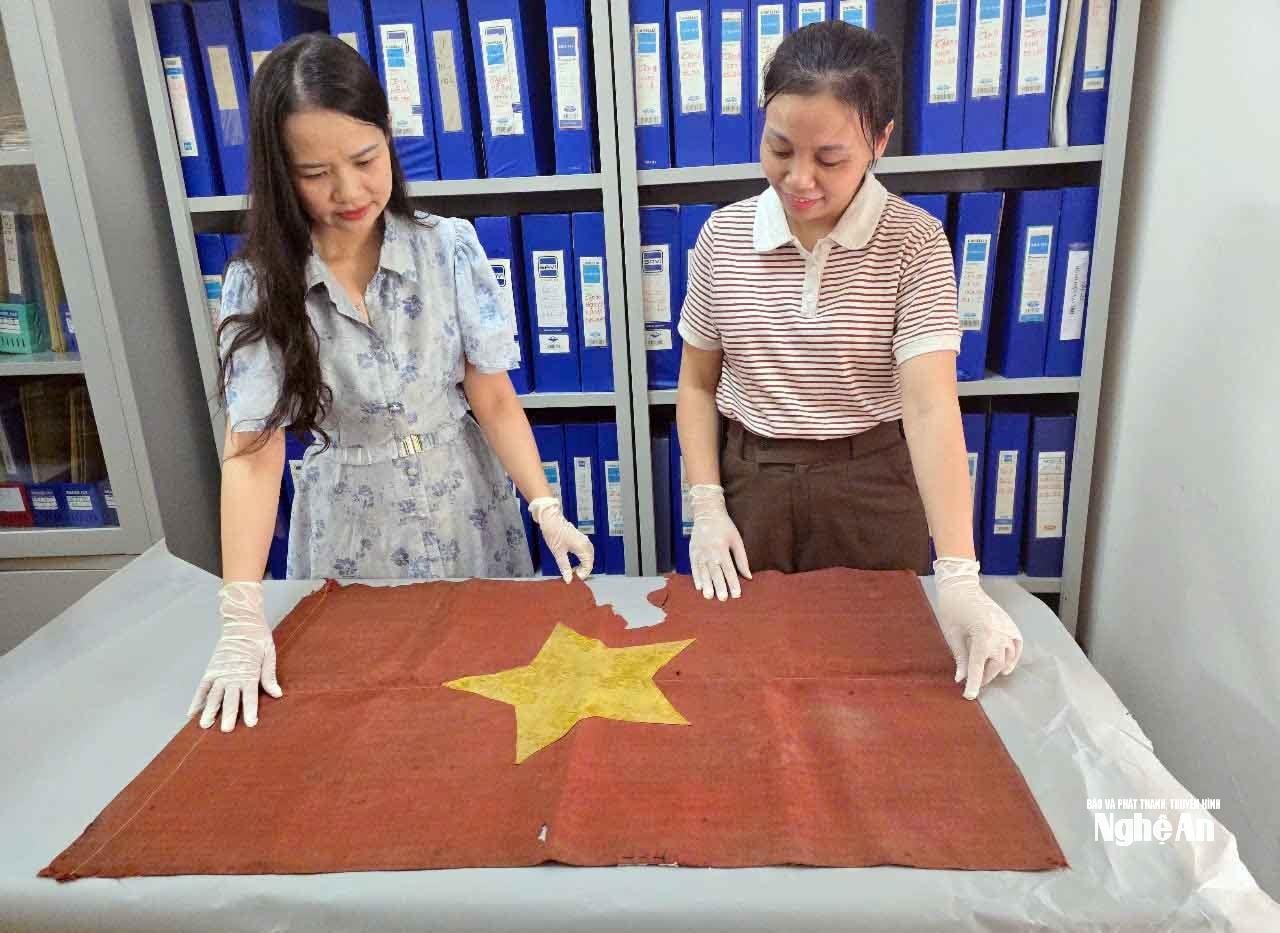
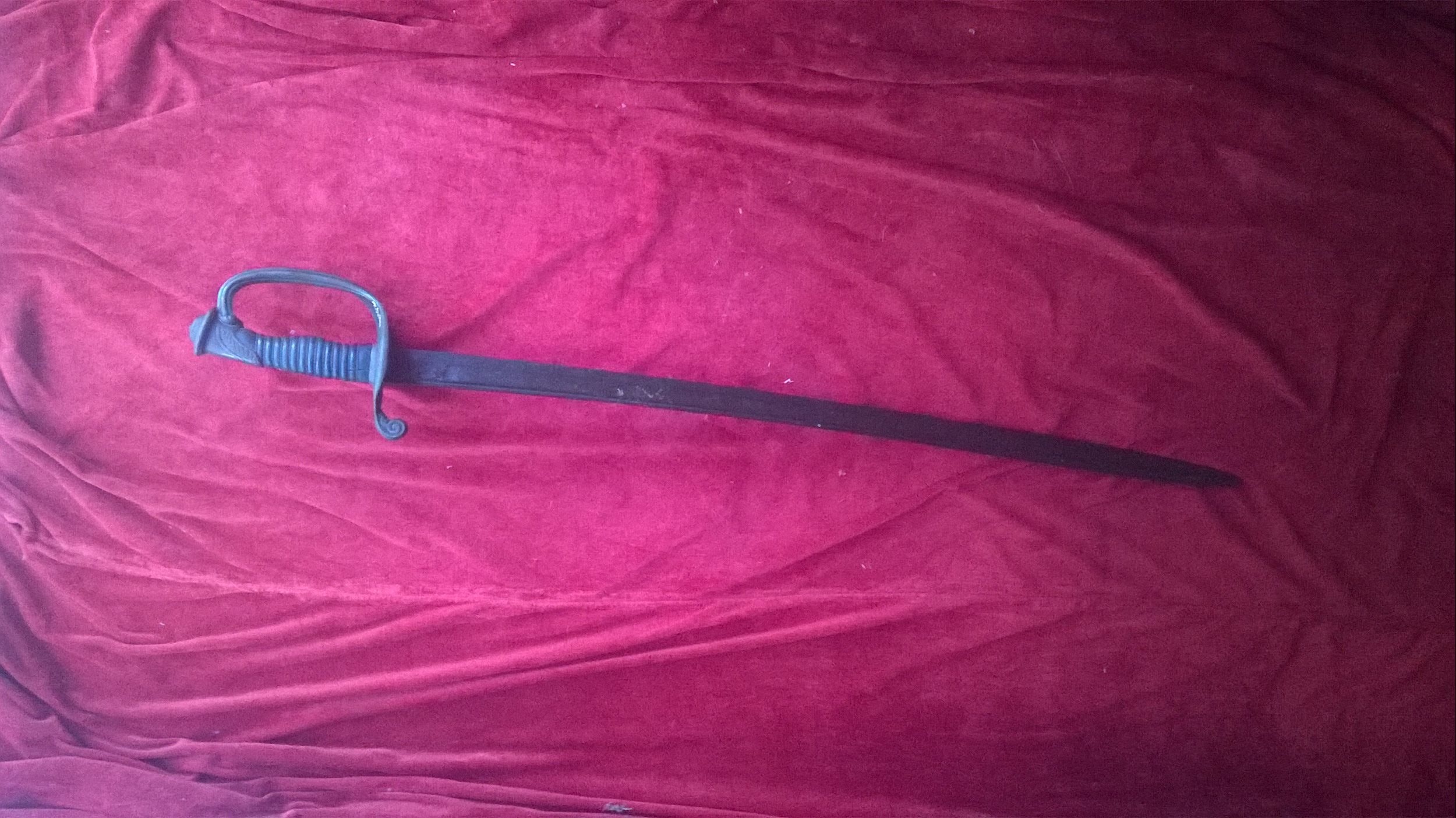
Here, alongside documentary photographs and glorious historical accounts, many visitors linger longer before artifacts associated with the August 1945 General Uprising. Of particular note are the rudimentary weapons such as swords and knives that the Red Self-Defense units in Nghe An used to defend their villages and communes, ultimately leading to the seizure of power.
In addition, the museum also preserves a particularly precious artifact: the flag that the people raised high on the first day of the August Revolution's seizure of power. Each artifact still bears the mark of a time of war and the indomitable spirit of our ancestors.


In addition to the relics and artifacts mentioned above, Nghe An also has many other historical sites that attract the attention of many locals and tourists, such as:Mr. Hoang Vien's houseIn Lam Thanh commune (formerly Chau Nhan commune, Hung Nguyen district). This was a Party base during the Nghe Tinh Soviet Uprising and the General Uprising of 1945. Or like...Vo Liet TempleKim Bang commune (formerly Vo Liet commune, Thanh Chuong district) - a place that marks many historical events and was once a gathering point for forces seizing power during the August Revolution.
These landmarks have become a strong red thread in the rhythm of contemporary life, connecting the past with the present, so that history is not just confined to the pages of books but is also present, accompanying the development of the homeland.
Values that endure through time.
The historic autumn of 1945 unfolded extensively throughout Nghe An province, becoming a shining milestone in the homeland's struggle for independence. Looking back through valuable documents from the Nghe An Historical Society and the Provincial Party Committee's Propaganda and Mass Mobilization Department, the fervent atmosphere of those days of seizing power is vividly portrayed.
On August 8, 1945, the Nghe Tinh Inter-provincial Congress of Viet Minh Delegates was held to discuss leadership plans for preparing for the general uprising to seize power. Given the rapidly changing situation, the Standing Committee of the Nghe Tinh Viet Minh quickly established the Uprising Committee and advocated "seizing power starting from the villages to the district capitals."
.jpg)
On August 15, 1945, the Standing Committee of the Viet Minh in Nghe Tinh issued a directive for the uprising. Throughout the localities, the Uprising Committees and Provisional Revolutionary People's Committees were rapidly established. Leaflets and banners appeared everywhere, and the red flag with a yellow star fluttered brightly over village communal houses. Numerous rallies, speeches, demonstrations, marches, and protests erupted continuously, creating a revolutionary offensive momentum.
The August 1945 uprising to seize power in Nghe An province was a resounding success within nine days. When this once-in-a-lifetime opportunity arose, the Viet Minh in Nghe Tinh province creatively and flexibly applied the Viet Minh Front's policies; organizing and mobilizing all strata of the people to launch the uprising and achieve victory.
The victory of the uprising to seize power in Nghe An made a significant contribution to the overall victory of the entire country, breaking the shackles of slavery imposed by the fascist-colonial-feudal regime in our country, and ushering in a new era in the history of the Vietnamese nation.
.jpg)
Eighty years have passed, but the lessons and historical significance of the 1945 General Uprising to seize power remain as relevant as ever. This includes the highly successful and effective combination of "circumstances, opportunities, and timing"; and the spirit of unity and solidarity of the entire Vietnamese people under the leadership of the Party and President Ho Chi Minh.
These lessons serve as a solid foundation for Nghe An to achieve significant accomplishments in promoting industrialization, modernization, and international integration, striving to build the province into a model province as envisioned by President Ho Chi Minh during his lifetime.


