
Truong Bon Green, a tribute
(Baonghean) - I can't even remember how many times I've returned to Truong Bon on the last day of October for the commemoration. Yet each time I come back, I'm still amazed by the changes in this land once known as a "bombing zone" and a "fire zone." There was a "red Truong Bon" in the nation's golden history, associated with the heroic deeds and sacrifices of 13 Youth Volunteer martyrs, but after more than half a century, a "green Truong Bon" has emerged in the tributes we make.
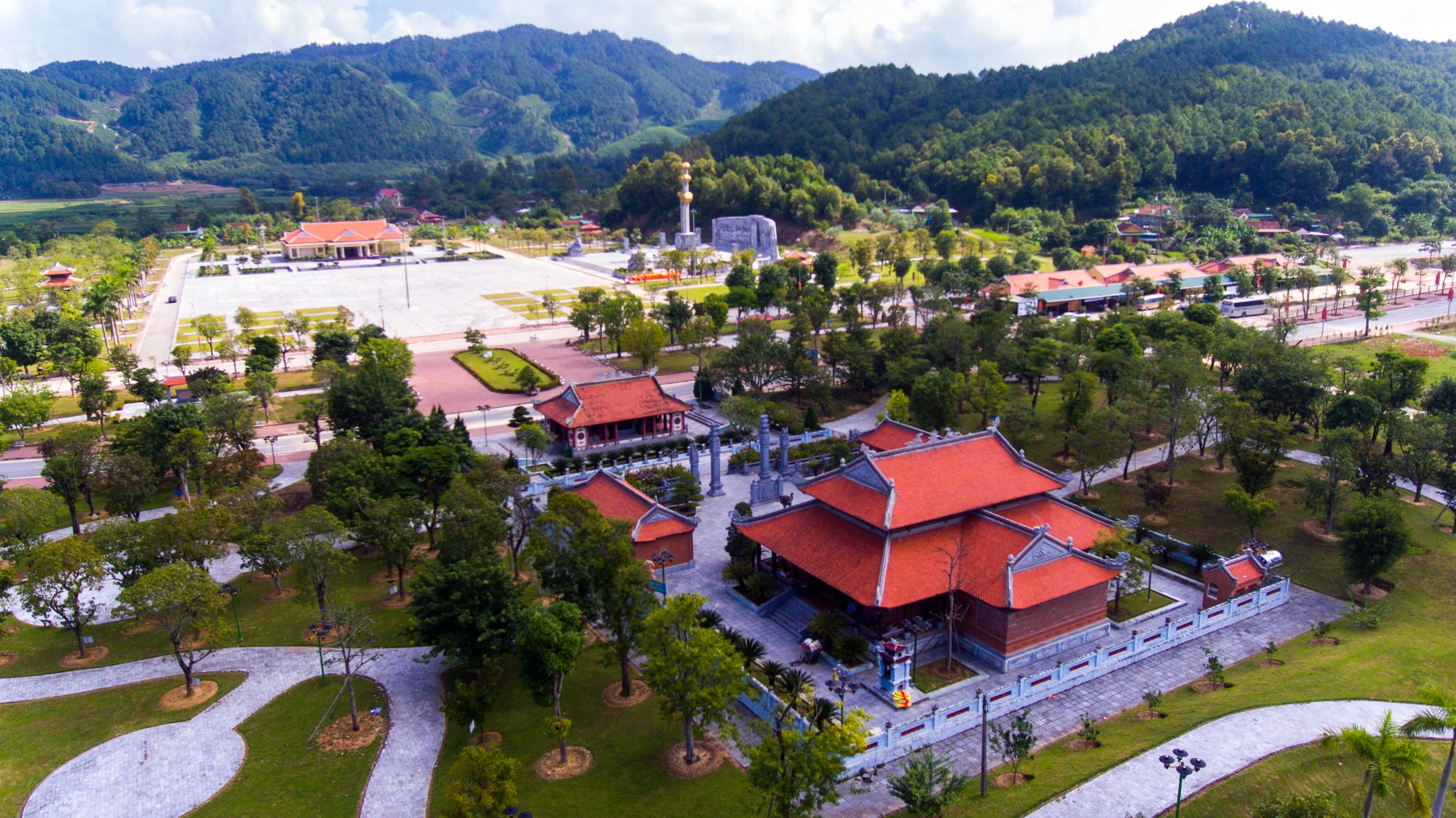 |
| Panoramic view of the Truông Bồn historical site. Photo: Thành Cường |
Green construction alongside bomb crater remnants.
Right next to the mass grave of the 13 heroic Youth Volunteers of Truong Bon, there are unfilled bomb craters. These deep, jagged craters, carved into the brown earth, stand silently through sun and rain, as silent yet fierce testaments. Their existence is not accidental, but rather a deliberate choice by those who constructed this historical site, aiming to convey a message about the brutality of war and the dangers of the Truong Bon "fire zone."
In recent years, tall trees have sprung up around the bomb crater. The green foliage gradually casts its shadow over the dark brown crater, a seemingly contradictory "planning" that is actually a deliberate intention. Talking to the officials and staff here only deepens the understanding of their efforts in rebuilding the site.
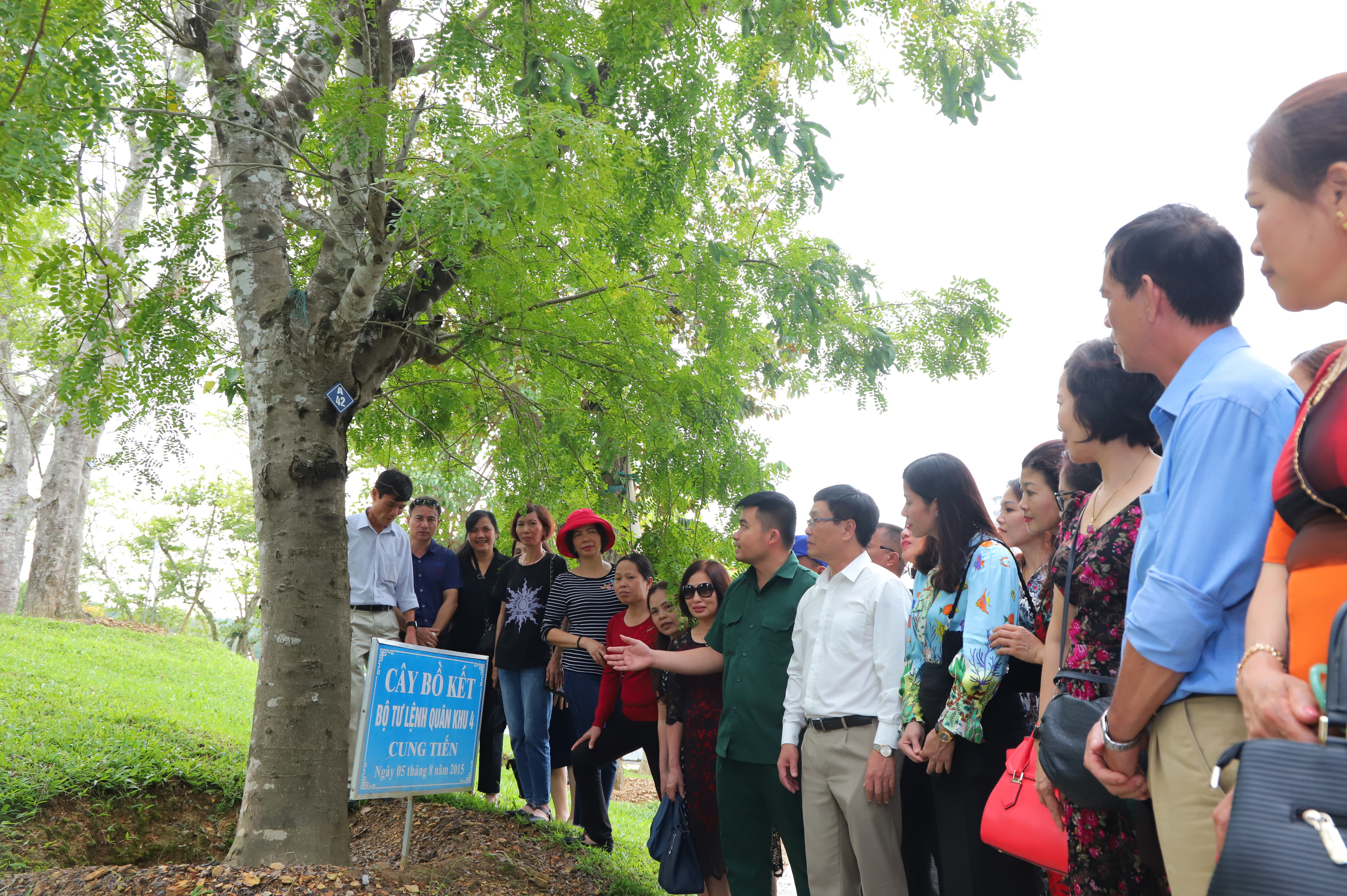 |
| Tourists admire the greenery at the Truông Bồn Historical Site. Photo: Phước Anh |
According to Mr. Tran Tuan Anh, the officer in charge of greenery at the Truong Bon historical site, there are currently nearly 800 large trees of various species covering the total area of over 210,000 square meters, not including other smaller trees and flowerbeds.
“During the construction process of the facilities for the historical site, the investor and the management board both aimed to harmonize the purposes of preserving historical evidence and creating green spaces so that this place is not only a destination for showing gratitude, remembering the source, and educating about revolutionary traditions, but also a place for sightseeing and attracting tourists,” shared Mr. Tran Tuan Anh.
The creation of green spaces at the Truông Bồn historical site has received support from many agencies and units in the province. On May 20, 2015, the Nghe An Provincial Party Committee issued Document No. 4279 on launching a tree planting campaign at the Truông Bồn historical site, with the noble meaning of remembering President Ho Chi Minh and the martyrs who sacrificed for the survival of the nation, and upholding the tradition of "drinking water, remember the source; eating fruit, remember the tree planter."
In response to this initiative, for the past four years, hundreds of organizations and individuals have wholeheartedly contributed to greening the Truong Bon "fire zone" with rare and valuable tree species. Not only within the province, this sound initiative has also received enthusiastic support from people outside the province. And overcoming all prejudices and doubts about tree planting as a "campaign," the nearly 800 towering trees growing in Truong Bon today are the clearest evidence of this meaningful work.
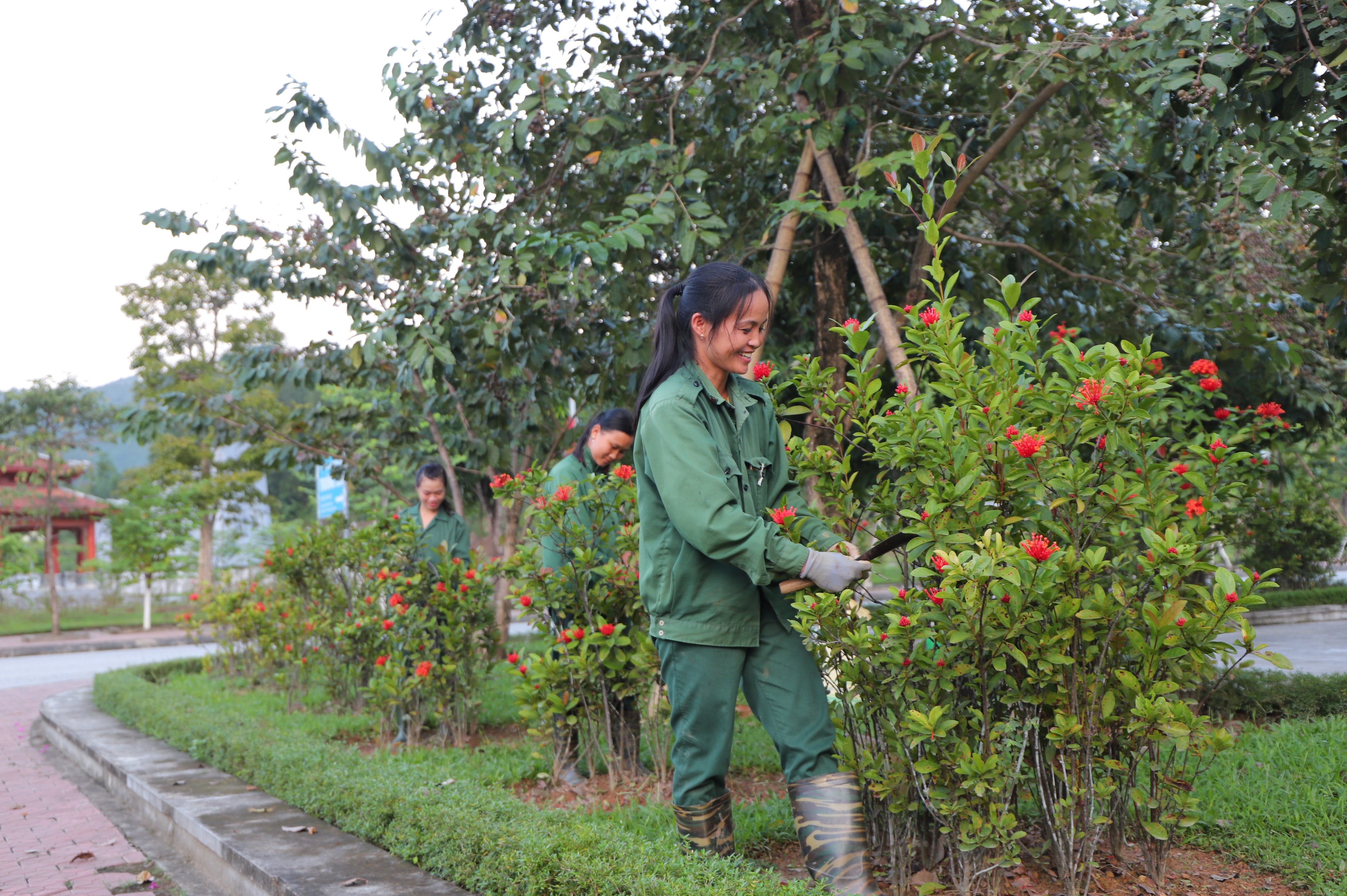 |
| Workers tending to the greenery at the Truông Bồn Historical Site. Photo: Phước Anh |
Strolling through the expansive grounds of the historical site, one seems unable to stop exploring and admiring the diverse species of trees, their shapes, and the myriad colors of their blossoms. There are vibrant red Barringtonia trees, deep purple Plum trees, red Bauhinia trees from the Northwest, white plum trees from the border region… Many trees are commemorative trees dedicated to Party and State leaders, and central ministries and departments. Most impressive of all, within the grounds of the Truông Bồn Historical Site, there are trees with a circumference exceeding 1.5 meters.
Digitizing green space maps
Mr. Tran Tuan Anh, an official at the historical site, jokingly said that the stories about the trees here could go on all day. Each tree has its own "history," some were brought from the far-off Northwest, others had to be grafted from the distant South... Whether it's thanks to the sacred energy of Truong Bon or not, almost 100% of the saplings sown in the soil here thrive, even those species that many people initially criticized for being difficult to grow in unfamiliar soil! Yet, after just one spring rain, the young shoots have sprouted; and after a few more Tet tree-planting seasons, even those "difficult" species have bloomed.
The number of trees planted by agencies and units has increased rapidly, requiring scientific planning and zoning. In 2016, the management board of the Truông Bồn historical site implemented the digitization of the tree map, marking lot numbers, plots, tree types, planting units, and planting times… Thanks to this method, it is easier and more convenient for agencies and units to visit the trees.
While chatting about the trees and flowers at Truông Bồn, we heard many touching memories shared by the tour guides at the historical site. They recounted how groups of veterans and former female youth volunteers, when offering incense and flowers to the spirits of the 13 heroic martyrs, never forgot to bring along bunches of dark, stinging soapberries, a pair of wooden combs, a piece of mirror… They placed these on the common grave of the fallen heroes and silently wept…
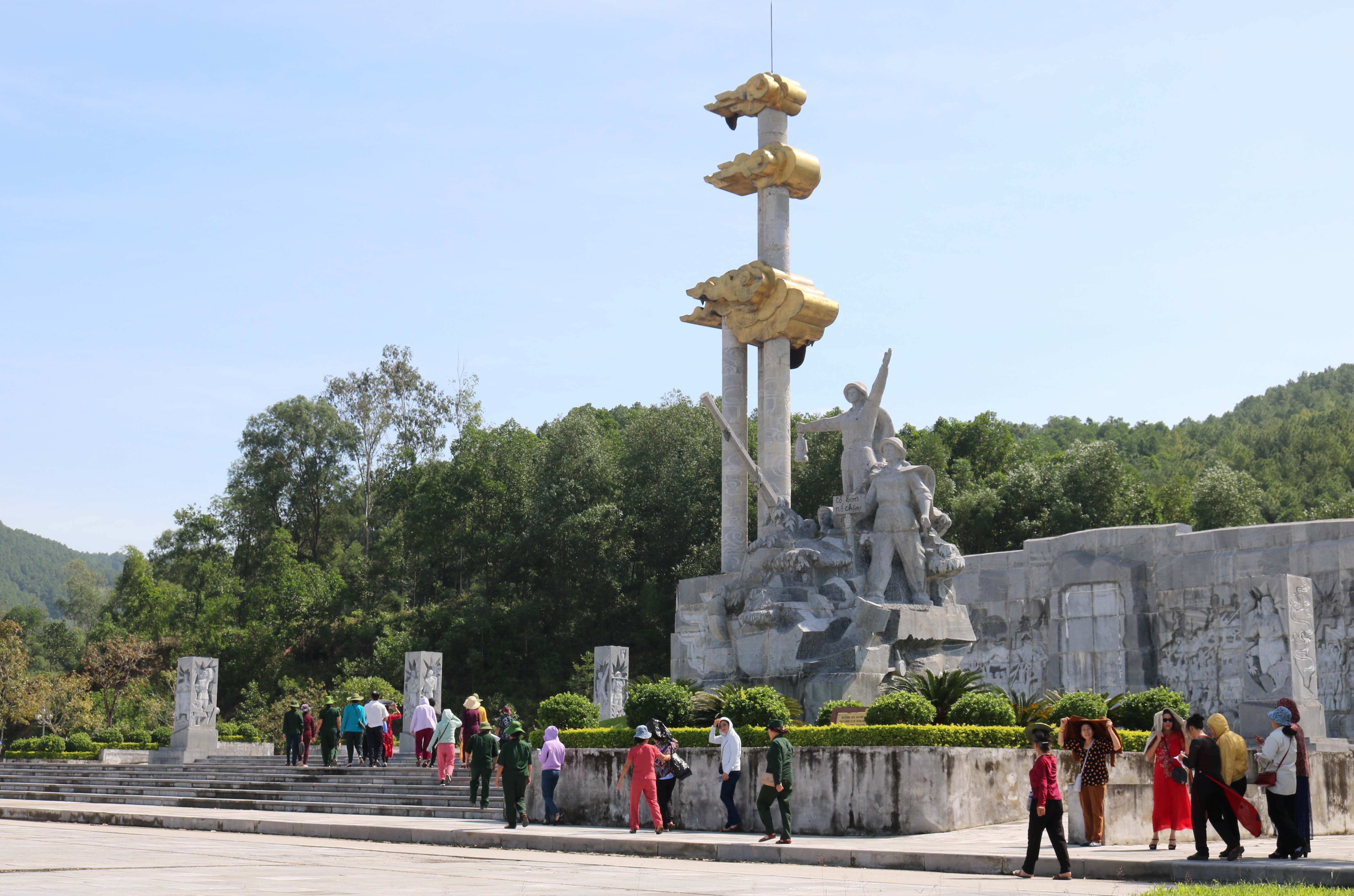 |
| Truong Bon - a National Historical Monument - will forever be a symbol of the indomitable strength and courage of our army and people in the struggle to defend the Fatherland. Photo: Huy Thu |
They said they fondly remembered their youth amidst the gunfire, longing for a handful of soapberry to wash their hair but lacking it, and heartbroken to see their hair and their friends' hair gradually falling out due to malaria. Then they stood around the soapberry trees near the communal graves, whispering stories of the past and present, about those who are still alive and those who have passed away… At the Truông Bồn historical site, there are dozens of soapberry trees, the tallest nearly 10 meters high, and in recent years they have begun to bear fruit. This tree, associated with the female Youth Volunteers of yesteryear, evokes many emotions in visitors who come here.
A few days ago, a youth group from an agency outside Hanoi came to Truong Bon to plant a field of rhododendron flowers. Rhododendrons are familiar plants in Truong Bon, closely associated with every patch of forest and hill around the area. When we visited, the field wasn't yet in full bloom; surely, by early summer next year, it will be a vast expanse of purple. Green trees, purple flowers, yellow buds… Truong Bon is gradually becoming more vibrant, reviving in the gratitude of generations today.


