
The two largest hydropower plants in Nghe An province are at risk of ceasing power generation.
(Baonghean.vn) - Currently, Nghe An province has two of the largest hydropower plants, Ban Ve and Hua Na, which are operating at a reduced capacity and risk ceasing power generation in the next few days.
Clip: PV |
Recently, due to the influence of the El Nino phenomenon, the hot weather, drought, and water shortage have severely affected many hydropower reservoirs in Nghe An, with electricity generation reaching only 30-50%.
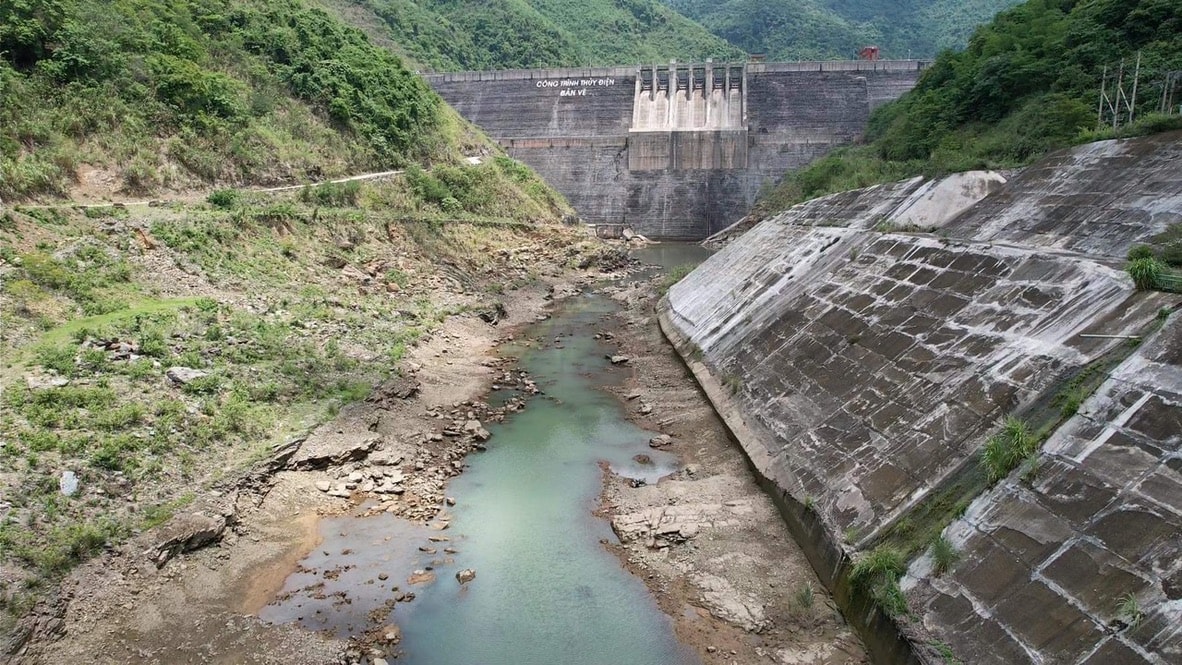 |
The Ban Ve hydropower plant is expected to cease power generation by June 11th due to low water levels. (Photo: PV) |
This includes the Ban Ve hydroelectric power plant (Tuong Duong) - the largest hydroelectric project in the North Central region with a reservoir capacity of over 1.8 billion cubic meters.3The usable capacity from an elevation of 155m - 200m is 1.3 billion m³.3water. Due to the prolonged heatwave, the water flow has decreased.Ban Ve hydroelectric reservoirVery low. The current measured water inflow into the lake averages 35 meters.3/second, compared to 105m at this time in 2022.3/second.
As of 8:26 AM this morning (June 9th), the water level in the reservoir is at an alarming level, reaching only 156.49 meters, 1.49 meters above the dead water level. Currently, the power plant is operating two turbines, with a discharge rate of 200 cubic meters.3Water supply/supply will be provided according to the directive of the People's Committee of Nghe An province from June 2, 2023, to serve the people's planting of the summer-autumn crop.
 |
Water levels were measured at 8:26 AM (June 9th) at the Ban Ve hydroelectric reservoir. Photo: PV |
According to projections, if the discharge rate is 200m³3By June 11th, the Ban Ve hydropower reservoir will return to its dead water level of 155m. At that point, the hydropower plant will only be able to collect water for a minimum of 3-5 hours per day, operating at a minimum capacity. Therefore, if the hot weather continues for an extended period, the downstream of the Ca River will experience water shortages, resulting in insufficient water supply for the power grid.
Also in the same situation is the hydroelectric power plant.Hua NaLocated in Dong Van commune, Que Phong district, the hydropower plant has a capacity of 180MW, and the reservoir is designed to have a storage capacity of approximately 400 million cubic meters.3water. However, with the prolonged hot weather and very low rainfall since the beginning of the season, the hydroelectric reservoir is nearing its dead water level.
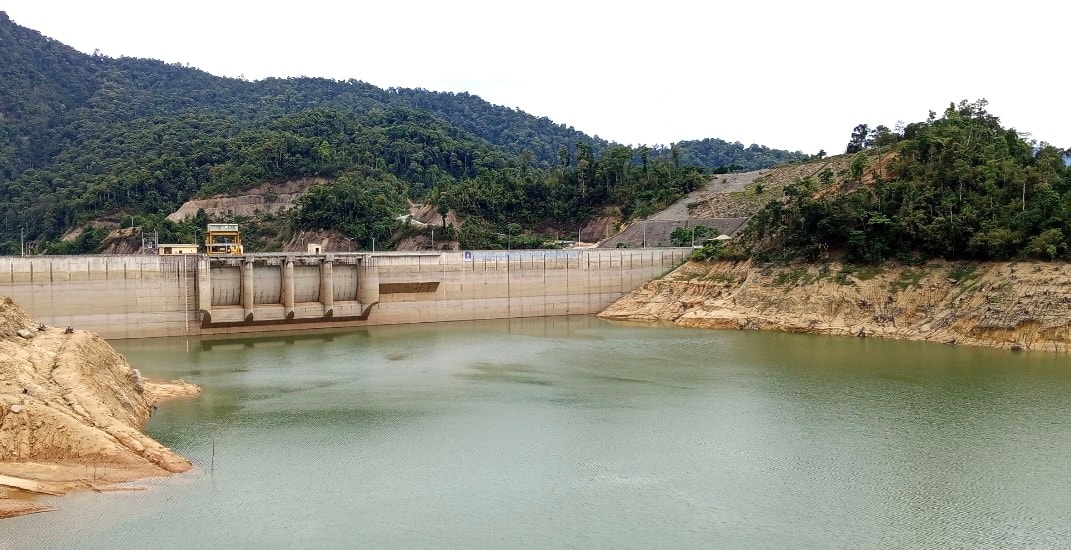 |
The water level in the Hua Na hydroelectric reservoir (Que Phong district) is only 1 meter away from the dead storage level. Photo: PV |
A representative from Hua Na Hydropower Joint Stock Company stated: “As of noon on June 9th, the reservoir water level only reached 216 meters, while the dead water level is 215 meters (1 meter away from the dead water level). Currently, the plant is operating two turbines to supply electricity to the national power grid, with a discharge flow of 200 cubic meters.”3With water/s operating for 5 hours/day, the hydropower plant generates approximately 0.5 million kWh of electricity. It is projected that, with this operating capacity, the water level in the Hua Na hydropower reservoir will reach its dead storage level by the end of today, June 9th.
According to a report from the Department of Industry and Trade, the province currently has 22 hydropower reservoirs, of which the two largest, Ban Ve and Hua Na, are close to their dead water levels, while the remaining 20 reservoirs have water levels below the minimum level specified in the inter-reservoir operating procedure.
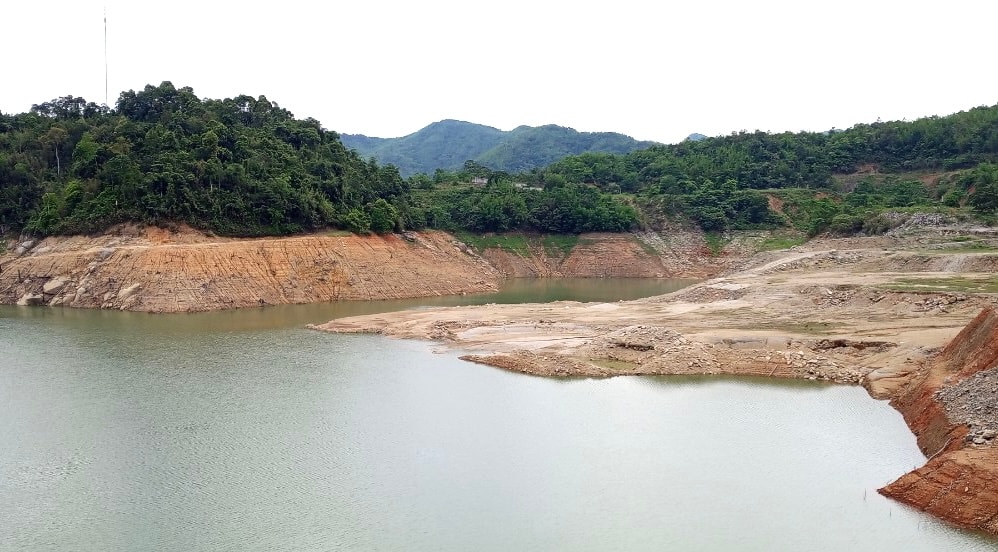 |
| According to forecasts, the water level in the Hua Na hydroelectric reservoir will reach its dead storage level by the end of today (June 9). Photo: PV |
If the hot weather continues for an extended period, the hydropower reservoir system in Nghe An will face many difficulties; some power plants will have to stop generating electricity, failing to meet the electricity demand of the system, and especially causing difficulties in supplying water to downstream areas.

05/05/2023
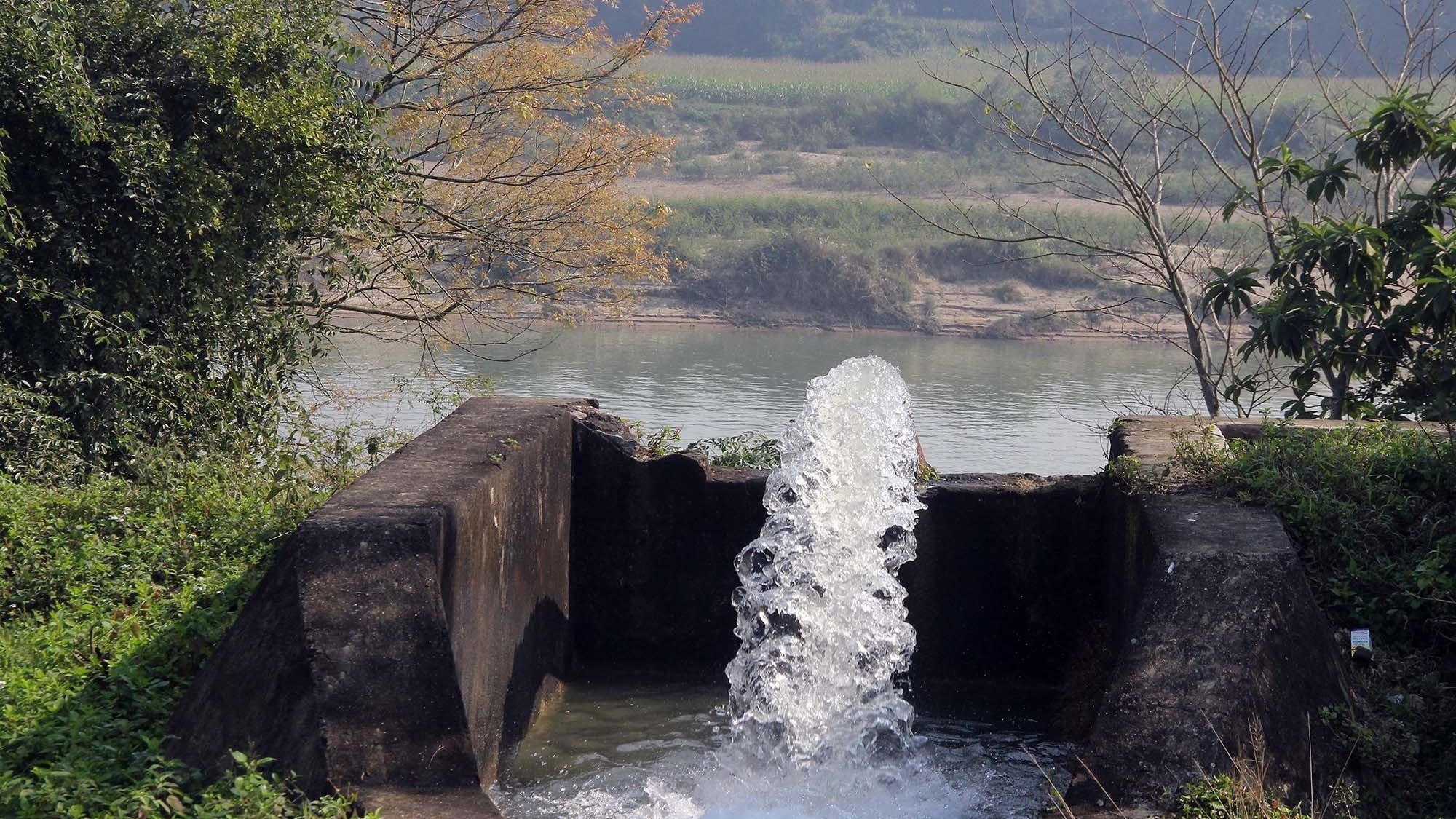
Hydroelectric reservoirs continue to increase discharge rates to 'save' rice crops.
22/04/2023


