
Is it safe to wear sandals while driving?
To ensure safe driving, experts advise drivers to adjust their seats properly, wear appropriate footwear, stay alert, and avoid distractions.
Following a multi-vehicle accident on Vo Chi Cong Street (Hanoi) on the afternoon of April 5th, the image of the driver, wearing flip-flops and looking distraught, getting out of the car has sparked much debate. Many people believe that wearing flip-flops while driving was the reason the car crashed into the crowd uncontrollably.
To ensure safe journeys, experts advise drivers, especially women, to keep in mind some basic rules such as: adjusting the seat appropriately, driving with concentration, and wearing suitable footwear.
1. Adjust the seat to a comfortable position.
Whether a new or experienced driver, the most important thing before getting behind the wheel is to adjust the seat to suit their needs. Don't sit too far or too close to the steering wheel; adjust the seat for the most comfortable position.
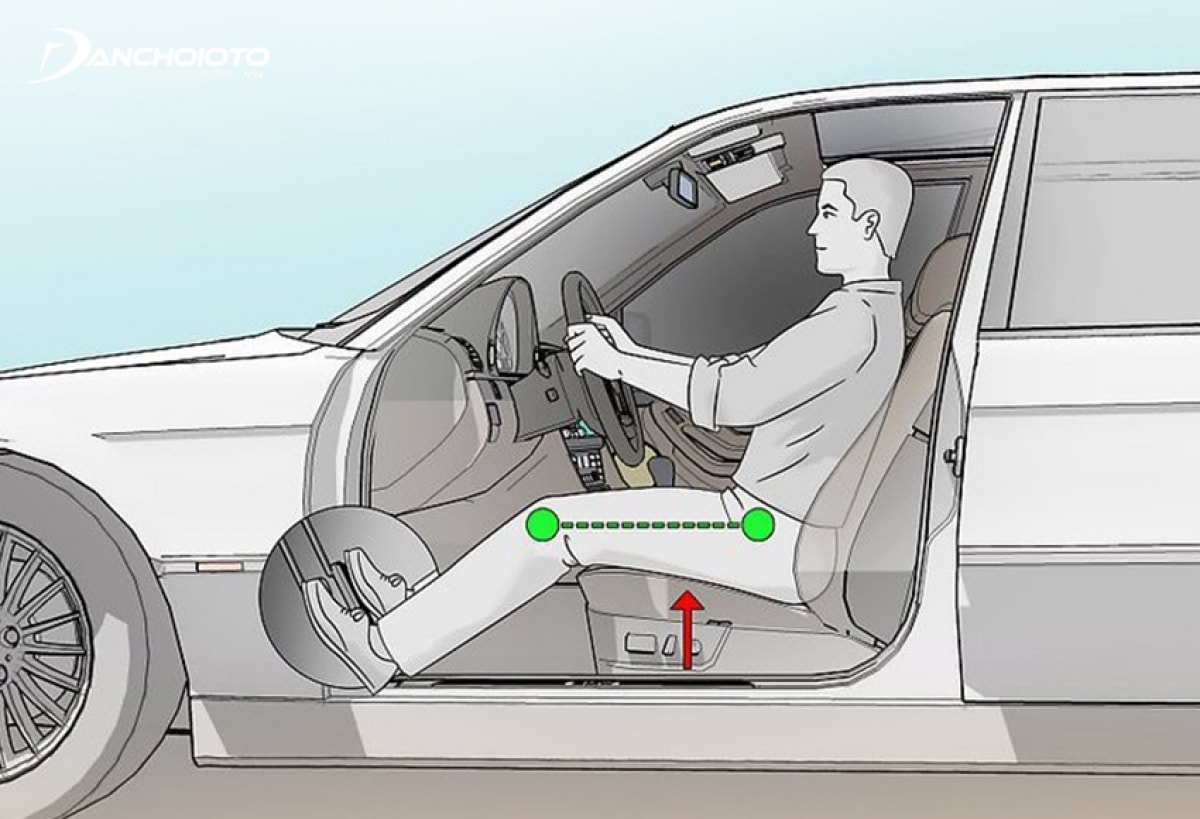 |
A comfortable and proper sitting posture will help make driving safer. |
This not only helps reduce driver fatigue during driving but also provides the best possible viewing position, ensuring unobstructed responses to unexpected situations.
In addition, adjusting your seating position correctly can help drivers minimize injuries in the event of a collision. Drivers should also remember to fasten their seatbelts before driving.
2. Adjust the rearview mirror.
After adjusting your seat, adjusting the interior and exterior rearview mirrors is one of the most important rules before driving on the road. This helps you observe vehicles and obstacles on both sides and behind your car while driving and when reversing.
Therefore, after finding a comfortable driving position, drivers begin adjusting their rearview mirrors for optimal visibility. This is especially important when driving unfamiliar vehicles. Many drivers have likened car rearview mirrors to a driver's second pair of eyes when on the road.
3. Do not wear high heels or flip-flops while driving.
According to safe driving experts, when driving a car, drivers should wear comfortable, flat-soled shoes or sandals with straps, and absolutely avoid wearing high heels or high boots while driving.
Suitable types of shoes to wear while driving include: sneakers (flat soles), flat-soled shoes like athletic shoes, women's ballet flats, ankle boots, dress shoes, and loafers.
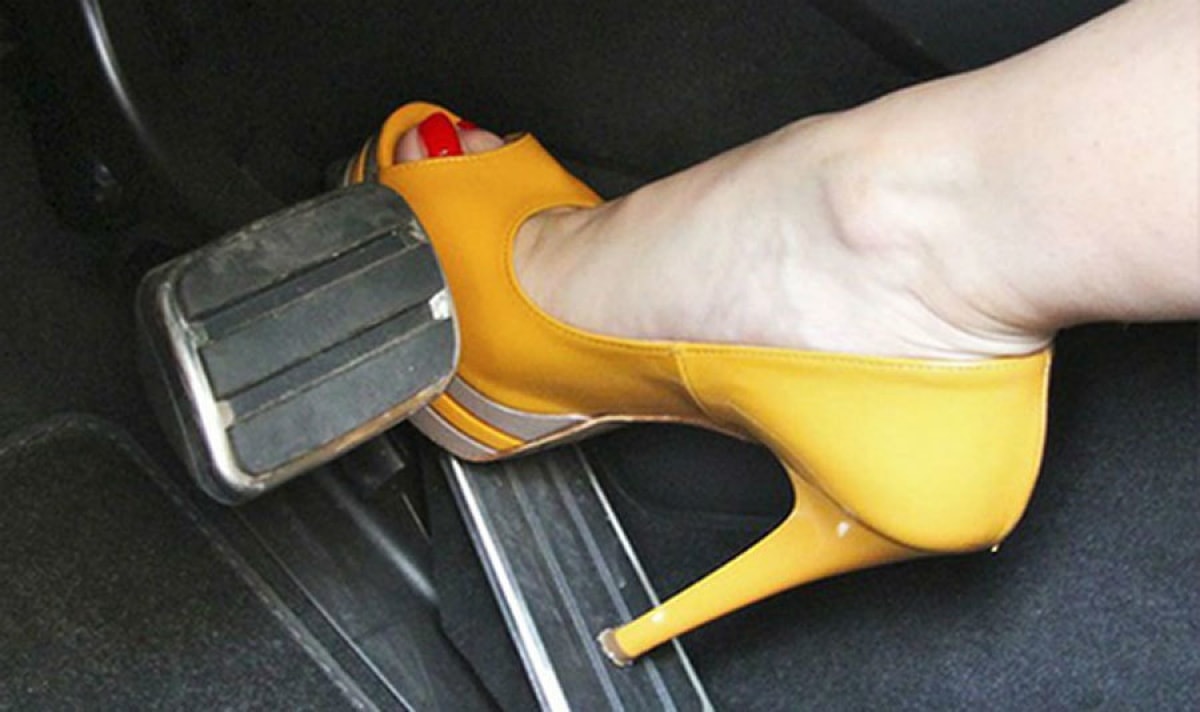 |
When driving, the feet are constantly in use, so drivers should be careful not to wear unsafe footwear such as high heels, flip-flops, or thongs. |
Because a driver's feet are crucial for pressing the accelerator, brake, and clutch, they require agility, coordination, and precision. Insecure sandals can cause you to slip off the brake pedal in emergency situations.
According to various surveys, wearing inappropriate footwear can lead to worse consequences than going barefoot. Specifically, according to research by NMRA, an insurance company in Australia, when surveying 1,000 drivers, 60% reported still wearing flip-flops or high heels while driving; and 38% admitted to having lost a shoe before an accident.
Therefore, safe driving experts advise car drivers to wear appropriate shoes or sandals with straps to ensure the stability of their feet. Flip-flops or thongs lack the support of a sole, are prone to slipping, and can get caught under the pedals, distracting the driver while they try to put their sandals back on...
Furthermore, according to experts, wearing high heels while driving is completely inappropriate. If your foot gets stuck on the gas pedal, it not only endangers other road users but also yourself. Therefore, whether male or female, always keep a separate pair of shoes for driving, and change into high heels or rubber boots when stopped.
Especially for women, wearing high heels can make it difficult to control the accelerator and brake pedals, even causing them to accidentally press the accelerator instead of the brake, particularly in emergency or dangerous situations, when driving on busy roads with high traffic density.
4. Choose neat and comfortable clothing.
It's not just high heels or boots that can be dangerous while driving; overly cumbersome or restrictive clothing can also contribute to avoidable accidents.
According to Nguyen Anh Tuan, a driving instructor in Hanoi, many women who drive wearing sun-protective clothing, scarves, hats, or flowing skirts are inadvertently endangering themselves, other road users, and passengers. Inappropriate attire makes it difficult to see while driving, preventing them from reacting quickly to unexpected situations or getting caught on vehicle components, leading to accidents.
 |
Overly elaborate driving attire can make it difficult for drivers to observe their surroundings and react to unexpected situations. |
"Therefore, based on years of experience, I advise women, especially new drivers, to choose appropriate clothing when driving. If you must wear elaborate outfits, you should use public transportation such as taxis or Grab to ensure safety," Mr. Tuan noted.
5. Test the accelerator and brake pedals multiple times.
After adjusting the seat and rearview mirrors, another important thing to check before driving is the accelerator and brake pedals (for automatic cars) and the clutch pedal (for manual cars).
This test will help you determine the responsiveness of your clutch, accelerator, and brake pedals. This will help you coordinate the force you apply to each pedal, ensuring that no unexpected incidents occur on the road.
Especially for the brakes, before starting the engine, press the brake pedal 3-5 times. If the brake pedal becomes firm and stays still, the power brake system is still working properly. When the engine starts, the brake pedal should slowly return to its original position; it shouldn't remain stationary.
If you press the brake pedal without starting the engine and feel a lack of responsiveness, and you can press it repeatedly without any effect, it means the vacuum power steering system has stopped working. In this case, it's best to call a mechanic for an on-site inspection or call a tow truck; don't risk driving the car on the road.
6. Avoid getting too close to the vehicle in front and reversing too close to obstacles behind.
For new drivers, estimating the distance from the front or rear of their vehicle to obstacles, other vehicles on the road, etc., can be quite challenging.
Therefore, when driving or reversing, new drivers should stop/park further away (park slightly off-center) than usual to avoid unnecessary collisions.
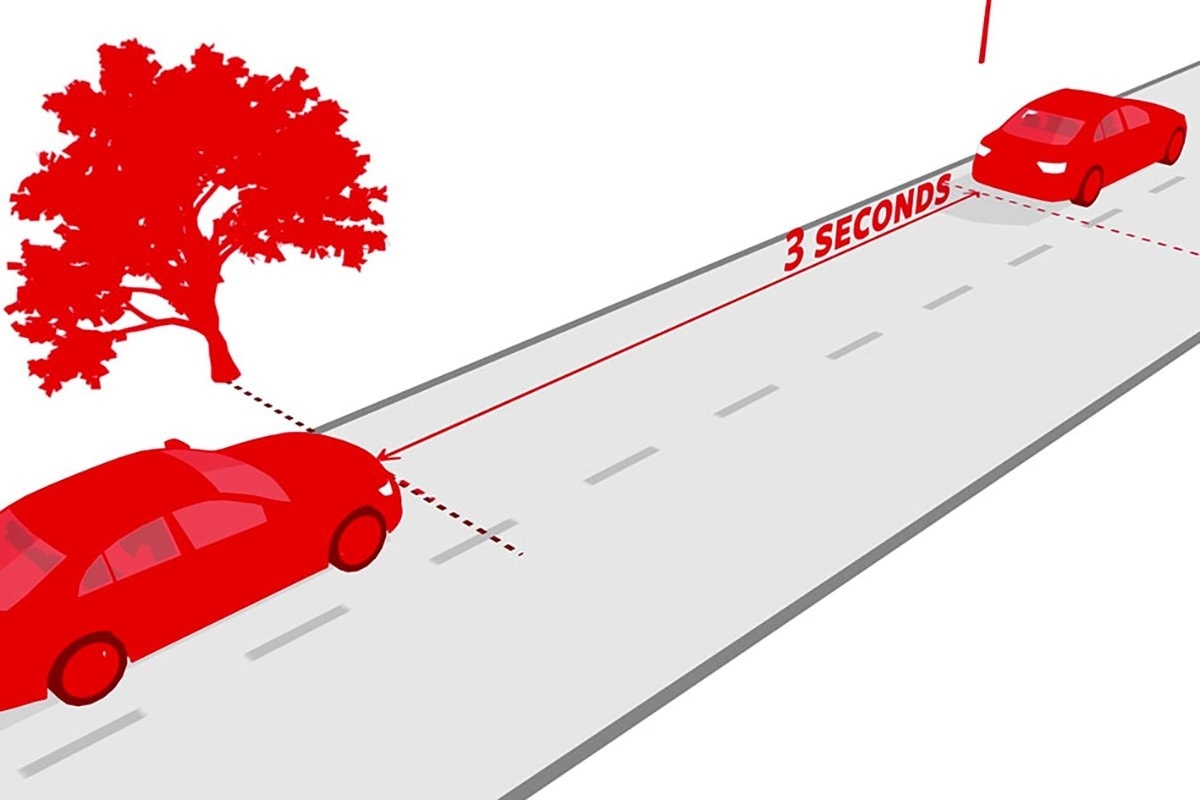 |
When driving, maintain a safe distance from the vehicle in front. |
At the same time, maintain a safe distance from the vehicles in front to allow more time to react in case of unexpected situations. Avoid tailgating the vehicles ahead.
According to experts, the 3-second rule when driving involves using something on the road as a reference point, such as a lamppost, a tree, or anything else. After the car in front has passed, mentally count down 1, 2, 3 seconds. This is the distance you should maintain to be able to react and brake in case of an unexpected maneuver from the car ahead.
- At a speed of 60 km/h, the safe distance is 17 m/s. So, in 3 seconds, we are 50 m away from the car in front.
Similarly, 80 km/h is 22 m/s. So, 3 seconds is 65 m.
- 100 km/h is 28 m/s. So in 3 seconds, it's 83 m.
- 120 km/h is 33 m/s. So in 3 seconds, you cover 100 m.
7. Do not use your phone while driving.
Do not use your phone while driving.
Whether you're a new or experienced driver, using your phone while driving is absolutely forbidden. Just a moment of inattention can easily lead to an accident. This is especially true for new drivers whose handling skills are not yet perfected and who lack experience.
Therefore, avoid using your phone while driving as it can easily cause distraction.
A study from the Virginia Tech Transportation Institute (USA) shows that texting while driving can increase the risk of a collision by 23 times compared to when focusing on driving.
8. Don't watch movies while driving.
Nowadays, most cars are equipped with entertainment screens, so many people often use them to watch movies while driving. However, this is a very dangerous habit as it distracts the driver.
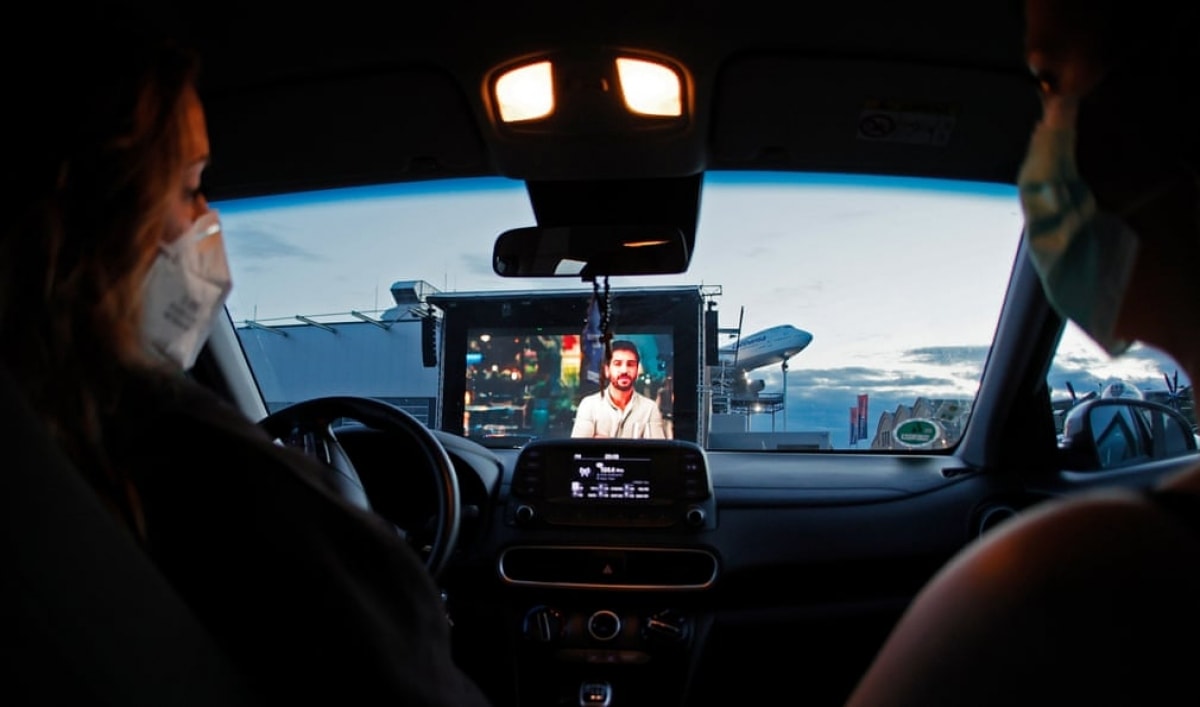 |
Distraction while driving is very dangerous and increases the risk of accidents. |
Therefore, drivers should avoid watching movies while driving as it can distract them and prevent them from concentrating on controlling the vehicle. This can easily lead to accidents or collisions with other vehicles.
The biggest danger to drivers on the road is other drivers, so always focus on the road instead of your phone or car screen.
In addition, some women take the opportunity to apply makeup while driving, which is also a dangerous habit. Therefore, whether you are an experienced driver or a new driver, you should immediately abandon this habit if you don't want to have an unexpected accident.
9. Avoid sudden acceleration and braking.
For new drivers, the feel of the clutch, brake, and accelerator pedals is not yet fully developed, and they may not be able to control the vehicle as desired. Therefore, you should drive slowly and calmly to get used to and feel the clutch, accelerator, and brake pedals. Avoid suddenly pressing the accelerator while driving, as you may not be able to control the vehicle's power during acceleration, causing it to lunge out of control...
This can easily create awkward situations and potentially lead to unfortunate accidents.
10. Make it a habit to lock the doors when getting into the car and to look around when getting out.
Whether you're a new or experienced driver, male or female, these are habits you should practice and maintain because they will help keep you and others safer.
 |
Looking around before opening the car door will help you avoid unnecessary accidents. |
Firstly, locking the car doors when boarding will prevent young passengers or those unfamiliar with driving from opening the doors while the car is moving, and also helps to inform the driver that the car doors are properly closed.
Whenever you get out of a car, whether you're the driver or a passenger, you should always look behind you before opening the door, and you should open it slowly to avoid endangering pedestrians.


