
Moving towards viewing Covid-19 as an endemic disease.
(Baonghean.vn) - In order for people to live with this disease, disease prevention and control in the current context need to be done better, especially vaccination against Covid-19.
Consider Covid-19 as an endemic disease.
On March 3rd, at the regular government meeting for February 2022, government members assessed the work of epidemic prevention and control.Covid-19Accordingly: To date, the epidemic situation in Vietnam remains basically under control. Although the number of cases has increased, the rate of severe illness and death is low, within the capacity of the healthcare system, clearly demonstrating the effectiveness of the epidemic prevention and control measures that have been implemented. All localities have shifted to a state of "Safe, flexible adaptation and effective epidemic control."Covid-19"according to Resolution 128/NQ-CP."
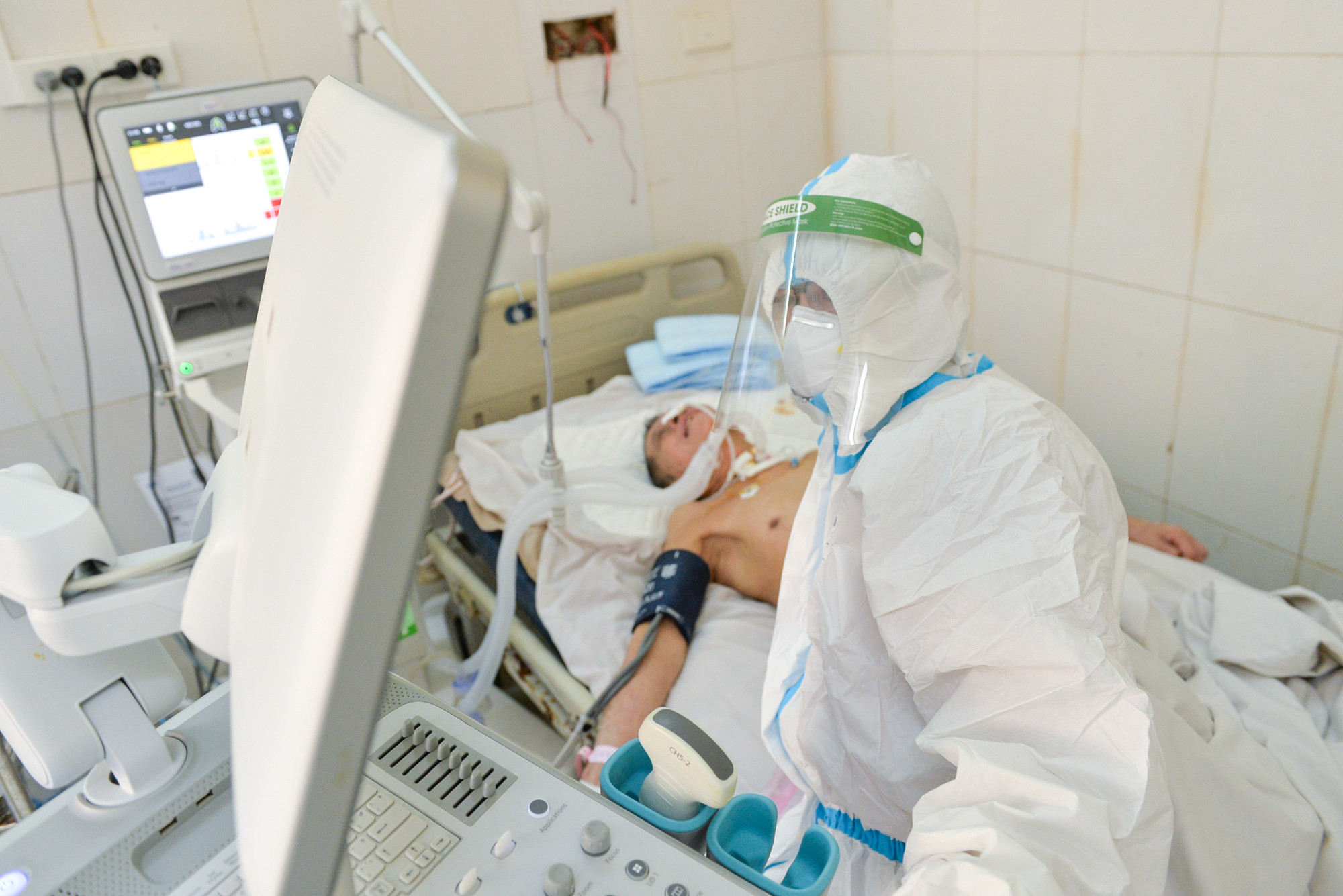 |
| The number of Covid-19 cases is increasing, leading to a corresponding increase in the number of severe and critical patients. Photo: Thanh Cuong |
With these results, Prime Minister Pham Minh Chinh requested that ministries, sectors, and localities continue to effectively control the epidemic and strictly implement the formulas and principles for epidemic prevention and control that have been summarized. The Ministry of Health should refer to international experience to develop appropriate and effective measures to move towards normalizing the epidemic, considering Covid-19 as an endemic disease (or "endemic disease").
Regarding this issue, on the morning of March 5th, the Ministry of Health reported to the National Steering Committee for COVID-19 Prevention and Control that Vietnam should not yet consider COVID-19 an endemic disease for the following reasons: Although the rate of severe illness and death has decreased significantly compared to the previous period, the number of deaths recorded daily remains high, at around 100 cases; higher than the peak annual death toll from rabies, dengue fever, or measles – which are endemic diseases with the highest mortality rates among infectious diseases in Vietnam.
Accordingly, the Ministry of Health will continue to closely coordinate with the WHO as well as other international and national organizations to monitor the Covid-19 epidemic situation and update on the changes of the SARS-CoV-2 virus in order to advise the Prime Minister on deciding whether to consider Covid-19 as an endemic disease at the appropriate time.
However, the Ministry of Health also proposed to the Prime Minister and the National Steering Committee for COVID-19 Prevention and Control to temporarily suspend the daily announcement of SARS-CoV-2 infection numbers. This aims to avoid causing panic, as the number of infections is only one of eight indicators used to assess the severity of the epidemic and does not accurately reflect the true nature of the situation. Instead of announcing new cases, localities are responsible for maintaining testing, collecting data, and considering other factors such as the number of severe cases, the capacity to respond to the epidemic, and vaccine coverage to assess and announce the epidemic level.
At the same time, the Ministry of Health proposed allowing F0 and F1 cases to return to work during their quarantine period. Specifically: Units and localities can consider arranging for online work, avoiding direct contact with others, in accordance with assigned tasks, professional qualifications, and strictly adhering to the "5K" message. F1 cases who have not received all doses or have not been vaccinated against Covid-19 are allowed to participate in urgent tasks of their unit or locality through online or in-person work. In the case of in-person work, the workplace must arrange and establish a separate work area for F1 cases, ensuring working distance, avoiding large gatherings, and ensuring good ventilation to reduce the risk of infection.
Actions to "live with" Covid-19
According to health experts: The WHO classifies COVID-19 as a Group A infectious disease (particularly dangerous). Therefore, one COVID-19 infection is considered an outbreak. In addition to mobilizing all resources and the entire political system in the fight against the pandemic, and requisitioning resources for epidemic control activities, medical examinations and treatment are entirely covered by the State; people receive COVID-19 treatment free of charge...
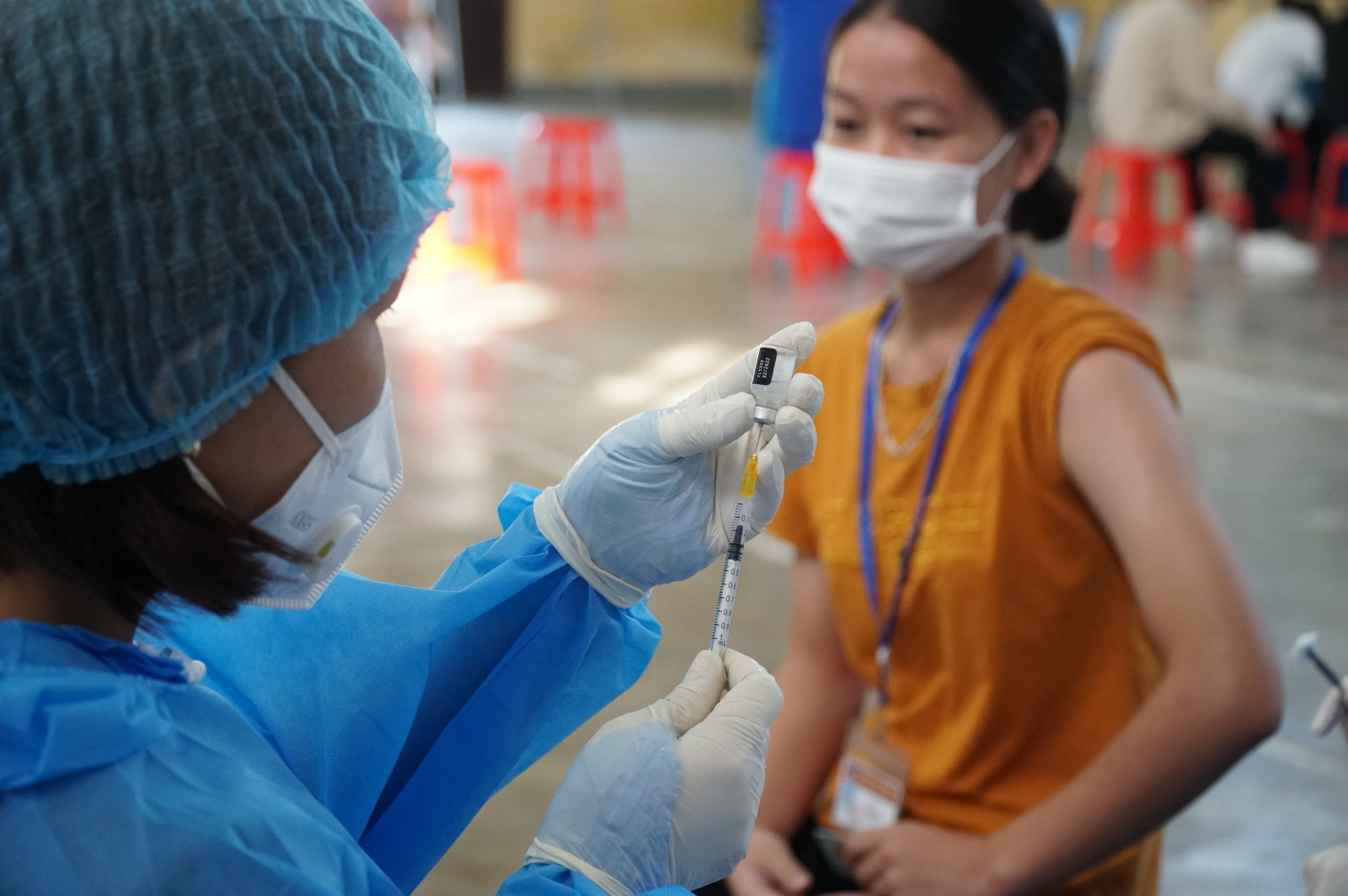 |
| Accelerating the vaccination program to "live with" Covid-19. Photo: My Ha |
Dr. Pham Dinh Du, Deputy Director of the Nghe An Center for Disease Control, analyzed: “When Covid-19 is considered an endemic disease, it means that Covid-19 will no longer be seen as a pandemic, but as a common infectious disease. At this time, the task of grassroots healthcare will be somewhat lighter as it will no longer have to conduct testing and contact tracing, but will focus on monitoring, statistics, reporting (weekly), and guidance, advice, and treatment. Healthcare facilities will focus on accurate diagnosis, effective treatment, reducing complications, and reducing mortality. Payment for Covid-19 examinations and treatments may be covered by health insurance or paid for by the people themselves.”
Associate Professor, Dr. Duong Dinh Chinh - Director of the Nghe An Department of Health, stated: “In the context of the whole society adapting to Government Resolution 128; and with vaccine coverage continuing to increase, the trend of herd immunity will gradually occur. From here, Covid-19 will be considered an endemic, endemic disease. The challenge for the health sector now is no longer about taking samples for testing but about treatment… The Nghe An Department of Health has developed scenarios and is fully prepared for the treatment of Covid-19 patients, even in situations where the number of cases increases further.”
Currently, the number of COVID-19 cases in Nghe An is increasing rapidly (over 11,000 new cases have been recorded in recent days), leading to a rise in the rate of severe and critical cases. Treatment facilities are overloaded. In the future, when COVID-19 is considered an endemic disease, the burden on treatment will increase. Dr. Que Anh Tram, Director of the Center for Tropical Diseases, stated: “At the time when COVID-19 is considered a respiratory disease, a specialized infectious disease, general hospitals will have to establish a COVID-19 Department, or at least a unit for diagnosing and treating COVID-19 patients, and some departments may even have dedicated rooms for treating COVID-19 patients. At this point, the work of diagnosis and treatment will be assigned to clinical doctors… In the province, a separate Tropical Diseases Hospital should also be established.”
How should we react when Covid-19 becomes endemic? - Dr. Nguyen Ngoc Hoa - Nghe An Friendship General Hospital, believes: “When enough people have acquired some immunity through vaccination or infection (preferably vaccination), the Coronavirus will transition to what epidemiologists call an “endemic” form. It will not be eliminated, but it will no longer be dangerous to our lives.”
However, before Covid-19 becomes an endemic disease, in the current context, everyone needs to be more vigilant, including those who are already F0 or F1 contacts, and those who have not yet contracted Covid-19 need to proactively prevent and control the epidemic, limit travel and contact, avoid gatherings, and stay away from crowded places unless necessary. Don't give up or relax, thinking "everyone will eventually become F0," as this is very dangerous and leads to countless consequences, including overloading the healthcare system, causing a surge in severe cases and deaths.
To ensure that Covid-19 no longer poses a danger to people's lives, at the meeting of the National Steering Committee for Covid-19 Prevention and Control on March 5th, the Prime Minister emphasized the need for even faster vaccination in the spirit of "going door to door, checking every person"; completing the third dose for people aged 18 and over in the first quarter (excluding those with contraindications and those not yet due for vaccination); completing the second dose for people aged 12-17 in March; preparing to vaccinate children aged 5-11; researching the possibility of administering a fourth dose and children under 5 years old…


