
Que Phong district hopes to eradicate poverty through cinnamon cultivation.
Que Phong district is known as the land of cinnamon. Along with protecting the existing cinnamon forests, the district is implementing a project to plant 600,000 Quy cinnamon trees to provide ethnic minority communities with a sustainable source of income.
Hope in cinnamon trees
As the year draws to a close, people in the border commune of Hanh Dich are busily clearing weeds from the hillsides to plant Quy cinnamon trees. Mr. Lo Van Hoai's family in Vinh Tien village has just finished planting nearly 4 hectares of Quy cinnamon trees on the hillside behind their house. Mr. Hoai happily shared: "My family has been growing Quy cinnamon trees for decades, but in small quantities, only intercropping them in our melaleuca garden."
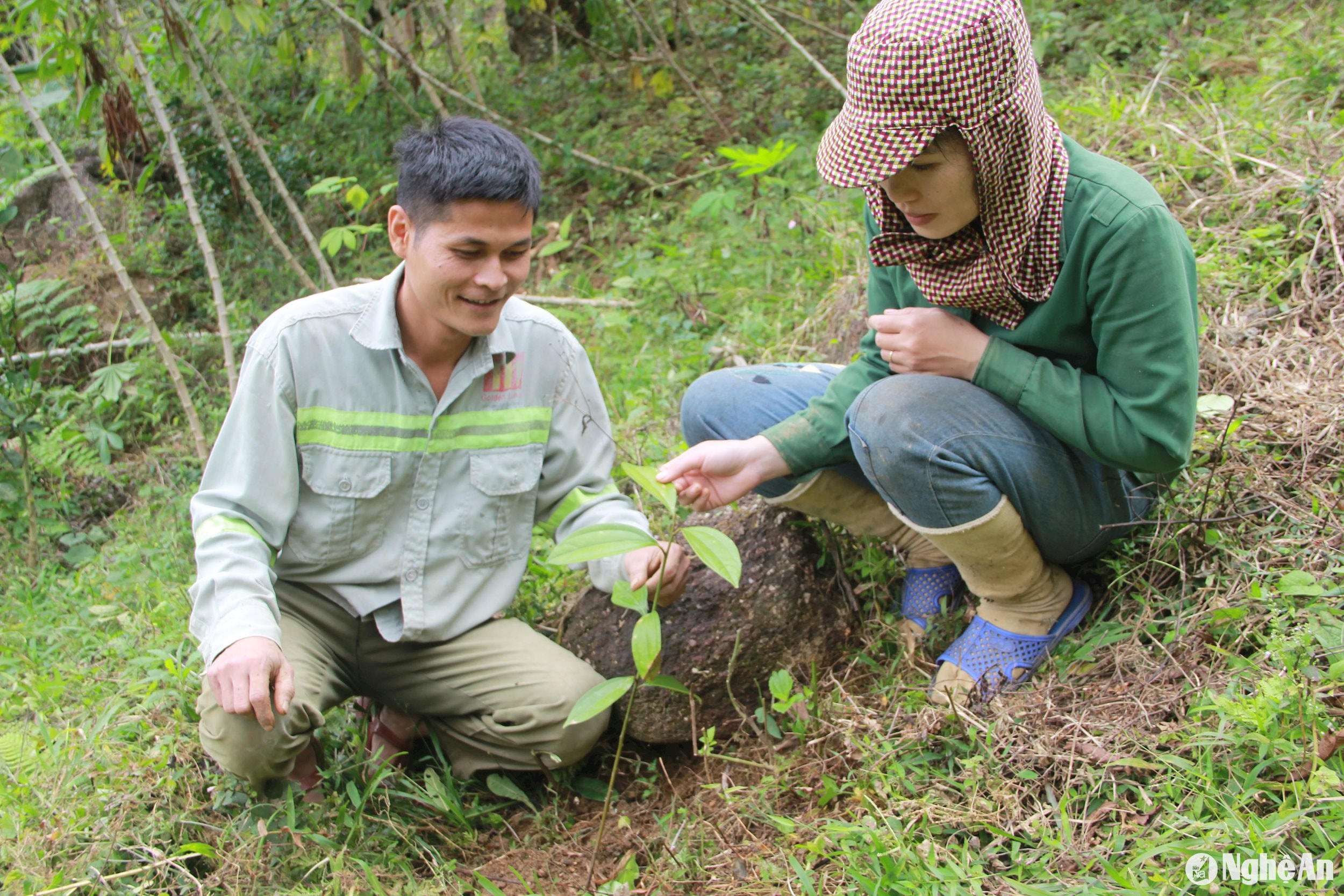
This year, thanks to the government's policy of supporting seedlings, the family converted their entire hillside land to cinnamon cultivation. As soon as the seedlings arrived, the family mobilized manpower to dig holes and plant them immediately. Following the instructions of the commune's agricultural officials, the cinnamon seedlings were removed from their root balls and planted in rows, 2 meters apart, with each plant receiving a handful of fertilizer. Because the seedlings are only 30cm tall, the family protects them from livestock and regularly clears weeds and replants any dead trees.
“Now that our family's finances are more stable than before, we will take better care of the cinnamon trees and wait until they are truly mature before harvesting them. We expect to harvest them after 4-5 years by pruning the branches and selling them to traders. We hope that this new crop will bring high economic efficiency and provide our family with a stable income,” Mr. Lo Van Hoai shared.
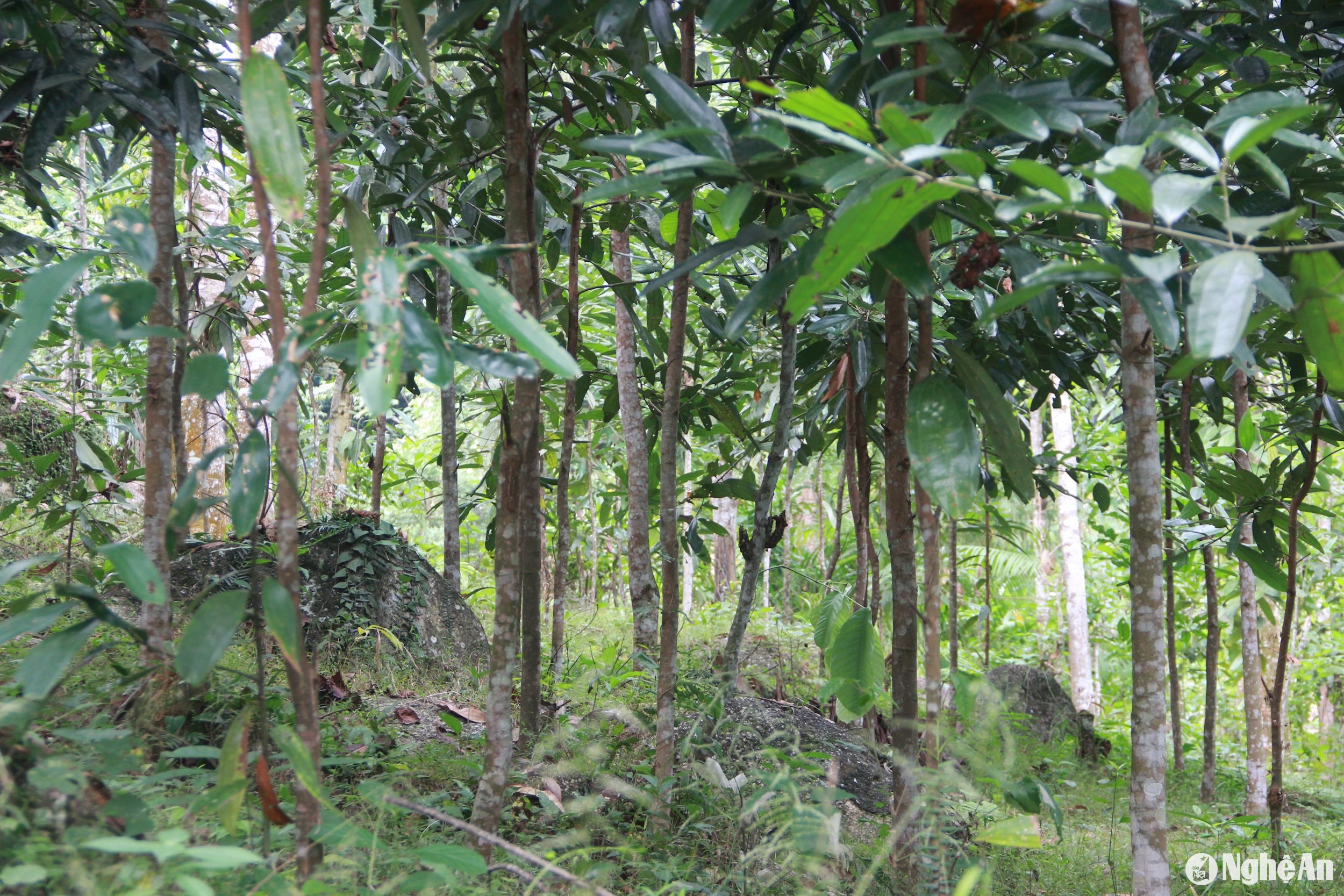
Observations show that in Vinh Tien village, many households have cinnamon gardens that are 3-4 years old, well-protected and cared for. Locals say that previously, the hilly land was mainly used for growing acacia and cassava, but realizing that cinnamon trees have a higher value, they switched to growing cinnamon.
One resident said that his family used to grow acacia trees, which could be harvested in just 5-7 years, but the investment in seedlings, fertilizers, care, and especially the cost of building access roads to harvest the acacia was very high. While growing cinnamon, they received support, and even before the entire tree was ready for harvest, they could regularly "make ends meet" by pruning branches and leaves to sell.
Ms. Lu Thi Thin, Vice Chairman of the People's Committee of Hanh Dich commune, said: "The locality has potential, advantages, and is suitable for growing Quy cinnamon trees. Previously, people in the commune have planted this native cinnamon variety and earned a stable income by pruning the branches. Currently, Hanh Dich commune has 147 hectares of Quy cinnamon trees planted scattered across 6 villages. Compared to acacia trees, Quy cinnamon trees yield higher income. Although acacia trees are harvested once every 5-6 years, they require replanting, while cinnamon trees only require one planting and can be harvested for decades. When the trees become too large, people harvest the entire tree, and traders buy the trunk, leaves, branches, roots, and trunk, so the value is high."

Ms. Lu Thi Thin added that this year the local plan is to plant 61,000 cinnamon trees, equivalent to nearly 30 hectares. By early December, the people had received 47,000 seedlings and planted more than 20 hectares. The cinnamon growers all received support from the State in the form of seedlings from the National Target Program. “The local government has been disseminating information and guiding the people on how to protect the cinnamon gardens after planting by building barbed wire fences to prevent livestock from damaging them; and regularly clearing weeds to help the cinnamon trees grow quickly,” Ms. Lu Thi Thin said.
According to Ha Minh Tuan, Secretary of the Chau Kim Commune Party Committee, the decrease in the area planted with hybrid acacia trees means an increase in the area planted with Quy cinnamon trees. This indicates that the people have learned to choose high-economic-value crops to invest in and demonstrates that their living standards have improved, because only when their living standards rise do they have the means to invest in long-term crops. Mr. Tuan added: The area planted with cinnamon in Chau Kim commune is nearly 200 hectares and will certainly expand further if cinnamon prices remain stable.
A processing plant is needed.
According to data from Que Phong district, the current area of Quy cinnamon in the district is nearly 750 hectares, concentrated in the communes of Chau Kim, Hanh Dich, Nam Giai, Muong Ngoc, Chau Thon, etc. Most of this cinnamon area was planted many years ago; the trees are tall and large, and for a long time, the locals have been harvesting by pruning branches and selling them to traders, generating a significant income.
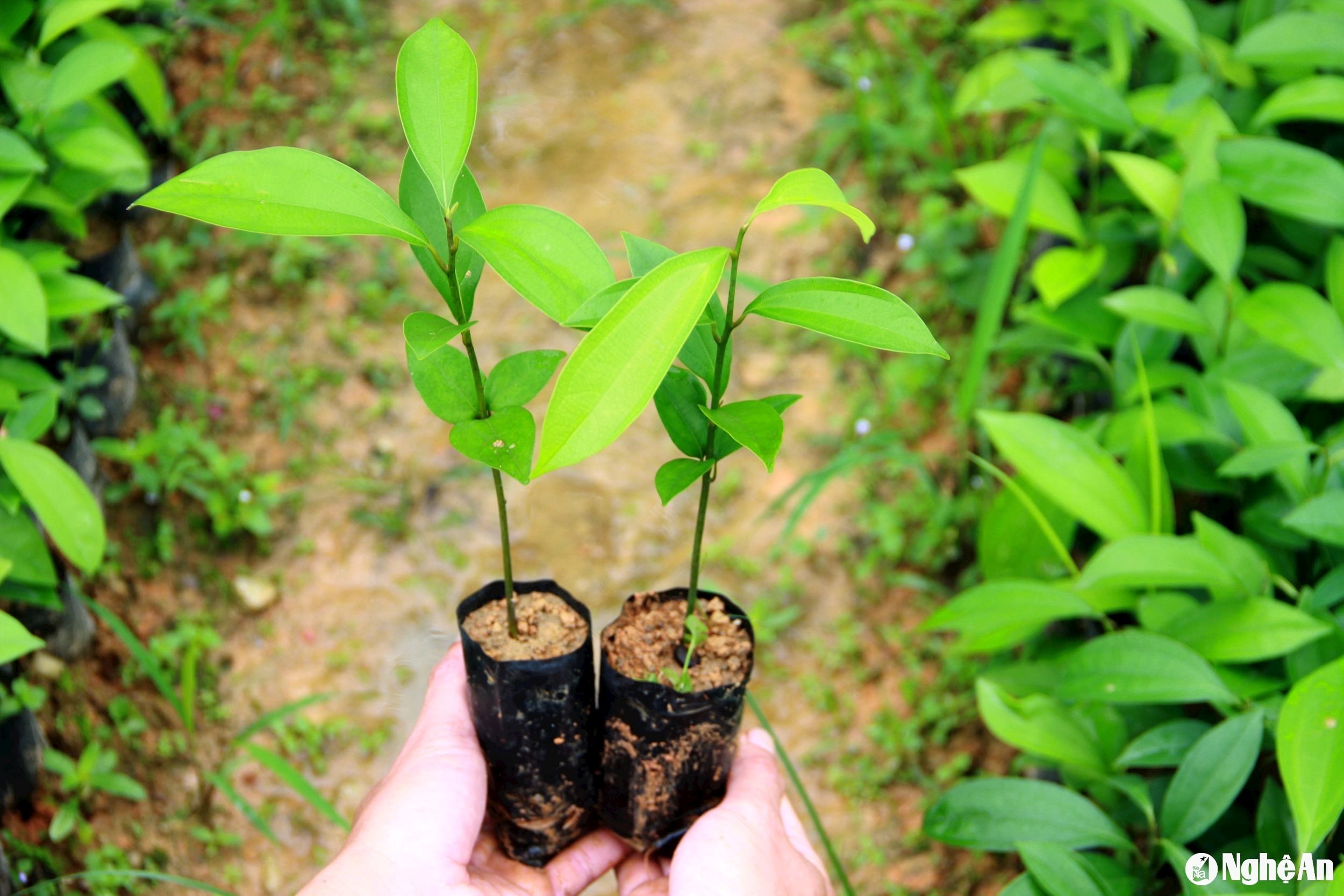
Mr. Pham Hoang Mai, Director of the Agricultural Services Center of Que Phong district, said: From the capital of the sub-project supporting production development in the agricultural sector under the National Target Program giai đoạn 2021 - 2025, Que Phong district, along with support for cattle, goat, and pig breeds, has made cinnamon trees one of the main crops to support farmers in developing production and increasing income.
Accordingly, by the end of 2024, the entire district will plant 600,000 cinnamon trees, equivalent to 240 hectares, raising the total cinnamon area in the locality to nearly 1,000 hectares. This perennial crop is expected to be a sustainable poverty alleviation crop for the people. To ensure sufficient seedlings for local areas, since the beginning of 2024, seedling nurseries in the district have been cultivating seedlings, and they are now ready for planting. After the farmers have finished planting, the local authorities will conduct an inspection to provide direct support to the farmers with a total capital of 2.67 billion VND from the National Target Program.
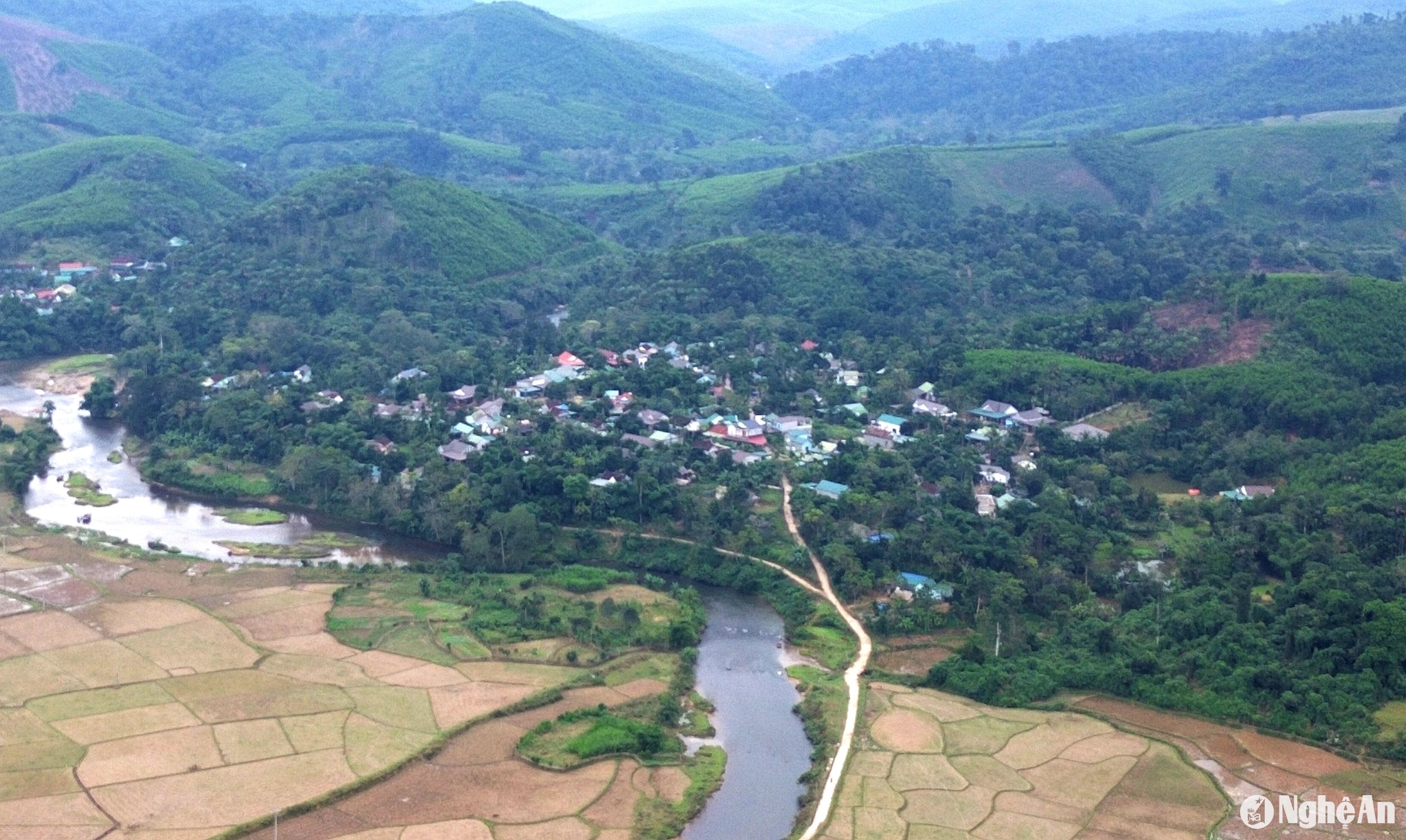
Mr. Bui Van Hien, Vice Chairman of the People's Committee of Que Phong District, said: "The characteristic of the native Quy cinnamon tree is its high essential oil content. Cinnamon is not only a valuable raw material in the pharmaceutical and food processing industries, but its wood is also good for producing household furniture. As a locality where the lives of the people mainly depend on forestry, the Quy cinnamon tree is not only a poverty alleviation tree, but also a wealth-generating tree for the ethnic minorities here."
Que Phong district's policy is to attract businesses to invest in processing plants in the locality, aiming to increase the value of cinnamon. Previously, because there were no processing plants in the district, cinnamon bark harvested by farmers was sold to traders who transported it elsewhere for processing, thus reducing the product's value. Therefore, the locality hopes that businesses will invest in processing plants to ensure farmers can confidently continue growing cinnamon.
Que Phong is a border district, one of the poorest districts in the country, with a poverty rate of 30.09%. Along with other crops and livestock, developing the area of cinnamon cultivation in Quy district aims to exploit its potential and advantages, creating a source of income to work towards the goal of sustainable poverty eradication.


